Firearms · Roundup
The Best Ammo Storage for Hunters
Ammunition stored properly lasts decades. Stored in a garage in a cardboard box, it corrodes quietly until the morning it matters.
Disclosure: Creek Cover is reader-supported. If you buy through our links we may earn a commission, at no extra cost to you. It never changes which pick we tell a beginner to start with. Full disclosure.
Quick picks at a glance
Tap a pick to read the full write-up, or the price button to check it on Amazon.
- 1
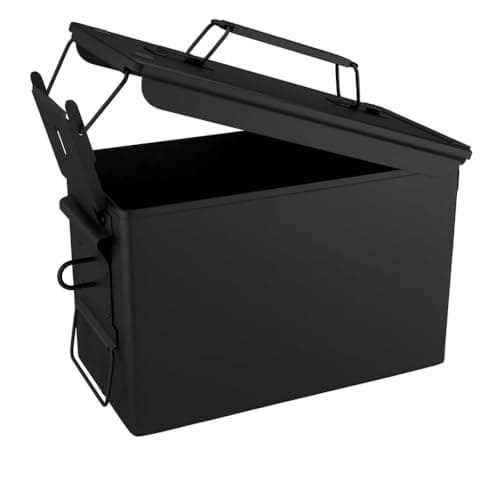
A gasketed steel 50-cal can with a proper hasp for a padlock. The gasket does the storage job and the lock point does the safety job, which makes this the sensible single purchase for a household with kids or visitors.
Best for: Moisture protection plus a padlock point9.1 - 2
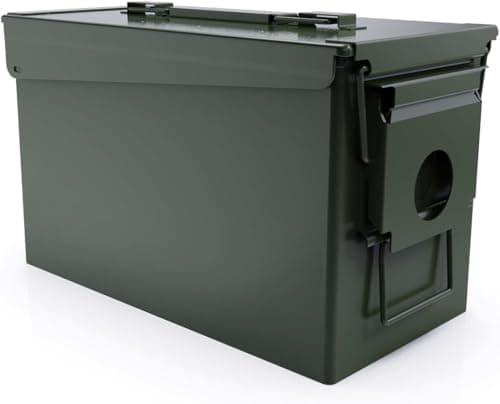
A plain gasketed steel ammo can at the lowest sensible price. No lock point, but the sealing job — which is the one that actually preserves ammunition — is identical to the pick above.
Best for: The straightforward budget can8.6 - 3
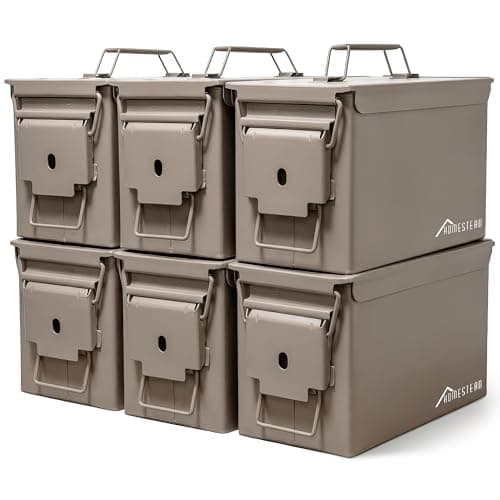
Six M2A1-pattern cans in one purchase. The reason to buy in bulk is organizational rather than economic — one can per caliber, labeled, means you never grab the wrong box in the dark at 4 a.m.
Best for: Sorting by caliber once you own several guns8.4
| # | Product | Best for | Score | Price |
|---|---|---|---|---|
| 1 | Solid Tactical Lockable 50 Cal Metal Ammo Can A gasketed steel 50-cal can with a proper hasp for a padlock. The gasket does the storage job and the lock point does the safety job, which makes this the sensible single purchase for a household with kids or visitors. | Moisture protection plus a padlock point | 9.1 | $35.98View on Amazon#ad |
| 2 | HARDROCK 50 Cal Metal Ammo Can A plain gasketed steel ammo can at the lowest sensible price. No lock point, but the sealing job — which is the one that actually preserves ammunition — is identical to the pick above. | The straightforward budget can | 8.6 | $23.79View on Amazon#ad |
| 3 | HOMESTEAD 50 Cal Metal Ammo Can (6-Pack) Six M2A1-pattern cans in one purchase. The reason to buy in bulk is organizational rather than economic — one can per caliber, labeled, means you never grab the wrong box in the dark at 4 a.m. | Sorting by caliber once you own several guns | 8.4 | $119.99View on Amazon#ad |
Ammunition is one of the few things in hunting that genuinely lasts decades if you store it properly, and degrades surprisingly fast if you do not. Factory ammunition kept cool, dry and sealed is routinely reliable long after the person who bought it has forgotten about it. The same ammunition in a cardboard box on a garage shelf through a few humid summers develops corroded cases and unreliable primers.
For a beginner this matters less because of quantity than because of consequence. You will not find out that a round has degraded on a range day. You will find out at the moment you have been waiting three months for. The sealed lockable can above plus a desiccant pack solves the entire problem for the price of two boxes of ammunition.
What actually degrades ammunition
Does ammunition go bad? Not from age, in any practical sense. Properly stored modern ammunition remains reliable for decades. What degrades it is the storage environment — specifically humidity, then temperature swings, then physical handling. Age alone is close to irrelevant.
| Factor | What it does | How to control it |
|---|---|---|
| Humidity | Corrodes brass cases and can penetrate the primer seal, causing misfires | A gasketed sealed container plus a desiccant pack. This is the whole game. |
| Temperature cycling | Repeated expansion and contraction draws moist air past seals; extreme heat can affect powder over time | Store inside the house rather than an uninsulated garage, attic or vehicle. |
| Direct sunlight and UV | Degrades any plastic components and heats the container | Store in the dark. Trivially easy. |
| Solvents and oils | Penetrating oil can seep into a primer and deactivate it | Never store ammunition in the same sealed container as cleaning solvents or an oily rag. |
| Physical damage | Dented cases, deformed bullet tips and loosened crimps affect feeding and accuracy | Keep rounds in trays or original boxes rather than loose in a bucket. |
The solvent point is worth emphasizing because it is a genuinely common mistake. People store their cleaning kit and their ammunition together in one convenient box, and the oil migrates. Keep your cleaning kit in a separate container.
Note also that the temperature threshold that actually matters is higher than most people assume — ammunition is not going to spontaneously become dangerous in a warm room. The reason to avoid a garage or an attic is the humidity cycling that comes with the temperature swings, not the heat itself.
How we picked these
We prioritized a genuine gasket seal above everything else, since humidity is the actual threat, then a padlock point, then standard M2A1 sizing so cans stack and nest predictably. We compared published construction specifications and sealing claims; we do not run humidity chamber testing and do not claim to. Our research method is published and prices here are live and dated.
The dollar item that does most of the work
A sealed container traps whatever air was inside it when you closed it, including that air's moisture. On a humid day you can seal a can and preserve the humidity rather than exclude it. A silica gel desiccant pack fixes this, and it costs about a dollar.
Buy indicating desiccant — the kind that changes color when saturated — so you can see at a glance whether it is still working. Most types are rechargeable: bake them in a low oven and the color returns. One pack per can, replaced or recharged once a year, and the humidity problem is solved permanently.
Seal the can on a dry day, not a humid one
Cans, boxes and what each is for
| Option | Sealing | Best for | Limitation |
|---|---|---|---|
| Steel ammo can (M2A1 pattern) | Excellent — rubber gasket | Bulk long-term storage at home | Heavy; no security unless it has a hasp. |
| Plastic ammo can | Good, if it has a real gasket | Truck and range use where weight matters | Latches and hinges are the weak point over time. |
| Plastic ammo boxes (fitted trays) | Minimal | Protecting individual rounds from denting; organizing by load | Not a moisture solution — put them inside a can. |
| Original factory boxes | None | Keeping the headstamp, lot and load data with the ammunition | Cardboard absorbs moisture. Keep them, but inside a sealed can. |
| Locking ammo cabinet or safe | Varies | Households needing genuine access control | Expensive; usually the answer alongside a gun safe, not instead of a can. |
The practical setup most hunters land on is layered: rounds in their factory boxes or fitted plastic trays, those inside a gasketed steel can with a desiccant pack, the can stored inside the house rather than a garage. That covers moisture, physical protection and organization at once.
Keep the original boxes even when you use trays. They carry the manufacturer, the load, the bullet weight and the lot number — information you will want when your rifle shoots one batch well and another badly, and information that matters for any recall notice.
Storage security, honestly
We want to be straightforward about what a padlocked ammo can is and is not. It is meaningful access control against curious children and casual opportunists. It is not a security device against a determined adult, and it is not a substitute for storing firearms locked and separate.
The general safe-storage principles that hunter education courses teach are worth restating, because a beginner buying their first firearm is exactly the person who has not heard them yet:
- Store firearms unloaded and locked — a safe, a cabinet, or at minimum a cable or trigger lock.
- Store ammunition separately from firearms, and ideally locked as well. This is the specific principle a lockable can serves.
- Know your state's storage law. Several states have specific safe-storage requirements, particularly where minors live in or access the home, and a few impose criminal liability. This is not optional reading.
- Do not leave ammunition in a vehicle long-term. Temperature and humidity cycling in a truck is the worst storage environment available, and it is also a theft target.
If you are new to owning a firearm at all, work through your hunter education course before worrying about storage products — the coursework covers all of this properly and is often free.
Carrying ammunition in the field
Storage at home and carry in the field are different problems, and the answer to the second one is smaller than beginners expect.
Take fewer rounds than you think. A deer hunt is a handful of cartridges. A box of twenty in your pack is dead weight you will carry all season without touching. Five rounds in a slide holder or a pocket, plus whatever is in the magazine, covers any realistic situation — and if you find yourself needing more than that, the problem is not ammunition supply.
Keep them quiet and dry. Loose rounds in a jacket pocket clink, and metallic noise carries in a way natural sound does not. A neoprene slide holder, a shell loop on a sling, or a small zip pouch solves it. Our rifle sling guide covers the options that integrate shell loops.
Keep them separate from anything oily. The same rule as at home. A round that has been rattling around in a pack pocket with a bottle of scent spray or a can of oil is a round to shoot at a target, not at an animal.
Check your travel rules if you fly or cross state lines. Airline ammunition rules require it to be in the manufacturer's packaging or a fitted container inside checked baggage, and state transport laws differ. Confirm both before a trip rather than at the counter. Add a can to the safety and maintenance block of the beginner gear checklist.
The picks in detail
Solid Tactical Lockable 50 Cal Metal Ammo Can
9.1/10Best for: Moisture protection plus a padlock point
A gasketed steel 50-cal can with a proper hasp for a padlock. The gasket does the storage job and the lock point does the safety job, which makes this the sensible single purchase for a household with kids or visitors.
- Size
- 50 cal (M2A1 pattern)
- Seal
- Rubber gasket lid
- Security
- Padlock hasp
- Best for
- Long-term home storage
- Gasket genuinely seals against humidity when latched properly
- Lockable, which a plain can is not
- Steel construction survives being stacked and dropped
- A padlock is not a gun safe — it deters, it does not secure
- Heavier than a plastic case for the same volume
HARDROCK 50 Cal Metal Ammo Can
8.6/10Best for: The straightforward budget can
A plain gasketed steel ammo can at the lowest sensible price. No lock point, but the sealing job — which is the one that actually preserves ammunition — is identical to the pick above.
- Size
- 50 cal
- Seal
- Rubber gasket lid
- Security
- None
- Best for
- Truck, range bag, general storage
- Cheapest way to get a genuine airtight seal
- Stackable and standard-sized, so cans nest predictably
- Fine for the truck or a locked room where security is handled elsewhere
- No padlock point — not an access-control solution
- Check the gasket on arrival; budget cans vary
HOMESTEAD 50 Cal Metal Ammo Can (6-Pack)
8.4/10Best for: Sorting by caliber once you own several guns
Six M2A1-pattern cans in one purchase. The reason to buy in bulk is organizational rather than economic — one can per caliber, labeled, means you never grab the wrong box in the dark at 4 a.m.
- Count
- 6 cans
- Size
- 50 cal, M2A1 pattern
- Seal
- Gasket lids
- Best for
- Multi-caliber households
- One can per caliber removes the most dangerous storage mistake
- Lower cost per can than buying individually
- Uniform size stacks efficiently on a shelf
- Overkill for a beginner with one firearm
- Six steel cans is a lot of weight and shelf space
Prices shown are from Amazon as of Sep 5, 2026 and change often — the button always goes to the current listing. Some links may earn us a commission at no extra cost to you. How this works.
Frequently asked questions
Does ammunition go bad over time?
Not from age in any practical sense - properly stored modern ammunition stays reliable for decades. What degrades it is the environment: humidity first, then temperature cycling, then contamination from oils and solvents. A sealed gasketed container with a desiccant pack solves nearly all of it.
How should you store hunting ammunition?
In its factory boxes or fitted trays, inside a gasketed metal ammo can with a silica gel desiccant pack, stored inside the house rather than a garage or attic. Keep it separate from cleaning solvents and oils, which can seep into primers and deactivate them.
Is it bad to store ammo in a garage?
Yes, mainly because of humidity cycling rather than heat. Uninsulated garages, attics and vehicles swing through large temperature changes that draw moist air past container seals, and that moisture corrodes cases and can penetrate primers. Store it in a climate-stable part of the house.
Do you need a lockable ammo can?
If children or visitors have access to the space, yes. A padlock hasp is meaningful access control against curiosity and casual opportunism, though it is not real security against a determined adult. Several states also have specific safe-storage laws worth checking, particularly where minors are in the home.
Sources
Keep reading
Not sure where to start?
The beginner gear checklist walks you through exactly what a first-season hunter needs — essentials first, nice-to-haves later, with one safe-default pick per category.