Firearms · Roundup
The Best Shooting Glasses for Hunting
Eye protection is the cheapest irreversible-injury insurance in hunting, and the one piece of safety gear beginners skip because nothing has gone wrong yet.
Disclosure: Creek Cover is reader-supported. If you buy through our links we may earn a commission, at no extra cost to you. It never changes which pick we tell a beginner to start with. Full disclosure.
Quick picks at a glance
Tap a pick to read the full write-up, or the price button to check it on Amazon.
- 1
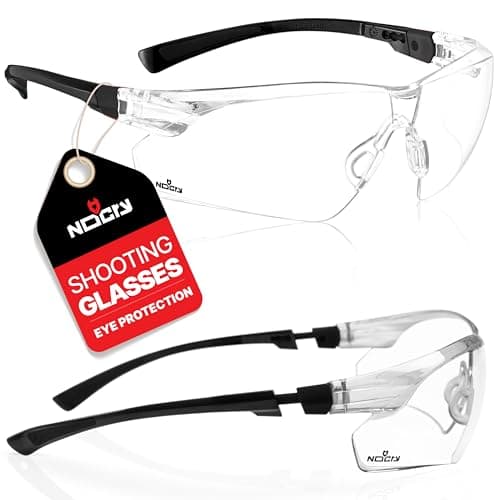
Clear, wraparound, anti-fog and ANSI Z87.1 rated. Clear is the correct hunting choice because legal shooting light is dim at both ends of the day, and every bit of tint you add is light you gave up.
Best for: The right default for hunting light9.1 - 2
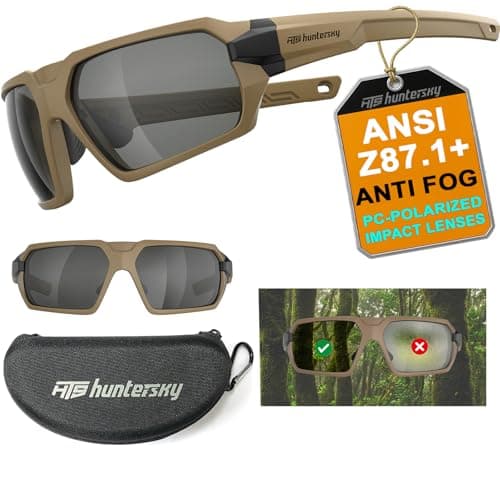
Polarized and ANSI Z87.1-plus rated, which is the combination worth paying for if you hunt open water, snow or high desert. Polarization cuts surface glare in a way tint alone does not.
Best for: Bright open country and water8.7 - 3
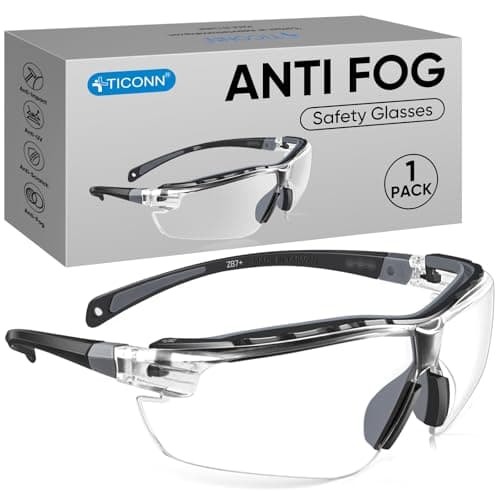
A plain ANSI Z87.1 anti-fog safety glass. Not styled for hunting and it does not need to be — buy two, leave one in the truck and one in the range bag, and you will never have an excuse to shoot without eye protection.
Best for: A spare pair for the truck and range bag8.3 - 4
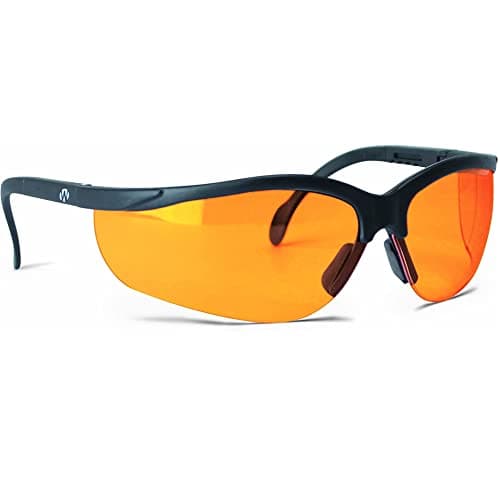
Half-frame polycarbonate with an adjustable rubber nose piece, from a brand better known for hearing protection. It costs less than a box of shells and it is vastly better than the nothing most beginners are wearing.
Best for: The cheapest way to stop being unprotected8.0
| # | Product | Best for | Score | Price |
|---|---|---|---|---|
| 1 | NoCry Clear Shooting Glasses Clear, wraparound, anti-fog and ANSI Z87.1 rated. Clear is the correct hunting choice because legal shooting light is dim at both ends of the day, and every bit of tint you add is light you gave up. | The right default for hunting light | 9.1 | $15.99View on Amazon#ad |
| 2 | HTS HUNTERSKY Q37 Polarized Tactical Shooting Glasses Polarized and ANSI Z87.1-plus rated, which is the combination worth paying for if you hunt open water, snow or high desert. Polarization cuts surface glare in a way tint alone does not. | Bright open country and water | 8.7 | $39.99View on Amazon#ad |
| 3 | TICONN Anti-Fog Safety Glasses A plain ANSI Z87.1 anti-fog safety glass. Not styled for hunting and it does not need to be — buy two, leave one in the truck and one in the range bag, and you will never have an excuse to shoot without eye protection. | A spare pair for the truck and range bag | 8.3 | $11.95View on Amazon#ad |
| 4 | Walker's Sport Polycarbonate Shooting Glasses Half-frame polycarbonate with an adjustable rubber nose piece, from a brand better known for hearing protection. It costs less than a box of shells and it is vastly better than the nothing most beginners are wearing. | The cheapest way to stop being unprotected | 8.0 | $5.99View on Amazon#ad |
Ask a room of hunters who wears eye protection while hunting and a small minority of hands go up. Ask the same room who wears it at the range and most hands go up. That gap is the entire subject of this page, because the eye injuries that happen in hunting do not respect the distinction — and unlike almost everything else that can go wrong in the field, an eye injury does not heal.
Eye protection is also the cheapest safety equipment in the sport. The clear ANSI-rated pair above costs less than a box of ammunition, and the arguments against wearing it are mostly habit.
Why hunters skip this, and why they should not
The usual reasoning is that hunting is not the range: you fire a few shots a season rather than a hundred in an afternoon, so the exposure is trivially small. That is true for the specific risk of a case rupture or a primer failure. It is also not the main risk.
The things that actually threaten a hunter's eyes are mundane:
- Branches, in the dark. Walking into a stand before dawn with a headlamp, pushing through brush, is the single most common way hunters injure an eye. A lens between your eye and a twig is the whole intervention.
- Ricochet and fragmentation. Shooting at a steel target, at a rock behind the animal, or at close range into hard ground can send fragments back. Shotgun pellets bounce more than people expect.
- Firearm malfunctions. Rare, and catastrophic when they occur. A ruptured case or a primer failure vents hot gas and brass rearward.
- Bow-specific failures. A dry fire, a delaminating limb, or a snapped string on a compound sends components back toward your face at speed. Bowhunters wear eye protection even less often than gun hunters and arguably need it more at the practice range.
- Wind, sun and blowing debris. Not injuries as such, but a watering eye behind a rifle scope at last light is a missed shot.
The honest use case is the range, not the stand
What ANSI Z87.1 actually means
Do shooting glasses need to be ANSI rated? Yes — it is the only marking that means anything. ANSI Z87.1 is the American National Standards Institute standard for occupational eye protection, and lenses carrying it have passed defined impact testing. Ordinary sunglasses, however expensive, have not been tested to that standard and can shatter into the eye they were supposed to protect.
| Marking | What it means | Relevance to hunting |
|---|---|---|
| Z87 | Meets basic impact requirements | The minimum. Fine for brush, debris and range use. |
| Z87+ | Meets high-impact (high-velocity) requirements | What you want if you shoot steel or want the higher margin. |
| No marking | Untested — a fashion lens | Not eye protection, regardless of price or brand. |
| MIL-PRF-32432 / MIL-PRF-31013 | U.S. military ballistic fragmentation standards | Higher than Z87+; genuinely more than hunting requires, but not a bad thing. |
| U6 / U-scale number | UV filtration level | Worth having for long days in open country. |
The marking is stamped on the lens or the temple arm. Check for it on the pair that arrives rather than trusting the listing text — this is a category where product descriptions occasionally claim a rating the item does not carry.
Polycarbonate is the material doing the work. It is the standard lens material for impact protection and blocks essentially all UV inherently. Glass lenses are more scratch resistant and a genuinely poor choice for shooting, because glass fails by shattering.
How we picked these
We filtered first on a verifiable ANSI Z87.1 marking, then on lens tint appropriate to hunting light, then on anti-fog treatment — which is not a luxury when you are walking in hard and then sitting still in cold air. We compared published specifications and manufacturer certification claims; we do not run impact testing and do not claim to. Our research method is published, and prices here are live and dated.
Lens tint: the choice that matters for hunting
This is where hunting diverges from target shooting, and where most people buy the wrong thing. Range shooters often want a tinted or colored lens to sharpen contrast against a target. Hunters shoot in legal shooting light — which begins before sunrise and ends after sunset — and in that light every bit of tint is light you have thrown away.
| Tint | What it does | Best for | Verdict |
|---|---|---|---|
| Clear | No light loss | Dawn, dusk, timber, overcast | The correct default for hunting. Buy this first. |
| Yellow / amber | Boosts contrast, slight brightening in flat light | Overcast days, fog, low-contrast conditions | A genuinely useful second lens. |
| Vermilion / rose | Sharpens orange and red against green | Clay targets, some upland shooting | Niche for hunting; excellent at a clays range. |
| Gray / smoke | Neutral darkening | Bright midday sun | Only for genuinely bright conditions. |
| Polarized | Cuts reflected surface glare | Water, snow, open desert | Excellent where relevant; can affect some LCD displays. |
If you buy one pair, buy clear. If you buy two, add yellow for flat overcast days. Polarized is worth it specifically for waterfowl and snow country, where glare is a genuine problem, and it is the wrong choice in timber.
Fit, fogging and glasses over glasses
Two practical problems come up constantly.
Fogging. You walk to your stand and sweat, then sit still in cold air, and your lenses fog at exactly the wrong moment. Anti-fog coatings help and wear out over time. The more reliable fixes are behavioral: walk slower than feels necessary so you arrive without sweating, and position the glasses slightly away from your face so air circulates rather than sealing them against your skin. A face covering that vents your breath downward rather than up is worth more than any coating.
Prescription glasses. If you wear glasses, you have three options: an over-the-glasses (OTG) safety frame designed to fit over them, prescription safety glasses with a Z87 rating, or contact lenses under standard shooting glasses. OTG frames are cheapest and bulkiest; prescription Z87 lenses are the best solution and cost the most. What does not work is assuming your prescription glasses are protection — most are not Z87 rated, and a shattered prescription lens is worse than no lens.
Fit matters for a reason specific to shooting: your eye needs to be in the same position relative to the scope or sights every time, and glasses that slide down your nose move it. Adjustable nose pieces and a snug wrap are worth paying a little for if you shoot a scoped rifle — the same consistency argument behind using a proper shooting rest when you zero.
When to actually wear them
A realistic standard, in descending order of how strongly we would argue for it:
- Always, at the range. No exceptions, for any weapon including a bow. This is where the shots are and where the failures happen.
- Always, when cleaning a firearm. Solvents and springs under tension. This one is genuinely overlooked and takes two seconds to fix — see our cleaning kit guide.
- Walking in and out in the dark. The branch-in-the-eye scenario, and the one most likely to actually happen to you.
- Waterfowl and dove hunting. Multiple hunters, low-angle shooting, pellets that can come down or bounce. Glare over water is a bonus reason.
- Sitting on stand. The weakest case, and where most hunters take them off. If a clear anti-fog lens does not cost you anything at last light, there is no reason to.
Add a pair to the safety block of the beginner gear checklist alongside hearing protection, a harness and a first aid kit. These are the four purchases that never appear on a skip list, because the downside is permanent and the cost is trivial.
The picks in detail
NoCry Clear Shooting Glasses
9.1/10Best for: The right default for hunting light
Clear, wraparound, anti-fog and ANSI Z87.1 rated. Clear is the correct hunting choice because legal shooting light is dim at both ends of the day, and every bit of tint you add is light you gave up.
- Rating
- ANSI Z87.1
- Lens
- Clear
- Coating
- Anti-fog, scratch resistant
- Best for
- Dawn and dusk hunting
- Clear lens costs you nothing in the low light you actually hunt in
- Anti-fog coating matters when you are breathing hard in cold air
- Wraparound shape stops debris from the side
- No glare reduction on bright open water or snow
- Anti-fog coatings wear — treat them as consumable over years
HTS HUNTERSKY Q37 Polarized Tactical Shooting Glasses
8.7/10Best for: Bright open country and water
Polarized and ANSI Z87.1-plus rated, which is the combination worth paying for if you hunt open water, snow or high desert. Polarization cuts surface glare in a way tint alone does not.
- Rating
- ANSI Z87.1+
- Lens
- Polarized
- Frame
- Wraparound
- Best for
- Waterfowl, snow, open country
- Polarization genuinely helps spotting birds over glare on water
- Higher impact rating than the basic Z87.1 mark
- Comfortable enough to wear for a full day
- Too dark for timber hunting at first and last light
- Polarization can interfere with some LCD rangefinder displays
TICONN Anti-Fog Safety Glasses
8.3/10Best for: A spare pair for the truck and range bag
A plain ANSI Z87.1 anti-fog safety glass. Not styled for hunting and it does not need to be — buy two, leave one in the truck and one in the range bag, and you will never have an excuse to shoot without eye protection.
- Rating
- ANSI Z87.1
- Lens
- Clear, anti-fog
- Style
- Utility safety glass
- Best for
- Spares and range use
- Cheap enough to buy several and scatter them where you need them
- Same ANSI rating as more expensive shooting-branded glasses
- Anti-fog included at this price
- Basic frame comfort — noticeable over a long session
- Generic fit works poorly over prescription glasses
Walker's Sport Polycarbonate Shooting Glasses
8.0/10Best for: The cheapest way to stop being unprotected
Half-frame polycarbonate with an adjustable rubber nose piece, from a brand better known for hearing protection. It costs less than a box of shells and it is vastly better than the nothing most beginners are wearing.
- Lens
- Polycarbonate
- Frame
- Half frame, adjustable nose piece
- Weight
- Very light
- Best for
- Range days on a tight budget
- Lowest price here by a clear margin
- Light enough that you forget you have them on
- Half-frame design keeps the upper sight picture clear
- Confirm the Z87 marking on the pair you receive
- Less side coverage than a full wraparound
Prices shown are from Amazon as of Sep 5, 2026 and change often — the button always goes to the current listing. Some links may earn us a commission at no extra cost to you. How this works.
Frequently asked questions
Do shooting glasses need to be ANSI rated?
Yes. ANSI Z87.1 is the only marking that certifies a lens has passed defined impact testing. Ordinary sunglasses, however expensive, have not been tested to that standard and can shatter into the eye they were meant to protect. Look for the Z87 or Z87+ stamp on the lens or temple arm.
What color lens is best for hunting?
Clear. Hunters shoot in legal shooting light, which begins before sunrise and ends after sunset, and every bit of tint is light you have given up. Yellow or amber is a useful second lens for flat overcast conditions, and polarized is worth it specifically for waterfowl, snow and open country.
Do I need eye protection if I only shoot a few times a season?
The volume of shots is not the main risk. Branches while walking to a stand in the dark, ricochets off hard ground or steel, and bow component failures at the practice range are the realistic threats. At minimum, wear eye protection every time you shoot for practice and every time you clean a firearm.
Can I wear shooting glasses over prescription glasses?
Yes, with an over-the-glasses (OTG) safety frame, though they are bulky. Prescription safety glasses with a Z87 rating are the better solution if you can afford them. Do not assume your normal prescription glasses are protection - most are not Z87 rated, and a shattered prescription lens is worse than none.
Sources
Keep reading
Not sure where to start?
The beginner gear checklist walks you through exactly what a first-season hunter needs — essentials first, nice-to-haves later, with one safe-default pick per category.