Gear · Comparison
Hunting vs Golf Rangefinder
They look identical, cost about the same, and use the same laser. They also prioritize opposite targets — which is exactly why the one in your golf bag can leave you holding a yardage for a branch instead of a deer.
Disclosure: Creek Cover is reader-supported. If you buy through our links we may earn a commission, at no extra cost to you. It never changes which pick we tell a beginner to start with. Full disclosure.
Quick picks at a glance
Tap a pick to read the full write-up, or the price button to check it on Amazon.
- 1
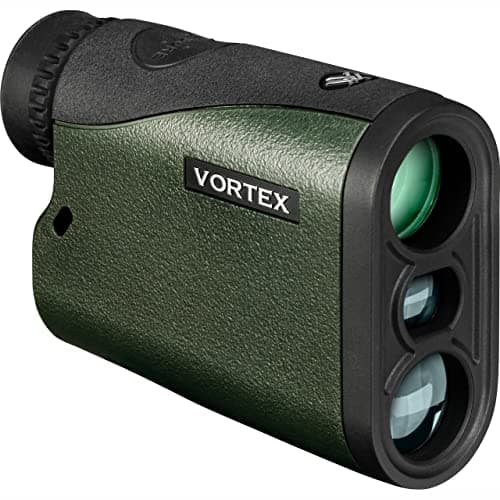
A selectable last-return target mode, HCD angle-compensated yardage, and an unlimited lifetime warranty at Vortex's entry price. If hunting is the priority, this is the unit — and it will still give you a yardage on the flag.
Best for: The hunting answer9.2 - 2
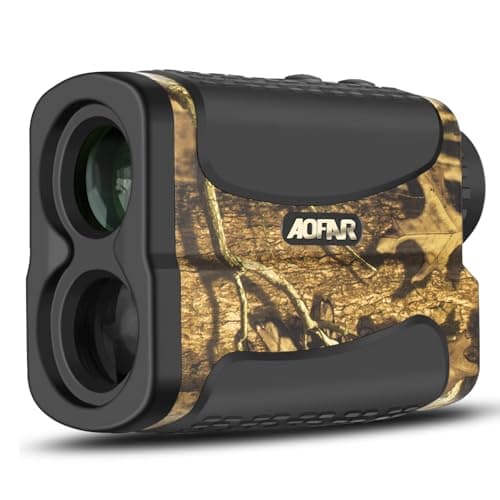
If you already own a golf rangefinder and resent buying a second device, this is the least painful way to do it right — archery-relevant modes at roughly the cost of a couple of dozen arrows.
Best for: Cheapest way to get a dedicated hunting unit8.4 - 3
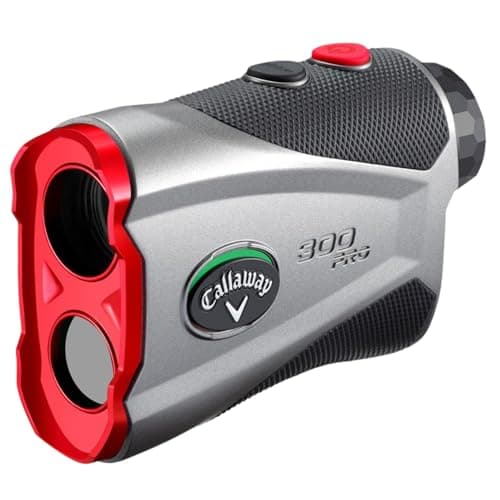
A proper golf unit with pin-lock, vibration confirmation, and a slope switch you can turn off for tournament play. It will range a deer in the open — it just was not designed to pick one out of brush.
Best for: If golf is the main sport8.6
| # | Product | Best for | Score | Price |
|---|---|---|---|---|
| 1 | Vortex Crossfire HD 1400 A selectable last-return target mode, HCD angle-compensated yardage, and an unlimited lifetime warranty at Vortex's entry price. If hunting is the priority, this is the unit — and it will still give you a yardage on the flag. | The hunting answer | 9.2 | $196.88View on Amazon#ad |
| 2 | AOFAR HX-700N If you already own a golf rangefinder and resent buying a second device, this is the least painful way to do it right — archery-relevant modes at roughly the cost of a couple of dozen arrows. | Cheapest way to get a dedicated hunting unit | 8.4 | $47.69View on Amazon#ad |
| 3 | Callaway Golf 300 Pro Slope A proper golf unit with pin-lock, vibration confirmation, and a slope switch you can turn off for tournament play. It will range a deer in the open — it just was not designed to pick one out of brush. | If golf is the main sport | 8.6 | $200.49View on Amazon#ad |
This question comes up constantly, and it is a fair one: a hunting rangefinder and a golf rangefinder are the same laser, the same class of optics, and often the same price. Plenty of people already own the golf one. So can you take it deer hunting? Yes, it will produce a number — but the two are tuned to prioritize opposite targets, and in the woods that difference is the whole ballgame. Here is what actually separates them, and how to decide without buying twice.
The short answer
A golf rangefinder is built to find the nearest reflective thing you point it at — the flagstick — and ignore everything behind it. A hunting rangefinder is built to do the reverse: see past the twigs, grass, and branches in the foreground and report the distance to the big dull thing behind them. Point a golf unit at a buck standing behind a screen of saplings and there is a very good chance the number on the display belongs to a sapling.
If you hunt in open country and never have brush between you and the animal, the golf unit will serve. If you hunt anywhere with cover — which is most of the eastern half of the country and essentially all bowhunting — buy the hunting unit. Our beginner rangefinder roundup ranks the options, and the Vortex Crossfire HD 1400 is the default answer.
First-target vs distant-target priority
This is the core technical difference and it has a name worth knowing. When a laser pulse goes out, it bounces off multiple objects and multiple returns come back. The device has to decide which return to believe.
First-target priority (golf) reports the closest return. That is exactly right when the closest thing is the pin and the far thing is a treeline you do not care about. Distant-target priority (hunting) reports the farthest strong return, filtering out the near clutter. That is exactly right when the near clutter is a branch and the far object is the animal you are about to shoot at. Some hunting units add a dedicated brush or scan mode that makes this behavior even more aggressive.
Why this matters more for bowhunters
Slope isn’t quite the same as angle compensation
Both categories advertise a feature that corrects for shooting up or down a hill, and the underlying trigonometry is identical: gravity acts on the horizontal component of the flight path, so a steep 40-yard shot plays shorter than 40 yards. Golf calls this slope. Hunting brands call it HCD, angle-modified range, or TBR.
The practical difference is that golf’s slope is usually switchable and often switched off, because slope-enabled devices are illegal in tournament play. Manufacturers ship them with a physical switch or a clearly-visible indicator so a playing partner can confirm it is disabled. If you borrow a golf rangefinder for hunting and the slope switch is off — which is how a competitive golfer stores it — you are getting raw line-of-sight distance and no correction at all from a treestand. Hunting units simply leave the compensation on.
| Feature | Golf rangefinder | Hunting rangefinder |
|---|---|---|
| Target priority | First target (nearest, pin-lock) | Distant target (past brush) |
| Angle correction | Slope — switchable, often disabled for tournaments | Always on (HCD / AMR / TBR) |
| Optimized distance band | 80-250 yards to a reflective flag | 15-400+ yards to a dull, non-reflective animal |
| Confirmation feedback | Vibration/jolt when the pin locks | Scan mode and brush filtering |
| Finish | Bright colors, white/red housings | Camo or matte black, low-glare |
| Typical warranty | 1-2 years | Often lifetime on the hunting-optics brands |
The differences nobody mentions
Beyond the laser behavior, three practical things separate them in the field. Color and glare: golf units are frequently white, silver, or bright red, because nothing on a fairway cares. A flash of white in a treestand at first light does care. Display type: many golf units use a black LCD readout that is perfectly legible against bright turf and nearly invisible against dark timber at dawn, which is precisely when you need to read it; hunting units more often use a red illuminated display for exactly this reason. Weatherproofing: golf gets canceled for weather, hunting does not, so hunting units generally carry more serious water sealing.
None of those three is a dealbreaker on its own. Stacked together with target priority, they explain why the two categories exist despite sharing a sensor.
When the golf unit is genuinely fine
We are not going to tell you to spend money you do not need to spend. Use the golf rangefinder you already own if all of the following are true: you hunt open ground — agricultural fields, prairie, clear-cuts — with no brush between you and the animal; you are hunting from the ground or a low stand where angle error is small; you can confirm the slope function is switched on; and you are shooting a rifle, where a few yards of error is survivable. Under those conditions it is a perfectly good tool and buying a second device is waste.
Buy the hunting unit if you are bowhunting at all, if you hunt timber or brushy edges, if you hunt from an elevated stand with steep shot angles, or if you would rather not be the person discovering the difference with a deer standing broadside at 40 yards.
Which should a beginner buy?
If you do not already own either: buy the hunting rangefinder. It costs about the same, it works fine for casual golf (it will happily range a flagstick — it just is not tournament-legal with compensation enabled), and it does the harder job properly. The reverse is not true; a golf unit is a compromised hunting tool no matter how good it is at golf.
If you already own the golf unit and hunt open country with a rifle, take it out this season and see whether it frustrates you. If you already own it and are bowhunting timber, add the AOFAR HX-700N — it costs less than a dozen arrows and removes the problem entirely.
Either way, a rangefinder sits in the nice-to-have column of the beginner gear checklist, behind binoculars, boots, and your weapon. If money is tight this season, that ordering still holds — and if you are bowhunting, the draw weight you can actually shoot well matters more than any electronic accessory.
The picks in detail
Vortex Crossfire HD 1400
9.2/10Best for: The hunting answer
A selectable last-return target mode, HCD angle-compensated yardage, and an unlimited lifetime warranty at Vortex's entry price. If hunting is the priority, this is the unit — and it will still give you a yardage on the flag.
- Target modes
- Normal, First or Last return
- Angle compensation
- Yes — HCD mode
- Warranty
- Unlimited, unconditional lifetime VIP
- Last-return mode reads a dull animal behind cover
- HCD angle-compensated yardage from a stand
- Unlimited, fully transferable lifetime warranty
- Not tournament-legal for competitive golf with HCD active
- 5x magnification, where the open-country hunting units give you 6x
AOFAR HX-700N
8.4/10Best for: Cheapest way to get a dedicated hunting unit
If you already own a golf rangefinder and resent buying a second device, this is the least painful way to do it right — archery-relevant modes at roughly the cost of a couple of dozen arrows.
- Max range
- 700 yards
- Modes
- Range, speed, scan
- Best for
- Bow distances
- Very inexpensive second device
- Fast reads at archery ranges
- Case and battery included
- Basic optics
- Limited support versus the big brands
Callaway Golf 300 Pro Slope
8.6/10Best for: If golf is the main sport
A proper golf unit with pin-lock, vibration confirmation, and a slope switch you can turn off for tournament play. It will range a deer in the open — it just was not designed to pick one out of brush.
- Priority
- First target (pin lock)
- Slope
- Switchable on/off
- Best for
- Golf first, occasional field use
- Excellent at its actual job
- Slope switch keeps it tournament legal
- Fast confirmation feedback
- First-target priority reads the brush, not the animal
- No hunting-specific brush or scan behavior
Prices shown are from Amazon as of Sep 5, 2026 and change often — the button always goes to the current listing. Some links may earn us a commission at no extra cost to you. How this works.
Frequently asked questions
Can I use a golf rangefinder for hunting?
You can, but it is optimized for the opposite job. Golf units use first-target priority to lock onto the nearest reflective object — the flag — so in the woods they often report the distance to a branch instead of the animal behind it. In open country with a rifle and slope switched on, a golf unit works fine. For bowhunting or brushy timber, buy a hunting unit.
What is the difference between a hunting and golf rangefinder?
Target priority is the main one: golf units report the nearest return (the pin), hunting units report the farthest strong return so they see past brush to the animal. Hunting units also leave angle compensation permanently on, use low-glare camo or matte finishes, favor illuminated displays for low light, and typically carry heavier weather sealing.
Is slope on a golf rangefinder the same as angle compensation?
The maths is the same — both correct line-of-sight distance to the horizontal distance gravity actually acts on. The difference is that golf slope is switchable and frequently switched off, because slope-enabled devices are not legal in tournament play. Hunting rangefinders leave the compensation enabled, so you always get the number to hold for.
Can I use a hunting rangefinder for golf?
Yes for casual rounds — it will range a flagstick without trouble, though distant-target priority means it may prefer a tree behind the green, and it is not tournament-legal with angle compensation active. If you need one device and hunt seriously, the hunting unit is the better compromise of the two.
Sources
Keep reading
Not sure where to start?
The beginner gear checklist walks you through exactly what a first-season hunter needs — essentials first, nice-to-haves later, with one safe-default pick per category.