Gear · Roundup
The Best Hunting Rangefinders for Beginners
A rangefinder is the cheapest way to stop guessing distance — the single biggest cause of a missed or wounded animal. Here's the one to buy first, and why the yardage number on the box is the spec that matters least.
Disclosure: Creek Cover is reader-supported. If you buy through our links we may earn a commission, at no extra cost to you. It never changes which pick we tell a beginner to start with. Full disclosure.
Quick picks at a glance
Tap a pick to read the full write-up, or the price button to check it on Amazon.
- 1
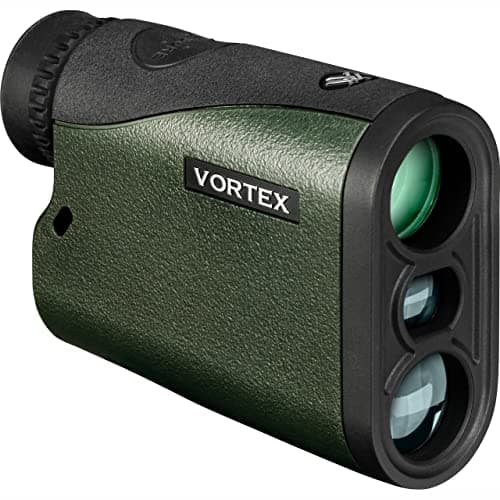
Everything a first-season hunter needs and nothing they don't: HD glass, a red display you can read against dark timber, HCD angle-compensated yardage, and the same no-questions lifetime warranty Vortex puts on gear costing five times as much.
Best for: The best all-around beginner rangefinder9.2 - 2
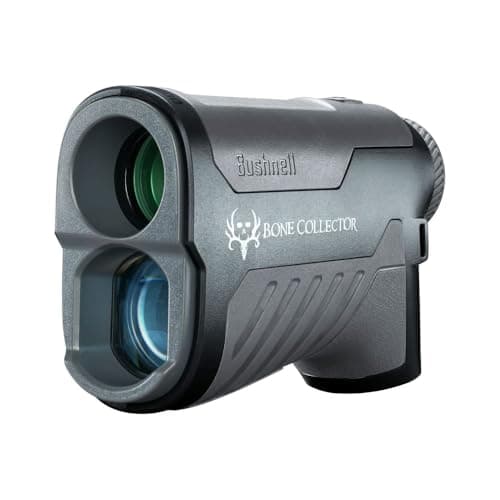
A stripped-back, genuinely easy rangefinder from a name that has been making them for decades. One button, a clear read, and a compact body that disappears in a jacket pocket.
Best for: Best simple one-button unit8.8 - 3
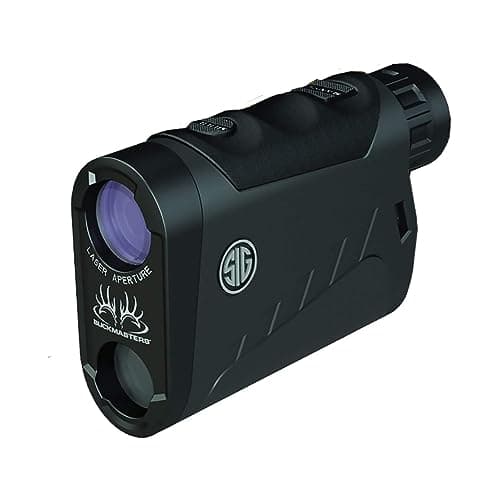
The one to buy if your hunting happens across canyons and crop fields rather than in timber — 1,500 yards of reach with angle-modified range, at a price that still reads as a beginner tool.
Best for: Best for open-country rifle hunting8.9 - 4
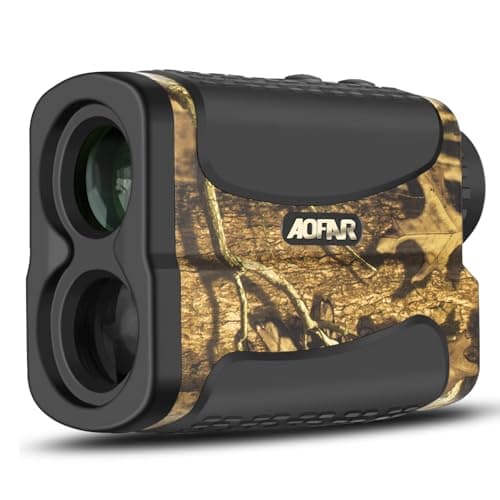
The cheapest unit here we'd actually hunt with. It has the archery-relevant modes and reads fast inside 60 yards, which is the only distance band a bowhunter cares about.
Best for: Best true budget pick for bowhunters8.4 - 5
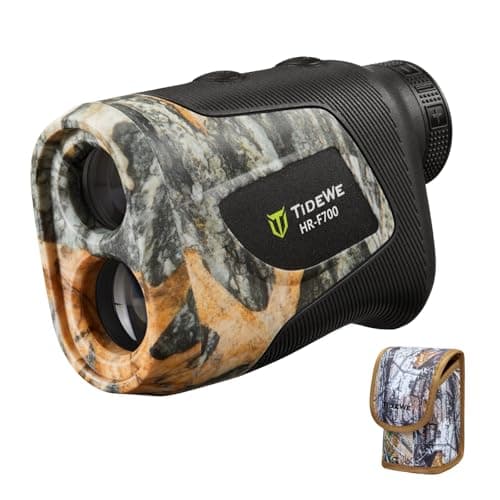
A rechargeable battery instead of a proprietary coin cell is a bigger quality-of-life win than most beginners expect — no scrambling for a CR2 the night before opening day.
Best for: Best rechargeable budget unit8.3 - 6
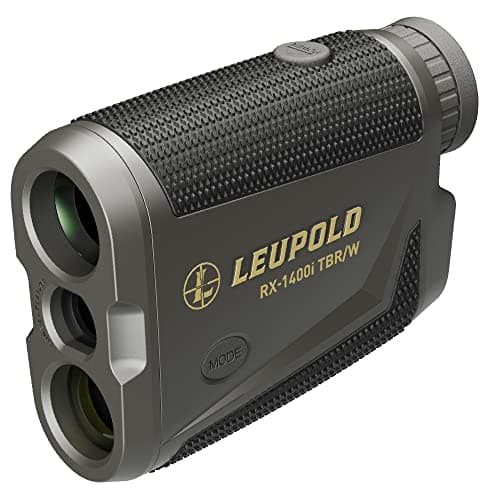
If you already know you're staying with this, the RX-1400i's true ballistic range with wind is the feature that changes shots rather than just informing them. Overkill for season one, excellent for season three.
Best for: The upgrade you grow into9.0
| # | Product | Best for | Score | Price |
|---|---|---|---|---|
| 1 | Vortex Crossfire HD 1400 Everything a first-season hunter needs and nothing they don't: HD glass, a red display you can read against dark timber, HCD angle-compensated yardage, and the same no-questions lifetime warranty Vortex puts on gear costing five times as much. | The best all-around beginner rangefinder | 9.2 | $196.88View on Amazon#ad |
| 2 | Bushnell BoneCollector 1000 A stripped-back, genuinely easy rangefinder from a name that has been making them for decades. One button, a clear read, and a compact body that disappears in a jacket pocket. | Best simple one-button unit | 8.8 | $99.88View on Amazon#ad |
| 3 | SIG SAUER Buckmasters 1500 The one to buy if your hunting happens across canyons and crop fields rather than in timber — 1,500 yards of reach with angle-modified range, at a price that still reads as a beginner tool. | Best for open-country rifle hunting | 8.9 | $125.94View on Amazon#ad |
| 4 | AOFAR HX-700N The cheapest unit here we'd actually hunt with. It has the archery-relevant modes and reads fast inside 60 yards, which is the only distance band a bowhunter cares about. | Best true budget pick for bowhunters | 8.4 | $47.69View on Amazon#ad |
| 5 | TideWe Camo Rangefinder 700Y A rechargeable battery instead of a proprietary coin cell is a bigger quality-of-life win than most beginners expect — no scrambling for a CR2 the night before opening day. | Best rechargeable budget unit | 8.3 | $64.99View on Amazon#ad |
| 6 | Leupold RX-1400i TBR/W Gen 2 If you already know you're staying with this, the RX-1400i's true ballistic range with wind is the feature that changes shots rather than just informing them. Overkill for season one, excellent for season three. | The upgrade you grow into | 9.0 | $199.99View on Amazon#ad |
A rangefinder is the cheapest fix for the most expensive mistake in hunting. Almost every beginner who misses or wounds an animal does it because they guessed the distance and guessed wrong — the deer that felt like 30 yards was 47, the arrow sailed under it, and the season turned into a story about the one that got away. A hundred-dollar tool removes that variable completely. For most first-season hunters the right answer is the Vortex Crossfire HD 1400. Here is the reasoning, and the specs the box wants you to care about that genuinely don’t matter.
How we picked these
We compiled the published specifications for each unit — maximum reflective range, stated accuracy, magnification, angle-compensation mode, power source, and warranty terms — then weighted them against what a beginner actually does with a rangefinder: read a deer-sized, non-reflective target somewhere between 15 and 300 yards, quickly, in bad light, with cold hands. We do not run an optics bench and we have not chronographed these units; our process is laid out in full on the how we research & pick page. Prices on this page are pulled live and dated, never typed in by hand.
Warranty carried real weight in the ranking. A rangefinder is a small electronic device that lives in a pocket, gets rained on, and eventually gets dropped on a rock. Two of the picks here are backed by warranties that replace the unit no matter whose fault the damage was, and for a beginner buying their first piece of hunting electronics, that removes most of the risk from the decision.
Do you actually need a rangefinder?
Honestly: not on day one. Our beginner gear checklist puts a rangefinder in the nice-to-have column, behind a weapon, boots, a knife, and binoculars. If your budget only stretches to one optic this season, buy the binoculars — you will use them a hundred times more often, and they help you find animals rather than just measure them.
But the rangefinder moves up the list fast in three situations. First, if you are bowhunting, where the difference between 30 and 40 yards is the difference between a clean kill and a gut shot. Second, if you hunt open country, where the human eye is famously terrible at judging distance across a field or canyon with nothing in between for scale. Third, if you hunt from an elevated stand, where the geometry genuinely tricks you. In flat timber with a 100-yard maximum sight line, you can get through a first season without one. Everywhere else, it earns its keep in a single hunt.
The max-range number is marketing
Every rangefinder box leads with a big number — 850, 1,000, 1,500, 1,800 yards. That number is the maximum reflective range: how far the unit can read a large, flat, highly-reflective object like a barn roof or a road sign under ideal conditions. It is not how far it will read a deer.
The practical rule is that a rangefinder’s usable distance on a deer-sized, non-reflective, brown target is roughly a third to a half of the headline number, and less in rain, fog, or bright glare. An 850-yard unit will comfortably read animals well past 300 yards. Since the overwhelming majority of hunters should not be shooting past 300 yards — and beginners absolutely should not — the headline spec stops mattering almost immediately. Paying double for 1,800 yards buys you capability at distances where you have no business pulling the trigger.
The number that actually matters
Angle compensation: the one feature to insist on
Here is the piece of physics nobody explains to new hunters, and it is the single best reason to buy a rangefinder at all. When you shoot down at a steep angle from a treestand or across a canyon, gravity only acts on the horizontal portion of the flight path, not the line-of-sight distance your eye measures. Shoot at a deer 40 yards away on a steep downward angle and the arrow behaves as though the animal is closer to 34 yards. Aim for 40 and you shoot over its back.
An angle-compensating rangefinder — Vortex calls it HCD, SIG calls it Angle Modified Range, Leupold calls it TBR — does that trigonometry for you and displays the number you should actually hold for. It is the difference between a tool that reports a fact and a tool that tells you what to do. For anyone hunting from a stand or in hill country, treat this as non-negotiable, and note that the cheapest units in this category often skip it.
| Situation | Does angle compensation matter? | Why |
|---|---|---|
| Ground blind, flat timber | Barely | Line-of-sight and horizontal distance are nearly identical |
| Treestand, 15-25 ft up, shots inside 30 yd | Yes, mildly | A few yards of error — enough to clip a shoulder instead of lungs |
| Treestand, steep shot angles | Critically | Error grows with angle; easy to shoot clean over an animal |
| Hill or canyon country with a rifle | Critically | Long shots plus steep angles compound the error fast |
What changes if you’re shooting a bow
Bowhunters and rifle hunters want almost opposite things from a rangefinder, which is why the rankings above are not a single line from cheap to expensive. If you are shooting a compound bow or a crossbow, your entire world is 15 to 60 yards. What you need is a unit that locks on instantly at close range, reads through the branches between you and the animal rather than ranging the branch, and gives you the angle-compensated number. Maximum range is irrelevant. The AOFAR HX-700N is a perfectly serious bowhunting tool at a fraction of the cost of the long-range units.
Rifle hunters have the opposite problem: your shot window might be 250 yards across a bean field, so reach and magnification matter, and ballistic output starts to be genuinely useful rather than a gimmick. That is the case for the SIG Buckmasters 1500 or, if you have committed to the sport, the Leupold RX-1400i. Still deciding which weapon you’re starting with? Read bow vs crossbow or the beginner rifle guide first — the rangefinder choice follows the weapon, not the other way around.
How to actually use it in the field
The mistake beginners make is ranging the animal. By the time a deer is standing in your shooting lane, you have a few seconds and any extra movement is what gets you busted. The right habit is to range your landmarks before anything shows up. When you settle into a stand or blind, spend two minutes ranging the fence post, the fallen log, the edge of the thicket, the third tree down the trail. Note the numbers. Now when a deer steps out beside the log you already know it is 32 yards and you never had to move.
Two more practical habits. Keep the rangefinder on a short tether or in the same pocket every single time, so finding it is automatic in the dark. And range in scan mode when you can — holding the button while panning gives continuous readings and helps you tell the difference between the brush at 22 yards and the animal behind it at 38. If your unit has a brush or distant-target mode, learn which one your habitat calls for before opening day, not during it.
What to skip
Skip rangefinding binoculars for now — they solve a real problem but cost more than most beginners spend on their entire kit, and a separate binocular plus rangefinder does the same job for a quarter of the money. Skip the 1,800-yard-plus units unless you genuinely hunt open western country. Skip anything without a stated accuracy figure. And skip the temptation to substitute a golf rangefinder you already own without reading that comparison first — the two look identical and behave very differently in the woods.
Add whatever you buy to the beginner gear checklist so it lands in one coherent kit, and pair it with binoculars— the optic you’ll actually reach for first.
The picks in detail
Vortex Crossfire HD 1400
9.2/10Best for: The best all-around beginner rangefinder
Everything a first-season hunter needs and nothing they don't: HD glass, a red display you can read against dark timber, HCD angle-compensated yardage, and the same no-questions lifetime warranty Vortex puts on gear costing five times as much.
- Max range
- 1,400 yd reflective, 750 yd on game
- Angle compensation
- Yes — HCD mode (LOS also selectable)
- Warranty
- Unlimited, unconditional lifetime VIP
- Weight
- 4.8 oz
- VIP warranty is unlimited, unconditional and fully transferable
- HCD angle compensation — the feature that matters from a treestand
- First and Last target modes read past brush instead of ranging it
- Roughly double the price of the budget units below
- 5x magnification, where the open-country picks give you 6x
Bushnell BoneCollector 1000
8.8/10Best for: Best simple one-button unit
A stripped-back, genuinely easy rangefinder from a name that has been making them for decades. One button, a clear read, and a compact body that disappears in a jacket pocket.
- Max range
- 1,000 yards
- Controls
- Single button
- Size
- Compact, pocketable
- Best for
- Absolute simplicity
- About as simple as a rangefinder gets
- Small enough to forget you're carrying it
- Long-established brand support
- No angle compensation on the base model
- Glass is a step below the Vortex
SIG SAUER Buckmasters 1500
8.9/10Best for: Best for open-country rifle hunting
The one to buy if your hunting happens across canyons and crop fields rather than in timber — 1,500 yards of reach with angle-modified range, at a price that still reads as a beginner tool.
- Max range
- 1,500 yards
- Magnification
- 6x22mm
- Angle compensation
- Angle Modified Range
- Best for
- Open country, rifle
- Real reach for western/plains hunting
- 6x glass helps you find the animal in the display
- Angle-compensated readings
- More rangefinder than a timber hunter needs
- Bulkier than the pocket units
AOFAR HX-700N
8.4/10Best for: Best true budget pick for bowhunters
The cheapest unit here we'd actually hunt with. It has the archery-relevant modes and reads fast inside 60 yards, which is the only distance band a bowhunter cares about.
- Max range
- 700 yards
- Modes
- Range, speed, scan
- Water resistance
- Waterproof body
- Best for
- Bow ranges on a budget
- Genuinely inexpensive
- Fast, reliable reads at bow distances
- Case and battery included
- Struggles on non-reflective targets at long range
- Support is not in the Vortex/Bushnell class
TideWe Camo Rangefinder 700Y
8.3/10Best for: Best rechargeable budget unit
A rechargeable battery instead of a proprietary coin cell is a bigger quality-of-life win than most beginners expect — no scrambling for a CR2 the night before opening day.
- Max range
- 700 yards
- Power
- Rechargeable battery
- Magnification
- 6x
- Best for
- Never hunting a dead battery
- Rechargeable — no odd battery to source
- Camo finish and included case
- Multi-mode display
- Optics are basic
- Charging is one more thing to remember
Leupold RX-1400i TBR/W Gen 2
9.0/10Best for: The upgrade you grow into
If you already know you're staying with this, the RX-1400i's true ballistic range with wind is the feature that changes shots rather than just informing them. Overkill for season one, excellent for season three.
- Max range
- 1,400 yards
- Ballistics
- TBR/W with Flightpath
- Build
- Compact, rugged
- Best for
- Rifle hunters who reload data
- Genuinely useful ballistic output
- Flightpath shows arrow/bullet clearance
- Compact for the capability
- Roughly double the entry picks
- The extra features do nothing for a 25-yard treestand shot
Prices shown are from Amazon as of Sep 5, 2026 and change often — the button always goes to the current listing. Some links may earn us a commission at no extra cost to you. How this works.
Frequently asked questions
What is the best hunting rangefinder for a beginner?
The Vortex Crossfire HD 1400 is our top beginner pick: fast, HCD angle-compensated readings out to further than most people should shoot, backed by Vortex's unlimited, unconditional VIP warranty. Bowhunters on a tight budget can drop to the AOFAR HX-700N without giving up anything that matters inside 60 yards.
How many yards do I need on a hunting rangefinder?
Far fewer than the box implies. A rangefinder's advertised maximum is measured against large reflective targets; on a deer-sized animal expect roughly a third to a half of that number. An 850-yard unit reads game well past 300 yards, which covers almost every ethical hunting shot. Extra yardage is only worth paying for in open western country.
Do I need angle compensation on a hunting rangefinder?
Yes, if you hunt from a treestand or in hilly country. Gravity acts on the horizontal component of the shot, not your line-of-sight distance, so a steep 40-yard shot behaves like a shorter one and an uncompensated reading makes you shoot high. Angle-compensating units (Vortex HCD, SIG AMR, Leupold TBR) display the number you should actually hold for.
Can I use a golf rangefinder for hunting?
It will give you a number, but it is optimized for the opposite job: golf units lock onto the nearest reflective object (the flag) and many disable slope compensation for tournament legality. Hunting units are built to read a dull brown animal behind brush and to give angle-compensated yardage. See our hunting vs golf rangefinder comparison for when the crossover works.
Is a rangefinder worth it for bowhunting?
It is the highest-value accessory a bowhunter can add. At archery distances a ten-yard misjudgment is the difference between a clean kill and a wounded animal, and pin gaps get unforgiving past 30 yards. Range your landmarks before game arrives so you never have to move when it matters.
Sources
Keep reading
Not sure where to start?
The beginner gear checklist walks you through exactly what a first-season hunter needs — essentials first, nice-to-haves later, with one safe-default pick per category.