Guides · Roundup
The Best Hunting Books for Beginners
A $17 book will teach you more about your first season than $500 of gear will. These are the four worth owning, and the order to read them in.
Disclosure: Creek Cover is reader-supported. If you buy through our links we may earn a commission, at no extra cost to you. It never changes which pick we tell a beginner to start with. Full disclosure.
Quick picks at a glance
Tap a pick to read the full write-up, or the price button to check it on Amazon.
- 1
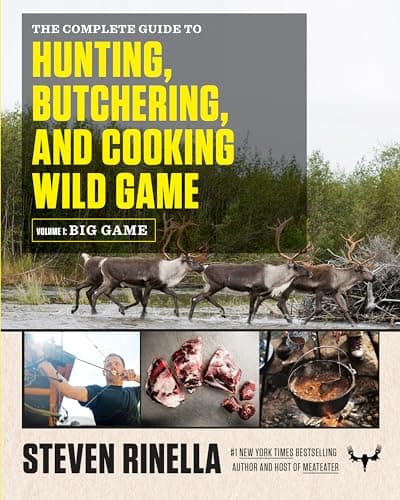
The reference that closed the biggest gap in beginner hunting literature: what to do with the animal. Hunting strategy, field dressing, and a genuinely thorough butchering section with photographs of every cut. If you buy one hunting book, buy this one.
Best for: The one book to own first9.5 - 2
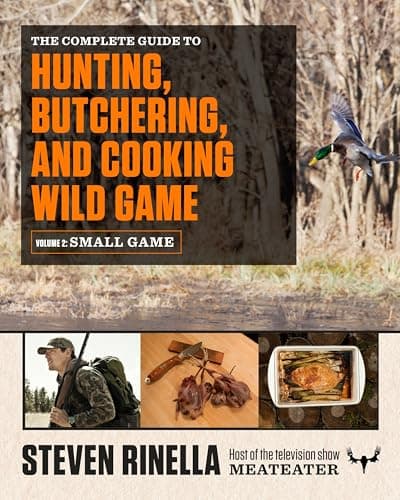
The companion volume, and arguably the more useful one for an actual beginner — because squirrel, rabbit and upland birds are where most people should start hunting, and almost nothing else covers them at this depth.
Best for: The beginner starting on small game9.2 - 3
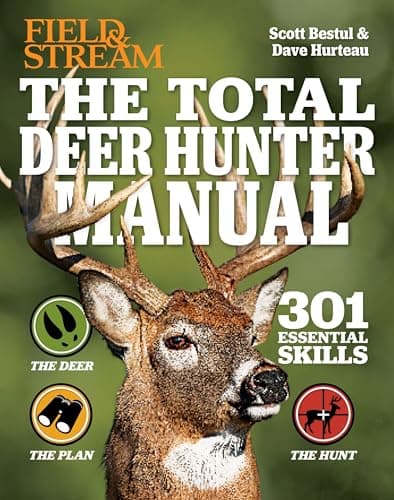
301 short, illustrated deer hunting skills — stand placement, reading sign, rut tactics, tracking. The format is its strength for a beginner: you can absorb five useful things in ten minutes rather than committing to a chapter.
Best for: Deer-specific tactics in bite-size pieces8.8 - 4
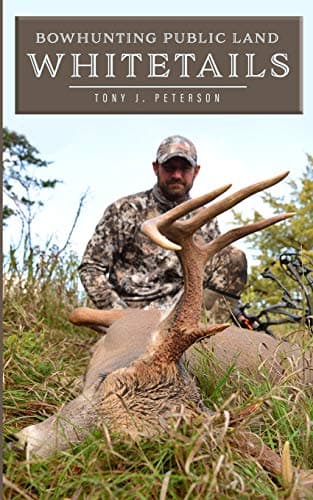
Almost all deer hunting literature quietly assumes you have a farm to hunt. This one does not, which makes it uniquely relevant to the beginner reality of pressured public ground — and to this site's bow-first readers in particular.
Best for: The beginner with no private land8.6
| # | Product | Best for | Score | Price |
|---|---|---|---|---|
| 1 | The Complete Guide to Hunting, Butchering, and Cooking Wild Game: Volume 1 — Big Game The reference that closed the biggest gap in beginner hunting literature: what to do with the animal. Hunting strategy, field dressing, and a genuinely thorough butchering section with photographs of every cut. If you buy one hunting book, buy this one. | The one book to own first | 9.5 | $16.86View on Amazon#ad |
| 2 | The Complete Guide to Hunting, Butchering, and Cooking Wild Game: Volume 2 — Small Game and Fowl The companion volume, and arguably the more useful one for an actual beginner — because squirrel, rabbit and upland birds are where most people should start hunting, and almost nothing else covers them at this depth. | The beginner starting on small game | 9.2 | $15.61View on Amazon#ad |
| 3 | The Total Deer Hunter Manual (Field & Stream) 301 short, illustrated deer hunting skills — stand placement, reading sign, rut tactics, tracking. The format is its strength for a beginner: you can absorb five useful things in ten minutes rather than committing to a chapter. | Deer-specific tactics in bite-size pieces | 8.8 | $29.00View on Amazon#ad |
| 4 | Bowhunting Public Land Whitetails Almost all deer hunting literature quietly assumes you have a farm to hunt. This one does not, which makes it uniquely relevant to the beginner reality of pressured public ground — and to this site's bow-first readers in particular. | The beginner with no private land | 8.6 | $12.95View on Amazon#ad |
Hunting is unusually badly served by beginner literature. Most of what gets recommended is either a celebrity memoir, a regional deer-camp nostalgia piece, or a technical volume aimed at someone who has already hunted for a decade. Very little of it answers the actual beginner questions: where do I stand, how do I know if I hit it, and what on earth do I do with a dead animal at nine o'clock at night.
These four do. Start with the Complete Guide, Volume 1 above if you are hunting big game, or Volume 2 if you are sensibly starting on small game.
How we picked these
We looked for books that teach a beginner a process they can follow without a mentor standing next to them, since that describes most people arriving at this site. Three filters did the work: does it cover what happens after the shot, is it written for someone with no hunting family, and is it specific enough to act on rather than atmospheric. That deliberately excludes a lot of well-loved hunting writing, which is worth reading for other reasons but will not get you through opening day. Our research method is published, and prices here are live and dated.
The order to read them in
| When | Read | Why then |
|---|---|---|
| Before you buy anything | Complete Guide, Volume 1 or 2 — the hunting chapters | It frames the whole activity around meat, which changes what gear you think you need. |
| While you wait for the season | The Total Deer Hunter Manual | Tactical detail is easiest to absorb in small pieces over weeks. |
| Once you know where you will hunt | Bowhunting Public Land Whitetails | Access-specific advice only makes sense once you have ground in mind. |
| The week you kill your first animal | Complete Guide — the butchering section | You will re-read this with the animal in front of you. Keep it accessible. |
Buy the physical copy of the butchering book
What books teach that videos do not
Hunting YouTube is genuinely useful and we are not going to pretend otherwise — for a physical skill like nocking an arrow or setting a climbing stand, video wins outright. But it has two structural weaknesses for a beginner, and books solve both.
The first is selection bias. Video is optimized for success footage. You watch fifty clips of animals falling and internalize a success rate that does not exist, which is why so many first-season hunters conclude they are uniquely bad at this in November. A book has room to tell you that most public-land hunters do not fill a tag, and that this is normal.
The second is sequence. Video teaches isolated moments. A book teaches the order — scout, then get access, then set up for a specific wind, then wait, then track, then cool the meat. Beginners overwhelmingly fail at sequencing rather than at any individual skill, which is the same reason our license guide is written as an ordered list rather than a set of facts.
What to skip
Skip the memoirs, for now. Hunting has a strong literary tradition and some of it is excellent, but a beautifully written account of an elk hunt in Montana will not help you find a place to sit in a county park. Read those in the off-season, once you have something to compare them to.
Skip the encyclopedic regional volumes. Books organized around exhaustive coverage of every species in a region are reference material for people who already hunt. As a beginner you need depth on one animal, not breadth across forty.
Skip anything promising a system. Books built around a proprietary method with a trademarked name are usually selling a seminar. The fundamentals of hunting are not secret and are not owned by anyone.
Skip buying more than two at once. The failure mode here is the same as with gear: buying the whole recommended stack, reading none of it, and concluding hunting is complicated. It is the reading equivalent of the mistakes in our what not to buy guide.
The free reading that beats most books
Two documents will teach you more that is immediately actionable than any book on this page, and both are free.
The first is your state's current hunting regulations digest. It is dry, and it contains the zone boundaries, season dates, bag limits, legal weapons, shooting hours and tagging procedures that actually govern your hunt. Beginners routinely read three books and never read the one document that could get them cited. Read it, then read the section for your specific zone again.
The second is your hunter education course material. Even where you are exempt from the requirement, the coursework covers safety, shot placement, wildlife identification and ethics with more rigor than most commercial books. Our licensing guide covers how to find your state's approved course.
Once you have read both and picked a book from this page, the next step is the gear, and the honest short list is on the beginner gear checklist — ordered by what matters rather than by what sells.
The picks in detail
The Complete Guide to Hunting, Butchering, and Cooking Wild Game: Volume 1 — Big Game
9.5/10Best for: The one book to own first
The reference that closed the biggest gap in beginner hunting literature: what to do with the animal. Hunting strategy, field dressing, and a genuinely thorough butchering section with photographs of every cut. If you buy one hunting book, buy this one.
- Covers
- Deer, elk, and other big game
- Strength
- Field-to-table process
- Format
- Illustrated reference
- Best for
- Every first-season big game hunter
- The butchering photography is worth the price on its own
- Treats meat care as the point of hunting, not an afterthought
- Written for someone with no hunting family to ask
- Big game only — small game and birds are in Volume 2
- A reference, not a page-turner; read it in sections
The Complete Guide to Hunting, Butchering, and Cooking Wild Game: Volume 2 — Small Game and Fowl
9.2/10Best for: The beginner starting on small game
The companion volume, and arguably the more useful one for an actual beginner — because squirrel, rabbit and upland birds are where most people should start hunting, and almost nothing else covers them at this depth.
- Covers
- Small game, upland birds, waterfowl
- Strength
- The hunts beginners can access
- Format
- Illustrated reference
- Best for
- Small game and bird hunters
- Covers the quarry a beginner can realistically access first
- Cleaning and cooking instructions for birds are hard to find elsewhere
- Pairs naturally with Volume 1 rather than repeating it
- Less useful if you are certain you will only hunt deer
- Same reference structure — not designed for cover-to-cover reading
The Total Deer Hunter Manual (Field & Stream)
8.8/10Best for: Deer-specific tactics in bite-size pieces
301 short, illustrated deer hunting skills — stand placement, reading sign, rut tactics, tracking. The format is its strength for a beginner: you can absorb five useful things in ten minutes rather than committing to a chapter.
- Covers
- Whitetail tactics and skills
- Format
- 301 illustrated entries
- Depth
- Broad rather than deep
- Best for
- First whitetail season
- Skim-friendly format suits someone learning around a job
- Heavily illustrated, which matters for sign-reading and shot placement
- Covers the tactical layer the field-to-table books skip
- Breadth over depth — no single topic is exhaustive
- Whitetail only
Bowhunting Public Land Whitetails
8.6/10Best for: The beginner with no private land
Almost all deer hunting literature quietly assumes you have a farm to hunt. This one does not, which makes it uniquely relevant to the beginner reality of pressured public ground — and to this site's bow-first readers in particular.
- Covers
- Public land bowhunting
- Focus
- Pressured deer, mobile hunting
- Format
- Narrative instruction
- Best for
- Bowhunters without private access
- Addresses the access problem most beginner books ignore
- Directly relevant if you hunt national forest or WMA ground
- Pairs well with a mobile saddle or lightweight stand setup
- Assumes you have chosen archery already
- Independently published — less polished than the major titles
Prices shown are from Amazon as of Sep 5, 2026 and change often — the button always goes to the current listing. Some links may earn us a commission at no extra cost to you. How this works.
Frequently asked questions
What is the best hunting book for beginners?
The Complete Guide to Hunting, Butchering, and Cooking Wild Game, Volume 1, if you are hunting big game - it is the rare beginner book that covers what happens after the shot in followable, photographed detail. Volume 2 covers small game and birds, which is where many beginners should actually start.
Can you learn to hunt from a book?
You can learn the sequence, the rules and the after-the-shot process from a book, which is where most beginners actually fail. What books cannot teach is physical skill and judgment in the field - those come from repetitions, ideally on small game where mistakes cost little.
Are hunting books worth it compared to YouTube?
They complement each other. Video is better for physical skills you need to see performed. Books are better at sequence and at honest expectations, because video is heavily selected for success footage and gives beginners an unrealistic sense of how often hunts work out.
What should a new hunter read first?
Your own state's current hunting regulations digest, which is free and governs everything you do, followed by your hunter education course material. After those, one book focused on the specific animal you plan to hunt - depth on one quarry beats breadth across many.
Sources
Keep reading
Not sure where to start?
The beginner gear checklist walks you through exactly what a first-season hunter needs — essentials first, nice-to-haves later, with one safe-default pick per category.