Bow Hunting · Roundup
The Best Bow Releases for Beginners
The release is the last thing to touch your bow before the arrow leaves. Get it right and your groups tighten; get it wrong and you learn to punch the trigger.
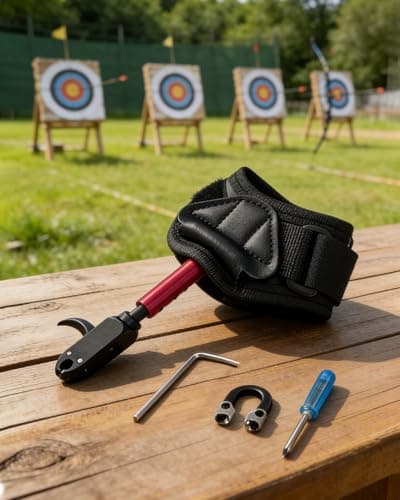
Disclosure: Creek Cover is reader-supported. If you buy through our links we may earn a commission, at no extra cost to you. It never changes which pick we tell a beginner to start with. Full disclosure.
Quick picks at a glance
Tap a pick to read the full write-up, or the price button to check it on Amazon.
- 1
An auto-closing dual-caliper head on an adjustable wrist strap — the standard design, done without gimmicks, at a price that leaves budget for arrows. Auto-close matters more than it sounds: you can hook the string without looking, in the dark, with cold hands.
Best for: The best first release9.0 - 2
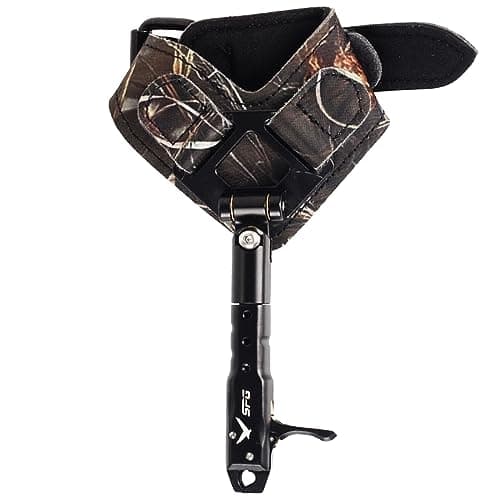
The strap is the part you wear for four hours in a treestand, and this one is padded and adjustable enough to forget about. A sensible small step up if the budget option's strap bothers you.
Best for: Best comfortable strap8.6 - 3
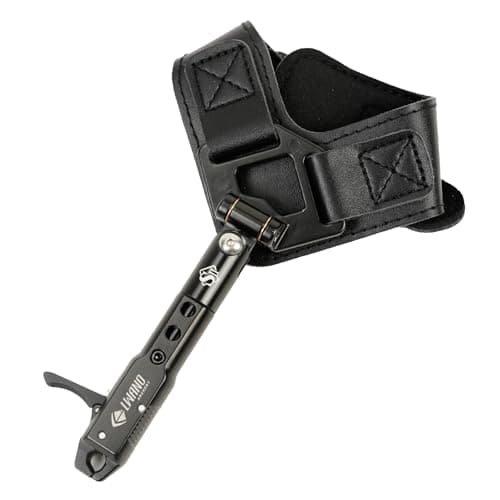
A 360-degree rotating head, which sounds like marketing and is not — it lets the release find a natural angle to your wrist instead of forcing your hand into one. Useful if the standard geometry never feels right to you.
Best for: Best adjustability8.5 - 4
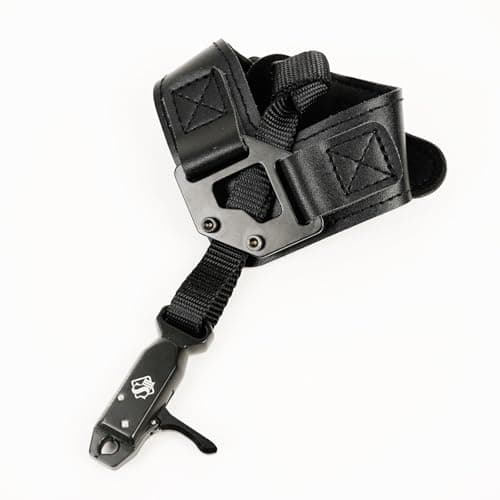
The stripped-back version of the pick above: fixed head, adjustable strap and length, nothing else to fiddle with. Fewer adjustments is genuinely an advantage when you are still learning what a good shot feels like.
Best for: Best simple everyday release8.3 - 5
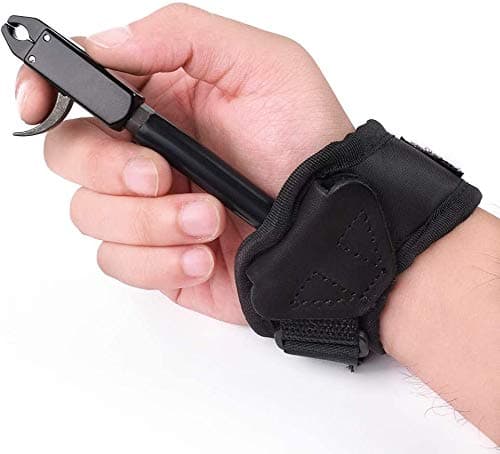
The lowest price here that we would still hunt with. Buy it as the spare that lives in your pack — because a lost or broken release ends a hunt instantly, and a backup costs less than a tank of fuel.
Best for: Cheapest release worth using7.9
| # | Product | Best for | Score | Price |
|---|---|---|---|---|
| 1 | NOVASPARK Compound Bow Wrist Release Aid An auto-closing dual-caliper head on an adjustable wrist strap — the standard design, done without gimmicks, at a price that leaves budget for arrows. Auto-close matters more than it sounds: you can hook the string without looking, in the dark, with cold hands. | The best first release | 9.0 | $17.99View on Amazon#ad |
| 2 | SPG Compound Bow Release with Wrist Strap The strap is the part you wear for four hours in a treestand, and this one is padded and adjustable enough to forget about. A sensible small step up if the budget option's strap bothers you. | Best comfortable strap | 8.6 | $23.99View on Amazon#ad |
| 3 | LWANO 360° Adjustable Bow Release Aid A 360-degree rotating head, which sounds like marketing and is not — it lets the release find a natural angle to your wrist instead of forcing your hand into one. Useful if the standard geometry never feels right to you. | Best adjustability | 8.5 | $29.99View on Amazon#ad |
| 4 | LWANO Adjustable Compound Bow Wrist Strap Release The stripped-back version of the pick above: fixed head, adjustable strap and length, nothing else to fiddle with. Fewer adjustments is genuinely an advantage when you are still learning what a good shot feels like. | Best simple everyday release | 8.3 | $25.99View on Amazon#ad |
| 5 | NIKA ARCHERY Caliper Bow Release The lowest price here that we would still hunt with. Buy it as the spare that lives in your pack — because a lost or broken release ends a hunt instantly, and a backup costs less than a tank of fuel. | Cheapest release worth using | 7.9 | $14.99View on Amazon#ad |
A release aid is a mechanical trigger that holds and then drops the bowstring, and it exists because human fingers cannot let go of a string identically twice in a row. It is a cheap piece of kit that has an outsized effect on your groups — and, more importantly, on the habits you build in your first few thousand shots. For almost every beginner the right answer is a wrist-strap caliper release like the NOVASPARK above.
How we picked these
We compared head design, adjustment range, strap construction and trigger behavior against what a first-year archer needs: a release that fits their anchor point, that they cannot lose, and that they can hook onto a D-loop in the dark without looking down. We weighted auto-closing jaws, length adjustability and strap comfort over premium trigger tuning that a beginner cannot yet feel. Our method is on the how we research and pick page.
Wrist strap, handheld, or thumb button?
| Type | How it works | Who it is for |
|---|---|---|
| Wrist-strap caliper | Strap takes the draw weight; index finger pulls a trigger | Beginners and most hunters — buy this first |
| Handheld thumb button | Held in the fingers; thumb pushes a barrel | Target archers and experienced hunters chasing a cleaner shot |
| Back-tension / hinge | Fires by rotation, with no trigger to pull | A training tool for fixing target panic, not a first release |
The wrist-strap wins for hunting for two unglamorous reasons. The strap transfers the draw weight into your wrist rather than your fingers, which matters when you are holding at full draw waiting for a deer to take one more step. And it is attached to you — a handheld release that falls out of a cold pocket twenty feet up a tree ends your hunt.
Setting the length — the step everyone skips
A release has an adjustable length between the strap and the jaws, and it is not a comfort setting — it decides where your hand ends up at full draw, which decides your anchor point, which decides where the arrow goes. Set it so that at full draw, with the release hooked and your hand relaxed against your jaw, your index finger falls naturally onto the trigger with a slight bend. If you are reaching for the trigger, it is too long; if your finger is curled past the first joint, too short. Adjust it once, properly, and then leave it alone — a release length that wanders is a group that wanders.
Get your draw length sorted first
Trigger punch, and how to avoid learning it
The most common bad habit in archery is punching the trigger — slapping it the instant the sight pin crosses the target, which throws the shot and eventually becomes target panic. The fix is to build the opposite habit from your very first sessions: settle the pin, put steady pressure on the trigger, and let the shot surprise you slightly. Practice it at ten yards on a big target where you cannot miss, so your brain stops associating the trigger with the pin being perfect. This is the single most valuable thing you can do in your first month, and it costs nothing.
What to skip for now
Skip hinge and thumb releases for a first season — they are excellent tools that require instruction and a lot of arrows to use safely. Skip adjustable-trigger-weight models until you can feel the difference. And skip shooting your bow with your fingers “just to see” on a compound; the string angle on a compound is designed for a release and finger-shooting one will hurt your accuracy and possibly your fingers. Buy one release, buy a cheap spare for the pack, then spend the rest on arrows and a target — the two things that actually produce reps. The full budget picture is on what a complete beginner bow setup costs.
The picks in detail
NOVASPARK Compound Bow Wrist Release Aid
9.0/10Best for: The best first release
An auto-closing dual-caliper head on an adjustable wrist strap — the standard design, done without gimmicks, at a price that leaves budget for arrows. Auto-close matters more than it sounds: you can hook the string without looking, in the dark, with cold hands.
- Type
- Wrist-strap caliper
- Head
- Auto-closing dual caliper
- Adjustment
- Length adjustable
- Best for
- A first compound release
- Auto-close hooks the D-loop without you watching it
- Adjustable length so you set it to your anchor
- Inexpensive enough to buy a spare
- Basic strap material compared with premium releases
- Trigger is not adjustable for travel or weight
SPG Compound Bow Release with Wrist Strap
8.6/10Best for: Best comfortable strap
The strap is the part you wear for four hours in a treestand, and this one is padded and adjustable enough to forget about. A sensible small step up if the budget option's strap bothers you.
- Type
- Wrist-strap caliper
- Strap
- Padded, adjustable
- Adjustment
- Length adjustable
- Best for
- All-day comfort
- Comfortable enough to leave on all hunt
- Solid caliper jaws for the money
- Adjusts to a wide range of wrist sizes
- Slightly bulkier than the NOVASPARK
- Buckle can be fiddly in gloves
LWANO 360° Adjustable Bow Release Aid
8.5/10Best for: Best adjustability
A 360-degree rotating head, which sounds like marketing and is not — it lets the release find a natural angle to your wrist instead of forcing your hand into one. Useful if the standard geometry never feels right to you.
- Type
- Wrist-strap caliper
- Head
- 360° rotating
- Adjustment
- Length + rotation
- Best for
- Awkward wrist geometry
- Rotating head suits unusual anchor points
- Well-made jaws and trigger for the price
- Broad length adjustment range
- More adjustment means more to get wrong at first
- Rotation can creep loose over a season
LWANO Adjustable Compound Bow Wrist Strap Release
8.3/10Best for: Best simple everyday release
The stripped-back version of the pick above: fixed head, adjustable strap and length, nothing else to fiddle with. Fewer adjustments is genuinely an advantage when you are still learning what a good shot feels like.
- Type
- Wrist-strap caliper
- Head
- Fixed
- Adjustment
- Length + strap
- Best for
- Simplicity
- Nothing to misadjust mid-season
- Solid, consistent trigger feel
- Fair price for the build
- No rotation for unusual anchors
- Plain finish
NIKA ARCHERY Caliper Bow Release
7.9/10Best for: Cheapest release worth using
The lowest price here that we would still hunt with. Buy it as the spare that lives in your pack — because a lost or broken release ends a hunt instantly, and a backup costs less than a tank of fuel.
- Type
- Wrist-strap caliper
- Adjustment
- Adjustable strap
- Role
- Primary on a tight budget, or spare
- Best for
- A backup in the pack
- Cheap enough to own two
- Standard caliper design, no surprises
- Fine for learning on
- Trigger feel is coarse
- Strap and buckle feel like the price
Prices shown are from Amazon as of Sep 5, 2026 and change often — the button always goes to the current listing. Some links may earn us a commission at no extra cost to you. How this works.
Frequently asked questions
What kind of bow release should a beginner buy?
A wrist-strap caliper release. The strap carries the draw weight through your wrist instead of your fingers, the index-finger trigger is intuitive, and because it is strapped to your arm you cannot drop it out of a treestand. Handheld thumb and hinge releases are excellent but are not first-season equipment.
How do I set the length of a bow release?
At full draw with the release hooked and your hand relaxed against your anchor point, your index finger should fall onto the trigger with a slight bend. Reaching for the trigger means it is too long; curling past the first joint means it is too short. Set it once and then leave it alone.
What is trigger punch in archery?
Slapping the release trigger the moment your sight pin crosses the target, rather than applying steady pressure through the shot. It throws arrows and can develop into target panic. Practice at short range on a large target, settling the pin and squeezing gradually so the shot breaks slightly by surprise.
Do I need a release for a compound bow?
Effectively yes. A compound's string angle at full draw is designed around a mechanical release, and shooting one with your fingers costs accuracy and can pinch them painfully. A release also gives you a far more repeatable string let-go, which is the whole reason your groups tighten.
Sources
Keep reading
Not sure where to start?
The beginner gear checklist walks you through exactly what a first-season hunter needs — essentials first, nice-to-haves later, with one safe-default pick per category.