Bow Hunting · Roundup
The Best Archery Targets for Beginners
The target in your backyard is the single biggest predictor of whether you shoot well in October. Here is which one to buy, and why arrow removal is the spec that decides it.
Disclosure: Creek Cover is reader-supported. If you buy through our links we may earn a commission, at no extra cost to you. It never changes which pick we tell a beginner to start with. Full disclosure.
Quick picks at a glance
Tap a pick to read the full write-up, or the price button to check it on Amazon.
- 1
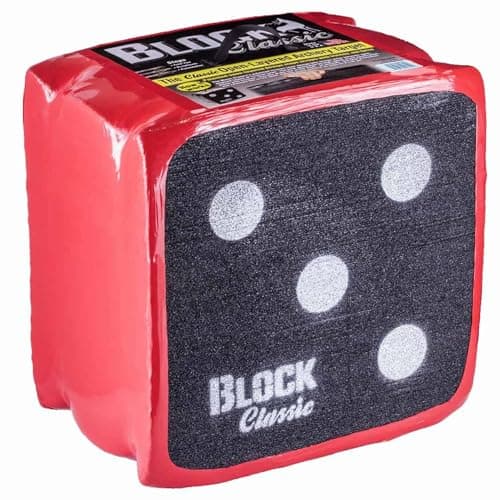
Open-layer foam that stops arrows along the shaft and lets you pull them out one-handed. Two shootable sides, a sane price, and it takes field points all summer without collapsing into a hole in the middle.
Best for: The best first backyard target9.2 - 2
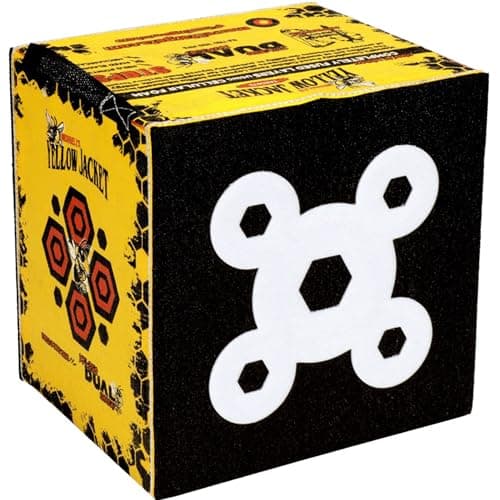
A bag target is the cheapest arrow-per-shot practice there is, and this one is rated to 350 feet per second, which covers essentially every beginner compound. Effortless arrow removal, and it hangs or stands.
Best for: Best bag target for high-volume practice8.9 - 3
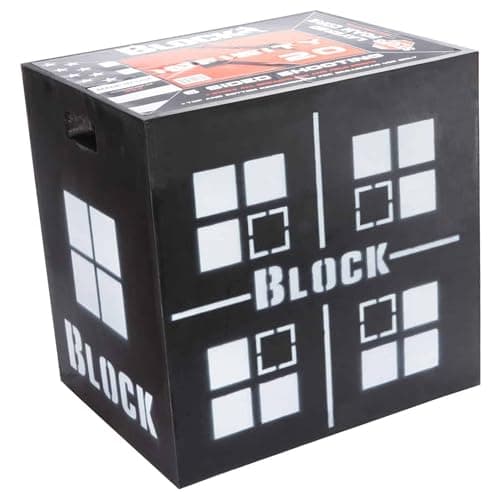
Six shootable sides and a 500 FPS rating, which means it will still be your target when you have upgraded your bow twice. The upgrade to buy if you would rather purchase once than replace a cheap target every season.
Best for: Best target to keep for years8.8 - 4
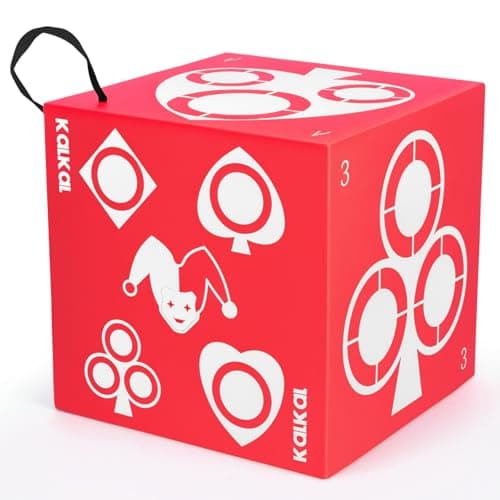
Six sides and a carry handle at close to bag-target money. A sensible compromise if you want the longevity of a multi-face block without the price of the premium ones.
Best for: Best value multi-sided target8.3 - 5
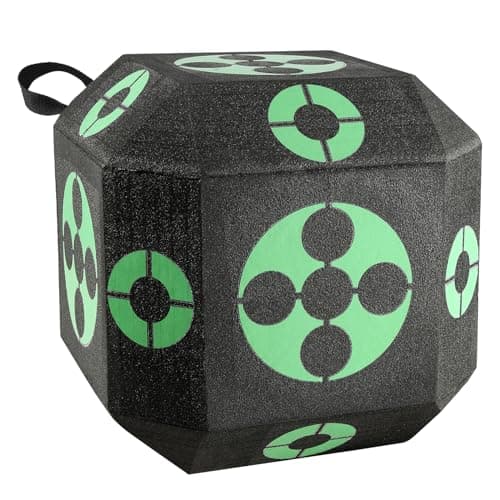
The lowest price here that will genuinely stop a beginner compound's arrows. Buy it if the alternative is not practicing at all — and understand you will be replacing it sooner than the others.
Best for: Cheapest target worth owning7.8
| # | Product | Best for | Score | Price |
|---|---|---|---|---|
| 1 | BLOCK Classic Layered Foam Archery Target Open-layer foam that stops arrows along the shaft and lets you pull them out one-handed. Two shootable sides, a sane price, and it takes field points all summer without collapsing into a hole in the middle. | The best first backyard target | 9.2 | $77.50View on Amazon#ad |
| 2 | Morrell Yellow Jacket Dual Threat 350 FPS Target A bag target is the cheapest arrow-per-shot practice there is, and this one is rated to 350 feet per second, which covers essentially every beginner compound. Effortless arrow removal, and it hangs or stands. | Best bag target for high-volume practice | 8.9 | $79.99View on Amazon#ad |
| 3 | BLOCK Infinity 6-Sided Foam Target, 20 inch Six shootable sides and a 500 FPS rating, which means it will still be your target when you have upgraded your bow twice. The upgrade to buy if you would rather purchase once than replace a cheap target every season. | Best target to keep for years | 8.8 | $140.75View on Amazon#ad |
| 4 | Kalkal 6-Side Foam Archery Target Block Six sides and a carry handle at close to bag-target money. A sensible compromise if you want the longevity of a multi-face block without the price of the premium ones. | Best value multi-sided target | 8.3 | $55.99View on Amazon#ad |
| 5 | VEVOR Archery Target Block, 15 inch The lowest price here that will genuinely stop a beginner compound's arrows. Buy it if the alternative is not practicing at all — and understand you will be replacing it sooner than the others. | Cheapest target worth owning | 7.8 | $57.57View on Amazon#ad |
Nobody gets good at archery at a range. You get good in a backyard, twenty arrows an evening, for six weeks before the season — and the thing that decides whether that happens is not your discipline, it is your target. A target that grips arrows so hard you need both hands and a puller turns a pleasant twenty minutes into a chore, and chores get skipped. That is why the BLOCK Classic leads this list.
How we picked these
We compared published construction, speed ratings, face count and stated arrow-removal behavior against the practice pattern that actually produces an accurate hunter: frequent, short, low-friction sessions at home. We weighted easy removal, durable multi-face designs and honest speed ratings over price alone. We do not run a shot-count durability lab and do not claim to; our method is on the how we research and pick page.
Bag, block, or 3D?
| Type | Strengths | Weaknesses |
|---|---|---|
| Bag | Cheapest per shot, arrows pull out with no effort, huge face | Field points only — never broadheads. Must stay dry |
| Foam block | Takes field points and often broadheads, multiple faces, weatherproof | Costs more, arrows need slightly more effort to remove |
| 3D animal | Teaches shot placement on a real body shape and angle | Expensive, single small kill zone wears out fast |
For a first season, buy a block if you can only buy one, because it is the one that also handles broadheads and lives outside. Add a bag later for high-volume form work if you shoot a lot. A 3D deer is a genuinely useful third purchase — it teaches you where the vitals sit on an angled animal, which no round target can — but it is the wrong first target because you will be shooting a small kill zone into ruin while you are still learning to group.
Arrow removal is the spec that matters
Layered-foam targets like the BLOCK stop an arrow by friction along the whole shaft; dense single-block foam grips the point. The first design lets you pull an arrow out with two fingers; the second can require a jaw puller and a bad word. Over a summer, that difference is hundreds of arrows shot versus dozens. If a target listing does not talk about arrow removal at all, assume it is hard. Buy a cheap arrow puller regardless — it is a rubber pad that costs very little and saves your hands and your fletchings.
Put the target somewhere you walk past
Shooting broadheads into a target
You must shoot your actual hunting broadheadsbefore the season — a fixed broadhead steers differently from a field point, and if your bow is slightly out of tune they will not land together. But broadheads destroy bag targets and chew through cheap foam fast. Two sane approaches: buy a block rated for broadheads and accept it will wear, or buy a cheap dedicated broadhead target and keep your main target for field points. Either way, only shoot broadheads at a target rated for them, and check your target’s speed rating against your bow — a target rated to 350 FPS in front of a 400 FPS crossbow is a pass-through waiting to happen.
What to skip for now
Skip the 3D deer until you can group at 20 yards. Skip the giant range-sized targets — they are heavy, expensive and no more useful in a backyard. Skip layering cardboard or straw bales as a homemade solution; they stop arrows unpredictably and destroy fletchings. Put the money into a dozen practice arrows and a release you shoot consistently, and see how to start bow hunting for the practice plan that turns all of it into a shot you can take on an animal.
The picks in detail
BLOCK Classic Layered Foam Archery Target
9.2/10Best for: The best first backyard target
Open-layer foam that stops arrows along the shaft and lets you pull them out one-handed. Two shootable sides, a sane price, and it takes field points all summer without collapsing into a hole in the middle.
- Size
- 18" x 18" x 13.5"
- Design
- Layered open-foam, 2-sided
- Arrow removal
- Very easy
- Broadheads
- Field points — check model rating
- Easiest arrow removal at this price
- Two usable faces doubles its life
- Light enough to carry out and put away
- Not the target for repeated broadhead work
- Layered foam eventually compresses in a hot spot
Morrell Yellow Jacket Dual Threat 350 FPS Target
8.9/10Best for: Best bag target for high-volume practice
A bag target is the cheapest arrow-per-shot practice there is, and this one is rated to 350 feet per second, which covers essentially every beginner compound. Effortless arrow removal, and it hangs or stands.
- Type
- Bag target
- Speed rating
- 350 FPS
- Arrow removal
- Effortless
- Broadheads
- No — field points only
- Cheapest cost per thousand arrows
- Arrows practically fall out
- Multiple aiming points keep you honest
- Field points only — a broadhead will destroy it
- Must be kept dry or it degrades quickly
BLOCK Infinity 6-Sided Foam Target, 20 inch
8.8/10Best for: Best target to keep for years
Six shootable sides and a 500 FPS rating, which means it will still be your target when you have upgraded your bow twice. The upgrade to buy if you would rather purchase once than replace a cheap target every season.
- Size
- 20" x 20" x 20"
- Sides
- 6 shootable faces
- Speed rating
- 500 FPS
- Best for
- Buy-once practice
- Six faces means years of even wear
- Handles fast crossbows as well as compounds
- High-density layered foam holds its shape
- Heavy to move around a yard
- Costs more than twice the entry options
Kalkal 6-Side Foam Archery Target Block
8.3/10Best for: Best value multi-sided target
Six sides and a carry handle at close to bag-target money. A sensible compromise if you want the longevity of a multi-face block without the price of the premium ones.
- Type
- 6-sided foam block
- Portability
- Carry handle
- Arrow removal
- Easy
- Best for
- Value and portability
- Six faces at a budget price
- Light enough to carry one-handed
- Straightforward arrow removal
- Lower speed tolerance than the premium blocks
- Foam density is not in the BLOCK Infinity class
VEVOR Archery Target Block, 15 inch
7.8/10Best for: Cheapest target worth owning
The lowest price here that will genuinely stop a beginner compound's arrows. Buy it if the alternative is not practicing at all — and understand you will be replacing it sooner than the others.
- Size
- 15" x 15"
- Type
- All-side foam block
- Portability
- Carry handle
- Best for
- The lowest-cost start
- Cheapest entry point
- Small and easy to store
- Works with compound and crossbow field points
- Small face punishes a beginner's spread
- Wears out faster than the name-brand blocks
Prices shown are from Amazon as of Sep 5, 2026 and change often — the button always goes to the current listing. Some links may earn us a commission at no extra cost to you. How this works.
Frequently asked questions
What archery target should a beginner buy?
A layered-foam block target. It takes field points, often handles broadheads, lives outside in the weather, and - most importantly - lets you pull arrows out easily, which is what keeps you practicing. A bag target is a cheaper alternative for high-volume field-point practice but cannot take broadheads.
Can you shoot broadheads into any archery target?
No. Bag targets are destroyed by broadheads, and many foam blocks are rated for field points only. Check the target's rating before shooting a broadhead into it, and consider a cheap dedicated broadhead target so you can verify your hunting arrows' point of impact without ruining your main target.
How far away should I practice from?
Start at 10 yards and only move back when you can group consistently. Most deer are shot inside 25 yards with a bow, so a beginner who is deadly at 20 has all the range they need. Shooting long distances before your form is settled just teaches you to accept a wide group.
Why are my arrows so hard to pull out of the target?
Usually the target's construction - dense single-block foam grips the arrow point, while layered open-foam designs stop the shaft by friction and release easily. A rubber arrow puller helps with any target and costs very little. If a target has developed a soft central hole, rotate to a fresh face.
Sources
Keep reading
Not sure where to start?
The beginner gear checklist walks you through exactly what a first-season hunter needs — essentials first, nice-to-haves later, with one safe-default pick per category.