Bow Hunting · Roundup
The Best Hunting Arrows for Beginners
Arrows are the one part of a bow setup where the wrong number on the box makes the whole thing inaccurate. Here is what spine means, and the arrows worth starting with.
Disclosure: Creek Cover is reader-supported. If you buy through our links we may earn a commission, at no extra cost to you. It never changes which pick we tell a beginner to start with. Full disclosure.
Quick picks at a glance
Tap a pick to read the full write-up, or the price button to check it on Amazon.
- 1
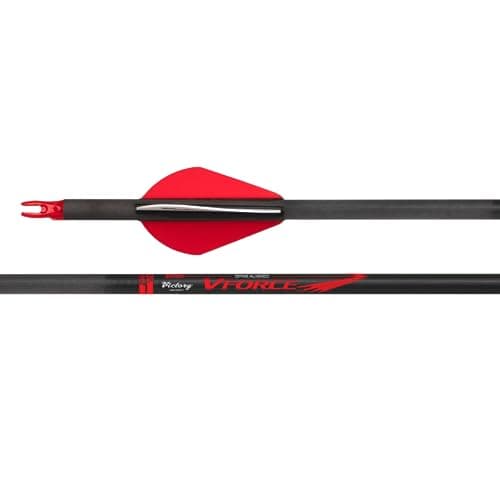
A real archery-brand shaft with a published straightness tolerance, fletched and ready. If you are going to put a broadhead on it and shoot at an animal, this is the level of consistency you want — and 400 spine covers most beginner compound setups.
Best for: The best arrow to hunt with9.2 - 2
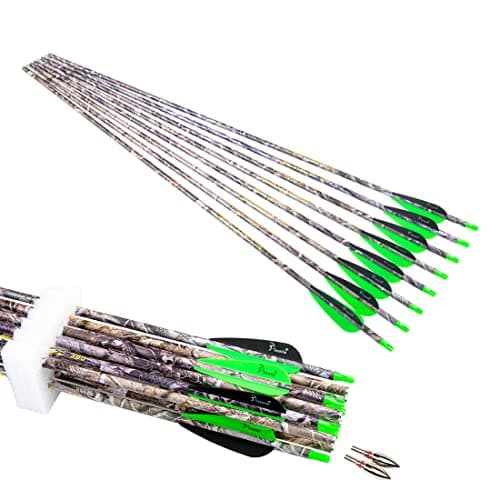
Available in the full range of spines and lengths, which makes them a sensible choice once you actually know your numbers. A good middle ground between throwaway practice shafts and premium hunting arrows.
Best for: Best mid-price hunting arrows8.7 - 3
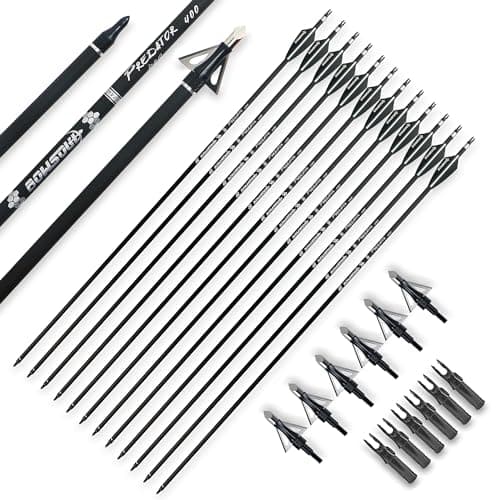
Hard vanes and a 400 spine at a price that lets you own enough arrows to actually practice. The right way to use these is as your volume-practice arrows so you are not shooting your expensive hunting shafts into a target all summer.
Best for: Best value practice-and-hunt arrows8.4 - 4
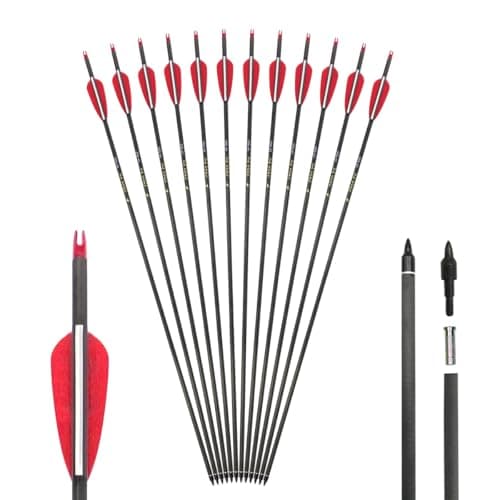
Twelve arrows for roughly the price of six premium ones. In your first month you will lose arrows, bury them in dirt behind the target and break a couple — do that with these, not with hunting shafts.
Best for: Best cheap dozen for learning8.1 - 5
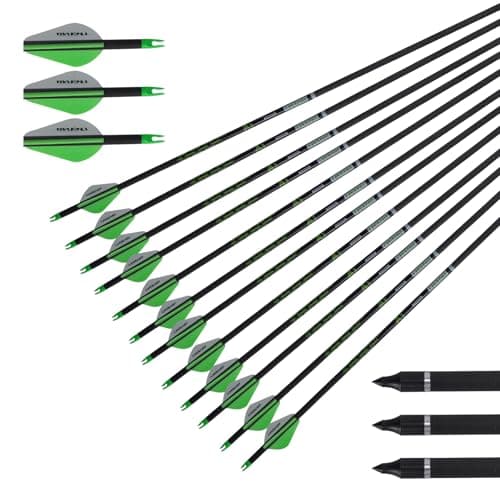
A 32-inch shaft, which matters if you have a long draw and keep finding stock arrows are too short to cut down safely. Uncut length is a genuinely useful spec that most listings bury.
Best for: Best for long draw lengths8.0
| # | Product | Best for | Score | Price |
|---|---|---|---|---|
| 1 | Victory Archery VForce Fletched Arrow, 400 Spine A real archery-brand shaft with a published straightness tolerance, fletched and ready. If you are going to put a broadhead on it and shoot at an animal, this is the level of consistency you want — and 400 spine covers most beginner compound setups. | The best arrow to hunt with | 9.2 | $49.06View on Amazon#ad |
| 2 | Pinals Archery Carbon Hunting Arrows Available in the full range of spines and lengths, which makes them a sensible choice once you actually know your numbers. A good middle ground between throwaway practice shafts and premium hunting arrows. | Best mid-price hunting arrows | 8.7 | $59.98View on Amazon#ad |
| 3 | BOWSOUL Hunting Carbon Arrows, 400 Spine Hard vanes and a 400 spine at a price that lets you own enough arrows to actually practice. The right way to use these is as your volume-practice arrows so you are not shooting your expensive hunting shafts into a target all summer. | Best value practice-and-hunt arrows | 8.4 | $40.99View on Amazon#ad |
| 4 | CIGENBON Carbon Arrows, 400 Spine (12-Pack) Twelve arrows for roughly the price of six premium ones. In your first month you will lose arrows, bury them in dirt behind the target and break a couple — do that with these, not with hunting shafts. | Best cheap dozen for learning | 8.1 | $32.59View on Amazon#ad |
| 5 | LWANO 32-Inch Carbon Arrows, 400 Spine A 32-inch shaft, which matters if you have a long draw and keep finding stock arrows are too short to cut down safely. Uncut length is a genuinely useful spec that most listings bury. | Best for long draw lengths | 8.0 | $49.99View on Amazon#ad |
Arrows are where new archers lose accuracy without ever knowing why. You can buy a good bow, set it up properly, shoot decent form, and still throw arrows all over a target because the shafts are the wrong stiffness for your setup. That number is called spine, and it is the only arrow spec you genuinely have to get right. For most beginner compounds the answer is a 400 spine — which is why the Victory VForce 400 tops this list.
How we picked these
We compared published spine ranges, uncut lengths, straightness tolerances and pack sizes against what a first-year archer actually does: shoot a lot of practice arrows into foam, then put broadheads on a small number of matched shafts for the season. We weighted correct-spine availability and published consistency above brand and cosmetics. We do not run an arrow spine-testing rig and do not claim to; our method is on the how we research and pick page.
Arrow spine, explained without the chart
Spine is how much an arrow bends. When you release, the arrow flexes around the riser and then straightens in flight — that is normal and unavoidable. If the shaft is too stiff for your bow it will not flex enough and will fly left or right of where you aimed; too weak and it flexes too much and does the same in the other direction. Manufacturers label spine with a number where lower means stiffer, which catches everyone out at first.
| Your draw weight (compound) | Typical spine | Notes |
|---|---|---|
| Roughly 40-50 lb | 500 | Lighter setups, youth and smaller-frame adults |
| Roughly 50-65 lb | 400 | The most common beginner range — start here |
| Roughly 65-75 lb | 340 | Heavier adult setups |
| 75 lb and up | 300 | Uncommon for beginners, and rarely necessary |
Treat that table as orientation, not gospel: draw length and point weight shift spine too, and every arrow manufacturer publishes its own chart. If you bought a ready-to-hunt compoundin the 50–65 pound range and you are shooting a 100-grain point, 400 is the safe default. And if you have not settled your draw weight yet, read what draw weight to start at before you buy arrows — buying arrows for a weight you cannot hold is a common and expensive order of operations mistake.
How long should your arrows be?
Long enough that at full draw the point sits in front of the rest — never behind it, which is a genuine safety hazard. In practice, arrows are sold long and cut down. Buy uncut shafts a comfortable margin longer than your draw length and have a shop cut and square them, or measure carefully at full draw with a helper marking the shaft. Cutting arrows changes spine slightly (shorter is stiffer), which is the other reason to let someone with an arrow saw and a chart do it the first time.
The beginner mistake
How many arrows do you actually need?
More than you think for practice, fewer than you think for hunting. A dozen practice arrows is a sane minimum — you will bury some, break some and lose some in the grass, and having twelve means a session does not end when three go missing. For hunting, half a dozen matched shafts with broadheads is plenty: you carry three to five in the quiver and keep the rest as spares. Shoot your hunting arrows with broadheads at a target that accepts them at least a few times before the season, because a broadhead does not necessarily hit where your field points do, and finding that out with an animal in front of you is the worst possible time.
What to skip for now
Skip micro-diameter and high-end tolerance shafts — the accuracy difference lives beyond the distances a beginner should be shooting, and the components cost more to replace. Skip lighted nocks until you have a bow you shoot consistently (they are a genuine help on a real shot, but they are not what is making you miss now). And skip fletching your own arrows in year one; a jig, glue and time are a hobby of their own. Put the money into a target you can shoot every evening and a release you can shoot consistently, and check the whole setup against what a complete beginner bow setup costs.
The picks in detail
Victory Archery VForce Fletched Arrow, 400 Spine
9.2/10Best for: The best arrow to hunt with
A real archery-brand shaft with a published straightness tolerance, fletched and ready. If you are going to put a broadhead on it and shoot at an animal, this is the level of consistency you want — and 400 spine covers most beginner compound setups.
- Spine
- 400
- Pack
- 6 fletched arrows
- Straightness
- ±.006 published
- Best for
- Hunting arrows for a 45-65lb compound
- Published straightness tolerance from an arrow specialist
- Consistent shaft-to-shaft weight and flight
- Fletched and ready — no build required
- Six per pack, so a hunting set costs real money
- Still needs cutting to your draw length at a shop
Pinals Archery Carbon Hunting Arrows
8.7/10Best for: Best mid-price hunting arrows
Available in the full range of spines and lengths, which makes them a sensible choice once you actually know your numbers. A good middle ground between throwaway practice shafts and premium hunting arrows.
- Spine options
- 300 / 340 / 350 / 400
- Lengths
- 28" and 30"
- Material
- Carbon
- Best for
- Matching an unusual draw length or weight
- Wide spine and length range — you can match your actual setup
- Solid value for a hunting-capable arrow
- Consistent enough for broadhead work
- The straightness figure is the maker's own claim, not a legacy arrow house's spec
- Stock on specific spine/length combinations comes and goes
BOWSOUL Hunting Carbon Arrows, 400 Spine
8.4/10Best for: Best value practice-and-hunt arrows
Hard vanes and a 400 spine at a price that lets you own enough arrows to actually practice. The right way to use these is as your volume-practice arrows so you are not shooting your expensive hunting shafts into a target all summer.
- Spine
- 400
- Length
- 30"
- Vanes
- 2.75" high-hardness
- Best for
- High-volume practice
- Cheap enough to shoot hundreds of arrows without wincing
- Durable vanes survive a target's foam better than soft ones
- Fits standard compound and recurve setups
- Shaft-to-shaft consistency is not premium-grade
- We would practice with these and hunt with the Victory
CIGENBON Carbon Arrows, 400 Spine (12-Pack)
8.1/10Best for: Best cheap dozen for learning
Twelve arrows for roughly the price of six premium ones. In your first month you will lose arrows, bury them in dirt behind the target and break a couple — do that with these, not with hunting shafts.
- Spine
- 400
- Length
- 29"
- Pack
- 12 arrows
- Bow range
- 30-65 lb
- A dozen arrows, so a lost arrow is not a decision
- Correct spine range for most beginner draw weights
- Perfectly adequate for target work
- Not the consistency you want behind a broadhead
- Inserts and nocks are basic
LWANO 32-Inch Carbon Arrows, 400 Spine
8.0/10Best for: Best for long draw lengths
A 32-inch shaft, which matters if you have a long draw and keep finding stock arrows are too short to cut down safely. Uncut length is a genuinely useful spec that most listings bury.
- Spine
- 400
- Length
- 32" uncut
- Fits
- Compound and recurve
- Best for
- Draw lengths above 29 inches
- Long enough to cut to almost any draw length
- Works for both compound and recurve
- Reasonable price for the length
- You will need them cut and re-inserted at a shop
- Overkill length adds weight if left uncut
Prices shown are from Amazon as of Sep 5, 2026 and change often — the button always goes to the current listing. Some links may earn us a commission at no extra cost to you. How this works.
Frequently asked questions
What arrow spine do I need for a beginner compound bow?
For most beginner compounds set between roughly 50 and 65 pounds with a 100-grain point, a 400 spine is the safe default. Lower spine numbers mean stiffer arrows. Always confirm against the arrow manufacturer's own chart using your draw weight, draw length and point weight - those three together decide spine, not draw weight alone.
How long should my hunting arrows be?
Long enough that at full draw the point sits in front of the arrow rest, never behind it. Arrows are sold long and cut to fit, so buy uncut shafts longer than your draw length and have a shop cut and square them. Cutting an arrow shorter also makes it slightly stiffer, which is another reason to have it done properly the first time.
How many arrows should a beginner buy?
A dozen inexpensive arrows for practice and about half a dozen better-quality matched arrows for hunting. You will lose and break practice arrows, and having twelve means a session does not end early. Six matched hunting shafts is plenty - you carry three to five and keep the rest as spares.
Can I use the same arrows for practice and hunting?
You can, but most hunters do not. Practice arrows take a beating from repeated target impacts, and a shaft that has been shot hundreds of times is not what you want behind a broadhead. Practice with cheap arrows, hunt with a matched set, and shoot your hunting arrows with broadheads a few times before the season so you know where they hit.
Sources
Keep reading
Not sure where to start?
The beginner gear checklist walks you through exactly what a first-season hunter needs — essentials first, nice-to-haves later, with one safe-default pick per category.