Firearms · Roundup
The Best Rifle Scopes for Beginners
Most new hunters overspend on the rifle and underspend on the glass. Here is the scope that does everything a deer hunter needs, and why the magnification number matters least.
Disclosure: Creek Cover is reader-supported. If you buy through our links we may earn a commission, at no extra cost to you. It never changes which pick we tell a beginner to start with. Full disclosure.
Quick picks at a glance
Tap a pick to read the full write-up, or the price button to check it on Amazon.
- 1
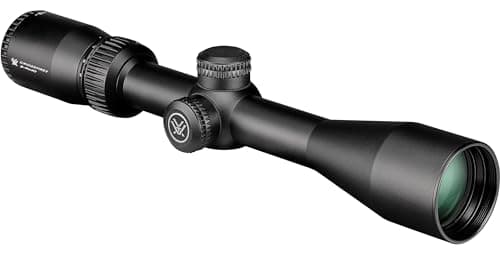
The default recommendation for a first deer rifle, and it earns it: clear, simple, capped turrets you cannot knock out of zero, and an unconditional lifetime warranty that survives your mistakes as well as the factory's.
Best for: The best all-round beginner scope9.3 - 2
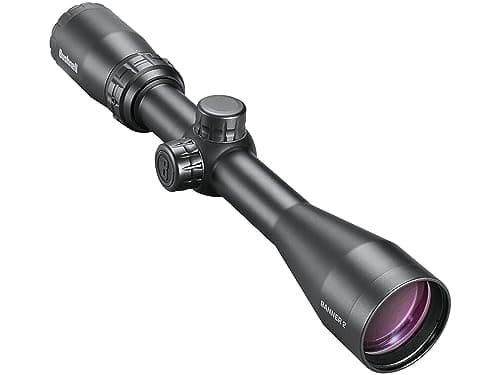
The same 3-9x40 formula, sold with weaver-style aluminum rings in the box — which removes the single most common beginner stumbling block, buying a scope and discovering you cannot attach it to your rifle.
Best for: Best complete kit with rings9.0 - 3No image
Where the money goes when you spend more: noticeably better light transmission at dawn and dusk, when deer actually move. If you hunt hard timber or first-and-last light, this upgrade is real rather than cosmetic.
Best for: Best step up in glass8.9 - 4
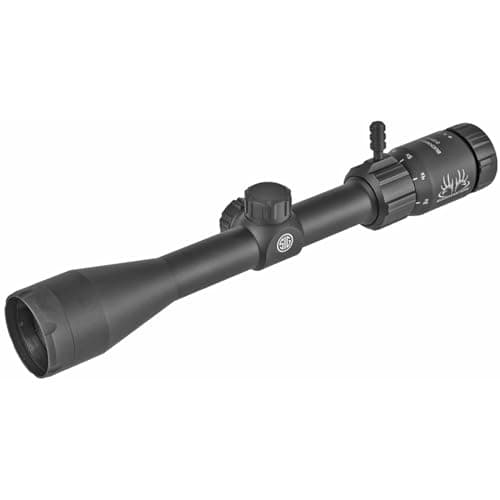
A straightforward hunting scope with holdover marks at a price below the Vortex line. A sensible choice if the rifle budget was tight and you would rather have a working scope now than a better one next year.
Best for: Best budget name-brand option8.2 - 5
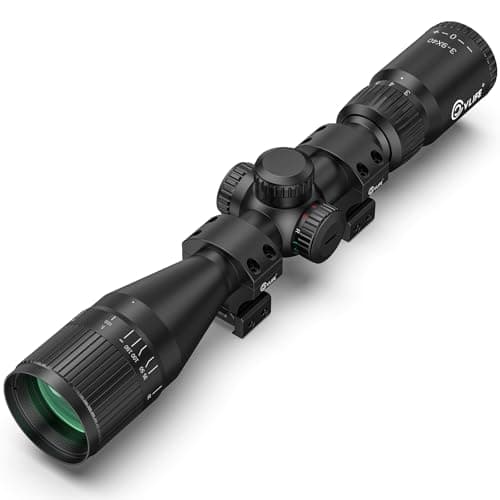
Adjustable objective and an illuminated reticle at a very low price. We would put this on a .22 for small game and practice, not on the centerfire rifle you intend to hunt deer with — recoil is what separates cheap scopes from good ones.
Best for: Best cheap scope for a rimfire or practice rifle7.6
| # | Product | Best for | Score | Price |
|---|---|---|---|---|
| 1 | Vortex Optics Crossfire II 3-9x40 The default recommendation for a first deer rifle, and it earns it: clear, simple, capped turrets you cannot knock out of zero, and an unconditional lifetime warranty that survives your mistakes as well as the factory's. | The best all-round beginner scope | 9.3 | $117.00View on Amazon#ad |
| 2 | Bushnell Banner 2 3-9x40 The same 3-9x40 formula, sold with weaver-style aluminum rings in the box — which removes the single most common beginner stumbling block, buying a scope and discovering you cannot attach it to your rifle. | Best complete kit with rings | 9.0 | $89.00View on Amazon#ad |
| 3 | No image Vortex Optics Diamondback 3-9x40 Where the money goes when you spend more: noticeably better light transmission at dawn and dusk, when deer actually move. If you hunt hard timber or first-and-last light, this upgrade is real rather than cosmetic. | Best step up in glass | 8.9 | Check price on Amazon#ad |
| 4 | Buckmasters 3-9x40mm BDC Scope A straightforward hunting scope with holdover marks at a price below the Vortex line. A sensible choice if the rifle budget was tight and you would rather have a working scope now than a better one next year. | Best budget name-brand option | 8.2 | $89.49View on Amazon#ad |
| 5 | CVLIFE EagleFeather 3-9x40 AO Rifle Scope Adjustable objective and an illuminated reticle at a very low price. We would put this on a .22 for small game and practice, not on the centerfire rifle you intend to hunt deer with — recoil is what separates cheap scopes from good ones. | Best cheap scope for a rimfire or practice rifle | 7.6 | $69.99View on Amazon#ad |
We do not sell or link to firearms — those are bought in person through a licensed dealer, following your state’s law. What we can help with is the glass on top, and this is the accessory where beginners most often make the wrong call: buying a $700 rifle and putting a $40 scope on it. Flip that instinct. The rifle is rarely the limiting factor in a beginner’s accuracy; a scope that will not hold zero absolutely is. The safe answer is a 3-9x40 with a real warranty.
How we picked these
We compared published magnification ranges, objective sizes, reticles, tube specifications and — heavily — warranty terms, against what a first-season deer hunter needs: a scope that survives recoil and being knocked about in a truck, that is simple enough to use with adrenaline running, and that gathers enough light at dawn and dusk. We do not run optical bench testing and do not claim to; our method is on the how we research and pick page.
Why 3-9x40 is still the right answer
Those numbers mean 3x to 9x variable magnification with a 40mm front lens. It has been the standard American deer scope for half a century for a simple reason: it matches the actual distances people shoot deer at.
| Situation | Magnification you want | Why |
|---|---|---|
| Thick timber, 40 yards, deer moving | 3x | Wide field of view — you can find the animal at all |
| Field edge, 150 yards | 6-9x | Enough magnification to place the shot precisely |
| Beyond 300 yards | More than this scope | A distance a beginner should not be shooting at game |
The mistake is buying more magnification than you need. High magnification narrows your field of view — at 20x you may genuinely be unable to find a deer standing at 60 yards — magnifies your own wobble, and gathers less light. Almost every experienced deer hunter you meet hunts with their variable scope turned down near its lowest setting and turns it up only for a deliberate longer shot. Buy the 40mm objective too, not a 50mm: the bigger lens gathers a little more light but forces higher rings, which raises your head off the stock and costs you the consistent cheek weld that actually makes you accurate.
The warranty is the spec that matters most
This is the least intuitive advice on the page. Your first scope is going to get dropped, or ride in a truck bed, or take a fall from a stand. An unconditional, transferable lifetime warranty — Vortex’s VIP being the best-known example — means that is an inconvenience instead of a $200 mistake. It applies whether the fault was theirs or yours, with no receipt and no registration. Between two scopes at a similar price, take the one with the better warranty every time.
Budget for rings and a bore-sight
Mounting and zeroing — do not skip this
A perfectly good scope mounted badly shoots badly. Get the rings torqued evenly, set the eye relief so you see a full image with your head in a natural position on the stock, and level the reticle before you tighten anything. Then zero it properly from a solid rest — most deer hunters zero at 100 yards, which puts you close enough at every distance you should be shooting. A shooting restis genuinely important here: zeroing off a wobbling bipod or a rolled-up jacket means you are adjusting for your own shake instead of the rifle’s point of impact. And wear hearing protection — a zeroing session is thirty or forty rounds at a bench, which is exactly the exposure that causes permanent damage.
What to skip for now
Skip first-focal-plane, mil-based tactical scopes — they are superb tools for long-range shooting and pure clutter for a hunter at 120 yards. Skip illuminated reticles at this budget; the money is better spent on glass. Skip exposed target turrets, which are easy to knock out of zero in a pack. And skip the temptation to buy a big scope before you have decided your cartridge — read what caliber a beginner should choose and the beginner hunting rifle guide first, then buy glass to suit. The full kit list is on the beginner gear checklist.
The picks in detail
Vortex Optics Crossfire II 3-9x40
9.3/10Best for: The best all-round beginner scope
The default recommendation for a first deer rifle, and it earns it: clear, simple, capped turrets you cannot knock out of zero, and an unconditional lifetime warranty that survives your mistakes as well as the factory's.
- Magnification
- 3-9x
- Objective
- 40mm
- Reticle
- V-Plex (simple duplex)
- Warranty
- Unconditional lifetime VIP
- Warranty covers damage you caused, forever, transferable
- Simple duplex reticle — nothing to misread under pressure
- Holds zero reliably, which is the whole job
- Low-light performance trails scopes costing three times as much
- No illuminated reticle option at this price
Bushnell Banner 2 3-9x40
9.0/10Best for: Best complete kit with rings
The same 3-9x40 formula, sold with weaver-style aluminum rings in the box — which removes the single most common beginner stumbling block, buying a scope and discovering you cannot attach it to your rifle.
- Magnification
- 3-9x
- Objective
- 40mm
- Includes
- Weaver-style aluminum rings
- Reticle
- DOA Quick Ballistic
- Rings in the box — one purchase, no compatibility research
- Dusk & Dawn coatings are the Banner line's long-standing strength
- One-piece aluminum body, IPX7 waterproof rated
- Included rings are basic — a heavy-recoiling rifle deserves better
- The six-point ballistic reticle is more to read than our top pick's plain duplex
Vortex Optics Diamondback 3-9x40
8.9/10Best for: Best step up in glass
Where the money goes when you spend more: noticeably better light transmission at dawn and dusk, when deer actually move. If you hunt hard timber or first-and-last light, this upgrade is real rather than cosmetic.
- Magnification
- 3-9x
- Objective
- 40mm
- Reticle
- Dead-Hold BDC
- Warranty
- Unconditional lifetime VIP
- Genuinely better low-light image than the Crossfire II
- BDC reticle gives usable holdover marks
- Same no-questions warranty
- Roughly double the price of the Crossfire II
- BDC marks only match a specific load — you must confirm yours
Buckmasters 3-9x40mm BDC Scope
8.2/10Best for: Best budget name-brand option
A straightforward hunting scope with holdover marks at a price below the Vortex line. A sensible choice if the rifle budget was tight and you would rather have a working scope now than a better one next year.
- Magnification
- 3-9x
- Objective
- 40mm
- Reticle
- BDC
- Best for
- A tight total budget
- Real hunting scope at a low price
- BDC reticle for longer shots
- Adequate glass for daylight hunting
- Warranty support is not in the Vortex class
- Low-light performance is where the savings show
CVLIFE EagleFeather 3-9x40 AO Rifle Scope
7.6/10Best for: Best cheap scope for a rimfire or practice rifle
Adjustable objective and an illuminated reticle at a very low price. We would put this on a .22 for small game and practice, not on the centerfire rifle you intend to hunt deer with — recoil is what separates cheap scopes from good ones.
- Magnification
- 3-9x
- Objective
- 40mm, adjustable
- Reticle
- Illuminated mil-dot
- Best for
- Rimfire, plinking, practice
- Very inexpensive
- Adjustable objective removes parallax at short range
- Illuminated reticle is unusual at this price
- Not something we would trust to hold zero under centerfire recoil
- Mil-dot reticle is more clutter than a beginner needs
Prices shown are from Amazon as of Sep 5, 2026 and change often — the button always goes to the current listing. Some links may earn us a commission at no extra cost to you. How this works.
Frequently asked questions
What scope magnification do I need for deer hunting?
A 3-9x variable covers essentially every realistic deer-hunting distance. You will hunt with it near 3x most of the time for a wide field of view and turn it up only for a deliberate longer shot. Higher magnification narrows your view, magnifies your wobble and gathers less light - it is not an upgrade for a hunter.
How much should a beginner spend on a rifle scope?
Enough to get a scope that holds zero and carries a strong warranty - roughly the price of a Vortex Crossfire II is the widely accepted value point. Spending less usually means buying a scope that loses zero under recoil, which costs you more in wasted ammunition and missed animals than the saving was worth.
Is a 40mm or 50mm objective lens better for hunting?
40mm for most hunters. The 50mm gathers slightly more light but requires taller rings, which lifts your head off the stock and costs you the consistent cheek weld that makes you accurate. The small low-light gain rarely outweighs that, especially at beginner distances.
Do I need to have a scope professionally mounted?
Not necessarily, but it is worth it the first time. Rings need to be torqued evenly, the reticle leveled and the eye relief set to your natural head position - all easy to get subtly wrong. A gunsmith will do it quickly for a modest fee, and you will still need to zero the rifle yourself at the range.
Sources
Keep reading
Not sure where to start?
The beginner gear checklist walks you through exactly what a first-season hunter needs — essentials first, nice-to-haves later, with one safe-default pick per category.