Firearms · Roundup
The Best Shooting Rests for Beginners
You cannot tell whether your rifle is accurate until you remove yourself from the equation. A rest is the cheapest way to find out what the gun is really doing.
Disclosure: Creek Cover is reader-supported. If you buy through our links we may earn a commission, at no extra cost to you. It never changes which pick we tell a beginner to start with. Full disclosure.
Quick picks at a glance
Tap a pick to read the full write-up, or the price button to check it on Amazon.
- 1
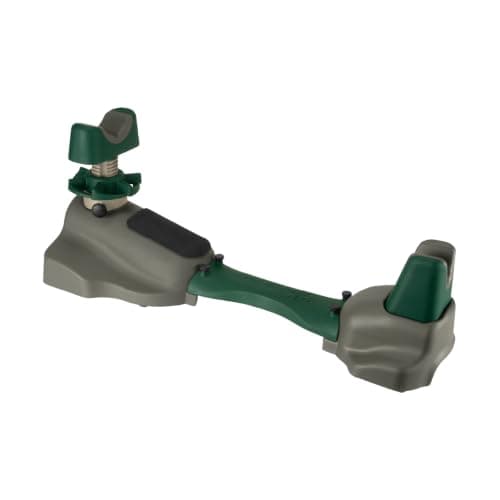
Front and rear support in one frame, height-adjustable, and stable enough that a group tells you about the rifle rather than about you. The standard answer for zeroing at a bench, from the brand that dominates this category.
Best for: The best rest for zeroing a hunting rifle9.2 - 2
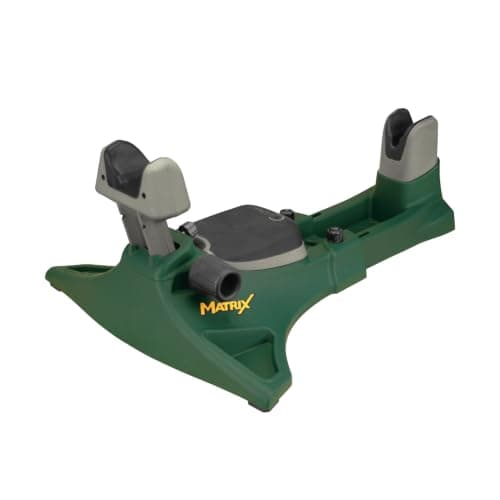
A finer, more adjustable rest for someone who wants to chase small groups or test different ammunition. More capability than a beginner needs for a hunting zero, but a genuinely better tool if you catch the accuracy bug.
Best for: Best precision adjustment8.7 - 3
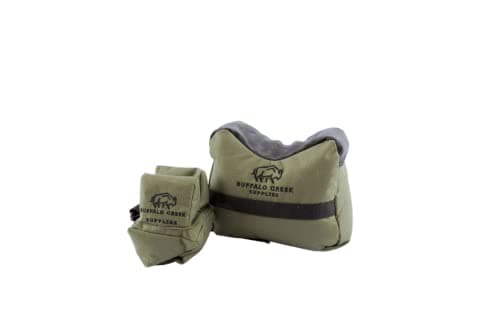
Two filled bags — one under the forend, one under the buttstock. It is the oldest, cheapest and still one of the most effective ways to shoot a small group, and unlike a frame rest it packs into a range bag.
Best for: Best value for a first zero8.6 - 4
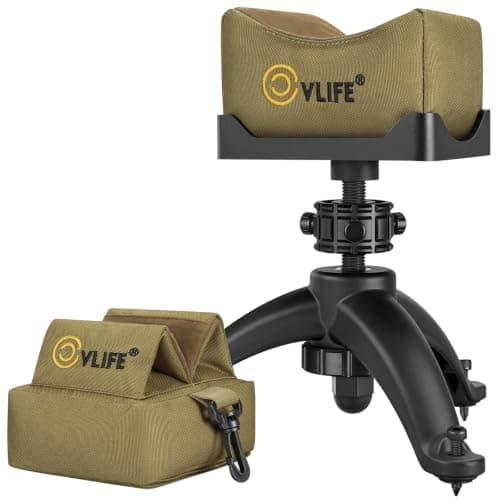
A tripod rest is the one on this page you might actually carry into the field. Shooting sticks or a tripod steady you far more than a freehand shot, and a steadier shot is the difference between a clean kill and a wounded animal.
Best for: Best rest you can hunt with8.3 - 5
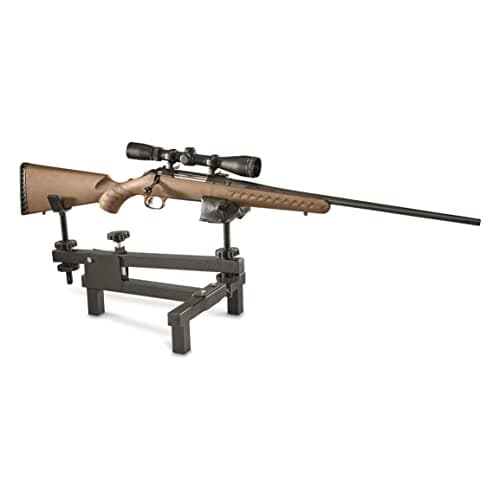
An adjustable portable stand at close to bag-combo money. Less refined than the Caldwell rests, but it does the core job of holding the forend steady while you learn what a clean trigger press feels like.
Best for: Cheapest adjustable frame rest7.9
| # | Product | Best for | Score | Price |
|---|---|---|---|---|
| 1 | Caldwell Steady Rest NXT Front and rear support in one frame, height-adjustable, and stable enough that a group tells you about the rifle rather than about you. The standard answer for zeroing at a bench, from the brand that dominates this category. | The best rest for zeroing a hunting rifle | 9.2 | $28.98View on Amazon#ad |
| 2 | Caldwell Matrix Rest A finer, more adjustable rest for someone who wants to chase small groups or test different ammunition. More capability than a beginner needs for a hunting zero, but a genuinely better tool if you catch the accuracy bug. | Best precision adjustment | 8.7 | $57.99View on Amazon#ad |
| 3 | Buffalo Creek Front and Rear Shooting Bag Combo Two filled bags — one under the forend, one under the buttstock. It is the oldest, cheapest and still one of the most effective ways to shoot a small group, and unlike a frame rest it packs into a range bag. | Best value for a first zero | 8.6 | $26.99View on Amazon#ad |
| 4 | CVLIFE Shooting Rest Tripod A tripod rest is the one on this page you might actually carry into the field. Shooting sticks or a tripod steady you far more than a freehand shot, and a steadier shot is the difference between a clean kill and a wounded animal. | Best rest you can hunt with | 8.3 | $45.98View on Amazon#ad |
| 5 | Guide Gear Shooting Rifle Bench Rest An adjustable portable stand at close to bag-combo money. Less refined than the Caldwell rests, but it does the core job of holding the forend steady while you learn what a clean trigger press feels like. | Cheapest adjustable frame rest | 7.9 | $39.99View on Amazon#ad |
A shooting rest is the least exciting purchase in this hub and one of the most useful. Its job is to remove youfrom the equation for long enough to find out what your rifle and scope are actually doing. Without one, a group on paper is a blend of the rifle’s accuracy, the ammunition’s consistency and your own heartbeat — and you cannot correct a scope based on a number you cannot separate. Start with the Caldwell Steady Rest NXT.
How we picked these
We compared rest type, adjustment range, rigidity and portability against the two jobs a beginner has: zeroing a hunting rifle from a bench before the season, and steadying a real shot in the field. We weighted stability and value over precision-competition features. Our method is on the how we research and pick page, and prices are live and dated.
Why you cannot zero a rifle without one
Sighting in means adjusting your scope so the bullet lands where the crosshair points. To do that you need to know where the bullet is landing — which means shooting a group tight enough that its center is meaningful. A beginner shooting off a rolled-up jacket might produce a four-inch group at 100 yards; adjusting a scope based on that is guesswork, and it burns expensive ammunition while teaching you nothing. On a rest, the same rifle might group inside an inch and a half, and now every click of adjustment is doing something you can see. This is the difference between an afternoon that ends with a zeroed rifle and one that ends with a headache.
| Support | Typical result | Use it for |
|---|---|---|
| Freehand / standing | Large, meaningless groups | Practicing field positions, never zeroing |
| Jacket or pack on a bench | Better, but inconsistent | A rough starting zero if you have nothing else |
| Sandbags front and rear | Small, repeatable groups | Zeroing on a budget |
| Adjustable frame rest | Smallest, most repeatable | Zeroing and testing ammunition |
| Field tripod / sticks | Far steadier than freehand | The actual shot at an animal |
Frame rest, bags, or a field tripod?
Buy a frame rest or a bag combo for zeroing — they live at the range and never come hunting. Then, separately, consider a field tripod or shooting sticks for the hunt itself, because a rested field shot is dramatically steadier than a freehand one and most beginners shoot far better from support than they expect. Those are two different purchases solving two different problems, and conflating them is why people end up with a rest that is too flimsy for the bench and too bulky for the woods.
Using a rest properly
Two rules. First, rest the forend, never the barrel. A barrel touching a hard surface vibrates differently on every shot and will scatter your group for reasons that have nothing to do with your scope. Second, let the rifle sit where it wants to and control it gently — a rifle wrestled into position against a rest will jump differently on each shot. Then it comes down to the trigger: settle the crosshair, breathe out, and squeeze until the shot surprises you slightly. Same principle as not punching a bow release.
Let the barrel cool
What to skip for now
Skip the heavy competition front rests with windage tops — superb tools, wrong problem. Skip the portable bench-and-seat combinations until you know you will be shooting somewhere without a bench. And skip mechanical recoil-reducing rests; they protect your shoulder during long load-testing sessions and do nothing for a hunter zeroing a deer rifle. Put the money into a scope with a real warranty and a second box of ammunition, so the zeroing session is thorough. Everything else you need before opening day is on the beginner gear checklist, and if you are still choosing a cartridge, read the caliber guide first.
The picks in detail
Caldwell Steady Rest NXT
9.2/10Best for: The best rest for zeroing a hunting rifle
Front and rear support in one frame, height-adjustable, and stable enough that a group tells you about the rifle rather than about you. The standard answer for zeroing at a bench, from the brand that dominates this category.
- Type
- Full-length front and rear rest
- Adjustment
- Height adjustable
- Frame
- Modular
- Best for
- Zeroing and load testing
- Supports the whole rifle, not just the forend
- Adjustable enough to suit almost any stock
- Stable on a concrete or wooden bench
- Bench use only — not something you carry hunting
- Bulky to store and transport
Caldwell Matrix Rest
8.7/10Best for: Best precision adjustment
A finer, more adjustable rest for someone who wants to chase small groups or test different ammunition. More capability than a beginner needs for a hunting zero, but a genuinely better tool if you catch the accuracy bug.
- Type
- Modular front rest
- Adjustment
- Fine elevation control
- Build
- Heavier, more rigid frame
- Best for
- Load testing, small groups
- Finer elevation adjustment than the Steady Rest
- Rigid and heavy — very stable
- Grows with you if you get serious about accuracy
- Roughly double the price
- Overkill for simply zeroing a deer rifle
Buffalo Creek Front and Rear Shooting Bag Combo
8.6/10Best for: Best value for a first zero
Two filled bags — one under the forend, one under the buttstock. It is the oldest, cheapest and still one of the most effective ways to shoot a small group, and unlike a frame rest it packs into a range bag.
- Type
- Front + rear bag combo
- Weather
- All-weather material
- Portability
- Packs flat
- Best for
- Budget zeroing, portability
- Cheapest genuinely effective option
- Fits in a range bag and weighs nothing empty
- Works on a bench, a tailgate or the ground
- Less repeatable than an adjustable frame rest
- Needs filling, and filler is not always included
CVLIFE Shooting Rest Tripod
8.3/10Best for: Best rest you can hunt with
A tripod rest is the one on this page you might actually carry into the field. Shooting sticks or a tripod steady you far more than a freehand shot, and a steadier shot is the difference between a clean kill and a wounded animal.
- Type
- Field tripod rest
- Adjustment
- Height adjustable legs
- Portability
- Carried in the field
- Best for
- Hunting shots from a sit
- Genuinely useful during a hunt, not just at the bench
- Adjusts for seated or kneeling positions
- Works with rifle or crossbow
- Not as rigid as a bench rest for zeroing
- One more thing to carry and set up quietly
Guide Gear Shooting Rifle Bench Rest
7.9/10Best for: Cheapest adjustable frame rest
An adjustable portable stand at close to bag-combo money. Less refined than the Caldwell rests, but it does the core job of holding the forend steady while you learn what a clean trigger press feels like.
- Type
- Adjustable front rest
- Portability
- Portable stand
- Use
- Outdoor range
- Best for
- The lowest-cost frame rest
- Cheapest adjustable frame here
- Straightforward setup
- Adequate for zeroing a hunting rifle
- Less rigid than the Caldwell frames
- Adjustment is coarse
Prices shown are from Amazon as of Sep 5, 2026 and change often — the button always goes to the current listing. Some links may earn us a commission at no extra cost to you. How this works.
Frequently asked questions
Do I need a shooting rest to sight in a rifle?
Practically, yes. Sighting in requires groups tight enough that their center means something, and a beginner shooting off a jacket produces groups too large to adjust from. A rest removes your own wobble so every scope adjustment is based on what the rifle is actually doing.
Are sandbags as good as a shooting rest?
For zeroing a hunting rifle, a good front-and-rear bag combo is close to as good and costs far less, with the bonus that it packs flat into a range bag. An adjustable frame rest is more repeatable and easier to fine-tune, which matters if you also want to compare different loads.
Should you rest the barrel or the forend?
The forend, always. A barrel touching a hard surface vibrates differently on every shot and will scatter your groups for reasons unrelated to your scope. Support the stock ahead of the trigger guard and let the barrel float free.
Can I use a shooting rest while hunting?
A bench rest, no - it is a range tool. But shooting sticks or a lightweight field tripod are genuinely worth carrying: almost every hunter shoots dramatically better from support than freehand, and a steadier shot is the single biggest factor in a clean, ethical kill.
Sources
Keep reading
Not sure where to start?
The beginner gear checklist walks you through exactly what a first-season hunter needs — essentials first, nice-to-haves later, with one safe-default pick per category.