Gear · Roundup
The Best Trail Cameras for Beginners
A trail camera turns a piece of woods you know nothing about into a place you understand. Here is the one to start with, and why the cheapest cellular plan can cost more than the camera.
Disclosure: Creek Cover is reader-supported. If you buy through our links we may earn a commission, at no extra cost to you. It never changes which pick we tell a beginner to start with. Full disclosure.
Quick picks at a glance
Tap a pick to read the full write-up, or the price button to check it on Amazon.
- 1
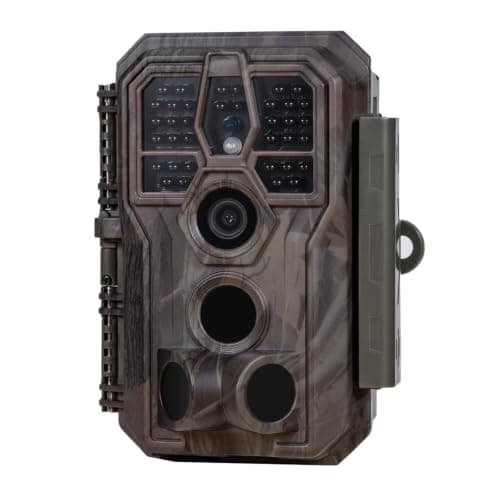
Everything a beginner needs and nothing that bills you monthly. Fast trigger, no-glow night flash, and it writes to an SD card you pull yourself — which is the right way to learn a property anyway, because it forces you to walk it.
Best for: The best first trail camera9.1 - 2
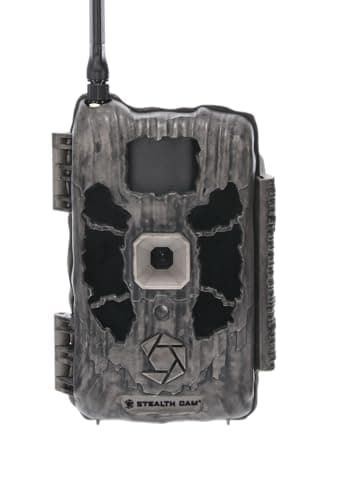
The cellular step up from a name that has been in trail cameras for two decades. Photos come to your phone, so you stop walking through your hunting area to check a card — the real reason cellular is worth paying for.
Best for: Best established-brand cellular option8.7 - 3
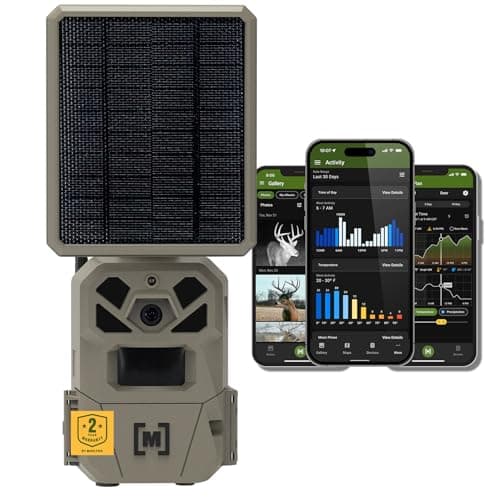
An integrated solar panel means you are not hiking in to change twelve AA batteries in February. If you are hanging a camera somewhere awkward and want to genuinely leave it alone for months, this is the design that does it.
Best for: Best set-and-forget camera8.6 - 4
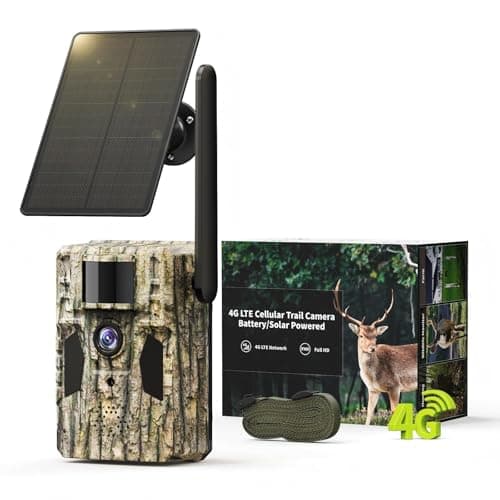
The low-cost route into cellular scouting, including live-view streaming. Buy it to find out whether remote scouting changes how you hunt before committing to a premium body — but read the plan terms first, not after.
Best for: Cheapest way to try cellular8.1 - 5
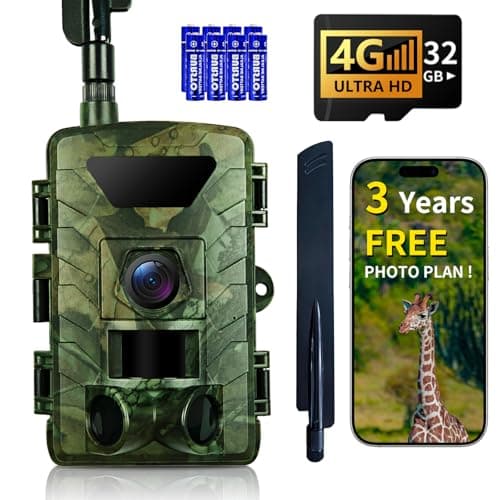
A cellular camera that transfers photos to an app without a paid subscription. That is an unusual and genuinely appealing model for a beginner — just go in understanding that free tiers can change, and the camera is only as good as its coverage.
Best for: Cellular without a monthly bill7.9
| # | Product | Best for | Score | Price |
|---|---|---|---|---|
| 1 | GardePro E5S Trail Camera Everything a beginner needs and nothing that bills you monthly. Fast trigger, no-glow night flash, and it writes to an SD card you pull yourself — which is the right way to learn a property anyway, because it forces you to walk it. | The best first trail camera | 9.1 | $49.99View on Amazon#ad |
| 2 | Stealth Cam Deceptor Cellular Trail Camera The cellular step up from a name that has been in trail cameras for two decades. Photos come to your phone, so you stop walking through your hunting area to check a card — the real reason cellular is worth paying for. | Best established-brand cellular option | 8.7 | $57.03View on Amazon#ad |
| 3 | Moultrie Edge Solar Cellular Trail Camera An integrated solar panel means you are not hiking in to change twelve AA batteries in February. If you are hanging a camera somewhere awkward and want to genuinely leave it alone for months, this is the design that does it. | Best set-and-forget camera | 8.6 | $99.99View on Amazon#ad |
| 4 | SEHMUA 4G LTE Cellular Trail Camera The low-cost route into cellular scouting, including live-view streaming. Buy it to find out whether remote scouting changes how you hunt before committing to a premium body — but read the plan terms first, not after. | Cheapest way to try cellular | 8.1 | $49.99View on Amazon#ad |
| 5 | Cellular Trail Camera with No-Subscription Photo Transfer A cellular camera that transfers photos to an app without a paid subscription. That is an unusual and genuinely appealing model for a beginner — just go in understanding that free tiers can change, and the camera is only as good as its coverage. | Cellular without a monthly bill | 7.9 | $69.99View on Amazon#ad |
A trail camera is the closest thing hunting has to a cheat code for a beginner. You do not know where the deer are, when they move, or whether the piece of public land you found on a map holds anything at all — and a camera answers all three while you are at work. The catch is that the industry has quietly moved to a subscription model, and the cheapest camera on the shelf can be the most expensive thing you own by March. Start with the GardePro E5S and read the next section before you buy anything cellular.
How we picked these
We compared published trigger speeds, flash type, resolution, power options and — critically — whether the camera requires a paid plan to do its job. We weighted no-glow flash, honest total cost of ownership and setup simplicity above megapixel counts, which are the least useful number on a trail camera box. We do not run a field-test farm and do not claim to; our method is on the how we research and pick page. Prices are live and dated.
Cellular vs SD card — the honest maths
| SD card camera | Cellular camera | |
|---|---|---|
| Up-front cost | Lower | Similar or slightly higher |
| Ongoing cost | None | A monthly or annual data plan per camera |
| Checking it | You walk in — and leave scent every time | Photos arrive on your phone |
| If it is stolen | You lose the camera and the data | You at least have the photos already |
| Best for | Your first camera, close to a trail you already walk | Spots you should not disturb, or that are far away |
The real argument for cellular is not convenience — it is scent and pressure. Every trip in to swap a card leaves human scent and puts mature deer on notice. If your camera is sitting on a stand location you actually intend to hunt, cellular genuinely protects the spot. If it is on a trail you already walk past, an SD card is fine and you keep the money. Budget for the plan honestly: a plan per camera, per month, for the months you run it, adds up faster than most beginners expect.
No-glow vs low-glow flash
At night a camera has to light the scene somehow. Low-glow (sometimes sold as red-glow) infrared emits a faint visible red light — cheaper, and it produces slightly better night images. No-glow (black flash) is invisible to animals and to people, at the cost of a little image quality and range. For a beginner, no-glow is worth the small premium for a reason that has nothing to do with deer: a visibly glowing camera on public land is an advertisement to anyone walking past. Deer notice the glow too, though the practical effect is smaller than forums suggest — one glow does not ruin a property.
Do not put it at deer height
Where to hang it (this matters more than the camera)
The best camera in the wrong spot tells you nothing. For a first camera, aim at a funnel — a gap in a fence line, a creek crossing, a saddle between two ridges, or the pinch point where two field edges meet. Those places concentrate movement, so one camera reports on a lot of animals. Avoid open field edges for your first camera; you will get beautiful photos of deer at 40 yards and learn very little about where they enter and leave. Face the camera north where you can, so the rising and setting sun does not wash out every dawn and dusk photo — which is exactly when the animals move.
Everything a camera tells you feeds a decision you make somewhere else. Times and directions of travel tell you where to hang a stand or set a ground blind; the sheer number of animals tells you whether a spot is worth your season at all. Pair it with a decent pair of binocularsfor the scouting you do with your own eyes, and check your state’s rules — a handful of states restrict cameras on public land or during the season, which your state wildlife agency publishes alongside the regulations.
What to skip for now
Skip buying four cameras before you have learned to read one. Skip the highest megapixel model — trigger speed and detection range decide whether you get a photo at all, and resolution only decides how nice the photo you did get looks. Skip security boxes and cable locks on private land you control; buy one only if you are running cameras on public ground. And skip the temptation to treat the camera as the hunt: a screen full of deer photos is not a filled tag, and the hours you spend swapping cards are hours you are not practicing your shot. When you are building the rest of your kit, the beginner gear checklist puts scouting gear in order against the things you actually need on opening day.
The picks in detail
GardePro E5S Trail Camera
9.1/10Best for: The best first trail camera
Everything a beginner needs and nothing that bills you monthly. Fast trigger, no-glow night flash, and it writes to an SD card you pull yourself — which is the right way to learn a property anyway, because it forces you to walk it.
- Type
- Standard (SD card, non-cellular)
- Flash
- No-glow infrared
- Trigger
- 0.1s claimed trigger speed
- Subscription
- None
- No monthly fee, ever
- No-glow flash does not spook deer or advertise the camera to people
- Simple enough to set up in the field without the manual
- You have to walk in to check it, which risks leaving scent
- No remote alerts if someone takes it
Stealth Cam Deceptor Cellular Trail Camera
8.7/10Best for: Best established-brand cellular option
The cellular step up from a name that has been in trail cameras for two decades. Photos come to your phone, so you stop walking through your hunting area to check a card — the real reason cellular is worth paying for.
- Type
- Cellular (4G LTE)
- Flash
- 80ft infrared
- Resolution
- 40MP / 1440p video
- Subscription
- Required for image delivery
- Stops you contaminating your spot with scent every week
- Long-established brand with real support
- Good night range for the money
- A data plan is a recurring cost on top of the camera
- Coverage-dependent — check signal at the actual tree
Moultrie Edge Solar Cellular Trail Camera
8.6/10Best for: Best set-and-forget camera
An integrated solar panel means you are not hiking in to change twelve AA batteries in February. If you are hanging a camera somewhere awkward and want to genuinely leave it alone for months, this is the design that does it.
- Type
- Cellular with integrated solar
- Resolution
- 40MP
- Power
- Solar + internal battery
- Subscription
- Required for image delivery
- Solar removes the battery-changing trip entirely
- Fewer visits means less human scent in your spot
- Well-supported app ecosystem
- Needs a sky-facing position — deep timber limits it
- Plan cost still applies
SEHMUA 4G LTE Cellular Trail Camera
8.1/10Best for: Cheapest way to try cellular
The low-cost route into cellular scouting, including live-view streaming. Buy it to find out whether remote scouting changes how you hunt before committing to a premium body — but read the plan terms first, not after.
- Type
- Cellular (4G LTE)
- Resolution
- 48MP, 2K live view
- Extras
- Live streaming
- Subscription
- Plan-dependent
- Lowest entry price for a cellular camera here
- Live view is genuinely useful for checking conditions
- Cheap enough to risk on public land
- Build quality is not in the Moultrie/Stealth Cam class
- Battery drain is heavy when live view is used
Cellular Trail Camera with No-Subscription Photo Transfer
7.9/10Best for: Cellular without a monthly bill
A cellular camera that transfers photos to an app without a paid subscription. That is an unusual and genuinely appealing model for a beginner — just go in understanding that free tiers can change, and the camera is only as good as its coverage.
- Type
- Cellular (4G LTE)
- Resolution
- 60MP / 1296p video
- Flash
- Low-glow infrared
- Subscription
- Free photo transfer tier
- No recurring fee for basic photo delivery
- High resolution for the price
- App setup is straightforward
- Low-glow flash is visible to animals and people at night
- No long-established brand behind the free tier
Prices shown are from Amazon as of Sep 5, 2026 and change often — the button always goes to the current listing. Some links may earn us a commission at no extra cost to you. How this works.
Frequently asked questions
Do I need a cellular trail camera as a beginner?
No. A standard SD-card camera costs nothing to run and teaches you the property. Cellular is worth paying for when the camera is watching a spot you intend to hunt and every trip in to swap a card would leave scent and pressure - or when the spot is far enough away that checking it is a half-day trip.
What is the difference between no-glow and low-glow trail cameras?
Low-glow cameras emit a faint visible red light when they fire at night; no-glow (black flash) cameras are invisible. No-glow costs a little more and gives slightly shorter night range, but it does not advertise the camera to passers-by, which matters most on public land.
Where should I put my first trail camera?
On a funnel - a creek crossing, a gap in a fence, a saddle between ridges, or a pinch point between fields - rather than an open field edge. Hang it slightly above deer height, angled down and across the trail rather than straight along it, and clear any branches or grass in front of the lens.
How many megapixels does a trail camera need?
Far fewer than the box implies. Trigger speed and detection range decide whether you get a photo at all; megapixels only affect how it looks. Any modern camera has enough resolution to identify a deer, so spend the money on flash type, battery life and reliability instead.
Sources
Keep reading
Not sure where to start?
The beginner gear checklist walks you through exactly what a first-season hunter needs — essentials first, nice-to-haves later, with one safe-default pick per category.