Gear · Roundup
The Best Treestand Safety Harnesses
Falls are the leading cause of serious hunting injury, and almost all of them happen during the climb. This is the cheapest piece of gear that will genuinely save your life.
Disclosure: Creek Cover is reader-supported. If you buy through our links we may earn a commission, at no extra cost to you. It never changes which pick we tell a beginner to start with. Full disclosure.
Quick picks at a glance
Tap a pick to read the full write-up, or the price button to check it on Amazon.
- 1
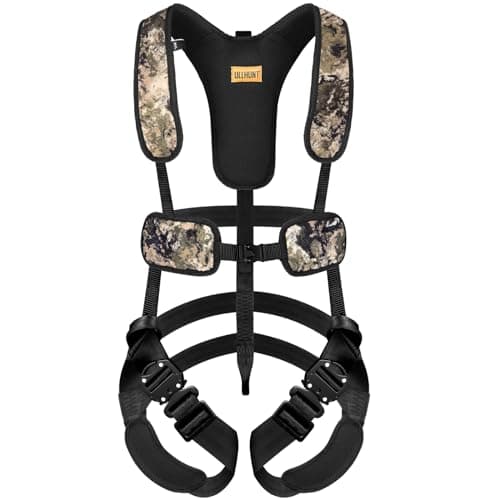
A full-body harness, adjustable, light enough that you forget you have it on, at a price that removes every excuse. It is not the plushest harness made — it is the one that gets bought and worn.
Best for: The best first harness9.0 - 2
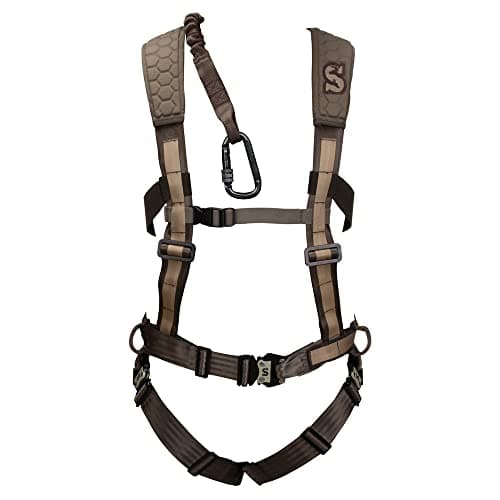
Made by the company that makes the climbers, and built to match — better padding, better hardware, and a design that has been used on Summit stands for years. The one to buy if you hunt hard and sit long.
Best for: Best harness from a stand manufacturer8.9 - 3
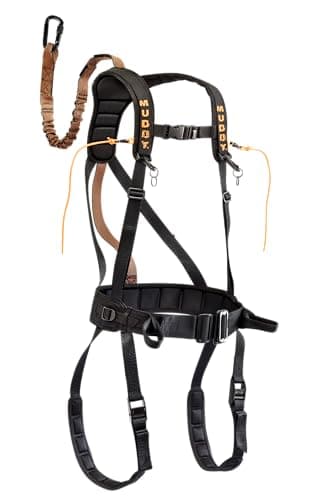
A solid, no-drama harness from an established treestand brand, sitting between the budget options and the Summit on both price and padding. A sensible choice if the cheapest one feels too cheap.
Best for: Best mid-price harness8.6 - 4
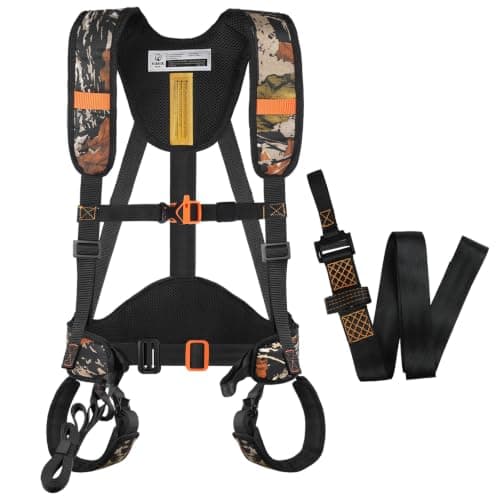
Includes a whistle, which sounds trivial until you consider the actual scenario: you have fallen, you are suspended, and you need to attract attention from someone who may be a long way off. A shout does not carry; a whistle does.
Best for: Best for hunters who hunt alone8.4 - 5
Padding at a budget price. Comfort is not a luxury in a harness — an uncomfortable harness is one you loosen, and a loosened harness does not do its job — so this is a sensible place to spend a few extra dollars.
Best for: Best budget padded option8.2
| # | Product | Best for | Score | Price |
|---|---|---|---|---|
| 1 | QOGIR Lightweight Tree Stand Safety Harness A full-body harness, adjustable, light enough that you forget you have it on, at a price that removes every excuse. It is not the plushest harness made — it is the one that gets bought and worn. | The best first harness | 9.0 | $49.99View on Amazon#ad |
| 2 | Summit Treestands Pro Safety Harness Made by the company that makes the climbers, and built to match — better padding, better hardware, and a design that has been used on Summit stands for years. The one to buy if you hunt hard and sit long. | Best harness from a stand manufacturer | 8.9 | $109.99View on Amazon#ad |
| 3 | MUDDY The Safeguard Treestand Safety Harness A solid, no-drama harness from an established treestand brand, sitting between the budget options and the Summit on both price and padding. A sensible choice if the cheapest one feels too cheap. | Best mid-price harness | 8.6 | $67.99View on Amazon#ad |
| 4 | Kalkal Tree Stand Harness with Whistle Aid Includes a whistle, which sounds trivial until you consider the actual scenario: you have fallen, you are suspended, and you need to attract attention from someone who may be a long way off. A shout does not carry; a whistle does. | Best for hunters who hunt alone | 8.4 | $51.29View on Amazon#ad |
| 5 | HUNTARMOR Padded Tree Stand Safety Harness Padding at a budget price. Comfort is not a luxury in a harness — an uncomfortable harness is one you loosen, and a loosened harness does not do its job — so this is a sensible place to spend a few extra dollars. | Best budget padded option | 8.2 | $49.99View on Amazon#ad |
Treestand falls are the leading cause of serious injury in hunting, and the statistic that should change how you buy is this: the majority of hunters who fall were not wearing a harness at the time, and a large share of falls happen during the climb rather than while seated. That means the harness only works if you put it on at the truck and stay connected from the ground up. Start with the QOGIR — it is cheap enough that there is no argument left.
How we picked these
We compared harness type, padding, adjustment range, sizing and included accessories against the only question that matters: will you actually wear it, every hunt, correctly? That pushed us toward comfort and low price over premium features, because an expensive harness in the truck protects nobody. We weighted full-body designs exclusively. Our method is on the how we research and pick page, and prices are live and dated.
Where treestand falls actually happen
| Moment | Why it goes wrong | What protects you |
|---|---|---|
| Climbing up or down | Hands occupied, cold, dark, tired — the highest-risk phase | A lifeline you clip into at ground level |
| Transitioning into the stand | You are briefly attached to nothing while stepping across | A lifeline with a prusik knot that slides as you climb |
| Sitting or standing to shoot | Losing balance, or a stand component failing | The harness tether, kept short |
| Falling asleep | More common than hunters admit on a warm afternoon sit | The harness, worn correctly |
The harness is only half the system
A harness attached to nothing does nothing. The complete system is a full-body harness plus a lifeline — a rope that runs from the base of the tree to above your stand, with a sliding knot you clip your tether into before you leave the ground and stay clipped to until you are back down. That is what closes the gap during the climb, which is where most falls happen. Many harnesses ship without a lifeline; check, and buy one if not. Keep your tether short enough that you cannot generate a long fall — you want to be caught almost immediately, not after a drop.
Practice the fall at knee height
Suspension trauma — the part nobody mentions
Surviving the fall is not the whole problem. Hanging motionless in a harness restricts blood return from your legs, and that can become dangerous within a surprisingly short time. So the plan cannot stop at “the harness catches me.” You need a way to get weight off your leg straps — a suspension relief strap (many harnesses include one), or standing back on your stand — and you need someone to know where you are and when to expect you. Carry your phone in a zipped chest pocket where you can reach it while suspended, not in a pack hanging on the tree. A harness with a whistle, like the Kalkal, exists for exactly this reason.
What to skip for now
Skip any harness that is not full-body — belt and chest-only designs are obsolete and can injure you badly in a fall. Skip second-hand harnesses; webbing degrades in sunlight and you cannot see how a used one has been stored. Skip anything past its manufacturer’s stated service life, and replace a harness that has actually caught a fall. And do not skip the harness because you are only hunting from a ladder stand — ladder stands are safer, not safe. If you would rather not deal with any of this, hunt from the ground; it kills just as many deer. Either way, add it to the beginner gear checklist as a non-negotiable line item.
The picks in detail
QOGIR Lightweight Tree Stand Safety Harness
9.0/10Best for: The best first harness
A full-body harness, adjustable, light enough that you forget you have it on, at a price that removes every excuse. It is not the plushest harness made — it is the one that gets bought and worn.
- Type
- Full-body harness
- Weight
- Lightweight
- Adjustment
- Fully adjustable
- Best for
- A first harness for any stand
- Cheap enough that there is no reason to go without
- Light enough not to add bulk under a jacket
- Adjusts across a wide range of body sizes
- Minimal padding on a long sit
- Check the manufacturer's weight rating against your loaded weight
Summit Treestands Pro Safety Harness
8.9/10Best for: Best harness from a stand manufacturer
Made by the company that makes the climbers, and built to match — better padding, better hardware, and a design that has been used on Summit stands for years. The one to buy if you hunt hard and sit long.
- Type
- Full-body harness
- Build
- Padded, heavier-duty hardware
- Sizing
- Sized (M/L)
- Best for
- Long sits, frequent hunters
- Noticeably more comfortable over a four-hour sit
- Hardware quality matches the stands it is designed for
- Proper size range rather than one-size-fits-all
- Roughly double the price of the budget options
- You must order the correct size
MUDDY The Safeguard Treestand Safety Harness
8.6/10Best for: Best mid-price harness
A solid, no-drama harness from an established treestand brand, sitting between the budget options and the Summit on both price and padding. A sensible choice if the cheapest one feels too cheap.
- Type
- Full-body harness
- Material
- Nylon webbing
- Sizing
- Sized (XL available)
- Best for
- Larger builds, mid budget
- Established treestand brand behind it
- Sizing goes up further than most
- Straightforward buckles you can work in gloves
- Less padded than the Summit Pro
- Bulkier under a jacket than the QOGIR
Kalkal Tree Stand Harness with Whistle Aid
8.4/10Best for: Best for hunters who hunt alone
Includes a whistle, which sounds trivial until you consider the actual scenario: you have fallen, you are suspended, and you need to attract attention from someone who may be a long way off. A shout does not carry; a whistle does.
- Type
- Full-body harness
- Extras
- Whistle aid included
- Weight
- Lightweight
- Best for
- Solo hunters
- The whistle is genuinely useful if you hunt alone
- Light and adjustable
- Reasonable price for the feature set
- Padding is minimal
- Newer brand with less track record
HUNTARMOR Padded Tree Stand Safety Harness
8.2/10Best for: Best budget padded option
Padding at a budget price. Comfort is not a luxury in a harness — an uncomfortable harness is one you loosen, and a loosened harness does not do its job — so this is a sensible place to spend a few extra dollars.
- Type
- Full-body harness
- Padding
- Padded shoulder and leg straps
- Adjustment
- Adjustable
- Best for
- Comfort on a budget
- Padded where it matters at a low price
- Adjustable across a wide size range
- Comfortable enough that you keep it snug
- Bulkier than unpadded harnesses
- Limited brand history
Prices shown are from Amazon as of Sep 5, 2026 and change often — the button always goes to the current listing. Some links may earn us a commission at no extra cost to you. How this works.
Frequently asked questions
Do I really need a treestand safety harness?
Yes. Falls are the leading cause of serious hunting injury, and the majority of hunters who fall were not wearing a harness. A full-body harness costs less than a box of premium ammunition and is the single highest-value safety purchase in hunting.
When should I put my safety harness on?
At the base of the tree, before you leave the ground, and stay connected until your feet are back on it. Most treestand falls happen during the climb or the transition into the stand, so a harness you clip in only once you are seated misses the highest-risk phase entirely.
What is a treestand lifeline and do I need one?
A lifeline is a rope running from the base of the tree to above your stand with a sliding knot you clip your harness tether into. It keeps you attached during the climb, which is where most falls happen. A harness without a lifeline leaves the riskiest part of the hunt unprotected.
What happens if you fall and hang in a harness?
You survive the fall, but hanging motionless restricts blood return from your legs and can become dangerous within a short time - this is called suspension trauma. Use a suspension relief strap or get weight back onto your stand, keep a phone in a reachable chest pocket, and always tell someone where you are hunting.
Sources
Keep reading
Not sure where to start?
The beginner gear checklist walks you through exactly what a first-season hunter needs — essentials first, nice-to-haves later, with one safe-default pick per category.