Gear · Roundup
The Best Hunting Backpacks for Beginners
The pack is the piece of gear beginners buy twice: once too small for the walk out, once too big for the sit. Here's how to size it right the first time and what a frame actually buys you.
Disclosure: Creek Cover is reader-supported. If you buy through our links we may earn a commission, at no extra cost to you. It never changes which pick we tell a beginner to start with. Full disclosure.
Quick picks at a glance
Tap a pick to read the full write-up, or the price button to check it on Amazon.
- 1
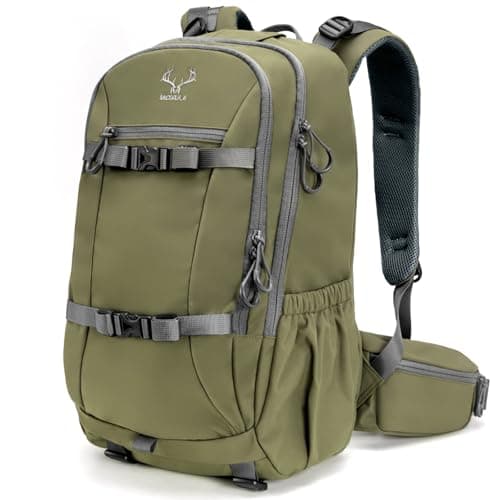
The right size for a real day hunt, with a rain cover and enough organization to find a call in the dark. This is the pack most beginners should buy, and many never need to replace.
Best for: The best all-around beginner day pack9.0 - 2
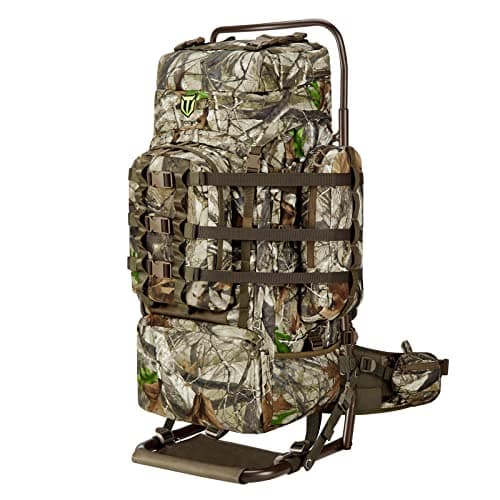
The pack that solves the walk out. A real external frame, a huge bag, and a rain cover — carries your gear in and quartered meat back to the truck without destroying your back.
Best for: Best do-everything frame pack8.9 - 3
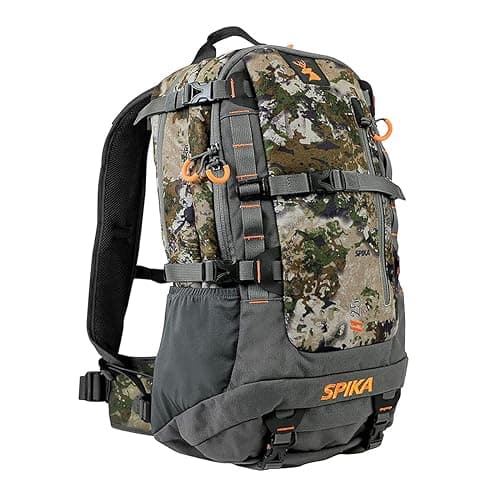
A more built-up day pack with a hydration bladder, removable waist belt, and a rifle/bow holder — the details that matter when you need both hands for a climbing stick.
Best for: Best day pack with a weapon carry8.7 - 4
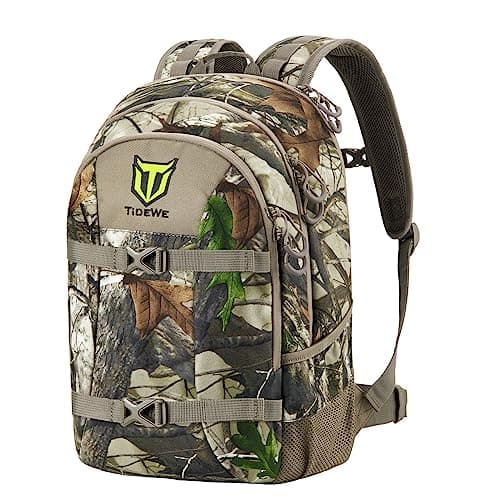
Barely more than the cost of a box of shells, and honestly enough pack for a morning sit close to the truck. The one to buy if the budget is already committed elsewhere.
Best for: Best true budget pick8.1 - 5
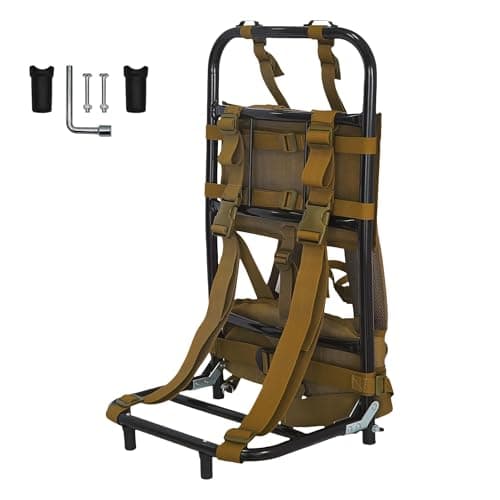
The smart middle path: keep your day pack, add a bare frame that lives in the truck for the day you actually kill something. Cheaper and more flexible than owning two full packs.
Best for: Adding hauling capacity to a pack you own8.4 - 6
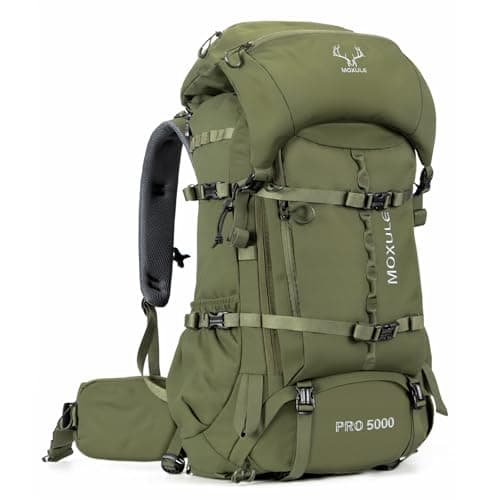
A larger, better-suspended hauler for hunters who have decided they're doing this properly — western hunts, elk, or anywhere the animal is a mile from the road.
Best for: The upgrade for serious pack-outs8.8
| # | Product | Best for | Score | Price |
|---|---|---|---|---|
| 1 | MOXULE 25L Hunting Day Pack The right size for a real day hunt, with a rain cover and enough organization to find a call in the dark. This is the pack most beginners should buy, and many never need to replace. | The best all-around beginner day pack | 9.0 | $99.99View on Amazon#ad |
| 2 | TIDEWE 90L External Frame Hunting Pack The pack that solves the walk out. A real external frame, a huge bag, and a rain cover — carries your gear in and quartered meat back to the truck without destroying your back. | Best do-everything frame pack | 8.9 | $164.99View on Amazon#ad |
| 3 | SPIKA 25L Camo Hunting Day Pack A more built-up day pack with a hydration bladder, removable waist belt, and a rifle/bow holder — the details that matter when you need both hands for a climbing stick. | Best day pack with a weapon carry | 8.7 | $165.99View on Amazon#ad |
| 4 | TIDEWE 25L Lightweight Camo Daypack Barely more than the cost of a box of shells, and honestly enough pack for a morning sit close to the truck. The one to buy if the budget is already committed elsewhere. | Best true budget pick | 8.1 | $34.99View on Amazon#ad |
| 5 | EAGWON Foldable Aluminum Pack Frame The smart middle path: keep your day pack, add a bare frame that lives in the truck for the day you actually kill something. Cheaper and more flexible than owning two full packs. | Adding hauling capacity to a pack you own | 8.4 | $94.99View on Amazon#ad |
| 6 | MOXULE Pro 5000 Frame Meat Hauler A larger, better-suspended hauler for hunters who have decided they're doing this properly — western hunts, elk, or anywhere the animal is a mile from the road. | The upgrade for serious pack-outs | 8.8 | $278.99View on Amazon#ad |
The hunting backpack is the single most over-bought item in a beginner’s kit. New hunters see a 5,000-cubic-inch expedition frame pack, imagine dragging an elk off a mountain, and buy something they then resent carrying on a two-hour whitetail sit half a mile from the truck. Then they kill a deer, discover a day pack cannot get it out, and buy a second one. For most people the right first answer is a 25-liter day pack, with a bare frame in the truck for the day it matters. Here is how to get it right the first time.
How we picked these
We compared published capacity, frame type, fabric, suspension, and included features (rain cover, hydration compatibility, weapon carry) against the three jobs a beginner’s pack actually does: carry layers and essentials to a stand, stay quiet and out of the way for hours, and get meat back to the vehicle. We have not loaded these with 80 pounds of boned-out elk and walked five miles — nobody who tells you they did that with every pack on their list has either. Our full process is on the methodology page. Prices are live and dated.
How many liters do you actually need?
Pack capacity is measured in liters or cubic inches (roughly 61 cubic inches to a liter), and the numbers get abstract fast. Translate them into hunts instead:
| Capacity | What it holds | Right for |
|---|---|---|
| 10-18 L | Water, snack, knife, license, one layer | Short morning sits close to the truck |
| 20-30 L | All of the above plus a warm layer, rain shell, calls, and a small kill kit | The realistic all-season day-hunt size |
| 35-50 L | Day gear plus a full extra clothing system, spotting gear, and room for boned meat | Long days, cold weather, hike-in public land |
| 60 L+ with a frame | Multi-day camp or a quartered animal | Pack-outs, western hunts, multi-day trips |
The honest read for a first season on public or private land within a mile of a road: 25 liters. It is the size that survives contact with reality. Big enough for a cold-weather layer and rain shell you did not expect to need, small enough that you take it every single time instead of leaving it in the truck.
Frame pack or day pack?
This is the actual decision, and it is not about capacity — it is about load transfer. A day pack hangs weight off your shoulders. That is fine to about 20 pounds and miserable beyond it. A framed pack puts a rigid structure between the load and your body so the weight rides on your hips, which is how humans carry heavy things without wrecking their back. Above roughly 40 pounds, a frame is not a luxury, it is the difference between two trips and four.
Here is the part nobody says out loud: a mature whitetail is heavier than a beginner expects. A field-dressed adult deer commonly runs 100-150 pounds, and quartered, that is two or three loads even with a frame. If you are hunting anywhere you cannot back a vehicle or drag to, you need a hauling plan before you pull the trigger — not after.
The cheap way to have both
Quiet fabric is a real spec, not marketing
Most general-purpose backpacks are made from ripstop nylon with a slick coating, which is durable, cheap, and sounds like a crisp packet when a branch drags across it. Hunting-specific packs use brushed, fleece-faced, or tricot-backed fabrics that are noticeably quieter against brush and clothing. On a fifteen-yard bow shot, that difference is real.
The other noise sources are hardware and zips. Metal buckles clacking together at first light carry a long way in still air. Before opening day, load your pack and shake it — anything that rattles gets taped, tied down, or moved to an inside pocket. That five-minute check is worth more than any fabric spec on the box.
Fit: the part nobody checks
A pack is sized by torso length, not your height. Measure from the bony bump at the base of your neck (C7 vertebra) down to the level of the top of your hip bones. Most adult men land between 17 and 21 inches. A pack whose frame is too long for your torso pushes the hip belt below your hips and the whole load goes back onto your shoulders — the exact problem the frame exists to solve.
Then load it properly. Heavy items ride high and close to your spine, not at the bottom of the bag. Tighten the hip belt first, over the top of your hip bones, then snug the shoulder straps, then the load lifters. Done right, roughly 70-80% of the weight sits on your hips. Done wrong, you carry it all on your traps and blame the pack.
What actually goes in it
For a day hunt, the contents barely change season to season: water, a high-calorie snack, a warm layer, a packable rain shell, your knife and a few game bags, a headlamp with fresh batteries, your license and tags, a phone battery, toilet paper in a zip bag, and whatever calls your quarry needs. Binoculars live on a chest harness, not in the pack, and a rangefinder lives in the same pocket every time so you can find it in the dark.
If you hunt from an elevated stand, your safety harness goes on before you leave the truck, not in the pack. And keep a small dedicated kill kit — bags, gloves, a zip tie for the tag — permanently in one pocket so it never gets left behind on the one day you need it. The full list lives on the beginner gear checklist.
What to skip
Skip the 6,000-cubic-inch expedition pack for a whitetail season. Skip anything with a dozen MOLLE panels and no hip belt — that is a tactical-styling pack, not a load carrier. Skip built-in “survival kit” bundles. And skip spending pack money before you have sorted boots and binoculars; a mediocre pack on a good day is an annoyance, while bad boots end the hunt.
The picks in detail
MOXULE 25L Hunting Day Pack
9.0/10Best for: The best all-around beginner day pack
The right size for a real day hunt, with a rain cover and enough organization to find a call in the dark. This is the pack most beginners should buy, and many never need to replace.
- Capacity
- 25 liters
- Type
- Day pack
- Rain cover
- Included
- Best for
- Day sits, tree stands, ground blinds
- Right-sized for a day hunt
- Rain cover included
- Quiet fabric and sensible pockets
- No load-hauling frame
- Too small for a multi-day or pack-out hunt
TIDEWE 90L External Frame Hunting Pack
8.9/10Best for: Best do-everything frame pack
The pack that solves the walk out. A real external frame, a huge bag, and a rain cover — carries your gear in and quartered meat back to the truck without destroying your back.
- Capacity
- 90 liters
- Type
- External frame
- Rain cover
- Included
- Best for
- Meat hauling, multi-day, big game
- Genuinely hauls heavy loads
- Bag detaches from the frame for meat
- Excellent value for a framed pack
- Far more pack than a morning sit needs
- Bulky and noisy in thick cover
SPIKA 25L Camo Hunting Day Pack
8.7/10Best for: Best day pack with a weapon carry
A more built-up day pack with a hydration bladder, removable waist belt, and a rifle/bow holder — the details that matter when you need both hands for a climbing stick.
- Capacity
- 25 liters
- Hydration
- Bladder included
- Weapon carry
- Rifle/bow holder
- Best for
- Hands-free approach hikes
- Weapon carry frees both hands
- Water bladder included
- Removable belt for a lighter sit
- Costs more than the simpler 25L packs
- Heavier empty weight
TIDEWE 25L Lightweight Camo Daypack
8.1/10Best for: Best true budget pick
Barely more than the cost of a box of shells, and honestly enough pack for a morning sit close to the truck. The one to buy if the budget is already committed elsewhere.
- Capacity
- 25 liters
- Weight
- Lightweight
- Type
- Simple daypack
- Best for
- Short sits, tight budgets
- Very inexpensive
- Light enough to forget
- Fine for close-to-the-truck hunts
- Thin fabric, less durable
- No frame, no rain cover
EAGWON Foldable Aluminum Pack Frame
8.4/10Best for: Adding hauling capacity to a pack you own
The smart middle path: keep your day pack, add a bare frame that lives in the truck for the day you actually kill something. Cheaper and more flexible than owning two full packs.
- Type
- Bare external frame
- Material
- Aluminum, foldable
- Use
- Meat and camp hauling
- Best for
- Pack-outs without a second pack
- Turns any hunt into a haul-capable one
- Folds for truck storage
- Much cheaper than a second full pack
- No bag — you strap loads directly
- Extra step versus an integrated frame pack
MOXULE Pro 5000 Frame Meat Hauler
8.8/10Best for: The upgrade for serious pack-outs
A larger, better-suspended hauler for hunters who have decided they're doing this properly — western hunts, elk, or anywhere the animal is a mile from the road.
- Capacity
- 5000 cu in class
- Type
- Frame meat hauler
- Rain cover
- Included
- Best for
- Elk, western hunts, multi-day
- Carries genuinely heavy loads comfortably
- Better suspension than the budget frames
- Rain cover included
- Overkill for whitetail from a stand
- The most expensive option here
Prices shown are from Amazon as of Sep 5, 2026 and change often — the button always goes to the current listing. Some links may earn us a commission at no extra cost to you. How this works.
Frequently asked questions
What size backpack do I need for hunting?
For most beginners, 25 liters is the right size — enough for water, a warm layer, rain shell, knife, calls, and your tags, without being so big you leave it in the truck. Step up to 35-50 liters for long cold-weather days or hike-in public land, and to a 60L+ framed pack only if you need to carry a quartered animal or camp.
Do I need a frame pack for hunting?
Not for carrying day gear — a frameless 25L pack is fine to about 20 pounds. You need a frame once you are hauling a quartered animal or a multi-day load, because the frame transfers weight to your hips instead of your shoulders. A cheap folding pack frame kept in the truck is the budget way to have hauling capacity without owning two packs.
How much does a field-dressed deer weigh to pack out?
A field-dressed adult whitetail commonly runs 100-150 pounds, which is two or three loads even on a good frame pack once quartered. Plan your pack-out before you hunt an area — how far you are from the vehicle and whether you can drag matters more than any spec on your backpack.
Does a hunting backpack need to be camo?
No. Camo helps at close bow range and where the law does not require blaze orange, but a solid earth-tone pack is fine for most hunting, and quiet fabric matters far more than the pattern. Check your state's blaze-orange rules — some require orange on your pack or above the shoulders during firearm seasons.
How do I fit a hunting backpack correctly?
Size by torso length, not height: measure from the bony bump at the base of your neck to the top of your hip bones. Load heavy items high and close to your spine, tighten the hip belt over the hip bones first, then the shoulder straps, then the load lifters. Done right, most of the weight rides on your hips, not your shoulders.
Sources
Keep reading
Not sure where to start?
The beginner gear checklist walks you through exactly what a first-season hunter needs — essentials first, nice-to-haves later, with one safe-default pick per category.