Gear · Roundup
The Best Treestands for Beginners
Hunting from a tree is a genuine advantage and a genuine risk. Here is which stand to start with, and the one accessory you must buy alongside it.
Disclosure: Creek Cover is reader-supported. If you buy through our links we may earn a commission, at no extra cost to you. It never changes which pick we tell a beginner to start with. Full disclosure.
Quick picks at a glance
Tap a pick to read the full write-up, or the price button to check it on Amazon.
- 1
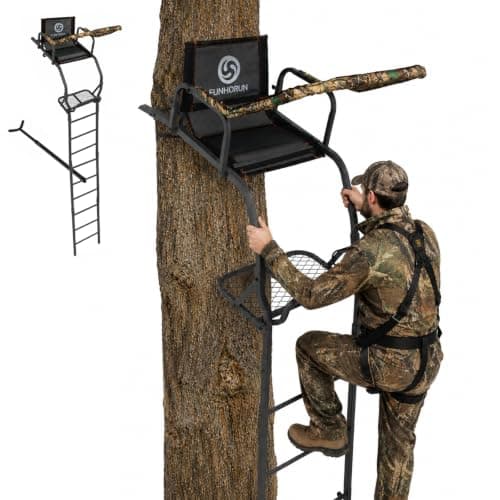
Fifteen feet of ladder with a seat at the top. No climbing technique to learn, no cold-morning setup, and it goes up once in summer and stays until the season ends — which is exactly what a beginner needs.
Best for: The best first treestand9.0 - 2
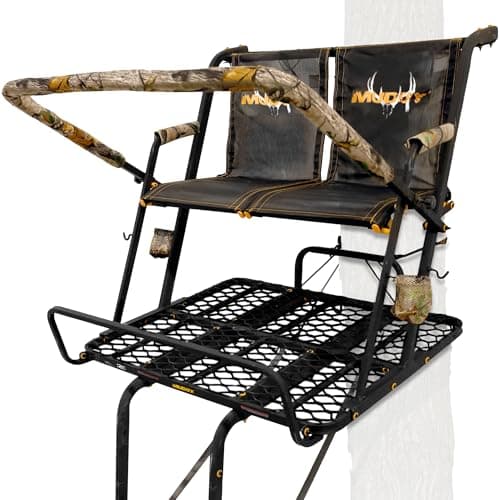
Two seats at 17 feet. Almost every new hunter learns faster with someone experienced beside them, and this is the stand that makes that possible — it is also how you take a kid on their first hunt.
Best for: Best stand to take a mentor or a child up8.9 - 3
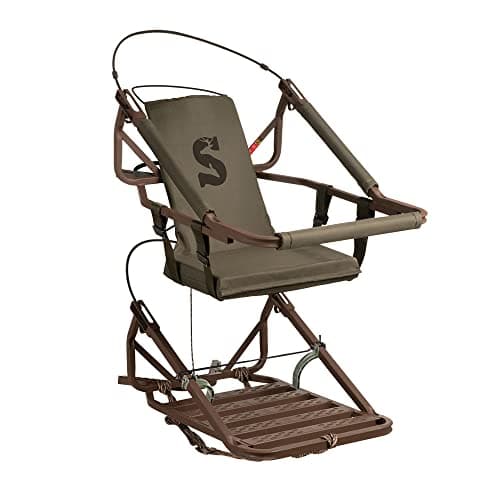
The entry into Summit's climbers, which are the benchmark for the category. A climber lets you move to where the deer actually are — the single biggest advantage over a fixed stand — but it demands you learn the technique first.
Best for: Best value climbing stand8.8 - 4
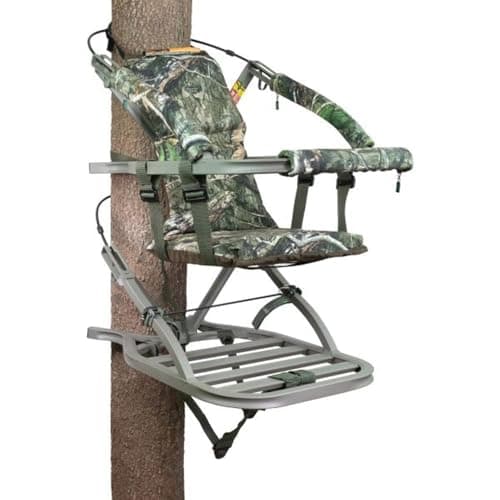
A smaller, lighter Viper for hunters who walk a long way to their spot. Every pound matters when the stand is on your back for a mile in the dark — but you are trading platform room for that.
Best for: Best lightweight climber for a long walk in8.6 - 5
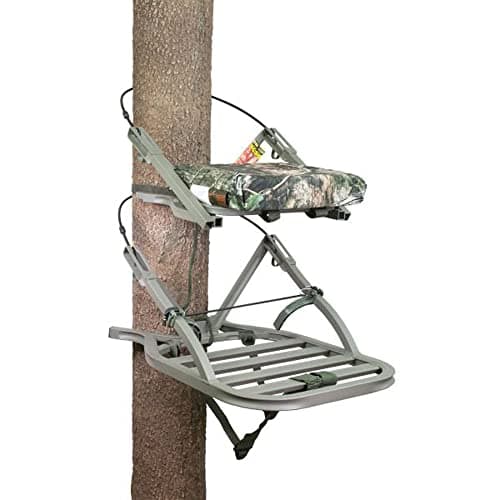
An open-front design so nothing sits between you and the shot — the detail that matters when you need to draw a bow and rotate. The trade-off is that an open front feels far less secure to a beginner, so this is a second stand, not a first.
Best for: Best climber for bow hunting8.5
| # | Product | Best for | Score | Price |
|---|---|---|---|---|
| 1 | FUNHORUN 15ft Ladder Tree Stand Fifteen feet of ladder with a seat at the top. No climbing technique to learn, no cold-morning setup, and it goes up once in summer and stays until the season ends — which is exactly what a beginner needs. | The best first treestand | 9.0 | $159.99View on Amazon#ad |
| 2 | Muddy 2-Person Ladder Tree Stand, 17ft Two seats at 17 feet. Almost every new hunter learns faster with someone experienced beside them, and this is the stand that makes that possible — it is also how you take a kid on their first hunt. | Best stand to take a mentor or a child up | 8.9 | $339.99View on Amazon#ad |
| 3 | Summit Treestands Viper Steel Climbing Treestand The entry into Summit's climbers, which are the benchmark for the category. A climber lets you move to where the deer actually are — the single biggest advantage over a fixed stand — but it demands you learn the technique first. | Best value climbing stand | 8.8 | $239.99View on Amazon#ad |
| 4 | Summit Treestands Mini Viper SD Climbing Treestand A smaller, lighter Viper for hunters who walk a long way to their spot. Every pound matters when the stand is on your back for a mile in the dark — but you are trading platform room for that. | Best lightweight climber for a long walk in | 8.6 | $374.99View on Amazon#ad |
| 5 | Summit Treestands OpenShot SD Climbing Treestand An open-front design so nothing sits between you and the shot — the detail that matters when you need to draw a bow and rotate. The trade-off is that an open front feels far less secure to a beginner, so this is a second stand, not a first. | Best climber for bow hunting | 8.5 | $359.99View on Amazon#ad |
Getting fifteen feet off the ground does two useful things: it puts you above a deer’s normal line of sight, and it lifts a good part of your scent off the trail. It also introduces the single most common cause of serious hunting injury in the United States — a fall. Both of those facts are true at once, and this page treats them that way. For a first season the right answer is a ladder stand, not a climber.
How we picked these
We compared stand type, height, capacity, weight and setup demands against what a beginner can genuinely use safely and repeatedly. We weighted ease and safety of getting up and down above mobility and weight savings, because a stand you use cautiously beats a stand you use nervously. We have not climbed every model here and do not claim to; our method is on the how we research and pick page.
Buy the harness before you buy the stand
Read this before you buy anything
Four rules, and they are not optional. One: wear a full-body harness attached to the tree, with a lifeline that keeps you connected during the climb. Two: never carry your bow or firearm up — haul it separately on a rope once you are seated and secured, unloaded and pointed safely. Three: tell someone exactly where you are and when you will be back. Four: inspect straps and welds every single season; the webbing on a stand left out all year degrades in sunlight, and that is precisely how a stand that was fine last November fails this one.
Ladder stand or climbing stand?
| Ladder stand | Climbing stand | |
|---|---|---|
| Skill required | Climb a ladder | A real technique you must practice first |
| Setup | Once, pre-season, with two people | Every hunt, in the dark |
| Mobility | None — fixed for the season | Go anywhere with a suitable tree |
| Tree requirements | Most trees work | Straight trunk, no low branches, right diameter |
| Left in the woods | Yes — theft and weather exposure | No — comes home with you |
| Best for | Private land, a first season | Public land, once you have experience |
The honest summary: a climber is the better hunting tool and the worse first purchase. Being able to move to where the sign is beats a fixed stand in a mediocre spot every time — but a climber asks you to learn a technique, in the dark, at height, while cold. Practice a climber at knee height in your yard a dozen times before you take it into the woods. If you hunt land you can leave gear on, start with the ladder and buy the climber next year.
How high should you go?
Fifteen to twenty feet covers almost every situation. High enough to be out of a deer’s normal sight line and to get some scent above the trail; low enough that the shot angle down onto an animal is still workable. Going much higher steepens the angle sharply, which shrinks the vital area you are actually aiming at and increases the chance of a single-lung hit. Height is not the variable that makes you successful — cover behind you is. A stand at fifteen feet with a tree trunk breaking up your outline beats one at thirty feet silhouetted against open sky.
Where you put it should come from evidence, not hope. Run a trail camera on a funnel first and hang the stand where the photos say animals actually move, with the prevailing wind carrying your scent away from that trail. Range a few landmarks with a rangefinder the day you hang it, so you are not guessing distance with a deer in front of you.
What to skip for now
Skip saddle hunting for a first season — it is an excellent, mobile system and it is an advanced one. Skip hang-on stands with climbing sticks until you are comfortable at height, because the transition from sticks into the stand is the highest-risk moment in treestand hunting. And skip the temptation to hunt from a tree at all if it makes you genuinely nervous: a ground blind kills just as many deer with none of the risk, and there is no prize for being uncomfortable. Whichever you choose, put it on the beginner gear checklist alongside the harness — they are one purchase, not two.
The picks in detail
FUNHORUN 15ft Ladder Tree Stand
9.0/10Best for: The best first treestand
Fifteen feet of ladder with a seat at the top. No climbing technique to learn, no cold-morning setup, and it goes up once in summer and stays until the season ends — which is exactly what a beginner needs.
- Type
- Ladder stand
- Height
- 15 ft
- Setup
- Once, pre-season
- Best for
- A property you can leave gear on
- Easiest and safest style for a first-season hunter
- Cheapest way into hunting from height
- Nothing to learn beyond climbing a ladder carefully
- Needs two people and real effort to erect safely
- Fixed in one spot — no moving with the deer
Muddy 2-Person Ladder Tree Stand, 17ft
8.9/10Best for: Best stand to take a mentor or a child up
Two seats at 17 feet. Almost every new hunter learns faster with someone experienced beside them, and this is the stand that makes that possible — it is also how you take a kid on their first hunt.
- Type
- 2-person ladder stand
- Height
- 17 ft
- Capacity
- Two hunters
- Best for
- Mentored hunts, hunting with a child
- Lets an experienced hunter sit with you
- Height gets you well above a deer's normal sight line
- Established brand with proper hardware
- Heavy and awkward — a genuine two-person build
- Two people in a stand means twice the movement and scent
Summit Treestands Viper Steel Climbing Treestand
8.8/10Best for: Best value climbing stand
The entry into Summit's climbers, which are the benchmark for the category. A climber lets you move to where the deer actually are — the single biggest advantage over a fixed stand — but it demands you learn the technique first.
- Type
- Climbing treestand
- Frame
- Steel
- Mobility
- Carried in and out each hunt
- Best for
- Public land, moving with the deer
- Go wherever the sign is — enormous advantage on public land
- Summit's climbers are the benchmark for the category
- Nothing left in the woods to be stolen
- You must practice the climbing technique at ground level first
- Only works on straight trees with no low branches
Summit Treestands Mini Viper SD Climbing Treestand
8.6/10Best for: Best lightweight climber for a long walk in
A smaller, lighter Viper for hunters who walk a long way to their spot. Every pound matters when the stand is on your back for a mile in the dark — but you are trading platform room for that.
- Type
- Climbing treestand
- Size
- Compact / lightweight
- Mobility
- Packed in on your back
- Best for
- Long walk-ins, smaller hunters
- Noticeably lighter to carry than a full-size climber
- Same proven Summit climbing system
- Quieter aluminum construction
- Small platform is cramped for a bow hunter
- Priced well above a ladder stand
Summit Treestands OpenShot SD Climbing Treestand
8.5/10Best for: Best climber for bow hunting
An open-front design so nothing sits between you and the shot — the detail that matters when you need to draw a bow and rotate. The trade-off is that an open front feels far less secure to a beginner, so this is a second stand, not a first.
- Type
- Open-front climbing stand
- Shooting
- Unobstructed for archery
- Mobility
- Packed in
- Best for
- Bow hunters who have climbed before
- Nothing in the way of a bow shot in any direction
- Lighter than a full-rail climber
- Proven Summit hardware
- The open front is genuinely unnerving for a first-timer
- Demands strict harness discipline
Prices shown are from Amazon as of Sep 5, 2026 and change often — the button always goes to the current listing. Some links may earn us a commission at no extra cost to you. How this works.
Frequently asked questions
What kind of treestand is best for a beginner?
A ladder stand. You climb a ladder rather than learning a climbing technique, it goes up once before the season and stays put, and it is far and away the least likely style to get a beginner into trouble. Climbing stands are better hunting tools but demand practice at ground level before you use them at height.
How high should a treestand be?
Fifteen to twenty feet suits almost every situation. That is high enough to be out of a deer's normal sight line without steepening your shot angle so much that the vital area shrinks. Cover behind you matters more than height - a stand at fifteen feet against a broken background beats one at thirty feet silhouetted.
Do I need a safety harness for a treestand?
Yes, always, and a full-body harness with a lifeline that keeps you attached during the climb. Falls are the leading cause of serious hunting injury, and most happen during the climb or the transition into the stand rather than while seated. Budget for the harness in the same purchase as the stand.
Can you take a bow or rifle up a treestand?
Not while climbing. Get up, get seated and get secured first, then haul your unloaded firearm or your bow up on a haul rope with the muzzle pointed safely away. Carrying a weapon while climbing occupies a hand you need and is one of the most common causes of treestand accidents.
Sources
Keep reading
Not sure where to start?
The beginner gear checklist walks you through exactly what a first-season hunter needs — essentials first, nice-to-haves later, with one safe-default pick per category.