Gear · Roundup
The Best Turkey Calls for Beginners
Three call types, one of which you can be good at by Friday. Start there, and learn exactly two sounds.
Disclosure: Creek Cover is reader-supported. If you buy through our links we may earn a commission, at no extra cost to you. It never changes which pick we tell a beginner to start with. Full disclosure.
Quick picks at a glance
Tap a pick to read the full write-up, or the price button to check it on Amazon.
- 1
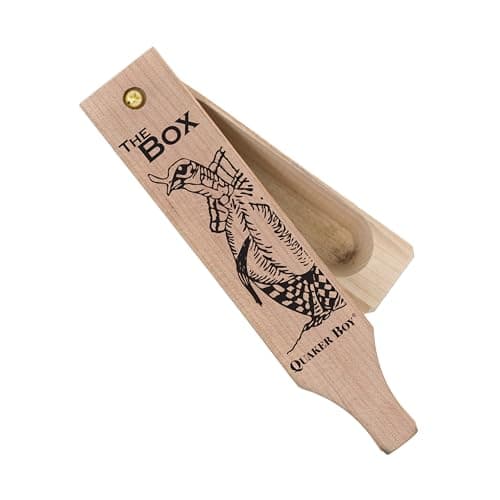
A straightforward wooden box call at a fair price. You will produce a usable yelp in your first sitting and a good one within a week, which is not true of any other call type.
Best for: The call to learn first9.2 - 2
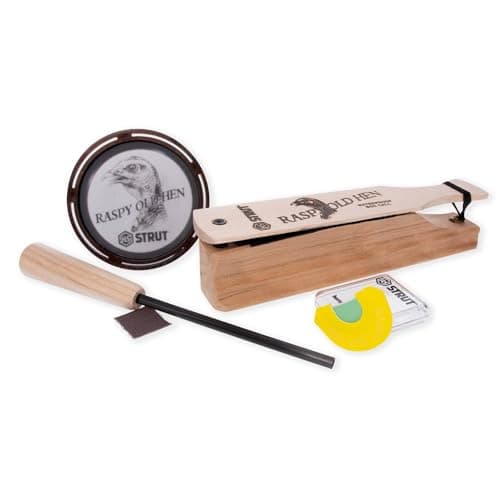
A combination pack that covers a wider range of turkey sounds than any single call, so you can find out which type suits you without buying three separately. The efficient way to start if you know you will keep at it.
Best for: Best starter kit if you want more than one call8.9 - 3
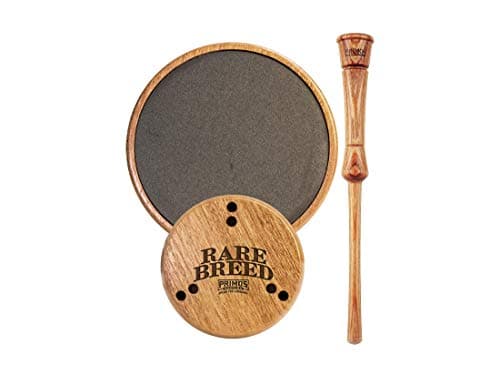
Slate produces the soft, raspy clucks and purrs that finish a gobbler at forty yards, where a box call is too loud and too obvious. Harder than a box call, easier than a mouth call.
Best for: Best pot call for soft, close work8.7 - 4
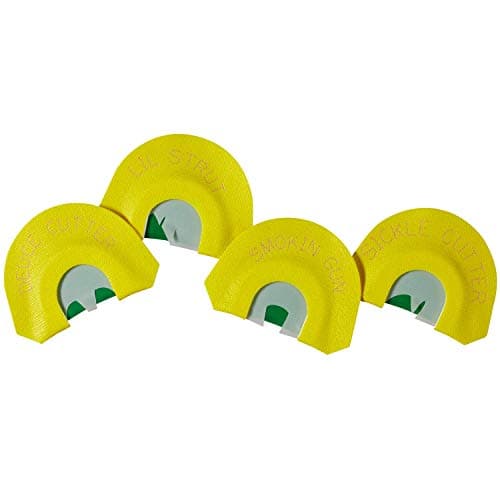
Four diaphragm calls with different reed configurations for the price of a couple of boxes of shells. Mouth calls are the hardest to learn and the only ones that leave both hands free — this is the low-risk way to find out if you can get on with them.
Best for: Cheapest way to try mouth calls8.4 - 5
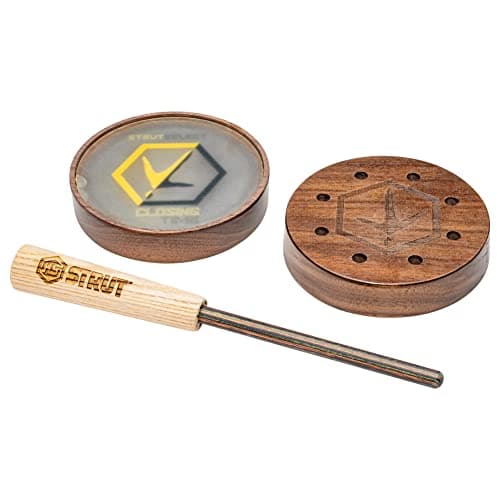
A kiln-dried walnut pot with a slate surface at a noticeably lower price than the Primos. The tone is a little less refined and the difference will not cost you a bird in your first season.
Best for: Best value pot call8.2
| # | Product | Best for | Score | Price |
|---|---|---|---|---|
| 1 | Quaker Boy The Box Turkey Call A straightforward wooden box call at a fair price. You will produce a usable yelp in your first sitting and a good one within a week, which is not true of any other call type. | The call to learn first | 9.2 | $21.99View on Amazon#ad |
| 2 | Hunters Specialties Raspy Old Hen Combo Kit A combination pack that covers a wider range of turkey sounds than any single call, so you can find out which type suits you without buying three separately. The efficient way to start if you know you will keep at it. | Best starter kit if you want more than one call | 8.9 | $28.29View on Amazon#ad |
| 3 | Primos Rare Breed Slate Turkey Pot Call Slate produces the soft, raspy clucks and purrs that finish a gobbler at forty yards, where a box call is too loud and too obvious. Harder than a box call, easier than a mouth call. | Best pot call for soft, close work | 8.7 | $41.40View on Amazon#ad |
| 4 | Hunters Specialties Premium Flex Four Diaphragm Calls, 4-Pack Four diaphragm calls with different reed configurations for the price of a couple of boxes of shells. Mouth calls are the hardest to learn and the only ones that leave both hands free — this is the low-risk way to find out if you can get on with them. | Cheapest way to try mouth calls | 8.4 | $10.74View on Amazon#ad |
| 5 | HS Strut Select Closing Time Walnut Turkey Pot Call A kiln-dried walnut pot with a slate surface at a noticeably lower price than the Primos. The tone is a little less refined and the difference will not cost you a bird in your first season. | Best value pot call | 8.2 | $26.83View on Amazon#ad |
Spring turkey is the most call-dependent hunting most beginners will do, and it is also the one where over-calling ruins the most hunts. The good news is that the learning curve is not as steep as it looks: a box call and two sounds will kill turkeys, and you can be genuinely competent with both by the weekend. Start with the Quaker Boy box call above.
How we picked these
We compared call type, published construction and volume against the two things that decide a first spring: how fast a beginner can make a convincing sound, and whether the call still works in wind and damp. We weighted learning speed heavily and discounted calls that need conditioning, tuning or a trained tongue before they produce anything usable. We do not record and analyze call audio — our approach is on the how we research and pick page, and prices here are live and dated.
The three call types, honestly compared
Every turkey call in a shop is one of three things. Which one is “best” depends entirely on how much time you have before opening day.
| Call type | Time to sound convincing | Strength | Weakness |
|---|---|---|---|
| Box call | Minutes | Loud, works in wind, easy | Two hands and visible motion |
| Pot (slate or glass) | A few sessions | Soft, natural close-range sounds | Needs conditioning, must stay dry |
| Diaphragm (mouth) | Weeks | Completely hands-free | Hard to learn, and not everyone can tolerate one |
| Locator (crow, owl) | Minutes | Makes a gobbler answer without calling him | Not a turkey sound - a different job entirely |
The honest sequence for a first-season hunter is: buy the box call, hunt with it, and buy a pot call when you find yourself needing to make soft sounds at a bird already inside fifty yards. Buy a diaphragm when you have had the experience of needing to call with a gun already mounted — that moment is what mouth calls exist for, and until you have had it, the practice feels pointless.
The only two sounds you need to learn
Turkeys make dozens of sounds. You need two. The first is the plain yelp — a series of three to eight notes, evenly spaced, which is a hen saying where she is. It is the sound that answers a gobble and the sound that pulls a bird toward you. The second is the cluck — a single sharp note, used sparingly, which reassures a bird that has gone quiet and is hanging up out of range.
That is genuinely it for a first season. Cutting, cackling, purring and kee-kee runs all have their place, and every one of them is a way for a beginner to sound wrong at the worst moment. If you master a clean yelp and a confident cluck, you have the same tools that killed turkeys for a century before anyone owned six calls.
Learn to shut up before you learn a third sound
When to stop calling
There are three moments to go quiet, and they matter more than any sound you can make. When a bird answers and closes the distance — quit and let him hunt for you. When he hangs up and gobbles in place — quit for ten or fifteen minutes; boredom moves more hung-up gobblers than calling does. When you can see him— quit entirely, because you cannot make a hand motion with a box call inside a turkey’s eyesight and expect to get away with it. That last point is also the reason experienced hunters carry a diaphragm even if they hate them.
What to skip for now
Skip the full lanyard of eight calls — carry two. Skip gobble calls entirely for your first season: you are imitating a mature gobbler on public ground where other people are hunting, and the safety math on that is bad. Skip anything sold on being the loudest, because volume is a locating tool and locating is what a crow call does for four dollars. Pair the calls with a visible way to identify yourself when moving on public ground, and read the full spring plan in turkey hunting for beginners.
The picks in detail
Quaker Boy The Box Turkey Call
9.2/10Best for: The call to learn first
A straightforward wooden box call at a fair price. You will produce a usable yelp in your first sitting and a good one within a week, which is not true of any other call type.
- Type
- Box call
- Volume
- High - reaches across a ridge
- Learning curve
- Minutes
- Best for
- Locating and calling in open timber
- Fastest call to sound genuinely convincing on
- Loud enough to raise a gobble at distance and in wind
- Nothing to break and nothing to keep dry except the chalk
- Requires two hands and visible motion
- Loses volume if the lid gets damp - keep it bagged
Hunters Specialties Raspy Old Hen Combo Kit
8.9/10Best for: Best starter kit if you want more than one call
A combination pack that covers a wider range of turkey sounds than any single call, so you can find out which type suits you without buying three separately. The efficient way to start if you know you will keep at it.
- Type
- Multi-call combo kit
- Sounds
- Wide range - yelps through cutting
- Learning curve
- Varies by call
- Best for
- Working out what suits you
- Cheaper than buying the same calls individually
- Lets you find your preferred call type in one season
- Covers both soft close-range and loud locating sounds
- More calls than a first-season hunter needs at once
- Tempts you into calling too much
Primos Rare Breed Slate Turkey Pot Call
8.7/10Best for: Best pot call for soft, close work
Slate produces the soft, raspy clucks and purrs that finish a gobbler at forty yards, where a box call is too loud and too obvious. Harder than a box call, easier than a mouth call.
- Type
- Pot call, slate surface
- Volume
- Soft to moderate
- Learning curve
- A few sessions
- Best for
- Close-range finishing
- The right tool once a bird is close and committed
- Slate gives the softest, most natural purrs here
- One hand on the pot, one on the striker - less motion than a box
- Slate must be conditioned and kept dry to work at all
- Not loud enough to locate a distant gobbler
Hunters Specialties Premium Flex Four Diaphragm Calls, 4-Pack
8.4/10Best for: Cheapest way to try mouth calls
Four diaphragm calls with different reed configurations for the price of a couple of boxes of shells. Mouth calls are the hardest to learn and the only ones that leave both hands free — this is the low-risk way to find out if you can get on with them.
- Type
- Diaphragm mouth calls
- Pack
- 4 calls, varied cuts
- Learning curve
- Weeks
- Best for
- Hands-free calling with a gun up
- Zero hand motion, which is the whole point once a bird is close
- Four different cuts to find one that suits your mouth
- The cheapest calls on this page by unit
- Genuinely hard - expect weeks before you sound like a turkey
- They trigger a gag reflex in some people, and no practice fixes that
HS Strut Select Closing Time Walnut Turkey Pot Call
8.2/10Best for: Best value pot call
A kiln-dried walnut pot with a slate surface at a noticeably lower price than the Primos. The tone is a little less refined and the difference will not cost you a bird in your first season.
- Type
- Pot call, slate surface
- Body
- Kiln-dried walnut
- Volume
- Soft to moderate
- Best for
- Close work on a budget
- Real wood pot at a budget price
- Same soft close-range capability as pricier slate calls
- Striker included, so nothing else to buy
- Tone is less consistent across the surface
- Still needs conditioning and dry storage like any slate
Prices shown are from Amazon as of Sep 5, 2026 and change often — the button always goes to the current listing. Some links may earn us a commission at no extra cost to you. How this works.
Frequently asked questions
What is the easiest turkey call for a beginner?
A box call. Most people produce a usable yelp within ten minutes of picking one up and a genuinely convincing one within a week - no other call type is close. It is also loud enough to reach a gobbler on the next ridge and it keeps working in wind.
What turkey sounds should a beginner learn?
Two: the plain yelp and the cluck. The yelp is a series of three to eight evenly spaced notes that says where a hen is, and it is what answers a gobble. The cluck is a single sharp note used sparingly to reassure a bird that has gone quiet. Everything else can wait.
Box call or slate call for turkey hunting?
Box call first. It is louder, easier and works in wind, which makes it the right tool for locating and for calling across distance. A slate pot call is better once a bird is inside fifty yards and you need soft clucks and purrs - which is why many hunters eventually carry both.
Are mouth calls worth learning?
Yes, eventually. A diaphragm is the only call that leaves both hands free, which is what you need when a gobbler is closing and your gun is already up. They take weeks to sound right and some people cannot tolerate one at all, so try a cheap multi-pack before committing.
Sources
Keep reading
Not sure where to start?
The beginner gear checklist walks you through exactly what a first-season hunter needs — essentials first, nice-to-haves later, with one safe-default pick per category.