Guides · Quarry
Turkey Hunting for Beginners
A gobble at forty yards is the loudest thing in the spring woods and the reason turkey hunters are insufferable about it. Here is how to have that morning in your first season.
Disclosure: Creek Cover is reader-supported. If you buy through our links we may earn a commission, at no extra cost to you. It never changes which pick we tell a beginner to start with. Full disclosure.
Quick picks at a glance
Tap a pick to read the full write-up, or the price button to check it on Amazon.
- 1
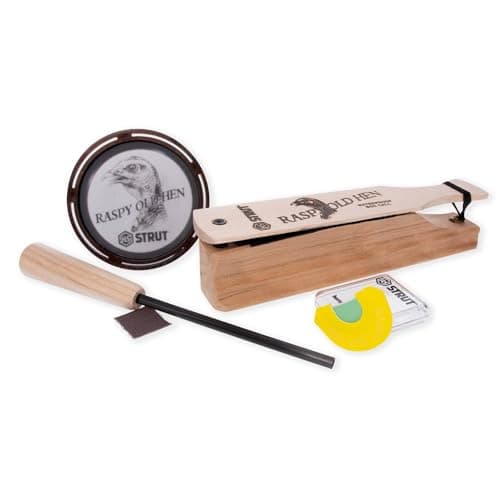
A friction-call combo covering the two easiest calls to learn. Both make a convincing yelp within a few days of practice, which is not true of the mouth calls beginners are usually pushed toward.
Best for: The first turkey call to own9.0 - 2
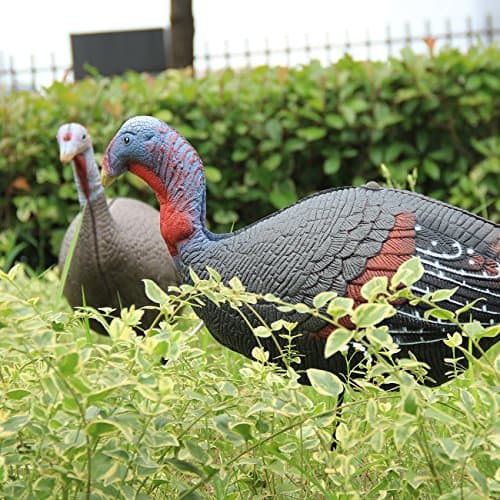
A hen and a jake is the classic beginner setup — the hen says safe, the jake says competition, and together they give a gobbler something to walk to instead of standing at eighty yards waiting for the hen to come to him.
Best for: Pulling a hung-up gobbler the last thirty yards8.6 - 3
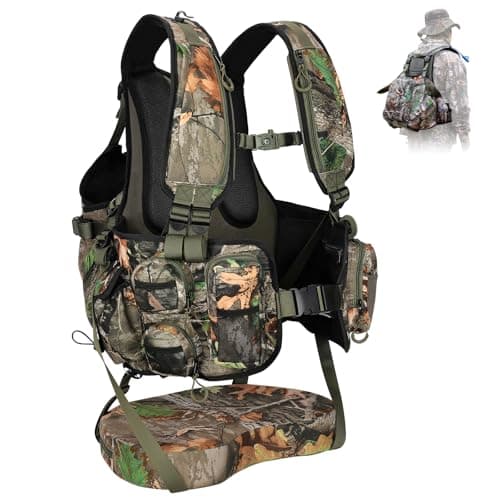
A turkey vest is a chair you wear. The built-in seat pad is the actual point — it is what makes sitting motionless against a rough tree trunk for two hours possible rather than theoretical.
Best for: Sitting still for two hours against a tree8.3
| # | Product | Best for | Score | Price |
|---|---|---|---|---|
| 1 | Hunters Specialties Raspy Old Hen Combo Kit A friction-call combo covering the two easiest calls to learn. Both make a convincing yelp within a few days of practice, which is not true of the mouth calls beginners are usually pushed toward. | The first turkey call to own | 9.0 | $28.29View on Amazon#ad |
| 2 | TargetEvo Hen and Jake Turkey Decoy Combo (2-Pack) A hen and a jake is the classic beginner setup — the hen says safe, the jake says competition, and together they give a gobbler something to walk to instead of standing at eighty yards waiting for the hen to come to him. | Pulling a hung-up gobbler the last thirty yards | 8.6 | $31.99View on Amazon#ad |
| 3 | Kalkal Turkey Vest with Seat A turkey vest is a chair you wear. The built-in seat pad is the actual point — it is what makes sitting motionless against a rough tree trunk for two hours possible rather than theoretical. | Sitting still for two hours against a tree | 8.3 | $39.99View on Amazon#ad |
Turkey hunting is the one hunt where the animal answers you. You call, a gobbler responds from a ridge four hundred yards away, and for the next forty minutes you are having an argument with a bird that has better eyesight than you do. It is interactive in a way that sitting in a treestand waiting for a deer is not, and it is why a lot of people who try it stop caring much about the other seasons.
It is also a genuinely good beginner hunt for reasons that have nothing to do with romance: the gear list is short, you do not need a treestand or a boat, spring seasons run when the weather is tolerable, and public land turkey hunting is often less crowded than public land deer hunting. What it demands instead is patience, the ability to sit still, and a real commitment to one particular safety rule.
How spring turkey hunting works
How do you hunt turkeys as a beginner? In spring, you locate a roosted gobbler before dawn, set up 100 to 150 yards away in the direction he is likely to travel, and imitate a hen so he walks to you. Spring seasons are structured around this because gobblers are actively seeking hens, which is the one time of year a turkey can be reliably called into gun range.
The whole hunt inverts normal animal behavior. Ordinarily, a hen goes to a gobbling tom. You are asking him to do the opposite, which is why birds "hang up" — he gobbles enthusiastically from eighty yards and then simply waits, because in his experience the hen comes to him. Almost every beginner frustration in turkey hunting is a version of this problem, and almost every solution is either better setup position or more patience.
| Time | What is happening | What you do |
|---|---|---|
| Well before first light | Birds are still on the roost | Get in quietly and set up. Being late is the most common self-inflicted failure. |
| First light | Gobblers sound off on the roost | Locate, but call sparingly. A soft tree yelp at most. |
| Fly-down | Birds pitch down, often to a hen | This is the peak window. Call, then stop and let him come. |
| Mid-morning | Hens drift off to nest and gobblers are left alone | Frequently the best and most overlooked window of the whole day. |
| Midday onward | Quiet, but birds still travel | Where legal, sit a field edge or strut zone. Check your state's shooting hours. |
Note that mid-morning point, because it contradicts what most beginners assume. Hunters go home at 9 a.m. when the gobbling stops, and that is frequently exactly when a lone tom becomes callable. If your season allows all-day hunting, staying out is free.
Which call to learn first
The standard advice is to start with a diaphragm (mouth) call because it leaves your hands free. That advice is correct for experienced hunters and wrong for beginners. Diaphragms take weeks or months to sound like a turkey and sound genuinely terrible in the meantime. Start with friction calls instead — a box call and a slate — which produce a convincing yelp within a few days of practice.
| Call type | Difficulty | Volume | Verdict for a beginner |
|---|---|---|---|
| Box call | Easy | Loud — carries a long way | Start here. Best call for locating a bird on a windy morning. |
| Slate / pot call | Easy to moderate | Soft to moderate | Your second call. Better once a bird is committed and coming. |
| Push-button call | Easiest of all | Soft | One-handed and nearly foolproof. A fine backup for close range. |
| Diaphragm / mouth call | Hard — weeks to months | Moderate to loud | Hands-free, and where you end up. Not where you start. |
Learn one sound properly before anything else: the plain yelp. A series of three to five yelps is the single most useful turkey sound there is, and a beginner who does that one thing well and sparingly will call in birds. Clucks and purrs are worth adding for close work; cutting is a loud, excited sequence best left alone until you can read whether a bird wants aggression or quiet.
The hardest part of calling is not calling
The setup: where you sit decides everything
Get closer than feels right, then set up properly. The rough target is 100 to 150 yards from a roosted bird — close enough that he can hear soft calling and does not lose interest on the walk, far enough that you do not spook him off the limb. Beginners almost always set up too far away, then wonder why the bird went to a real hen instead.
Sit with your back against a tree wider than your shoulders. This is both a comfort thing and a safety thing — it breaks your outline, gives you something to lean on for a two-hour sit, and puts solid wood between your back and anyone else in the woods. Face the direction you expect the bird to come from, with your gun already up on your knee pointed that way, because a turkey at thirty yards will catch the movement of you raising a shotgun every single time.
Terrain matters more than in deer hunting. Turkeys strongly prefer walking to easy, open ground and dislike crossing creeks, fences, and thick brush to reach a hen. Set up on the same side of the obstacle as the bird. A gobbler that will not cross a fence is not hung up because of your calling — he is hung up because of the fence.
Do beginners need decoys?
Not strictly, but they solve the hang-up problem better than anything else. When a gobbler can see a hen where the sound came from, his reason to stand and wait disappears. A hen decoy alone is the safest, most versatile choice; adding a jake introduces a competition angle that can trigger an aggressive tom to close fast — or occasionally intimidate a subordinate bird into leaving.
Place decoys 15 to 20 yards from your position, slightly to the side rather than directly in front, so an incoming bird's attention is on the decoy and not on you. Set them where they are visible from the direction the bird will approach — a decoy in a dip that a gobbler cannot see from eighty yards accomplishes nothing.
The serious caveat: on public land, never carry an assembled decoy in the open. Keep it in your vest or a bag until you are set up, and take it down before you move. A hunter walking through the woods with a turkey-shaped object is exactly the scenario the safety section below exists to prevent.
Gun, choke and shot
Turkey shooting is not wingshooting — you are aiming at a stationary bird's head and neck, so the gun is used more like a rifle than a shotgun. A 12-gauge or 20-gauge with a tight turkey choke and heavy shot in size 4, 5 or 6 is the standard setup. Our beginner shotgun guide covers gun selection; for turkeys the specifics are the choke and knowing your pattern.
Pattern your gun before the season. This is not optional advice — it is the step that separates hunters who kill turkeys cleanly from hunters who wound them. Shoot at a turkey head-and-neck target at 20, 30 and 40 yards with the exact load you will hunt, count the pellets in the vital area, and find the distance where your pattern thins out. That is your maximum range, and it is usually shorter than you assumed. A dedicated shooting rest makes this session far more useful, and hearing protection is mandatory — turkey loads are punishing.
Aim at the base of the neck where it meets the body when the bird's head is up. Do not shoot at a strutting bird — the head is tucked and the target is tiny. Cluck once to make him raise his head, then shoot.
The safety rule turkey hunting takes seriously
Turkey hunting has a distinctive safety profile because of one fact: you are deliberately imitating the animal that other people are hunting, while sitting camouflaged and motionless against a tree. Every element of the hunt that makes it work also makes you look and sound like a turkey to another hunter.
- Never wear red, white or blue. These are the exact colors of a gobbler's head. That includes socks, a bandana, a lighter clipped to a strap, and the logo on a hat.
- Never stalk a gobble. If you hear a turkey, there is a real chance it is another hunter calling. Set up and call instead of moving toward the sound. This single rule prevents most turkey hunting incidents.
- Sit against a tree wider than your shoulders. It puts solid material behind you.
- Identify the whole bird, and be certain of a beard where the season requires one. Never shoot at movement, color, or sound.
- Announce yourself with your voice, not a wave. If another hunter approaches, call out clearly and stay still. Waving is a movement that reads as a bird.
- Wear blaze orange while walking in and out, even where it is not required during the hunt, and cover any decoy you are carrying. See our blaze orange guide for what counts.
None of that should put you off. Turkey hunting is one of the best first hunts there is — short gear list, tolerable weather, and an animal that talks back. Get your license and tags sorted early, since spring turkey permits are draw-allocated in some states, and work the rest of your kit against the beginner gear checklist.
The picks in detail
Hunters Specialties Raspy Old Hen Combo Kit
9.0/10Best for: The first turkey call to own
A friction-call combo covering the two easiest calls to learn. Both make a convincing yelp within a few days of practice, which is not true of the mouth calls beginners are usually pushed toward.
- Type
- Friction — box and slate
- Sounds
- Yelp, cluck, purr, cutt
- Learning curve
- Days, not months
- Best for
- First spring season
- Box call carries a long way on a windy morning
- Slate is quieter and better for a bird already coming in
- Both are far easier than a diaphragm call to sound convincing on
- Friction calls need hands, which means movement at close range
- Rain kills a slate — keep it dry or carry a waterproof backup
TargetEvo Hen and Jake Turkey Decoy Combo (2-Pack)
8.6/10Best for: Pulling a hung-up gobbler the last thirty yards
A hen and a jake is the classic beginner setup — the hen says safe, the jake says competition, and together they give a gobbler something to walk to instead of standing at eighty yards waiting for the hen to come to him.
- Count
- 2 — hen and jake
- Packing
- Collapsible, carry bag
- Stakes
- Included
- Best for
- Open woods and field edges
- Solves the classic hang-up where a bird gobbles but will not close
- Collapsible enough to carry on a run-and-gun morning
- Gives the gobbler a focal point away from your position
- Carrying an exposed decoy on public land is a genuine safety risk
- Jake decoys can intimidate subordinate birds in some situations
Kalkal Turkey Vest with Seat
8.3/10Best for: Sitting still for two hours against a tree
A turkey vest is a chair you wear. The built-in seat pad is the actual point — it is what makes sitting motionless against a rough tree trunk for two hours possible rather than theoretical.
- Seat
- Built-in pad
- Pockets
- Call and shell pockets
- Game pouch
- Yes
- Best for
- Run-and-gun spring hunting
- Seat pad is the difference between a 30-minute and a 2-hour sit
- Calls stay organized and silent instead of clacking in a pack
- Game pouch handles the carry-out without a separate bag
- No kickstand frame — premium vests add a back rest
- Extra bulk if you are hunting from a blind rather than moving
Prices shown are from Amazon as of Sep 5, 2026 and change often — the button always goes to the current listing. Some links may earn us a commission at no extra cost to you. How this works.
Frequently asked questions
How do you hunt turkeys as a beginner?
In spring, locate a roosted gobbler before dawn, set up 100 to 150 yards away in the direction he will travel, sit against a tree wider than your shoulders with your gun already up, and imitate a hen with a few soft yelps. Then stop calling and let him come to you.
What is the best turkey call for beginners?
A friction call - a box call or a slate. Both produce a convincing yelp within days of practice, unlike diaphragm mouth calls, which take weeks or months and sound poor in the meantime. Learn the plain yelp properly before adding clucks, purrs or cutting.
How close should you set up to a roosted turkey?
Roughly 100 to 150 yards. Closer than most beginners are comfortable with - close enough that he hears soft calling and does not lose interest on the walk in, far enough that you do not spook him off the roost when you set up in the dark.
Why should you never wear red, white or blue turkey hunting?
Those are the exact colors of a gobbler's head, and another hunter glimpsing them through brush can mistake you for a bird. It applies to everything visible - socks, a bandana, a hat logo. For the same reason you should never stalk a gobble, since the sound may be another hunter calling.
Sources
Keep reading
Not sure where to start?
The beginner gear checklist walks you through exactly what a first-season hunter needs — essentials first, nice-to-haves later, with one safe-default pick per category.