Gear · Comparison
Hunting Boots vs Rubber Boots
Leather-and-membrane or full rubber? The answer depends less on the boot and more on whether you walk far, stand still, or spend your season in mud.
Disclosure: Creek Cover is reader-supported. If you buy through our links we may earn a commission, at no extra cost to you. It never changes which pick we tell a beginner to start with. Full disclosure.
Quick picks at a glance
Tap a pick to read the full write-up, or the price button to check it on Amazon.
- 1
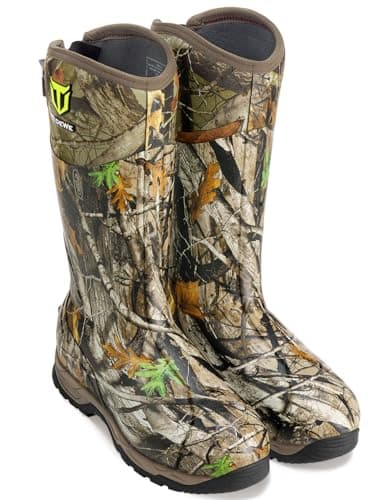
7mm neoprene over a sealed rubber shell, an air-mesh lining and an EVA midsole, comfort rated from -4°F to 59°F, at a price that makes buying a second pair of boots painless. The right amount of insulation for most of the country and most of the season.
Best for: Best value rubber boot for a first season9.0 - 2
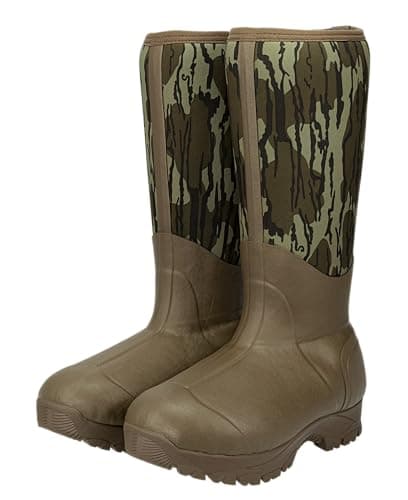
1600 grams of insulation and 17 inches of height — a boot built for standing motionless in December water. Far too warm to walk in, which is exactly the point.
Best for: Best for late-season cold sits8.8 - 3
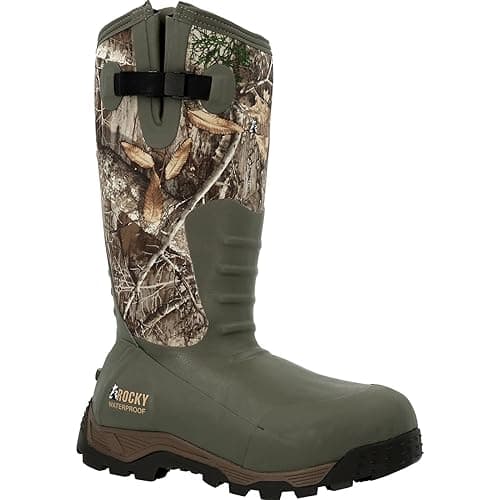
Rocky has been making hunting footwear for decades, and 1200g sits in the sweet spot between the all-round 600g and the late-season 1600g. The one to buy if you only ever want one rubber boot.
Best for: Best established-brand rubber boot8.7 - 4
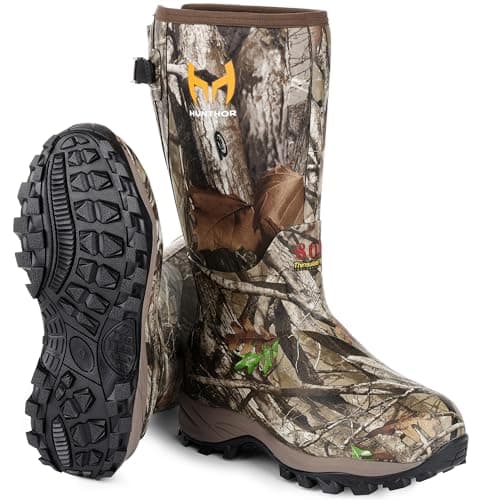
800 grams splits the difference between an all-purpose boot and a late-season one. A reasonable single-boot answer for a hunter in a genuinely cold state who still walks to the stand.
Best for: Best middle insulation level8.4 - 5
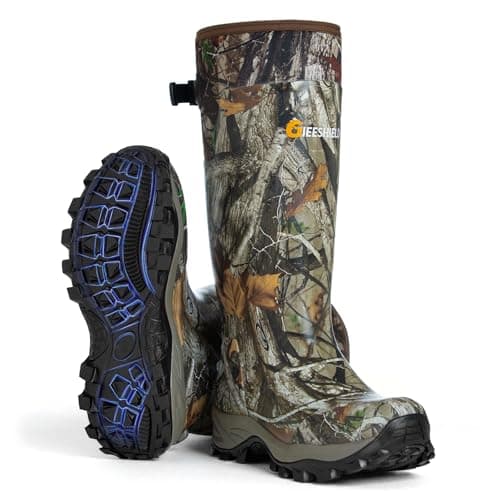
The lightest rubber boot here, which directly addresses the main complaint about the category. If the reason you have avoided rubber boots is that they feel like wearing buckets, start with this one.
Best for: Best lightweight rubber boot8.2
| # | Product | Best for | Score | Price |
|---|---|---|---|---|
| 1 | TIDEWE Insulated Rubber Hunting Boots 7mm neoprene over a sealed rubber shell, an air-mesh lining and an EVA midsole, comfort rated from -4°F to 59°F, at a price that makes buying a second pair of boots painless. The right amount of insulation for most of the country and most of the season. | Best value rubber boot for a first season | 9.0 | $112.99View on Amazon#ad |
| 2 | Muddy Outdoors MTX 17" 1600g Insulated Rubber Boots 1600 grams of insulation and 17 inches of height — a boot built for standing motionless in December water. Far too warm to walk in, which is exactly the point. | Best for late-season cold sits | 8.8 | $104.06View on Amazon#ad |
| 3 | ROCKY Sport Pro 1200g Insulated Rubber Boot Rocky has been making hunting footwear for decades, and 1200g sits in the sweet spot between the all-round 600g and the late-season 1600g. The one to buy if you only ever want one rubber boot. | Best established-brand rubber boot | 8.7 | $116.24View on Amazon#ad |
| 4 | Hunthor 800g Insulated Rubber Hunting Boots 800 grams splits the difference between an all-purpose boot and a late-season one. A reasonable single-boot answer for a hunter in a genuinely cold state who still walks to the stand. | Best middle insulation level | 8.4 | $85.49View on Amazon#ad |
| 5 | GIEESHIELD Ultra-Light 6mm Neoprene Insulated Rubber Boots The lightest rubber boot here, which directly addresses the main complaint about the category. If the reason you have avoided rubber boots is that they feel like wearing buckets, start with this one. | Best lightweight rubber boot | 8.2 | $89.99View on Amazon#ad |
If you sit still to hunt deer and your ground is ever wet, buy rubber first. A rubber boot is waterproof because of what it is made of, not because of a membrane that will eventually wear through, and it carries far less of your scent onto the trail. If you walk a long way, hunt dry hill country, or still-hunt on your feet all day, a leather-and-membrane hunting boot is the better tool — it supports your ankle, breathes, and does not punish you over miles. Most hunters eventually own both.
How they actually differ
| Leather hunting boot | Rubber boot | |
|---|---|---|
| Waterproofing | A membrane — very good until it wears or the boot tops flood | Total, by construction |
| Walking comfort | Far better — support, flex, breathability | Poor over distance; no real ankle support |
| Scent | Leather and fabric absorb and transfer odor | Rubber holds and transfers much less |
| Warmth standing still | Good, but the foot bed breathes heat away | Excellent at higher insulation levels |
| Break-in | Needs real miles before the season | None — wear them out of the box |
| Price | Usually higher | Usually lower for equivalent warmth |
| Best for | Walking, hills, dry country, still-hunting | Stand hunting, mud, flooded ground, scent discipline |
The scent argument for rubber
This is the reason serious whitetail hunters wear rubber boots even on dry ground, and it is the one scent-control claim with a clear mechanism behind it. Leather and fabric absorb odor and transfer it to everything you walk over; rubber does so far less. Since most deer smell a hunter’s approach trail rather than the hunter in the stand, the boots you walk in are doing more scent work than any spray. We say the same thing rather bluntly on our scent control page: most of what works is free or structural, and this is the structural part.
Do not lace up in the truck bed
Choosing an insulation level
Insulation is measured in grams, and the number that catches beginners out is that more is not better — it is warmer, which is only better if you are standing still. A boot that keeps you toasty on a December stand will have you sweating on the walk in, and damp feet get cold regardless of what is around them.
| Insulation | Conditions | Notes |
|---|---|---|
| Uninsulated | Early season, warm weather, lots of walking | Wear a heavier sock instead |
| 400-600g | The all-round starting point for most of the country | Buy this if you buy one pair |
| 800-1000g | Genuinely cold states, mostly sitting | Too warm for a long walk in |
| 1200-1600g | Late season, standing water, motionless sits | A specialist boot, not a first pair |
Whatever you choose, the sock inside it matters nearly as much — see the best hunting socks, and resist the urge to wear two pairs, which compresses the insulation and makes your feet colder.
Which should you buy first?
Be honest about how you will hunt this season. Sitting in a ground blind or a treestand on ground that gets wet? A mid-insulation rubber boot from this page. Walking ridges, hunting public land, covering miles? A proper leather hunting boot from our best hunting boots roundup, bought early enough to break in before opening day. Already own decent waterproof hiking boots and hunting a dry early season? Read hunting boots vs hiking bootsfirst — the answer is sometimes “what you have is fine for now,” and that money is better spent on a tag and practice.
One last thing that applies to both: buy them early. A boot bought the night before opening day is a blister waiting to happen, and a blister ends a hunt as completely as being seen does. Put miles on them on pavement first.
The picks in detail
TIDEWE Insulated Rubber Hunting Boots
9.0/10Best for: Best value rubber boot for a first season
7mm neoprene over a sealed rubber shell, an air-mesh lining and an EVA midsole, comfort rated from -4°F to 59°F, at a price that makes buying a second pair of boots painless. The right amount of insulation for most of the country and most of the season.
- Type
- Rubber / neoprene boot
- Insulation
- 7mm neoprene, rated to -4°F
- Waterproof
- Yes — by construction
- Best for
- Stand hunting, wet ground
- Genuinely waterproof — no membrane to fail
- Holds and transfers far less scent than leather
- Priced below most leather hunting boots
- Not a boot for walking several miles in
- Less ankle support than a lace-up boot
Muddy Outdoors MTX 17" 1600g Insulated Rubber Boots
8.8/10Best for: Best for late-season cold sits
1600 grams of insulation and 17 inches of height — a boot built for standing motionless in December water. Far too warm to walk in, which is exactly the point.
- Type
- Tall insulated rubber boot
- Insulation
- 1600g
- Height
- 17"
- Best for
- Late season, standing water
- Warm enough for genuinely cold, motionless sits
- Tall enough for flooded timber and deep mud
- Heavy rubber survives brush
- You will overheat walking any distance in these
- Heavy on the foot all day
ROCKY Sport Pro 1200g Insulated Rubber Boot
8.7/10Best for: Best established-brand rubber boot
Rocky has been making hunting footwear for decades, and 1200g sits in the sweet spot between the all-round 600g and the late-season 1600g. The one to buy if you only ever want one rubber boot.
- Type
- Rubber hunting boot
- Insulation
- 1200g
- Brand
- Rocky
- Best for
- One boot for most of the season
- Long-established hunting footwear brand
- 1200g covers cool through cold
- Good tread for muddy ground
- Priced above the value options
- Still not a walking boot
Hunthor 800g Insulated Rubber Hunting Boots
8.4/10Best for: Best middle insulation level
800 grams splits the difference between an all-purpose boot and a late-season one. A reasonable single-boot answer for a hunter in a genuinely cold state who still walks to the stand.
- Type
- Rubber / neoprene boot
- Insulation
- 800g
- Neoprene
- 6mm
- Best for
- Cold states, moderate walking
- A sensible compromise insulation level
- Thick neoprene handles cold water
- Fair price for the specification
- Newer brand with less history
- 800g is still too warm for early season
GIEESHIELD Ultra-Light 6mm Neoprene Insulated Rubber Boots
8.2/10Best for: Best lightweight rubber boot
The lightest rubber boot here, which directly addresses the main complaint about the category. If the reason you have avoided rubber boots is that they feel like wearing buckets, start with this one.
- Type
- Ultra-light rubber boot
- Neoprene
- 6mm
- Weight
- Lightweight for the category
- Best for
- Hunters who walk in and then sit
- Noticeably lighter than typical rubber boots
- Anti-slip sole for wet ground
- Fully waterproof by construction
- Lighter build is less durable in heavy brush
- Insulation is modest
Prices shown are from Amazon as of Sep 5, 2026 and change often — the button always goes to the current listing. Some links may earn us a commission at no extra cost to you. How this works.
Frequently asked questions
Are rubber boots better than leather for hunting?
For stand hunting on wet ground, yes - they are waterproof by construction rather than by a membrane that eventually wears, and they carry much less of your scent onto the trail. For walking long distances or hunting hill country, leather hunting boots are far better because they support your ankle and breathe.
Do rubber boots really help with scent control?
Yes, and it is the one scent-control step with a clear mechanism. Leather and fabric absorb odor and transfer it to the ground you walk over; rubber does so far less. Since most deer smell a hunter's approach trail rather than the stand itself, the boots you walk in matter more than any spray.
How many grams of insulation do hunting boots need?
400-600g is the all-round starting point for most of the country. Go 800-1000g if you hunt a genuinely cold state and mostly sit, and 1200g or more only for late-season motionless sits in standing water. More insulation is warmer, not better - too much means you sweat on the walk in and get cold anyway.
Can you walk long distances in rubber hunting boots?
Not comfortably. Rubber boots have little ankle support and do not flex or breathe like a lace-up boot, so they punish you over miles. If your hunt involves a long approach, either wear leather boots or walk in wearing something else and change at your stand.
Sources
Keep reading
Not sure where to start?
The beginner gear checklist walks you through exactly what a first-season hunter needs — essentials first, nice-to-haves later, with one safe-default pick per category.