Gear · Comparison
Hunting Waders vs Fishing Waders
They hang on the same rack and cost about the same. Then you stand in 34-degree water for three hours in the wrong pair. Here is the difference that matters and how to buy once.
Disclosure: Creek Cover is reader-supported. If you buy through our links we may earn a commission, at no extra cost to you. It never changes which pick we tell a beginner to start with. Full disclosure.
Quick picks at a glance
Tap a pick to read the full write-up, or the price button to check it on Amazon.
- 1
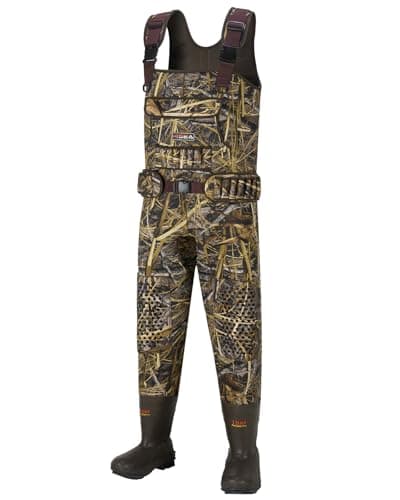
Heavy insulation, an attached boot, and camo — the three things a duck hunter standing still in cold water actually needs, at a price that does not swallow your decoy budget.
Best for: The beginner waterfowl wader9.0 - 2
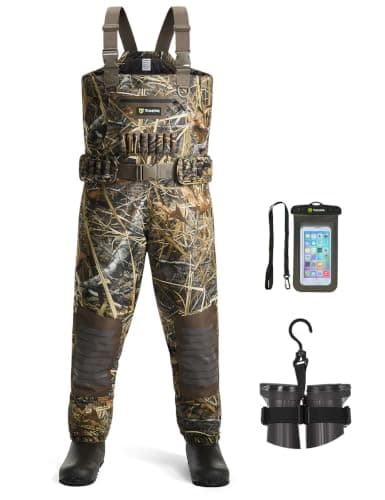
Breathable fabric with insulation built in — the compromise for a hunter who has to hike to the marsh, then stand in it. Costs more, and you gain the ability not to soak yourself in your own sweat on the walk.
Best for: Best if you walk in as much as you stand8.7 - 3
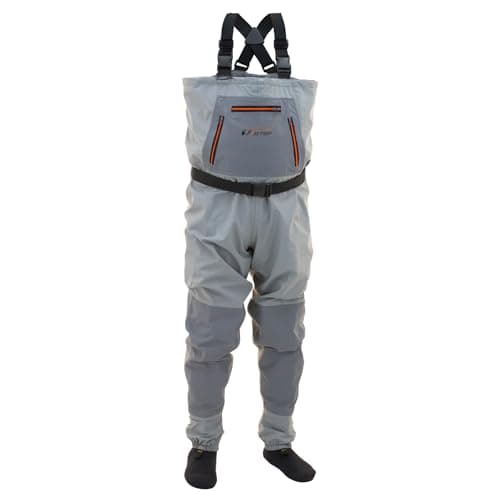
A well-made breathable stockingfoot fishing wader — light, packable and cool. It is the wrong tool for a cold-water duck sit and the right tool for walking a trout stream in September.
Best for: The fishing wader, honestly assessed8.4 - 4
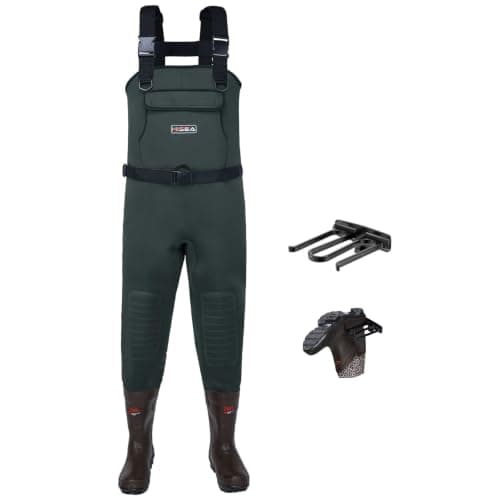
Neoprene, bootfoot, cleated outsole and a price that lets you use them for both cold-water fishing and casual waterfowl work. The honest compromise if you genuinely will do both and cannot buy twice.
Best for: The do-both budget pair8.2
| # | Product | Best for | Score | Price |
|---|---|---|---|---|
| 1 | HISEA 1200G Insulated Neoprene Hunting Wader Heavy insulation, an attached boot, and camo — the three things a duck hunter standing still in cold water actually needs, at a price that does not swallow your decoy budget. | The beginner waterfowl wader | 9.0 | $149.99View on Amazon#ad |
| 2 | TIDEWE Breathable Insulated Hunting Waders Breathable fabric with insulation built in — the compromise for a hunter who has to hike to the marsh, then stand in it. Costs more, and you gain the ability not to soak yourself in your own sweat on the walk. | Best if you walk in as much as you stand | 8.7 | $239.99View on Amazon#ad |
| 3 | FROGG TOGGS Hellbender Stockingfoot Wader A well-made breathable stockingfoot fishing wader — light, packable and cool. It is the wrong tool for a cold-water duck sit and the right tool for walking a trout stream in September. | The fishing wader, honestly assessed | 8.4 | $99.99View on Amazon#ad |
| 4 | HISEA Neoprene Bootfoot Fishing Chest Waders Neoprene, bootfoot, cleated outsole and a price that lets you use them for both cold-water fishing and casual waterfowl work. The honest compromise if you genuinely will do both and cannot buy twice. | The do-both budget pair | 8.2 | $102.99View on Amazon#ad |
Waders are the piece of gear where a beginner is most likely to buy the wrong version of the right item — because a hunting wader and a fishing wader look nearly identical on a rack, cost similar money, and are built around opposite assumptions about what your body will be doing. If you only read one line: fishing waders assume you are moving, hunting waders assume you are standing still.
The decision rule
Pick in this order
Insulation: the spec that actually separates them
Fishing waders are usually uninsulated and breathable. That is deliberate: an angler walks miles of river, generates heat, and needs the wader to vent sweat vapor or they end up soaked from the inside. You add warmth by layering underneath.
Hunting waders — specifically waterfowl waders — are usually insulated neoprene, rated in grams (600g, 800g, 1000g, 1200g). A duck hunter stands motionless in near-freezing water at dawn, generating almost no heat. Breathability is irrelevant when you are not sweating; insulation is everything. Neoprene also compresses less under water pressure than a laminate, which is why it holds warmth better at depth.
| Hunting waders | Fishing waders | |
|---|---|---|
| Core assumption | You stand still in cold water | You walk and cast in mild water |
| Insulation | 600-1600g neoprene, rated in grams | Usually none — you layer underneath |
| Material | Neoprene (warm, buoyant, heavy) | Breathable laminate (light, vents sweat) |
| Boot | Usually bootfoot, insulated, aggressive lug sole | Often stockingfoot; boots bought separately |
| Finish | Camo, matte, non-reflective | Solid gray/green; reflectivity irrelevant |
| Extras | Shell loops, hand-warmer pockets, D-rings for a call lanyard | Gravel guards, fly patches, tippet pockets |
| Weight | Heavy — poor for long walks | Light and packable |
Bootfoot vs stockingfoot
This is the second decision, and it trips up more beginners than insulation does. Bootfoot waders have the boot permanently attached — you step in and you are done. They are warmer (there is air space around your foot), easier to get on and off with cold hands, and cheaper overall because there is nothing else to buy. Nearly every waterfowl wader is bootfoot.
Stockingfoot waders end in a neoprene sock; you buy separate wading boots to wear over them. They fit better, walk better, and let you choose an outsole (felt, rubber, studded) for the bottom you are on. They are also colder and they add the cost of boots — which is the part beginners miss when comparing a $100 stockingfoot wader against a $130 bootfoot one. Budget for both or the comparison is not real.
Camo, buoyancy and the details hunters need
Beyond warmth, hunting waders carry features an angler never needs: a camo pattern and matte finish (ducks are looking down at you from above, and a shiny gray wader is a beacon), shell loops and a hand-warmer pocket, D-rings for a call lanyard, and often a wader belt that is genuinely important rather than decorative. Neoprene is also naturally buoyant, which matters in a way we will come to.
Fishing waders carry gravel guards to keep grit out of your boots, and pockets built around fly boxes and tippet. Useful, and irrelevant in a marsh.
The safety part nobody tells beginners
Waders are the only piece of hunting clothing with a genuine drowning risk attached, and it is worth saying plainly. Always wear the wader belt, cinched snugly at your waist. Its job is to stop the wader filling with water if you go in. The old story that full waders drag you down feet-first is largely a myth — trapped air is buoyant — but a wader full of water is enormously heavy the moment you try to climb out, and cold-water shock is a real and fast danger regardless. Know the bottom you are walking on, do not wade into current you cannot read, hunt with a partner where you can, and in a boat wear an actual PFD over the waders. The duck hunting for beginners guide covers the rest of the water-safety basics for a first season.
Which should a beginner buy?
If waterfowl is why you are here, buy the insulated bootfoot hunting wader and be done — it is the cheaper option, the warmer option, and the one that fits how you will actually hunt. Buy breathable waders only if you genuinely walk long distances into your spot, or if you fish more than you hunt. And if you are still assembling the rest of the kit, the beginner gear checklist puts waders in order against everything else, while hunting boots vs hiking boots answers the same question for dry-land hunting. One last practical note: waders are sized by boot size and run large to allow layering, so order to your foot and expect room in the body. Store them hanging and dry, never folded at the knee — creased neoprene cracks, and a cracked wader is a wet, cold, ruined morning.
The picks in detail
HISEA 1200G Insulated Neoprene Hunting Wader
9.0/10Best for: The beginner waterfowl wader
Heavy insulation, an attached boot, and camo — the three things a duck hunter standing still in cold water actually needs, at a price that does not swallow your decoy budget.
- Insulation
- 1200g
- Boot
- Bootfoot (attached)
- Material
- Neoprene
- Best for
- Cold-water waterfowl hunting
- Genuinely warm for standing still in near-freezing water
- Bootfoot design — nothing else to buy, nothing to leak at the ankle
- Neoprene has natural buoyancy and insulates even if it wets out inside
- Far too warm for walking any distance
- Neoprene is heavy and bulky compared with breathable waders
TIDEWE Breathable Insulated Hunting Waders
8.7/10Best for: Best if you walk in as much as you stand
Breathable fabric with insulation built in — the compromise for a hunter who has to hike to the marsh, then stand in it. Costs more, and you gain the ability not to soak yourself in your own sweat on the walk.
- Insulation
- Insulated, breathable shell
- Boot
- Bootfoot
- Material
- Breathable laminate
- Best for
- Walk-in marsh hunts
- Breathes on the walk in, so you arrive dry underneath
- Insulated enough for real cold once you stop moving
- Layer-friendly — you control the warmth from inside
- Notably more expensive than neoprene
- Breathable laminates are less puncture-tolerant
FROGG TOGGS Hellbender Stockingfoot Wader
8.4/10Best for: The fishing wader, honestly assessed
A well-made breathable stockingfoot fishing wader — light, packable and cool. It is the wrong tool for a cold-water duck sit and the right tool for walking a trout stream in September.
- Insulation
- None (uninsulated)
- Boot
- Stockingfoot — boots bought separately
- Material
- Breathable
- Best for
- Fishing, warm-weather wading
- Light and breathable — comfortable to walk and fish in all day
- Stockingfoot design lets you pick a boot with the grip you need
- Packs down small
- No insulation — you will get cold standing still in winter water
- Requires buying wading boots separately, which adds cost
- Solid gray, not camo
HISEA Neoprene Bootfoot Fishing Chest Waders
8.2/10Best for: The do-both budget pair
Neoprene, bootfoot, cleated outsole and a price that lets you use them for both cold-water fishing and casual waterfowl work. The honest compromise if you genuinely will do both and cannot buy twice.
- Insulation
- Neoprene (moderate)
- Boot
- Bootfoot, cleated
- Material
- Neoprene
- Best for
- Mixed fishing and hunting use
- One pair covers both jobs adequately
- Cleated outsole grips wet rock better than a plain hunting sole
- Cheapest genuinely warm option here
- Not camo — a real disadvantage on pressured ducks
- Warm for fishing, cool for hard winter waterfowl
Prices shown are from Amazon as of Sep 5, 2026 and change often — the button always goes to the current listing. Some links may earn us a commission at no extra cost to you. How this works.
Frequently asked questions
Can you use fishing waders for duck hunting?
You can, but they are the wrong tool for cold water. Fishing waders are usually uninsulated and breathable because anglers keep moving; a duck hunter stands still in near-freezing water and needs insulation. If you must use them, layer heavily underneath and accept that you will be cold on a hard morning.
What is the difference between hunting waders and fishing waders?
Hunting waders are typically insulated neoprene with an attached boot and a camo, non-reflective finish, built for standing still in cold water. Fishing waders are typically uninsulated breathable laminate, often stockingfoot, built for walking and casting in milder conditions. Insulation and boot type are the two real differences.
How many grams of insulation do I need in hunting waders?
For most beginner waterfowl hunting, 1000-1200 grams is the sensible all-purpose choice — warm enough for a still, cold morning without being unbearable in mild weather. Choose 600-800g if you hunt mild climates or walk far, and 1600g only for extreme late-season cold.
Are waders dangerous if you fall in?
They demand respect. Always wear the wader belt cinched at the waist so the legs cannot flood, know the bottom you are walking on, and wear a proper PFD in a boat. The idea that waders flip you upside down is largely a myth, but flooded waders are extremely heavy to climb out in and cold-water shock acts fast.
Sources
Keep reading
Not sure where to start?
The beginner gear checklist walks you through exactly what a first-season hunter needs — essentials first, nice-to-haves later, with one safe-default pick per category.