Guides · Quarry
Duck Hunting for Beginners
Waterfowl is the most social, most gear-dependent and most physically miserable way to hunt — and the people who love it would not trade it. Here is what a first season really needs.
Disclosure: Creek Cover is reader-supported. If you buy through our links we may earn a commission, at no extra cost to you. It never changes which pick we tell a beginner to start with. Full disclosure.
Quick picks at a glance
Tap a pick to read the full write-up, or the price button to check it on Amazon.
- 1
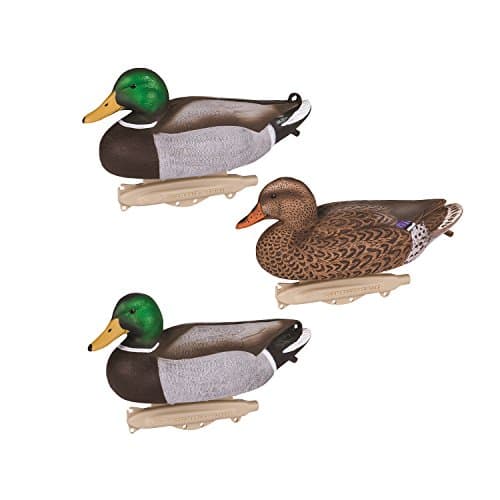
Durable, realistically painted mallard floaters at a price that lets you buy twelve rather than six. On a beaver pond or a flooded field corner, a dozen well-placed decoys does everything a hundred would.
Best for: The starter spread9.0 - 2No image
Insulated neoprene chest waders with attached boots — the single item that decides whether you last a full morning in November water. Buy a size up so heavy socks and a base layer fit underneath.
Best for: Staying in the hunt when it is cold and wet8.8 - 3
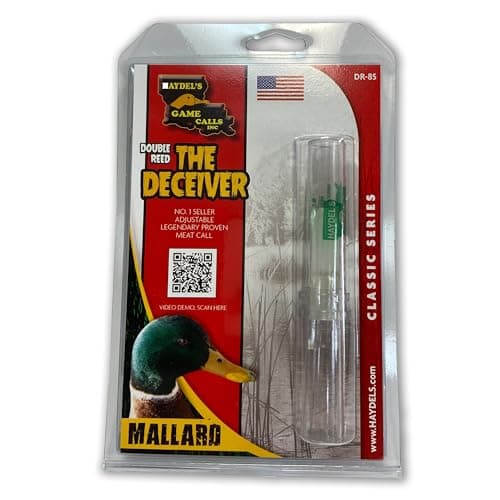
Double reed calls are far more forgiving than single reeds — they take less air control and are harder to blow badly. Start here, learn a basic quack and a feed chuckle, and ignore everything else for a season.
Best for: The beginner's duck call8.5
| # | Product | Best for | Score | Price |
|---|---|---|---|---|
| 1 | Flambeau Storm Front 2 Mallard Decoys (6-Pack) Durable, realistically painted mallard floaters at a price that lets you buy twelve rather than six. On a beaver pond or a flooded field corner, a dozen well-placed decoys does everything a hundred would. | The starter spread | 9.0 | $37.99View on Amazon#ad |
| 2 | No image HISEA Neoprene Chest Waders with Boots Insulated neoprene chest waders with attached boots — the single item that decides whether you last a full morning in November water. Buy a size up so heavy socks and a base layer fit underneath. | Staying in the hunt when it is cold and wet | 8.8 | Check price on Amazon#ad |
| 3 | Haydel's DR-85 Double Reed Mallard Call Double reed calls are far more forgiving than single reeds — they take less air control and are harder to blow badly. Start here, learn a basic quack and a feed chuckle, and ignore everything else for a season. | The beginner's duck call | 8.5 | $23.70View on Amazon#ad |
Duck hunting is different from every other kind of hunting a beginner might try, and the difference is not subtle. Deer hunting rewards sitting still alone; waterfowl rewards being set up in the right water before dawn with a spread of decoys, usually with other people, and almost always cold and wet. It also carries a layer of federal regulation the other hunts do not, and it is the one where beginners most often show up technically illegal without knowing it.
This guide covers the parts that actually decide whether your first season works: the legal stack, finding water you may hunt, what a decoy spread is doing, and the clothing problem. Gear beyond that is genuinely optional in year one.
The paperwork duck hunting adds
What do you need to hunt ducks? Four things in most states: a state hunting license, a state waterfowl or migratory-bird stamp, the federal duck stamp, and a Harvest Information Program (HIP) registration. Waterfowl is federally regulated because the birds migrate across state lines, so the requirements stack on top of your normal hunting license rather than replacing them.
| Requirement | Issued by | Why beginners miss it |
|---|---|---|
| State hunting license | Your state wildlife agency | Rarely missed — this is the one everyone knows about. |
| HIP registration | Your state agency, usually free at purchase | It is a checkbox in the license portal and easy to skip past. |
| State waterfowl stamp | Your state agency | Not every state has one, so advice from a friend in another state misleads. |
| Federal duck stamp | U.S. Fish and Wildlife Service, post offices, some retailers | Sold separately from your state license. The single most commonly missed item. |
| Non-toxic shot | Federal law, nationwide for waterfowl | Lead shotshells are illegal for waterfowl everywhere in the U.S. |
The federal duck stamp is the one to double-check. It is a physical stamp that must be signed across the face, and in most states it is not bundled into your online license purchase. Buying it also funds wetland conservation directly, which is worth knowing when you are grumbling about the cost. Our licensing guide covers the general order of operations; waterfowl simply adds these layers on top.
Season structure is also different. Waterfowl seasons are set within federal frameworks and split into zones and segments, with daily bag limits that vary by species — you may be allowed six ducks a day but only two of a particular species, and one of another. Read the current year's waterfowl digest for your state and zone, not last year's, and learn to identify birds on the wing before you shoot at them.
Where to hunt your first ducks
Beginners consistently start too big. A first-timer's mental image of duck hunting is a large marsh, a boat, and a hundred decoys — and that is the hardest possible way to start. Small water is far more forgiving: a beaver pond, a flooded creek bottom, a corner of a public wildlife management area that other hunters walk past on their way to the main impoundment. On small water, six to twelve decoys look natural, birds commit at close range, and you do not need a boat.
Public wildlife management areas and national wildlife refuges are the standard access route, and many operate a draw or first-come blind assignment on opening weekends. Call the area office and ask directly how it works — waterfowl areas have more local procedure than any other kind of public hunting ground, and the staff would rather explain it than write you a citation. Walk-in access is often available on days the boat blinds are all taken.
Scout for birds, not for water
How a decoy spread actually works
Decoys do one job: convince a passing duck that your patch of water is safe and already occupied. Everything about spread design follows from that. Ducks land into the wind, so you set the spread with a deliberate opening — the "landing hole" — downwind of your position, roughly 15 to 25 yards out, so committing birds finish in front of you rather than behind. The classic shapes are a J or a fishhook, with the hole in the pocket of the curve.
Numbers matter less than beginners assume, but not as little as they hope. On a small pond, six to a dozen decoys is genuinely enough. On open water where birds can see a long way and compare your spread against real rafts of ducks, a dozen looks thin. Start small, hunt small water, and add decoys as you learn where you actually hunt.
Motion is the one upgrade that punches above its price. Real water is never perfectly still, and a spread of motionless plastic on glassy water reads as wrong from a hundred yards up. A jerk cord — a length of line that ripples a few decoys when you pull it — costs almost nothing and creates the movement that spinning-wing decoys are sold for. Check your state's regulations before using electric spinning-wing decoys; several restrict them by season or area.
Calling is the last thing to worry about, not the first. Duck calls are heavily marketed and heavily overused. A beginner who calls sparingly — a greeting call at distance, a soft feed chuckle when birds are working — will kill more ducks than one who blows continuously at every bird in the county. If you want to sound convincing, the practice happens in your truck in August, not in the blind in November.
The gun, and why steel shot is the law
A 12-gauge shotgun with a modified choke covers virtually every duck situation a beginner will meet, and a 20-gauge is a genuinely capable lighter alternative for smaller-framed shooters over decoys. Our beginner shotgun guide covers the gun choice properly; for waterfowl specifically, the things that matter are that it cycles reliably when dirty and wet, and that you can swing it comfortably while wearing three layers.
Lead shot is illegal for waterfowl throughout the United States, and has been since 1991. You must use non-toxic shot — steel is the affordable standard, with bismuth and tungsten alloys available at much higher prices. This is not a preference or a local rule; it is federal law, enforced, and a common way for uninformed beginners to get cited.
Steel behaves differently from lead. It is lighter, so it loses velocity faster and delivers less energy downrange, and it does not deform, so patterns stay tighter. The practical adjustments: step up roughly two shot sizes from what you would use in lead (a beginner's general-purpose duck load is commonly steel #2 or #3), keep shots inside about 40 yards, and do not use steel through a full choke or a fixed choke in an older barrel not rated for it — modified is the sensible default.
Staying warm enough to stay out
Waterfowl hunting is the coldest hunting most people ever do, because you are standing in water, usually before dawn, often in wind. The clothing system is the same layering logic as any other hunt — see our base layer guide — with two waterfowl specifics.
First, waders are the foundation and sizing is the whole game. Buy them large enough that a heavy merino sock and a base layer fit underneath without compressing; waders that fit perfectly in the shop over jeans will be cold and blister-prone over hunting layers. Neoprene insulates while wet and is the right choice for cold-water sits; breathable waders are more comfortable for early-season walking but need layers underneath for warmth.
Second, your hands will be wet, and wet hands in wind is where hunts end. Carry two pairs of gloves so one is always dry, and accept that no glove keeps you both dry and dexterous while handling decoys — the trick is changing into the dry pair once the spread is set. A small towel clipped inside the blind is worth more than an expensive glove.
The mistakes that define a first season
- Missing the federal duck stamp. The single most common waterfowl citation for new hunters. Buy it early, sign it, carry it.
- Shooting at birds that are too far out. Steel loses energy fast; a bird at 60 yards is a crippled bird, not a dead one. Let them work. Forty yards is a real limit.
- Calling constantly. More ducks are flared by bad calling than are brought in by good calling. When birds are coming, say nothing.
- Hunting big water first. A beginner on a large open marsh with a dozen decoys is out-competed by every experienced spread on the water. Find small, overlooked water.
- Skipping bird identification. Bag limits are species-specific, and hen-versus-drake and species-versus-species mistakes are on you. Learn the common birds in your flyway before opening day.
- No plan for a downed bird on the water. Without a dog, you need a way to retrieve — which usually means hunting water shallow enough to wade. Plan the retrieve before you take the shot.
Duck hunting has a steeper entry than deer and a genuinely higher gear floor, which is why we generally suggest starting with whitetail deer if you have no one to take you. But if you have access to water and someone to go with, it is the most fun anyone has being cold. Work the rest of your kit against the beginner gear checklist.
The picks in detail
Flambeau Storm Front 2 Mallard Decoys (6-Pack)
9.0/10Best for: The starter spread
Durable, realistically painted mallard floaters at a price that lets you buy twelve rather than six. On a beaver pond or a flooded field corner, a dozen well-placed decoys does everything a hundred would.
- Count
- 6 per pack
- Species
- Mallard, drake and hen
- Type
- Floating
- Best for
- Small water and timber
- Paint holds up better than budget decoys over several seasons
- Weighted keels ride correctly instead of spinning in current
- Cheap enough to build a dozen-plus spread in one season
- Six is genuinely not enough on big open water
- Bulky to carry — a decoy bag is a near-mandatory second purchase
HISEA Neoprene Chest Waders with Boots
8.8/10Best for: Staying in the hunt when it is cold and wet
Insulated neoprene chest waders with attached boots — the single item that decides whether you last a full morning in November water. Buy a size up so heavy socks and a base layer fit underneath.
- Material
- Neoprene
- Style
- Chest, boot-foot
- Insulation
- Insulated boot
- Best for
- Cold-water marsh and timber
- Boot-foot design is warmer and simpler than separate wading boots
- Neoprene insulates while wet, unlike breathable-only waders
- Far cheaper than premium waterfowl brands for a first season
- Too warm for early-season walking hunts
- Neoprene is heavy — sizing up matters more than the price
Haydel's DR-85 Double Reed Mallard Call
8.5/10Best for: The beginner's duck call
Double reed calls are far more forgiving than single reeds — they take less air control and are harder to blow badly. Start here, learn a basic quack and a feed chuckle, and ignore everything else for a season.
- Reed
- Double
- Species
- Mallard
- Adjustable
- Yes
- Best for
- Learning basic calling
- Double reed forgives poor air control, which every beginner has
- Long-standing design with a huge amount of free instruction online
- Costs less than a box of non-toxic shells
- Less volume and range than a single reed for open water
- Over-calling scares more ducks than it brings — practice off-season
Prices shown are from Amazon as of Sep 5, 2026 and change often — the button always goes to the current listing. Some links may earn us a commission at no extra cost to you. How this works.
Frequently asked questions
What do you need to start duck hunting?
A state hunting license, HIP registration, any state waterfowl stamp, and the federal duck stamp - plus non-toxic shot, which is federally required for waterfowl. Beyond the paperwork: a shotgun, chest waders, six to twelve decoys, and legal access to water that ducks are actually using.
How many decoys do you need for duck hunting?
Six to a dozen is genuinely enough on small water like a beaver pond or flooded creek, which is where beginners should start. Open water where birds can compare your spread against real rafts of ducks typically demands two dozen or more, which is one of several reasons to start small.
Can you use lead shot for duck hunting?
No. Lead shot has been illegal for waterfowl hunting throughout the United States since 1991. You must use non-toxic shot - steel is the affordable standard, with bismuth and tungsten alloys as more expensive alternatives. Steel loses energy faster than lead, so keep shots inside roughly 40 yards.
Is duck hunting hard for beginners?
Harder than deer hunting, yes. Wingshooting is a genuine skill, the gear floor is higher, the legal requirements stack federally, and the conditions are cold and wet. It is much easier with someone experienced to go with; without that, most beginners have a better first season hunting deer.
Sources
Keep reading
Not sure where to start?
The beginner gear checklist walks you through exactly what a first-season hunter needs — essentials first, nice-to-haves later, with one safe-default pick per category.