Bow Hunting · Roundup
The Best Broadheads for Beginners
The broadhead is the only part of your setup that touches the animal. Here is why a simple fixed blade is the right first choice, and which ones are worth your season.
Disclosure: Creek Cover is reader-supported. If you buy through our links we may earn a commission, at no extra cost to you. It never changes which pick we tell a beginner to start with. Full disclosure.
Quick picks at a glance
Tap a pick to read the full write-up, or the price button to check it on Amazon.
- 1
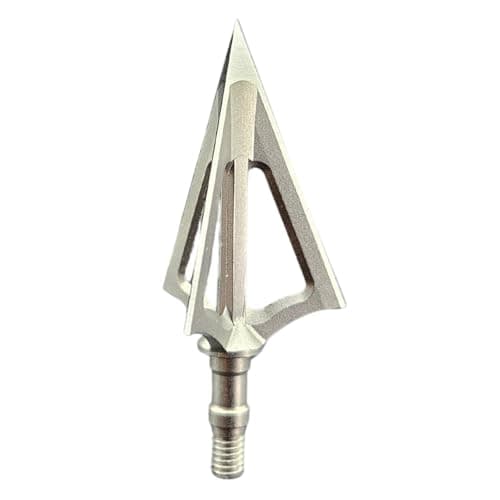
One piece of steel, three blades, nothing to break or deploy. It flies like a field point once tuned, penetrates hard from a 50-pound bow, and you can sharpen it and use it again. The default answer for a first season.
Best for: The best first broadhead9.3 - 2
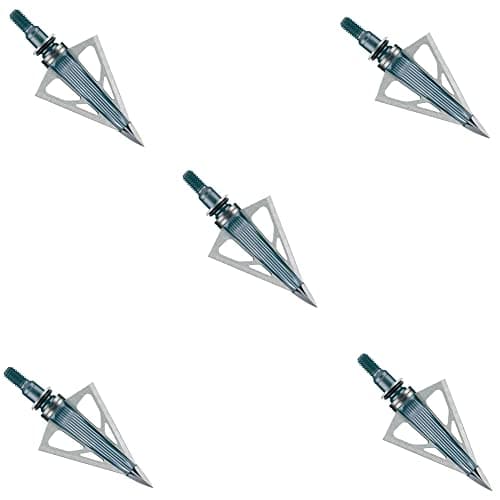
A design that has been killing deer for decades. Replaceable blades mean you swap in fresh razors rather than learning to sharpen — the same argument that makes replaceable-blade knives the right beginner choice.
Best for: Best proven replaceable-blade head8.9 - 3
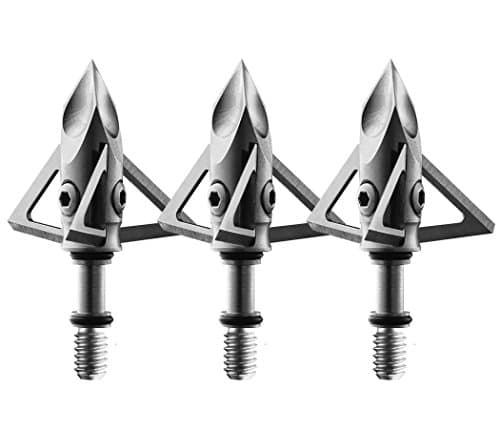
A well-regarded fixed head at a price closer to the budget packs than the premium ones. If the Montec is out of stock or out of budget, this is the honest substitute rather than a step down into unknown steel.
Best for: Best value fixed blade8.6 - 4
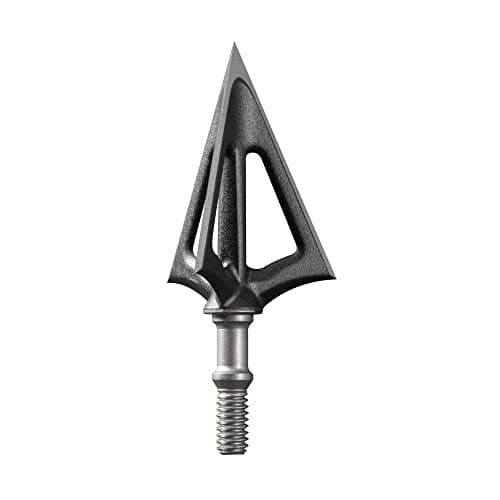
The Montec design built to handle crossbow speeds and energy. If you are hunting with a crossbow rather than a vertical bow, start here — a head designed for 400 feet per second is a different engineering problem.
Best for: Best for crossbow bolts8.7 - 5
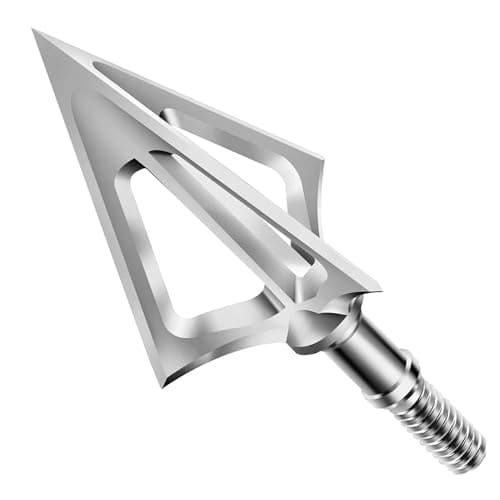
Six heads for the price of three premium ones. Use these for the essential job of checking whether broadheads hit where your field points do — not because they are as good, but because you should not blunt your hunting heads in a target.
Best for: Best practice broadheads7.8
| # | Product | Best for | Score | Price |
|---|---|---|---|---|
| 1 | G5 Outdoors Montec 100 Grain (3 Pack) One piece of steel, three blades, nothing to break or deploy. It flies like a field point once tuned, penetrates hard from a 50-pound bow, and you can sharpen it and use it again. The default answer for a first season. | The best first broadhead | 9.3 | $44.95View on Amazon#ad |
| 2 | New Archery Products Thunderhead 100 (5 Pack) A design that has been killing deer for decades. Replaceable blades mean you swap in fresh razors rather than learning to sharpen — the same argument that makes replaceable-blade knives the right beginner choice. | Best proven replaceable-blade head | 8.9 | $40.98View on Amazon#ad |
| 3 | Ramcat Diamondback 100 Grain (3 Pack) A well-regarded fixed head at a price closer to the budget packs than the premium ones. If the Montec is out of stock or out of budget, this is the honest substitute rather than a step down into unknown steel. | Best value fixed blade | 8.6 | Check price on Amazon#ad |
| 4 | TenPoint EVO-X Montec Fixed Blade (3 Pack) The Montec design built to handle crossbow speeds and energy. If you are hunting with a crossbow rather than a vertical bow, start here — a head designed for 400 feet per second is a different engineering problem. | Best for crossbow bolts | 8.7 | $44.99View on Amazon#ad |
| 5 | KEAUP Stainless Fixed Blade Broadheads (6 Pack) Six heads for the price of three premium ones. Use these for the essential job of checking whether broadheads hit where your field points do — not because they are as good, but because you should not blunt your hunting heads in a target. | Best practice broadheads | 7.8 | $23.99View on Amazon#ad |
Everything else in your setup exists to deliver this one small piece of steel to the right place. A broadhead kills by cutting, so the only questions that matter are whether it arrives sharp, whether it penetrates, and whether it goes where you aimed. For a first season the answer to all three is a simple fixed blade — the G5 Montec above.
How we picked these
We compared blade design, cutting diameter, construction and published grain weights against what a beginner brings to the shot: a modest draw weight, a bow that may not be perfectly tuned, and limited practice with broadheads specifically. That pushed us hard toward reliability and penetration over cutting diameter. We do not conduct ballistic gel or penetration testing and do not claim to; our method is on the how we research and pick page.
Fixed or mechanical for a beginner?
| Fixed blade | Mechanical (expandable) | |
|---|---|---|
| How it works | Blades are always out — solid head | Blades deploy on impact |
| Penetration | Better, especially at lower draw weights | Uses some energy to open |
| Flight | Steers in the wind — needs a tuned bow | Flies almost exactly like a field point |
| What can go wrong | Very little | Failure to deploy, or deploying early |
| Best for a beginner | Yes — start here | Later, once your bow is tuned and your weight is up |
The case for mechanicals is real — they fly like field points, which removes the tuning headache described below — but they spend energy opening, and energy is the thing a beginner shooting 50 pounds has least of. Start fixed. We break the whole argument down in fixed vs mechanical broadheads if you want the longer version before you decide.
What grain weight should you buy?
100 grain. It is the standard, it matches the field points you have been practicing with, and it suits the arrow spines most beginners shoot. Heavier heads (125 grain and up) increase front-of-center weight and penetration, and are worth exploring later, but changing head weight changes arrow spine and where the arrow hits — so it is not a first-season experiment. Whatever you choose, your practice field points must match your broadhead weight, or every practice session has been teaching you the wrong sight picture.
Broadheads do not fly like field points
This is the single most important thing on this page, and the thing nobody tells beginners until they have already been surprised by it. A field point is a smooth cone; a fixed broadhead has blades that act like little wings and steer the arrow. If your bow is even slightly out of tune, your field points will group beautifully and your broadheads will hit several inches away at 20 yards. That gap is not the broadhead being bad — it is the broadhead revealing a tuning problem the field points were hiding.
Do this before opening day
What to skip for now
Skip the huge-cutting-diameter mechanicals marketed on blood-trail photos — they demand more energy than a beginner setup produces. Skip single-bevel and heavy traditional heads unless you are shooting a traditional bow. Skip buying five different heads to “test”; buy one three-pack of a proven fixed head, tune to it, and shoot it all season. And never hunt with a head you have not shot from your own bow. Once the broadhead is sorted, the rest of the setup is on what a complete beginner bow setup costs, and the field-side of the job — what happens after the shot — is covered on the hunting knives page.
The picks in detail
G5 Outdoors Montec 100 Grain (3 Pack)
9.3/10Best for: The best first broadhead
One piece of steel, three blades, nothing to break or deploy. It flies like a field point once tuned, penetrates hard from a 50-pound bow, and you can sharpen it and use it again. The default answer for a first season.
- Type
- Fixed blade, one-piece
- Weight
- 100 grain
- Cut
- 1-1/16"
- Blades
- 3, re-sharpenable
- No moving parts — nothing can fail at the shot
- Excellent penetration at beginner draw weights
- Re-sharpenable rather than disposable
- Requires a well-tuned bow to fly true
- Smaller cut than a big mechanical head
New Archery Products Thunderhead 100 (5 Pack)
8.9/10Best for: Best proven replaceable-blade head
A design that has been killing deer for decades. Replaceable blades mean you swap in fresh razors rather than learning to sharpen — the same argument that makes replaceable-blade knives the right beginner choice.
- Type
- Fixed, replaceable blade
- Weight
- 100 grain
- Pack
- 5 heads
- Blades
- Replaceable
- Decades-long track record in the field
- Fresh blades instead of a sharpening skill
- Five per pack covers a quiver and spares
- Replacement blades are an ongoing cost
- Vented blades can be marginally noisier in flight
Ramcat Diamondback 100 Grain (3 Pack)
8.6/10Best for: Best value fixed blade
A well-regarded fixed head at a price closer to the budget packs than the premium ones. If the Montec is out of stock or out of budget, this is the honest substitute rather than a step down into unknown steel.
- Type
- Fixed blade
- Weight
- 100 grain
- Pack
- 3 heads
- Best for
- Value without gambling on quality
- Real brand at a budget-adjacent price
- Flies well from a tuned setup
- Good penetration for the money
- Availability is inconsistent
- Not as widely field-proven as the Montec or Thunderhead
TenPoint EVO-X Montec Fixed Blade (3 Pack)
8.7/10Best for: Best for crossbow bolts
The Montec design built to handle crossbow speeds and energy. If you are hunting with a crossbow rather than a vertical bow, start here — a head designed for 400 feet per second is a different engineering problem.
- Type
- Fixed blade, three-blade
- Weight
- 100 grain
- Designed for
- Crossbow speeds
- Pack
- 3 heads
- Built for the higher speeds a crossbow produces
- Same no-moving-parts reliability as the Montec
- Backed by a major crossbow manufacturer
- Overkill for a vertical bow at typical draw weights
- Priced above the standard Montec
KEAUP Stainless Fixed Blade Broadheads (6 Pack)
7.8/10Best for: Best practice broadheads
Six heads for the price of three premium ones. Use these for the essential job of checking whether broadheads hit where your field points do — not because they are as good, but because you should not blunt your hunting heads in a target.
- Type
- Fixed blade
- Weight
- 100 grain
- Material
- 420 stainless steel
- Pack
- 6 heads
- Cheap enough to shoot into a target repeatedly
- Same 100-grain weight as your hunting heads
- Six per pack
- Edge retention and consistency are not hunting-grade
- We would practice with these and hunt with the Montec
Prices shown are from Amazon as of Sep 5, 2026 and change often — the button always goes to the current listing. Some links may earn us a commission at no extra cost to you. How this works.
Frequently asked questions
Should a beginner use fixed or mechanical broadheads?
Fixed blades. They have no moving parts to fail and they penetrate better at the modest draw weights beginners shoot, because a mechanical head spends some of the arrow's energy opening its blades. The trade-off is that fixed heads reveal any tuning problem in your bow, so shoot them before the season.
What grain broadhead should I use?
100 grain for almost every beginner. It matches the standard field points you have been practicing with and suits the arrow spines most beginner setups use. Heavier heads improve penetration but change arrow spine and point of impact, so save that experiment for a later season.
Why do my broadheads hit differently than my field points?
Because a fixed broadhead's blades steer the arrow like small wings, exposing any tuning imperfection that smooth field points hide. It is a bow-tuning issue, not a bad broadhead. Shoot your hunting heads into a broadhead-rated target before the season and, if they do not group with your field points, have the bow paper-tuned.
Can you reuse broadheads after shooting a deer?
A one-piece head like the Montec can be cleaned, inspected and re-sharpened if it is undamaged. Replaceable-blade heads take fresh blades. Either way, inspect the ferrule for bends and cracks - a head that hit bone may look fine and no longer fly true, and it is not worth the risk of a wounded animal.
Sources
Keep reading
Not sure where to start?
The beginner gear checklist walks you through exactly what a first-season hunter needs — essentials first, nice-to-haves later, with one safe-default pick per category.