Gear · Roundup
The Best Hunting Headlamps for Beginners
Every hunt starts and ends in the dark. A headlamp is the cheapest piece of gear that can wreck your morning if you get it wrong — here is what to buy and why the color of the light matters more than the lumens.
Disclosure: Creek Cover is reader-supported. If you buy through our links we may earn a commission, at no extra cost to you. It never changes which pick we tell a beginner to start with. Full disclosure.
Quick picks at a glance
Tap a pick to read the full write-up, or the price button to check it on Amazon.
- 1
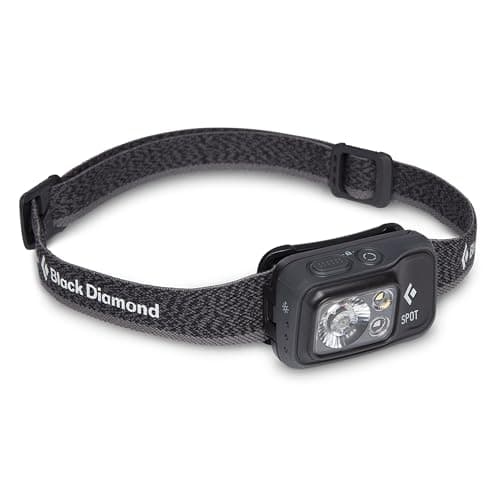
Red mode first, 400 lumens of white when you need it, waterproof, and it runs on AAAs you can replace anywhere. The lamp that handles the walk in, the field dressing, and the walk out without a compromise.
Best for: The best all-around hunting headlamp9.2 - 2
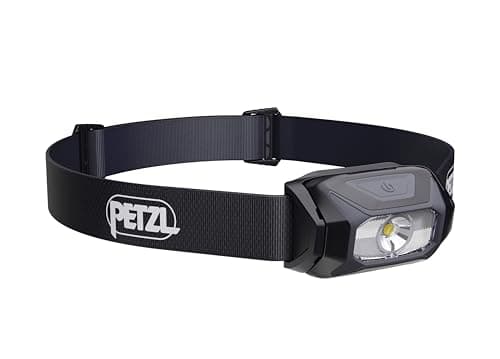
The honest cheap answer. Petzl build quality, simple one-button operation, and a price that lets you buy a second one for the truck. No red mode, which is the trade-off you are making.
Best for: Best budget lamp that is still a real lamp8.4 - 3
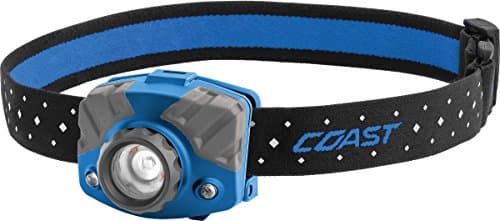
530 lumens, a dual-color head with red, and a focusing beam that goes from flood to spot — useful when you are trying to pick a reflective tack out of dark timber. Rechargeable, so it lives on a charger between hunts.
Best for: Best rechargeable with a real red mode8.6 - 4
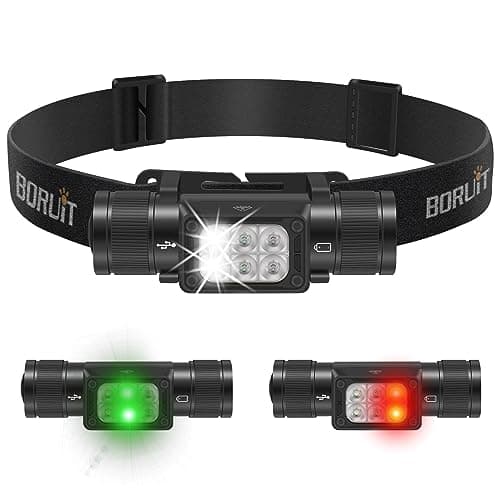
The three-color lamp. Green light makes fresh blood on leaf litter jump out in a way white light does not, and this is the affordable way to have that mode in your pack when a shot goes long.
Best for: Best for blood trailing8.3 - 5

Under ten dollars with a red mode. Buy it as the backup that stays in the bottom of your pack for the day your main lamp dies, not as your primary lamp.
Best for: The spare that lives in your pack7.8
| # | Product | Best for | Score | Price |
|---|---|---|---|---|
| 1 | Black Diamond Spot 400 Red mode first, 400 lumens of white when you need it, waterproof, and it runs on AAAs you can replace anywhere. The lamp that handles the walk in, the field dressing, and the walk out without a compromise. | The best all-around hunting headlamp | 9.2 | $59.88View on Amazon#ad |
| 2 | Petzl Tikkina The honest cheap answer. Petzl build quality, simple one-button operation, and a price that lets you buy a second one for the truck. No red mode, which is the trade-off you are making. | Best budget lamp that is still a real lamp | 8.4 | $19.95View on Amazon#ad |
| 3 | Coast FL75R Rechargeable 530 lumens, a dual-color head with red, and a focusing beam that goes from flood to spot — useful when you are trying to pick a reflective tack out of dark timber. Rechargeable, so it lives on a charger between hunts. | Best rechargeable with a real red mode | 8.6 | $59.99View on Amazon#ad |
| 4 | BORUIT HP360 White/Green/Red The three-color lamp. Green light makes fresh blood on leaf litter jump out in a way white light does not, and this is the affordable way to have that mode in your pack when a shot goes long. | Best for blood trailing | 8.3 | $32.48View on Amazon#ad |
| 5 | Foxelli LED Headlamp (White & Red) Under ten dollars with a red mode. Buy it as the backup that stays in the bottom of your pack for the day your main lamp dies, not as your primary lamp. | The spare that lives in your pack | 7.8 | $9.97View on Amazon#ad |
A headlamp is the piece of hunting gear you will use on literally every hunt, twice — walking in before legal light and walking out after it. It is also the piece most beginners buy last and cheapest, then regret at 5am when they are stumbling into a treestand with a phone flashlight in their teeth. The good news is that a genuinely good hunting headlamp costs less than a box of broadheads. The short answer is the Black Diamond Spot 400 above.
How we picked these
We compared published output, beam pattern, battery format, weather rating and available light colors against the two jobs a hunting lamp actually does: getting you to your spot without lighting up the whole woods, and helping you find and follow blood on the way out. We did not test these in a lab and we do not claim to have — our full process is on the how we research and pick page. Prices come from a live feed and are dated, so nothing here goes stale in a way we can hide.
Red, green, or white: what the colors are for
This is the part nobody explains to beginners, and it is the single reason a “hunting” headlamp differs from a camping one.
| Light color | What it is for | When you use it |
|---|---|---|
| Red | Preserves your own night vision and is far less visible to deer than white light | Walking in, getting settled, checking gear in the stand |
| Green | Makes fresh blood stand out sharply against leaf litter and dirt | Blood trailing after the shot |
| White | Maximum brightness and true color — but destroys your night vision and spooks game | Field dressing, dragging out, finding your truck |
In practice: use red for everything before the shot, white for everything after you are done hunting, and green if you have it and you are on a blood trail. A lamp that forces you to cycle through full white to reach red is a lamp that will blind you in a treestand at least once. That is why the Spot’s red-first behavior matters more than its lumen number.
How many lumens do you actually need?
Less than the marketing suggests. Roughly 150–250 lumensis plenty to walk a trail, climb into a stand and field dress an animal. The reason to buy a 400–530 lumen lamp is not that you will run it on high all night — you will not, because it eats battery and ruins your eyes — it is that a lamp with headroom can throw a genuinely useful beam on the one night you need it, when a deer ran further than you expected and you are looking for the next speck of blood at 30 yards. Buy the headroom, run it low.
The beginner mistake
Rechargeable vs AAA — the real answer
Rechargeable lamps are brighter per dollar and cheaper to run. Replaceable-battery lamps cannot be forgotten. For a first season we lean toward AAA for your primary lamp and rechargeable for your bright backup, because the failure mode of a rechargeable — a flat lamp on the morning of opening day, with no fix — is worse than the failure mode of AAAs, which is a two-dollar trip to any gas station. Cold matters too: alkaline output drops in hard cold, so late-season hunters should carry a spare set in an inside pocket where body heat keeps them warm. Whichever you pick, put fresh batteries in before the season and carry a spare set or a second lamp. Two cheap lamps beat one expensive one that is dead.
What to skip for now
You do not need a helmet-mount system, a remote battery pack, or a lamp with a built-in laser or Bluetooth. You do not need the 2,000-lumen option. What you do need alongside it is genuinely boring: spare batteries, and a lamp that lives permanently in your pack so you never leave the house without one. If you are still building the rest of your kit, the beginner gear checklist puts the headlamp in context with everything else, and a pack with a dedicated small pocket is where it should live so you can find it in the dark. If you are hunting from a stand or saddle, clip it to your harness rather than leaving it loose — dropping your only light from 20 feet up is a hunt-ending mistake.
One more thing worth saying plainly: a headlamp is a safety item, not just a convenience. Other hunters need to see you moving in the dark, especially during firearm seasons. A white flash toward the trail when you hear footsteps is the correct call, every time — being visible beats being stealthy when there is a rifle involved. Pair it with the blaze orange your state requires and you have covered the two things that keep you safe in low light.
The picks in detail
Black Diamond Spot 400
9.2/10Best for: The best all-around hunting headlamp
Red mode first, 400 lumens of white when you need it, waterproof, and it runs on AAAs you can replace anywhere. The lamp that handles the walk in, the field dressing, and the walk out without a compromise.
- Output
- 400 lumens (white)
- Night vision
- Dedicated red mode
- Power
- 3x AAA (replaceable)
- Weather
- Waterproof rated
- Red mode activates without cycling through white first
- AAA batteries mean no dead lamp because you forgot to charge
- Dimmable — you can run it low so you do not blow out your night vision
- Not rechargeable (the Spot 400-R is, for more money)
- No green mode for blood trailing
Petzl Tikkina
8.4/10Best for: Best budget lamp that is still a real lamp
The honest cheap answer. Petzl build quality, simple one-button operation, and a price that lets you buy a second one for the truck. No red mode, which is the trade-off you are making.
- Output
- Multiple white levels
- Night vision
- None (white only)
- Power
- 3x AAA (replaceable)
- Controls
- Single button
- Genuinely reliable brand at a throwaway price
- One button — no mode-cycling puzzle with cold hands
- Light enough to forget it is on your head
- White light only — no red or green mode
- Modest output compared with the Spot
Coast FL75R Rechargeable
8.6/10Best for: Best rechargeable with a real red mode
530 lumens, a dual-color head with red, and a focusing beam that goes from flood to spot — useful when you are trying to pick a reflective tack out of dark timber. Rechargeable, so it lives on a charger between hunts.
- Output
- 530 lumens (white)
- Night vision
- Red mode
- Power
- Rechargeable (battery pack)
- Beam
- Twist focus — flood to spot
- Focusing beam reaches further than a fixed flood
- Bright enough to be a genuine search light on a recovery
- No battery budget once you own it
- Rechargeable means a dead lamp if you forget to charge it
- Heavier on the head than the Spot or Tikkina
BORUIT HP360 White/Green/Red
8.3/10Best for: Best for blood trailing
The three-color lamp. Green light makes fresh blood on leaf litter jump out in a way white light does not, and this is the affordable way to have that mode in your pack when a shot goes long.
- Colors
- White, green, red
- Power
- Rechargeable
- Weather
- IP67 rated
- Best for
- Recovery and tracking
- Green and red modes without paying a premium brand price
- IP67 sealing survives real rain
- Bright enough to double as your main lamp
- Build quality is not Petzl or Black Diamond
- More modes to cycle through in the cold
Foxelli LED Headlamp (White & Red)
7.8/10Best for: The spare that lives in your pack
Under ten dollars with a red mode. Buy it as the backup that stays in the bottom of your pack for the day your main lamp dies, not as your primary lamp.
- Output
- Modest white output
- Night vision
- Red mode
- Power
- 3x AAA (replaceable)
- Role
- Backup / spare
- Cheap enough that owning two is not a decision
- Has a red mode, which many budget lamps skip
- Weighs almost nothing in a pack
- Not bright enough for a long recovery
- Strap and housing feel like the price
Prices shown are from Amazon as of Sep 5, 2026 and change often — the button always goes to the current listing. Some links may earn us a commission at no extra cost to you. How this works.
Frequently asked questions
What color headlamp is best for hunting?
Red for everything before the shot — it preserves your night vision and is much less visible to deer than white light. Green is the best choice for blood trailing, because fresh blood stands out sharply under green light. Save white for field dressing and the walk back to the truck, once hunting is over for the day.
How many lumens do I need in a hunting headlamp?
About 150-250 lumens covers walking in, climbing a stand and field dressing. Buying a 400-530 lumen lamp gives you headroom for a long blood trail or a difficult recovery, but you will run it on a low setting most of the time. More lumens is not better if it destroys your dark adaptation and drains batteries.
Do deer see red light?
Deer can detect red light, but they are far less sensitive to the red end of the spectrum than humans are, so a dim red beam disturbs them much less than white light. Keep it dim, point it down at the ground rather than out into the woods, and turn it off once you are settled.
Should a hunting headlamp be rechargeable or use batteries?
For a first season, a AAA-powered lamp is the safer primary: you can never be caught out by a flat battery you forgot to charge, and replacements are available anywhere. A rechargeable lamp makes an excellent bright backup. Carry a spare set of batteries or a second lamp either way.
Sources
Keep reading
Not sure where to start?
The beginner gear checklist walks you through exactly what a first-season hunter needs — essentials first, nice-to-haves later, with one safe-default pick per category.