Gear · Comparison
Fixed vs Folding Hunting Knife
The classic answer is 'fixed blade, always.' Replaceable-blade folders have made that advice about fifteen years out of date for most beginners.
Disclosure: Creek Cover is reader-supported. If you buy through our links we may earn a commission, at no extra cost to you. It never changes which pick we tell a beginner to start with. Full disclosure.
Quick picks at a glance
Tap a pick to read the full write-up, or the price button to check it on Amazon.
- 1
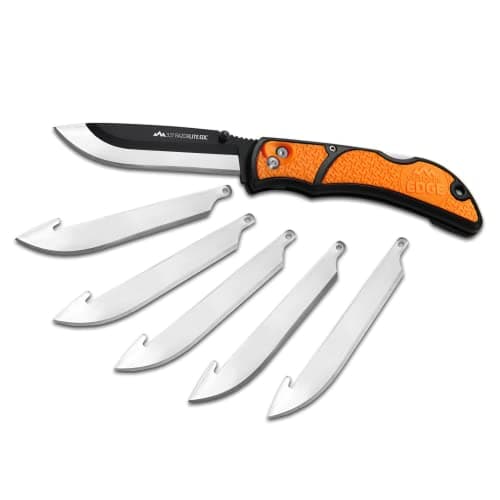
A replaceable-blade folder that stays surgically sharp through an entire animal because you swap the blade instead of sharpening it. For someone dressing one or two deer a year, this is a better tool than a traditional fixed blade.
Best for: The beginner who cannot sharpen yet9.2 - 2
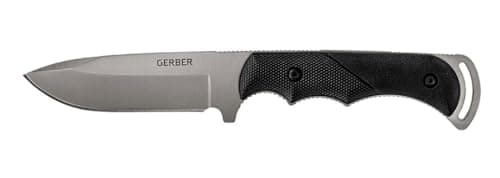
A full-tang drop point with a sheath at a genuinely low price. If you want one knife that will never fail structurally, cleans in thirty seconds, and handles jobs beyond dressing an animal, this is the honest budget answer.
Best for: The traditional do-everything fixed blade8.6
| # | Product | Best for | Score | Price |
|---|---|---|---|---|
| 1 | Outdoor Edge RazorLite EDC A replaceable-blade folder that stays surgically sharp through an entire animal because you swap the blade instead of sharpening it. For someone dressing one or two deer a year, this is a better tool than a traditional fixed blade. | The beginner who cannot sharpen yet | 9.2 | $34.94View on Amazon#ad |
| 2 | Gerber Freeman Guide Fixed Blade, Drop Point A full-tang drop point with a sheath at a genuinely low price. If you want one knife that will never fail structurally, cleans in thirty seconds, and handles jobs beyond dressing an animal, this is the honest budget answer. | The traditional do-everything fixed blade | 8.6 | $28.00View on Amazon#ad |
Should I use a fixed blade or a folding knife for hunting? For field dressing one or two animals a year, a replaceable-blade folder is the better beginner tool — it stays surgically sharp through an entire animal without any sharpening skill. A traditional fixed blade is stronger, easier to clean and better for hard general use, and it is the right choice if you want one knife that does everything.
Hunting knife advice has been "fixed blade, always" for decades, and there were good reasons for it. Two things have changed: replaceable-blade knives got genuinely good, and most beginners now dress one or two deer a year rather than living off the land. Both push the answer toward the folder. Our hunting knife roundup ranks specific models; this page is about which type to buy.
Head to head
| Factor | Fixed blade | Folder | Winner |
|---|---|---|---|
| Structural strength | Full tang, nothing to fail | A pivot and a lock are potential failure points | Fixed |
| Cleaning after an animal | Rinse and wipe — nowhere for tissue to hide | Tissue and blood get into the pivot and lock | Fixed, clearly |
| Staying sharp through a deer | Depends entirely on your sharpening skill | Replaceable blades stay surgical throughout | Replaceable-blade folder |
| Carry and convenience | Belt sheath — bulky, easy to leave behind | Pocket or pack, always with you | Folder |
| Safety in cold, wet hands | No moving parts to fumble | Opening and locking with numb fingers takes care | Fixed |
| Caping and detail work | Depends on blade size — often too large | Small precise blades excel | Folder |
| Heavy work (bone, prying, batoning) | Handles it, within reason | Do not — this is how folders break | Fixed |
| Ongoing cost | Buy once, sharpen forever | Replacement blades are consumable | Fixed |
| Legal carry | Generally fine in the field, restricted in daily carry in some places | Widely carried, but check local blade-length and lock rules | Depends on your state |
The strength argument, examined
The traditional case for a fixed blade is that it cannot fold on your fingers and cannot break at a pivot. Both are true. The question worth asking is whether that matters for what you are actually going to do.
Field dressing a deer is slicing work. You are cutting hide, connective tissue and muscle with a sharp edge — not prying, not chopping, not levering. A modern locking folder is far stronger than that job requires. The failures that make people distrust folders come from using them as pry bars, splitting a pelvis, or batoning through bone, and those are jobs a folder should never be asked to do in the first place.
The honest version of the strength argument is therefore narrower than it is usually stated: a fixed blade is the right choice if you want a single knife that will also handle work beyond dressing an animal — camp tasks, cutting shooting lanes, a knife you can abuse without thinking. If your knife's job is field dressing and caping, strength is not the deciding factor.
For splitting a pelvis or a sternum, neither type is the correct tool. A small bone saw does that job better and more safely than any knife, which is why the multi-piece field dressing kits we recommend on the deer hunting guide include one.
Cleaning, which is the real fixed-blade win
This is the argument that deserves more attention than strength and gets less. A folding knife has a pivot, a lock mechanism and internal channels, and after an animal all of them contain blood and tissue. Rinsing the blade does not clean them. Properly cleaning a folder used on a deer means working water and soap through the mechanism, drying it thoroughly, and re-oiling the pivot — and if you skip it you get corrosion, stiffness and a genuinely unpleasant smell.
A fixed blade has none of that. Rinse it, wipe it, dry it, put it away. In a cold garage at eleven at night after a long day, that difference is larger than it sounds on paper.
If you carry a folder, clean it the same night
The replaceable-blade knife changed the question
Here is the thing most beginners do not anticipate: a knife that starts sharp will not finish a deer sharp. Hide is abrasive and hair dulls an edge quickly. Halfway through your first animal, the knife that felt like a scalpel is now dragging, and you find yourself pushing harder — which is exactly when people cut themselves.
Experienced hunters solve this by touching up the edge on a small stone or steel as they work. That is a real skill that takes time to develop, and a beginner will not have it in their first season.
Replaceable-blade knives sidestep the problem entirely. The blades are surgical-grade, arrive genuinely sharp, and when one dulls you snap in a new one — a few seconds, with cold hands, in bad light. For an occasional hunter this is a better solution than owning a superb fixed blade you cannot maintain. It is also why our knife roundup ranks a replaceable-blade folder first.
Two honest caveats. The blades are thin and will snap if twisted or levered — treat them as cutting instruments only. And they are consumable, so factor a pack of replacements into the cost. Handle used blades carefully; a discarded surgical blade in a pack or a bin is a real hazard, so use the container the knife came with.
Blade shape matters more than the hinge
Once you have decided fixed or folding, the specification that actually affects your day is blade profile — and here beginners consistently buy too much knife.
| Profile | What it does | Verdict for a beginner |
|---|---|---|
| Drop point | Strong tip, generous belly for slicing | The default. Buy this if you buy one knife. |
| Clip point | Finer, more precise tip | Good for detail work; the thin tip is easier to break. |
| Gut hook | Opens the hide without puncturing the paunch | Genuinely useful for a first-timer; clogs with hair and is hard to sharpen. |
| Caping blade | Small, precise, for working around the head | Only needed if you are mounting the animal. |
| Skinner | Wide sweeping belly, blunt tip | Excellent at skinning, poor at everything else. |
Blade length is the other place to resist temptation. Three to four inches is right for field dressing a deer. A large knife is harder to control inside a body cavity, more likely to puncture the paunch — which is genuinely unpleasant and can taint meat — and no better at anything you will actually do. The big knives that look serious in a display case are a version of the pattern we describe in what not to buy.
The decision rule
Buy a replaceable-blade folder if you will dress one or two animals a year, you cannot yet sharpen a knife well, and you want the thing to be in your pocket rather than on a belt you might not wear. That describes most first-season hunters.
Buy a fixed blade if you want one knife for hunting and camp work, you value cleaning simplicity, you already sharpen competently, or you expect to process multiple animals a season. Buy a full-tang drop point in the three-to-four-inch range and learn to put an edge on it.
Buy both, eventually — a small folder in the pocket and a fixed blade in the pack is what a lot of experienced hunters carry, and neither costs much. The wrong answer is the eight-piece display set, which mostly stays in its case. Check the rest of your kit against the beginner gear checklist.
The picks in detail
Outdoor Edge RazorLite EDC
9.2/10Best for: The beginner who cannot sharpen yet
A replaceable-blade folder that stays surgically sharp through an entire animal because you swap the blade instead of sharpening it. For someone dressing one or two deer a year, this is a better tool than a traditional fixed blade.
- Type
- Folding, replaceable blade
- Blade
- Surgical-grade, swappable
- Sharpening
- None — replace instead
- Best for
- Field dressing and caping
- Never dulls mid-animal — swap in seconds with cold hands
- Removes the sharpening skill beginners do not yet have
- Pocket carry means it is actually on you when needed
- Blades are consumable — a small ongoing cost
- Not the tool for prying, batoning or heavy bone work
Gerber Freeman Guide Fixed Blade, Drop Point
8.6/10Best for: The traditional do-everything fixed blade
A full-tang drop point with a sheath at a genuinely low price. If you want one knife that will never fail structurally, cleans in thirty seconds, and handles jobs beyond dressing an animal, this is the honest budget answer.
- Type
- Fixed blade, full tang
- Profile
- Drop point
- Carry
- Belt sheath
- Best for
- General field work and hard use
- No pivot or lock to fail or fill with tissue
- Rinses clean in seconds — the real hygiene advantage
- Handles work a folder should never be asked to do
- Requires sharpening skill you may not have yet
- Belt sheath is bulkier and easier to leave in the truck
Prices shown are from Amazon as of Sep 5, 2026 and change often — the button always goes to the current listing. Some links may earn us a commission at no extra cost to you. How this works.
Frequently asked questions
Should I use a fixed blade or a folding knife for hunting?
For dressing one or two animals a year, a replaceable-blade folder is the better beginner tool - it stays surgically sharp throughout without any sharpening skill. A traditional fixed blade is stronger, far easier to clean, and the right choice if you want one knife for hunting and general field work.
Are folding knives strong enough to field dress a deer?
Yes. Field dressing is slicing work on hide, connective tissue and muscle, and a modern locking folder is far stronger than that requires. Folder failures come from prying, levering or batoning - jobs no folder should be asked to do. Use a small bone saw for the pelvis and sternum instead.
What size hunting knife do I need?
A three-to-four-inch drop point blade. Longer knives are harder to control inside a body cavity, more likely to puncture the paunch and taint meat, and no better at anything you will actually do. Blade length is where beginners most often buy more knife than the job needs.
How do you clean a folding knife after field dressing?
The same night, not the next morning. Flush the pivot and lock with warm soapy water, work the action open and closed a dozen times, rinse, dry it thoroughly and put a drop of oil on the pivot. Blood wicks into the mechanism where you cannot see it and will corrode and bind the action.
Sources
Keep reading
Not sure where to start?
The beginner gear checklist walks you through exactly what a first-season hunter needs — essentials first, nice-to-haves later, with one safe-default pick per category.