Gear · Roundup
The Best Hunting Coolers
The cooler is not camp gear. It is the last piece of the meat-care chain, and the one place a beginner is most likely to buy far more than they need.
Disclosure: Creek Cover is reader-supported. If you buy through our links we may earn a commission, at no extra cost to you. It never changes which pick we tell a beginner to start with. Full disclosure.
Quick picks at a glance
Tap a pick to read the full write-up, or the price button to check it on Amazon.
- 1
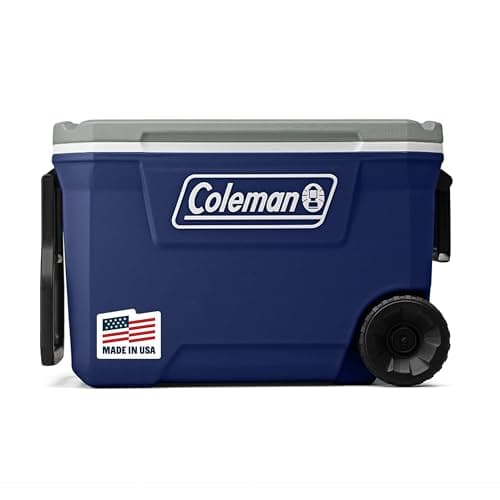
Sixty-two quarts, wheels, a real drain, and multi-day ice retention for about a quarter of the price of a rotomolded box. The correct first hunting cooler by a wide margin.
Best for: The best cooler for hauling a deer9.2 - 2
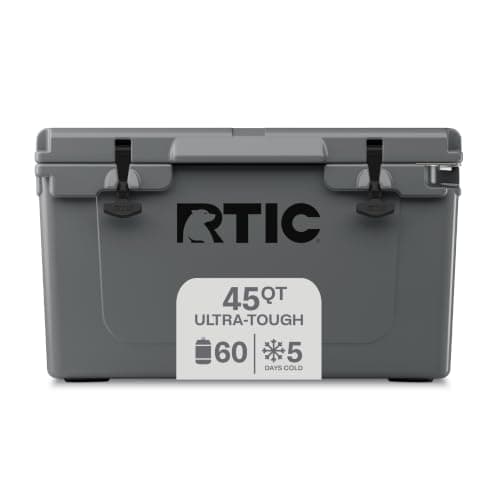
A rotomolded cooler with thick walls, a gasketed lid and the ice life to match. Worth the money if you camp for a week or hunt somewhere warm; hard to justify for a day trip from home.
Best for: Best ice retention8.9 - 3
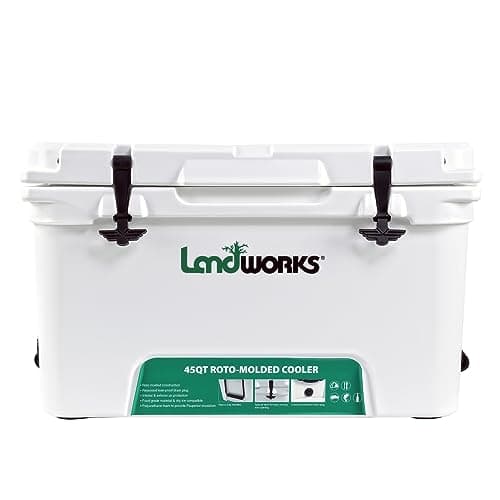
Rotomolded construction and a claimed five to ten day ice life at a substantially lower price than the name brands. The compromise is in the latches and the hardware, not the insulation.
Best for: Cheapest real rotomolded cooler8.6 - 4
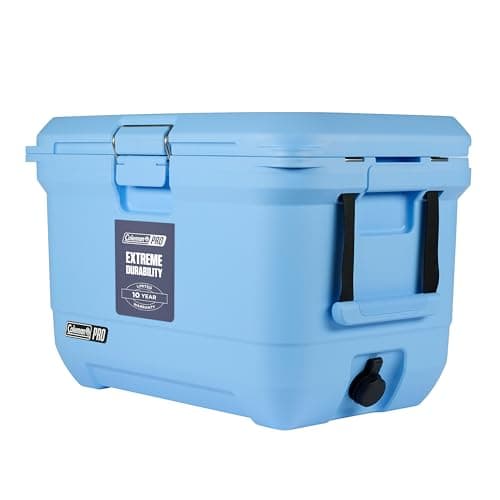
Extra-thick insulation and a four-day ice claim in a body that is genuinely lighter than rotomolded competitors. A sensible middle if you carry the cooler more than you leave it in a truck.
Best for: Best compromise between weight and ice life8.4 - 5
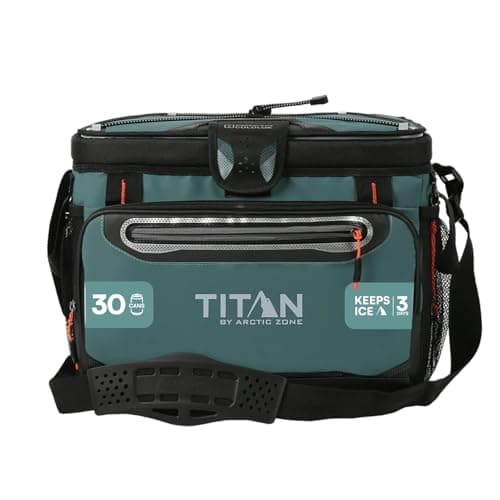
A three-day soft-shell cooler for food, drinks and a couple of frozen bottles. Not a meat cooler — but the one that stops you opening the meat cooler, which is exactly its job.
Best for: Best small cooler for the truck8.1
| # | Product | Best for | Score | Price |
|---|---|---|---|---|
| 1 | Coleman Classic 62-Quart Rolling Cooler Sixty-two quarts, wheels, a real drain, and multi-day ice retention for about a quarter of the price of a rotomolded box. The correct first hunting cooler by a wide margin. | The best cooler for hauling a deer | 9.2 | $67.99View on Amazon#ad |
| 2 | RTIC 45 QT Ultra-Tough Hard Cooler A rotomolded cooler with thick walls, a gasketed lid and the ice life to match. Worth the money if you camp for a week or hunt somewhere warm; hard to justify for a day trip from home. | Best ice retention | 8.9 | $215.10View on Amazon#ad |
| 3 | Landworks 45QT Rotomolded Cooler Rotomolded construction and a claimed five to ten day ice life at a substantially lower price than the name brands. The compromise is in the latches and the hardware, not the insulation. | Cheapest real rotomolded cooler | 8.6 | $161.49View on Amazon#ad |
| 4 | Coleman Pro Heavy-Duty 45qt Hard Cooler Extra-thick insulation and a four-day ice claim in a body that is genuinely lighter than rotomolded competitors. A sensible middle if you carry the cooler more than you leave it in a truck. | Best compromise between weight and ice life | 8.4 | $149.99View on Amazon#ad |
| 5 | Titan 30 Can Zipperless HardBody Cooler A three-day soft-shell cooler for food, drinks and a couple of frozen bottles. Not a meat cooler — but the one that stops you opening the meat cooler, which is exactly its job. | Best small cooler for the truck | 8.1 | $69.99View on Amazon#ad |
A cooler looks like camp equipment right up to the first time you fill a tag on a warm October afternoon three hours from home. At that point it becomes the last link in the chain that decides whether four months of scouting turns into a freezer full of venison. That is the framing this page uses — the 62-quart Coleman is the pick because it is sized for a deer and it has wheels, not because it is the most impressive cooler you can buy.
How we picked these
We compared published capacity, insulation construction, stated ice retention, drain design and mobility against one specific job: getting quartered meat cold and keeping it there for the drive home or the rest of a trip. We weighted capacity and wheels above ice-life claims, because most beginners are driving home the same day and a cooler that is too heavy to move alone is a cooler you leave in the wrong place. We do not run ice-retention tests — our method is on the how we research and pick page, and prices here are live and dated.
What size cooler holds a deer
The single most common mistake here is buying a 20-quart cooler because it was on offer and discovering it holds one front shoulder. Meat plus ice needs roughly twice the volume the meat alone would suggest.
| What you are carrying | Capacity needed | Notes |
|---|---|---|
| Food and drinks, day hunt | 20-30 qt | Keep this separate from the meat cooler |
| Turkey or small game | 25-40 qt | A single bird plus ice |
| Whitetail deer, quartered | 55-70 qt | The most common real requirement |
| Two deer, or a large mule deer | 100-120 qt | Or two 60 qt coolers, which are easier to move |
| Elk, quartered | Two 120 qt | Plan on multiple coolers and multiple trips |
Two 60-quart coolers beat one 120-quart cooler for almost everyone. A full 120 is beyond what one person should be lifting into a truck bed, and splitting the load means you can open one without dumping the cold out of the other.
Is a rotomolded cooler worth it?
Rotomolded coolers — the thick-walled, gasketed, expensive ones — genuinely do hold ice several times longer than a basic cooler. Whether that is worth four times the money depends entirely on one question: how long is the meat in the cooler?
Drive home the same evening and put the meat in a fridge or at a processor, and a basic cooler with enough ice does the job perfectly. Camp for five days out of a truck in September warmth, and the rotomolded cooler stops being a luxury. Most first-season hunters are in the first category, which is why the budget pick leads this page.
Pre-chill the cooler the night before
Using a cooler properly for meat
Meat goes into breathable game bags first, then into the cooler — never bare, and never in plastic. Ice goes on top as well as underneath, because cold falls. And the drain plug stays open, propped so meltwater runs out rather than pooling: meat sitting in bloody meltwater goes off far faster than meat sitting on ice, and the water is also what ruins the flavor of anything below it.
If you cannot drain — a truck bed on the road, for instance — put the meat on a rack or a layer of frozen bottles so it sits above the water line. Frozen water bottles are worth knowing about generally: they melt slower than loose ice, they do not flood the cooler, and you end up with drinking water. The whole sequence from the shot forward is in how to field dress a deer.
What to skip for now
Skip powered and thermoelectric coolers — they need a running vehicle, they cannot handle a deer, and they fail at exactly the moment a bag of ice would not have. Skip buying the premium rotomolded cooler as your first one unless you already know you camp for days. And skip the 20-quart bargain: it will not hold a hindquarter and you will buy a second cooler within a season. Check the rest of the after-the-shot kit against the beginner gear checklist.
The picks in detail
Coleman Classic 62-Quart Rolling Cooler
9.2/10Best for: The best cooler for hauling a deer
Sixty-two quarts, wheels, a real drain, and multi-day ice retention for about a quarter of the price of a rotomolded box. The correct first hunting cooler by a wide margin.
- Capacity
- 62 qt
- Ice retention
- Multi-day
- Mobility
- Wheels and tow handle
- Drain
- Yes
- Wheels make a loaded cooler a one-person job
- Fits a quartered whitetail with ice
- Cheap enough to own alongside a smaller day cooler
- Thinner insulation than a rotomolded cooler
- Latches are the weak point over years
RTIC 45 QT Ultra-Tough Hard Cooler
8.9/10Best for: Best ice retention
A rotomolded cooler with thick walls, a gasketed lid and the ice life to match. Worth the money if you camp for a week or hunt somewhere warm; hard to justify for a day trip from home.
- Capacity
- 45 qt
- Construction
- Rotomolded, gasketed lid
- Ice retention
- Several days plus
- Drain
- Threaded plug
- Holds ice far longer than any injection-molded cooler
- Effectively indestructible and bear-resistant when locked
- Threaded drain that does not weep
- Several times the price of the Coleman
- Very heavy empty, and no wheels at this size
Landworks 45QT Rotomolded Cooler
8.6/10Best for: Cheapest real rotomolded cooler
Rotomolded construction and a claimed five to ten day ice life at a substantially lower price than the name brands. The compromise is in the latches and the hardware, not the insulation.
- Capacity
- 45 qt
- Construction
- Rotomolded
- Ice retention
- 5-10 days claimed
- Drain
- Threaded plug
- Rotomolded performance well below rotomolded pricing
- Same thick-wall insulation approach as premium boxes
- Good value if the cooler lives in a truck bed
- Latches and hinges are the obvious cost saving
- Heavy for the capacity, like every rotomolded cooler
Coleman Pro Heavy-Duty 45qt Hard Cooler
8.4/10Best for: Best compromise between weight and ice life
Extra-thick insulation and a four-day ice claim in a body that is genuinely lighter than rotomolded competitors. A sensible middle if you carry the cooler more than you leave it in a truck.
- Capacity
- 45 qt
- Ice retention
- Up to 4 days
- Weight
- Light for the class
- Drain
- Yes
- Noticeably lighter than rotomolded coolers of the same size
- Real four-day ice performance rather than marketing days
- Easier to load in and out of a truck alone
- Less ice life than a true rotomolded box
- Priced closer to rotomolded than to basic coolers
Titan 30 Can Zipperless HardBody Cooler
8.1/10Best for: Best small cooler for the truck
A three-day soft-shell cooler for food, drinks and a couple of frozen bottles. Not a meat cooler — but the one that stops you opening the meat cooler, which is exactly its job.
- Capacity
- 30 cans
- Ice retention
- Up to 3 days
- Type
- Zipperless soft-body
- Best for
- Food and drinks, day hunts
- Keeps you out of the meat cooler, which preserves its ice
- Zipperless lid opens one-handed
- Light enough to carry to a blind
- Nowhere near enough capacity for meat
- Soft body offers no protection under load
Prices shown are from Amazon as of Sep 5, 2026 and change often — the button always goes to the current listing. Some links may earn us a commission at no extra cost to you. How this works.
Frequently asked questions
What size cooler do you need for a deer?
Fifty-five to seventy quarts for a quartered whitetail with ice. Meat plus ice needs roughly twice the volume the meat alone suggests, which is why the small bargain coolers hold about one front shoulder. Two 60 quart coolers are easier to handle than one 120.
Is a rotomolded cooler worth it for hunting?
Only if the meat is in it for days. Rotomolded coolers genuinely hold ice several times longer, which matters on a multi-day camp in warm weather. If you drive home the same evening and put the meat in a fridge or at a processor, a basic cooler with enough ice does the same job for a quarter of the price.
Should the cooler drain plug be open or closed with meat?
Open, with the cooler tilted so meltwater runs out. Meat sitting in bloody meltwater spoils considerably faster than meat sitting on ice, and the water taints anything below it. If you cannot drain, keep the meat above the water line on a rack or frozen bottles.
Can you put meat straight into a cooler?
Put it in breathable game bags first. Bare meat picks up meltwater and slides around, and plastic bags trap heat and moisture against warm meat, which causes souring. Bags first, ice above and below, drain open.
Sources
Keep reading
Not sure where to start?
The beginner gear checklist walks you through exactly what a first-season hunter needs — essentials first, nice-to-haves later, with one safe-default pick per category.