Guides · Roundup
Camping Gear for Hunters
Sleeping an hour closer to your spot is worth more than most gear upgrades. Here is the four-item kit that makes a public-land hunt possible without a cabin.
Disclosure: Creek Cover is reader-supported. If you buy through our links we may earn a commission, at no extra cost to you. It never changes which pick we tell a beginner to start with. Full disclosure.
Quick picks at a glance
Tap a pick to read the full write-up, or the price button to check it on Amazon.
- 1
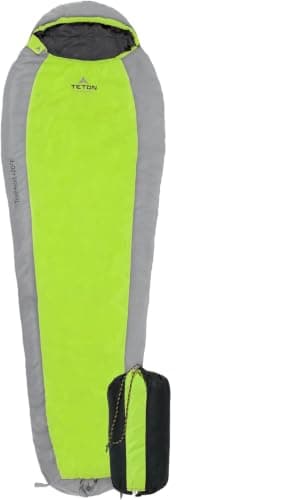
A 20-degree synthetic mummy bag at a price that leaves budget for the pad. Synthetic fill keeps insulating if it gets damp, which is the correct trade-off for hunting camps where nothing stays dry.
Best for: The all-season hunting bag9.0 - 2
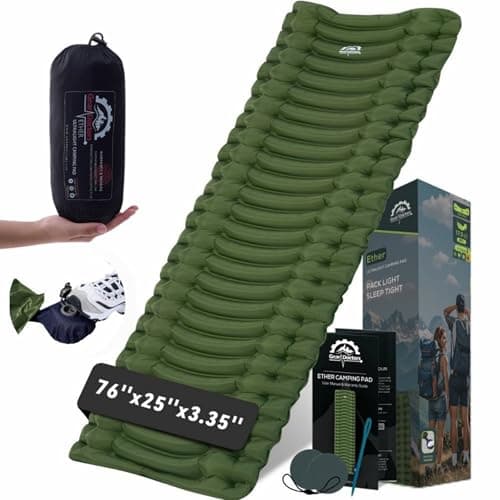
Beginners buy a warmer bag when they get cold at night; the actual culprit is almost always the ground stealing heat through a thin pad. An insulated inflatable pad fixes more cold nights than upgrading a bag by ten degrees.
Best for: The item that matters more than the bag8.9 - 3
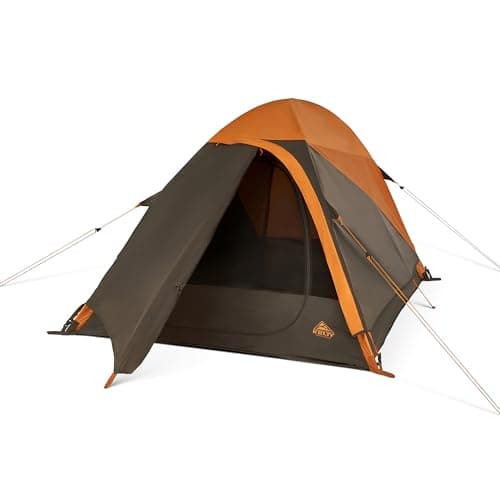
A three-season two-person tent from a brand that has been making them for decades. For one hunter plus a pack and wet boots, a two-person tent is the right size — a solo tent leaves nowhere for gear.
Best for: A shelter you can trust in weather8.7 - 4
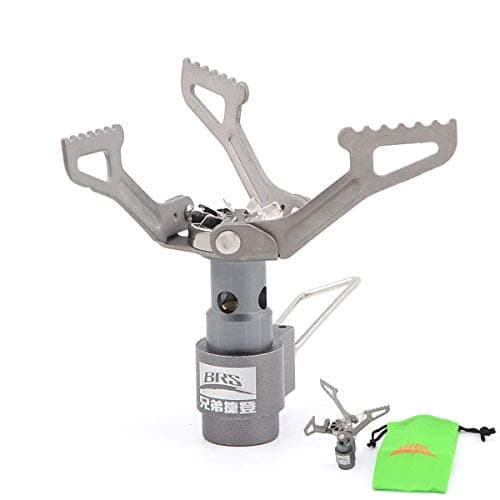
A titanium canister-top burner that weighs almost nothing and boils water for coffee, dehydrated meals and warming up on a cold sit. Cheap, tiny, and the single best morale item in a hunting camp.
Best for: Hot coffee at four in the morning8.5
| # | Product | Best for | Score | Price |
|---|---|---|---|---|
| 1 | TETON Trailhead 20-Degree Sleeping Bag A 20-degree synthetic mummy bag at a price that leaves budget for the pad. Synthetic fill keeps insulating if it gets damp, which is the correct trade-off for hunting camps where nothing stays dry. | The all-season hunting bag | 9.0 | $69.61View on Amazon#ad |
| 2 | Gear Doctors Ether Ultralight Sleeping Pad Beginners buy a warmer bag when they get cold at night; the actual culprit is almost always the ground stealing heat through a thin pad. An insulated inflatable pad fixes more cold nights than upgrading a bag by ten degrees. | The item that matters more than the bag | 8.9 | $33.99View on Amazon#ad |
| 3 | Kelty Grand Mesa 2-Person Backpacking Tent A three-season two-person tent from a brand that has been making them for decades. For one hunter plus a pack and wet boots, a two-person tent is the right size — a solo tent leaves nowhere for gear. | A shelter you can trust in weather | 8.7 | $149.95View on Amazon#ad |
| 4 | BRS-3000T Ultralight Titanium Camping Stove A titanium canister-top burner that weighs almost nothing and boils water for coffee, dehydrated meals and warming up on a cold sit. Cheap, tiny, and the single best morale item in a hunting camp. | Hot coffee at four in the morning | 8.5 | $16.89View on Amazon#ad |
The best hunting advice nobody frames as gear advice is this: get closer. Most beginners hunt the spots within an hour of home because that is what a pre-dawn drive allows, which means they hunt the same pressured ground as everyone else. Camping breaks that constraint. Sleep at the trailhead and you can walk in at 4 a.m. to a spot that is three hours from your house and, more importantly, three hours from everyone else's.
This is not backpacking, and the gear priorities are different. You are not counting grams across a ten-day thru-hike; you are trying to sleep well enough to hunt properly at first light, usually near a vehicle, often in weather. Start with the 20-degree bag above and the pad below it — those two items are most of the problem.
Why hunters camp at all
Three concrete reasons, in order of how much they matter:
Access to unpressured ground. Hunting pressure drops off sharply with distance from a road and with distance from a population center. Camping converts a four-hour round trip into a place you wake up.
Time in the field. A day hunt from home realistically gives you a dawn sit and an evening sit with a long drive between them, or one of the two. A camp gives you both plus the mid-morning window that a lot of hunters skip — which, during the rut or a spring turkey season, is often the productive one.
Sleep. Leaving home at 3 a.m. to be in a stand by 5:30 means you are tired, fidgety and impatient during exactly the hours that require stillness. An extra two hours of sleep is a genuine hunting advantage that costs nothing per outing once you own the kit.
How we picked these
We selected against a hunting camp's specific requirements rather than a backpacker's: synthetic insulation that tolerates damp over down that does not, a temperature rating with real margin for the autumn nights hunting seasons actually fall in, a tent big enough to store wet boots and a pack inside, and a stove chosen for boil speed rather than simmer control. Every product is a real, currently listed item with a live price; our research method is published and we do not claim to have field-tested anything we have not.
Sleeping bag ratings, honestly explained
This is the single most misunderstood number in camping gear, and getting it wrong is why people spend a miserable night and blame the bag.
A sleeping bag's temperature rating is broadly a survival or lower-limit figure, not a comfort figure. A "20-degree bag" means a person is unlikely to be in danger at 20°F in it — not that they will sleep comfortably. The practical rule most experienced campers use is to add roughly 10 to 15 degrees to a bag's rating to estimate the temperature at which you will actually sleep well.
| Your coldest expected night | Bag rating to buy | Notes |
|---|---|---|
| 40°F and above (early season, southern states) | 30° or 20° | A 20° bag unzipped as a quilt handles warm nights fine. Buy the 20°. |
| 25°F to 40°F (most autumn hunting) | 20° | The sweet spot. Covers the majority of deer and turkey seasons. |
| 10°F to 25°F (late season, northern states) | 0° or 20° plus a liner | A fleece liner adds warmth cheaply and washes easily. |
| Below 10°F | 0° or lower, plus a high-R-value pad | At this point the pad is doing as much work as the bag. |
On fill: down is lighter, packs smaller and lasts longer, but loses nearly all its insulating value when wet and is expensive. Synthetic is heavier and bulkier but keeps insulating while damp and costs far less. For hunting — where you are frequently damp, frequently near a vehicle, and rarely counting ounces — synthetic is the correct default. Buy down when you start genuinely backpacking in.
The pad matters more than the bag
Here is the thing that surprises almost every beginner: on a cold night, most of your heat is lost downward into the ground, not upward into the air. The ground is a vastly better conductor than still air, and the insulation in the bottom of your sleeping bag is compressed flat under your body weight, so it does almost nothing.
The pad is what stops that. Pads are rated by R-value — resistance to heat flow — and it is the number to look at. An R-value around 2 is a summer pad. Around 4 is a genuine three-season hunting pad. Above 5 is winter. If you are cold at night in a bag rated well below the temperature, the pad is the problem roughly every time.
The cheapest fix for a cold night is a foam pad you already own
Where hunting camps differ from backpacking
Most camping gear advice online is written for backpackers, and following it will lead you slightly wrong in four specific ways.
Weight matters less than you are told. Unless you are packing miles into a wilderness area, your camp is at or near a vehicle. Take the heavier synthetic bag, the sturdier tent and the bigger stove. Save the ultralight obsession for when you actually carry it.
Everything will be wet. You come back from a hunt in wet boots, wet outer layers, possibly with blood on your hands. Backpacking systems assume a level of dryness hunting does not offer. This is the whole argument for synthetic fill and for a tent with a vestibule you can leave boots in.
You wake up at an absurd hour, in the dark, quietly. Organize camp so you can dress, boil water and leave without a headlamp search. Lay everything out the night before. A headlamp with a red mode preserves your night vision and does not wake a shared camp.
Food storage is a legal and safety question. In bear country, food and scented items must be stored per the land manager's rules — a hard-sided vehicle or a certified container, not a tent. Game meat compounds this considerably. Check the specific rules for the national forest or WMA you are on before you go.
What to skip
Skip the camp chair, the folding table, the lantern and the multi-burner stove for a first season. They are pleasant and they are what turns a lean hunting camp into a two-hour setup you resent at 9 p.m. after an evening sit. Skip a dedicated cook set — one titanium mug and a spork covers boiling water for coffee and a dehydrated meal, which is what you will actually eat.
Skip buying camo-patterned camping gear at a premium. A tent's color is irrelevant to your hunting because you are not hunting from it, and camo versions of standard gear routinely cost more for nothing. That is the same reasoning as the rest of our what not to buy guide.
And skip the heated everything. Battery-powered warmth fails in exactly the cold that justifies it. A merino sock and a good pad are more reliable than any electric alternative. Check the rest of your kit against the beginner gear checklist before you add camping on top — the hunt comes first.
The picks in detail
TETON Trailhead 20-Degree Sleeping Bag
9.0/10Best for: The all-season hunting bag
A 20-degree synthetic mummy bag at a price that leaves budget for the pad. Synthetic fill keeps insulating if it gets damp, which is the correct trade-off for hunting camps where nothing stays dry.
- Rating
- 20°F
- Fill
- Synthetic
- Shape
- Mummy
- Best for
- Autumn hunting seasons
- Synthetic fill still insulates when damp, unlike down
- 20°F covers the majority of hunting-season nights
- Cheap enough to leave permanently in the truck
- Heavier and bulkier than a down bag of the same rating
- Temperature ratings are survival, not comfort — see below
Gear Doctors Ether Ultralight Sleeping Pad
8.9/10Best for: The item that matters more than the bag
Beginners buy a warmer bag when they get cold at night; the actual culprit is almost always the ground stealing heat through a thin pad. An insulated inflatable pad fixes more cold nights than upgrading a bag by ten degrees.
- Type
- Inflatable, insulated
- Weight
- Ultralight
- Packed size
- Small enough for a hunting pack
- Best for
- Cold ground, any season
- Solves the actual cause of most cold nights in camp
- Packs small enough to go in a hunting pack, not just a truck
- Comfort matters — a sleepless hunter hunts badly at dawn
- Inflatables can puncture; carry the patch kit
- Inflating one quietly in a shared camp is an acquired skill
Kelty Grand Mesa 2-Person Backpacking Tent
8.7/10Best for: A shelter you can trust in weather
A three-season two-person tent from a brand that has been making them for decades. For one hunter plus a pack and wet boots, a two-person tent is the right size — a solo tent leaves nowhere for gear.
- Capacity
- 2 person
- Season
- 3-season
- Poles
- Aluminum
- Best for
- Truck camps and short pack-ins
- Aluminum poles survive wind that snaps fiberglass
- Two-person size gives a solo hunter room for wet gear
- Established brand with real warranty support
- Heavier than a dedicated ultralight backpacking tent
- Most expensive item in this kit
BRS-3000T Ultralight Titanium Camping Stove
8.5/10Best for: Hot coffee at four in the morning
A titanium canister-top burner that weighs almost nothing and boils water for coffee, dehydrated meals and warming up on a cold sit. Cheap, tiny, and the single best morale item in a hunting camp.
- Type
- Canister-top burner
- Weight
- Ultralight titanium
- Fuel
- Isobutane canister (sold separately)
- Best for
- Boiling water fast
- Packs into a mug and disappears in a hunting pack
- Boils fast enough for coffee before a pre-dawn walk in
- Costs less than a box of ammunition
- Poor wind performance — needs a windscreen or shelter
- Fuel canisters lose pressure in genuine cold; sleep with it in your bag
Prices shown are from Amazon as of Sep 5, 2026 and change often — the button always goes to the current listing. Some links may earn us a commission at no extra cost to you. How this works.
Frequently asked questions
What camping gear does a hunter need?
Four things cover a public-land hunting camp: a sleeping bag rated around 20°F with synthetic fill, an insulated sleeping pad with an R-value near 4, a three-season tent big enough to store wet boots and a pack, and a small canister stove for boiling water. Everything else is comfort.
What temperature sleeping bag do I need for hunting?
A 20-degree bag covers the majority of autumn hunting seasons. Temperature ratings are lower-limit or survival figures rather than comfort figures, so add roughly 10 to 15 degrees to estimate where you will actually sleep well. Add a fleece liner rather than a warmer bag for late season.
Why am I cold at night even in a warm sleeping bag?
Almost always the sleeping pad. Most heat is lost downward into the ground, and the insulation under your body is compressed flat and doing nothing. Look at the pad's R-value: around 4 for three-season hunting, above 5 for winter. Stacking a foam pad under an inflatable adds R-value cheaply.
Should hunters use down or synthetic sleeping bags?
Synthetic, for most hunting. Down is lighter and packs smaller but loses nearly all its insulation when wet, and hunting camps are consistently damp - wet boots, wet outer layers, condensation. Synthetic keeps insulating while damp and costs considerably less. Choose down once you are genuinely backpacking in.
Sources
Keep reading
Not sure where to start?
The beginner gear checklist walks you through exactly what a first-season hunter needs — essentials first, nice-to-haves later, with one safe-default pick per category.