Gear · Roundup
The Best Game Bags for Hunters
The twenty-five dollar item that decides whether the last four months of work end as meat in a freezer or a sour hindquarter in a bin.
Disclosure: Creek Cover is reader-supported. If you buy through our links we may earn a commission, at no extra cost to you. It never changes which pick we tell a beginner to start with. Full disclosure.
Quick picks at a glance
Tap a pick to read the full write-up, or the price button to check it on Amazon.
- 1
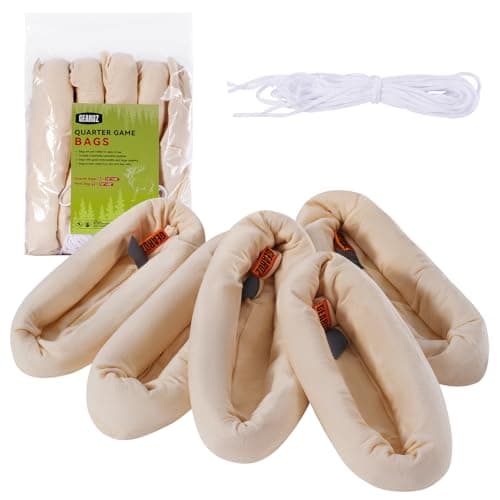
Five heavy-duty reusable quarter bags, breathable, and sized for elk quarters — which means they swallow a deer quarter with room to tie off. The sane single purchase for a first season.
Best for: The best all-round set9.0 - 2
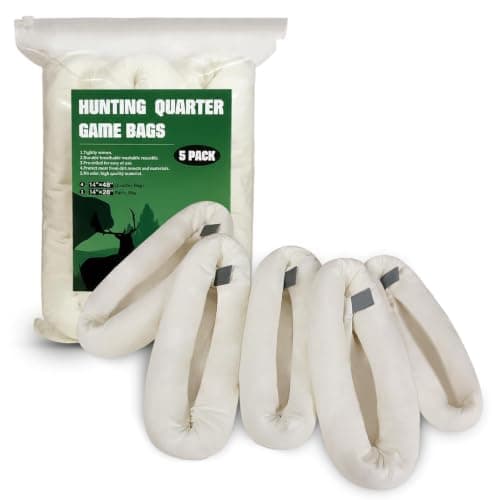
Forty-eight inches is long enough to take a full elk hindquarter or to hang a whole deer, which the shorter bags cannot do. If there is any chance you are dealing with something bigger than a whitetail, buy the long ones.
Best for: Best for large animals and hanging8.7 - 3
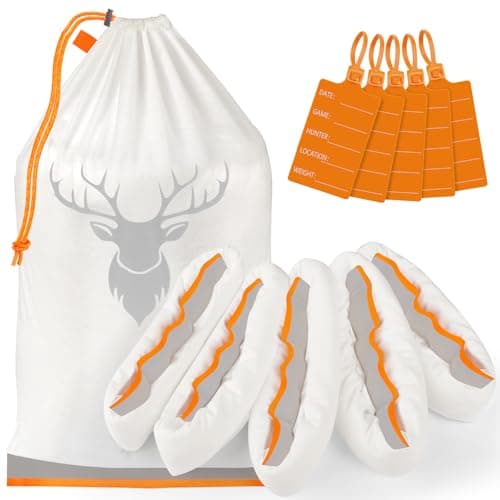
The same breathable fabric with a built-in drawstring, which is a small thing until you are closing a bag with bloody hands in the dark. Worth the couple of dollars over a plain roll-top.
Best for: Best closure system8.5 - 4
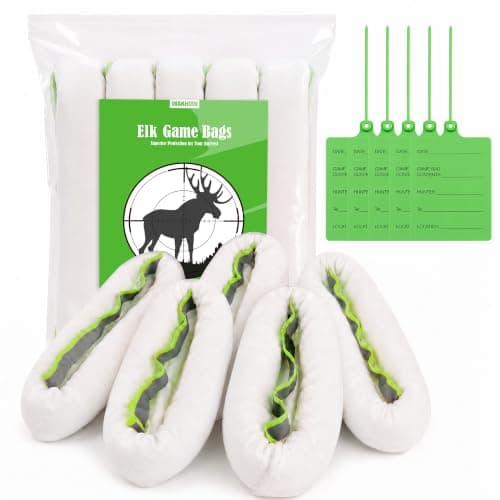
The lowest price here for five breathable reusable bags. The fabric is lighter than the GearOZ set and will not take as many seasons, which matters less than having bags at all the first time you need them.
Best for: Cheapest set worth buying8.2
| # | Product | Best for | Score | Price |
|---|---|---|---|---|
| 1 | GearOZ Elk Game Bags, 5-Pack Rolled Quarter Bags Five heavy-duty reusable quarter bags, breathable, and sized for elk quarters — which means they swallow a deer quarter with room to tie off. The sane single purchase for a first season. | The best all-round set | 9.0 | $23.99View on Amazon#ad |
| 2 | 48-Inch Hunting Meat Bags, 5-Pack Rolled Quarter Bags Forty-eight inches is long enough to take a full elk hindquarter or to hang a whole deer, which the shorter bags cannot do. If there is any chance you are dealing with something bigger than a whitetail, buy the long ones. | Best for large animals and hanging | 8.7 | $25.99View on Amazon#ad |
| 3 | Game Bags with Drawstring Closure, 5-Pack The same breathable fabric with a built-in drawstring, which is a small thing until you are closing a bag with bloody hands in the dark. Worth the couple of dollars over a plain roll-top. | Best closure system | 8.5 | $25.99View on Amazon#ad |
| 4 | Wakhow Field Dressing Meat Bags, 5-Pack The lowest price here for five breathable reusable bags. The fabric is lighter than the GearOZ set and will not take as many seasons, which matters less than having bags at all the first time you need them. | Cheapest set worth buying | 8.2 | $22.99View on Amazon#ad |
This is a commodity category and it is worth saying so plainly: most game bags on the shelf are the same breathable synthetic fabric sewn into the same tube, sold by different names. The differences that genuinely matter are length, how many are in the pack, and whether they close on their own. That is the honest shape of this page — the picks are ranked on those three things, and the body below is where the useful part lives, because knowing when and how to use them matters more than which pack you buy.
How we picked these
We compared stated fabric, bag length, pack count and closure across current listings, and ranked on the practical outcome: can one pack handle one animal, and will the bags survive a wash. We deliberately did not rank on brand, because in this category brand mostly tells you who printed the label. We do not run field trials on meat spoilage — our method is on the how we research and pick page, and prices here are live and dated.
What a game bag actually does
Three jobs, in this order. It keeps flies off. A blowfly can lay eggs on exposed meat within minutes in warm weather, and the result is not salvageable. It keeps dirt and hair off during the drag, the pack-out and the truck ride. And it lets the meat breathe, which is the one thing a plastic bag or a trash sack cannot do.
That third point is the one beginners get wrong most often. Meat needs to cool, and cooling happens by evaporation as much as by air temperature. Sealed in plastic, a warm hindquarter sits in its own moisture at body temperature and sours from the inside — you will not see it on the surface and you will find out when you butcher. Breathable fabric lets the surface dry into a thin crust, which is exactly what a butcher wants and exactly what flies cannot get through.
Never put warm meat in a plastic bag
How many bags one animal needs
Work it out before the season, not in the dark with an animal on the ground.
| Animal | Bags needed | Why |
|---|---|---|
| Whitetail deer, quartered | 4-5 | Two front, two hind, one for loose meat and tenderloins |
| Whitetail deer, whole or gutted | 1 large | One 48 in bag over the whole carcass |
| Mule deer | 5 | Same four quarters, plus neck and trim |
| Elk | 5-6 | Four quarters plus backstraps, neck and trim - each bag is heavy |
| Turkey or small game | 1 | A single bag, or a vest game pouch |
Five is the number that covers almost everything, which is why five-packs are what the market sells. Keep them in the pack all season rather than in a drawer at home — the day you need them is the day you did not plan to fill a tag.
Getting meat cool is the actual job
Game bags are one part of a sequence that starts the moment the animal is down. Field dress it promptly — the guide to that is how to field dress a deer — then get air moving through the cavity, then get the meat into bags, then get the bags somewhere cool. If the day is warm, that last step becomes urgent rather than optional.
Two practical habits. First, hang bagged quarters rather than stacking them — stacked meat holds heat in the middle of the pile, and a hung quarter cools from all sides. Second, keep the bags dry. A soaked game bag stops breathing and starts behaving like plastic, which is why bagged meat goes into a cooler on top of ice in a drainable layer, not swimming in meltwater. A cooler with a working drain plug is worth more than an extra ten quarts of capacity.
What to skip for now
Skip cheesecloth-style bags — they tear on bone and brush and they are single-use in practice. Skip anything marketed as a game bag that is not breathable, whatever the fabric is called. And skip the idea that you need a specialist bag per species: the same five bags handle deer, hogs and turkeys perfectly well. What is worth adding instead is a decent knife, a way to put an edge back on it partway through, and a pack that can actually carry weight — see hunting backpacks.
The picks in detail
GearOZ Elk Game Bags, 5-Pack Rolled Quarter Bags
9.0/10Best for: The best all-round set
Five heavy-duty reusable quarter bags, breathable, and sized for elk quarters — which means they swallow a deer quarter with room to tie off. The sane single purchase for a first season.
- Pack
- 5 bags
- Sized for
- Elk quarters (deer with room)
- Fabric
- Breathable, reusable
- Closure
- Roll and tie
- One pack covers a whole deer with a spare bag left
- Heavy enough fabric to survive a drag and a wash
- Breathable, so meat cools instead of sweating
- Oversized for a small deer or antelope
- No drawstring - you supply the cordage
48-Inch Hunting Meat Bags, 5-Pack Rolled Quarter Bags
8.7/10Best for: Best for large animals and hanging
Forty-eight inches is long enough to take a full elk hindquarter or to hang a whole deer, which the shorter bags cannot do. If there is any chance you are dealing with something bigger than a whitetail, buy the long ones.
- Pack
- 5 bags
- Length
- 48 in
- Fabric
- Breathable, reusable
- Best for
- Elk, mule deer, hanging whole
- Long enough to hang a whole small deer
- Handles elk quarters without forcing
- Same washable, reusable fabric as the shorter sets
- Excess fabric to gather on a whitetail quarter
- Bulkier in the pack
Game Bags with Drawstring Closure, 5-Pack
8.5/10Best for: Best closure system
The same breathable fabric with a built-in drawstring, which is a small thing until you are closing a bag with bloody hands in the dark. Worth the couple of dollars over a plain roll-top.
- Pack
- 5 bags
- Closure
- Integrated drawstring
- Fabric
- Breathable, reusable
- Best for
- Working alone in the dark
- Drawstring closes one-handed with cold, wet hands
- No separate cord to lose out of the pack
- Same price band as bags without one
- Drawstring is the first thing to fail after several washes
- Slightly less versatile than an open-top bag
Wakhow Field Dressing Meat Bags, 5-Pack
8.2/10Best for: Cheapest set worth buying
The lowest price here for five breathable reusable bags. The fabric is lighter than the GearOZ set and will not take as many seasons, which matters less than having bags at all the first time you need them.
- Pack
- 5 bags
- Fabric
- Breathable, lighter weight
- Sized for
- Deer and elk quarters
- Best for
- First season on a budget
- The cheapest complete set on this page
- Still breathable, which is the part that matters
- Light enough to leave permanently in a pack
- Thinner fabric snags on brush and bone
- Fewer seasons of reuse than heavier sets
Prices shown are from Amazon as of Sep 5, 2026 and change often — the button always goes to the current listing. Some links may earn us a commission at no extra cost to you. How this works.
Frequently asked questions
What are game bags used for?
Three things: keeping flies off exposed meat, keeping dirt and hair off during the drag or pack-out, and letting the meat breathe so it cools and forms a dry surface crust. The third job is why they are made from breathable fabric rather than plastic.
How many game bags do you need for a deer?
Four to five if you are quartering - two front quarters, two hind quarters, and one for backstraps, tenderloins and trim. One long 48 inch bag covers a whole gutted carcass instead. A standard five-pack handles one deer with a spare.
Can you use trash bags instead of game bags?
No. Plastic traps heat and moisture against warm meat, which prevents cooling and causes souring from the inside - and you often will not see it until you butcher. Breathable game bags let the surface dry and the meat cool, which is the entire point.
Are game bags reusable?
Yes, most modern synthetic game bags are. Rinse them cold as soon as you can, wash them without fabric softener, and hang them to dry fully before storing. Heavier fabrics survive several seasons; the thinnest budget bags are realistically good for one or two.
Sources
Keep reading
Not sure where to start?
The beginner gear checklist walks you through exactly what a first-season hunter needs — essentials first, nice-to-haves later, with one safe-default pick per category.