Gear · Roundup
The Best Vacuum Sealers for Wild Game
One deer is thirty to fifty packages sealed in a single afternoon. That number, not suction pressure, is what decides which machine you should own.
Disclosure: Creek Cover is reader-supported. If you buy through our links we may earn a commission, at no extra cost to you. It never changes which pick we tell a beginner to start with. Full disclosure.
Quick picks at a glance
Tap a pick to read the full write-up, or the price button to check it on Amazon.
- 1
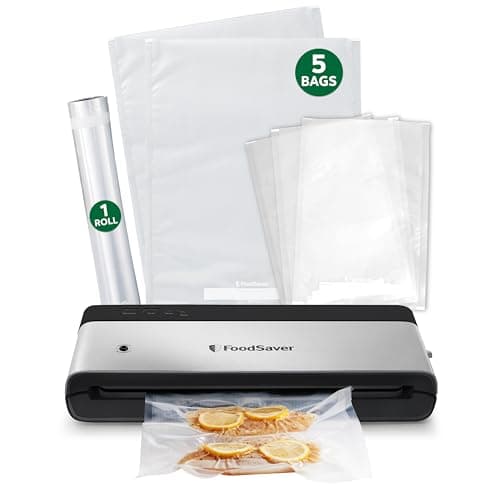
Takes 11-inch rolls, has a moist setting, stores upright on a shelf between seasons. Nothing about it is fast or heavy-duty, and for a hunter packaging one animal a year that genuinely does not matter.
Best for: The best first sealer for one deer a year9.2 - 2
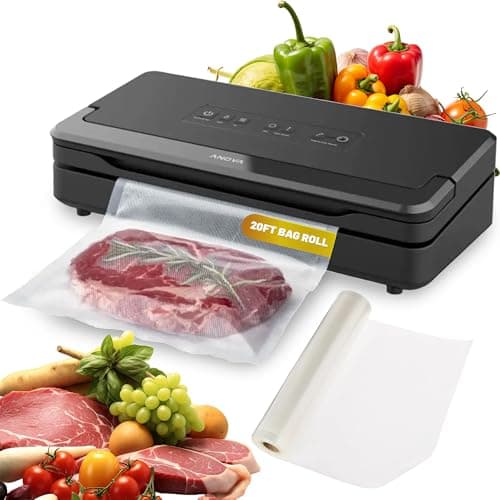
A double seal, a built-in roll holder and cutter, and the only two-year warranty in this lineup. Anova rates it for over 100 continuous seals, which covers a whole deer without a cooling stop.
Best for: Best all-round counter machine8.9 - 3
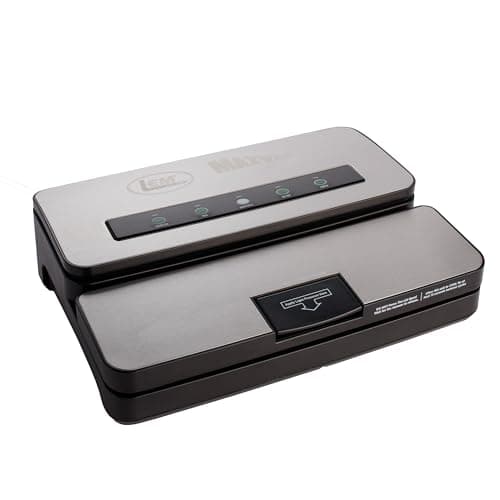
LEM rates it at 250-plus consecutive seals and up to two and a half hours of continuous running. That is the spec that separates a game-processing machine from a kitchen appliance, and it comes with the roll holder and cutter built in.
Best for: Best for processing your own game every year8.7 - 4
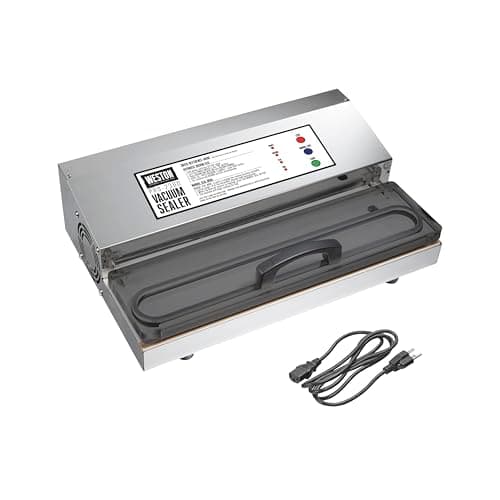
A 15-inch, 5 mm seal bar and a fan-cooled motor built for repetitive use. This is the machine for a household that processes several animals a season, or anyone sealing elk quarters and whole loins rather than steaks.
Best for: Best for volume and oversized cuts8.5 - 5
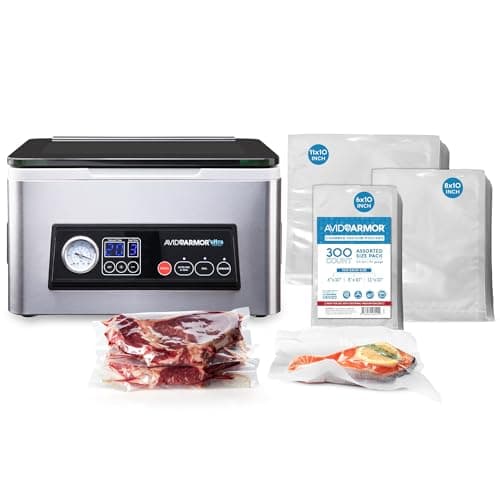
A true chamber machine: the pouch sits inside the chamber so liquid never gets pulled toward the seal. It solves the one job every channel sealer on this page fails at, and it caps out at an 11 by 10 inch pouch.
Best for: Best for ground meat, brines and marinades8.4 - 6
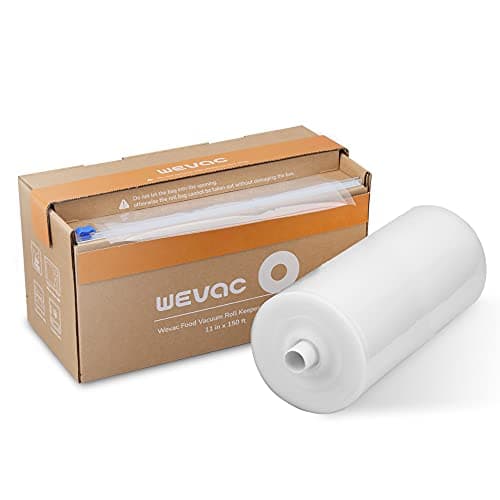
The recurring cost nobody budgets for. One 150-foot embossed roll is a deer's worth of custom-length bags at a fraction of the per-foot price of branded rolls, and it fits channel machines including the FoodSaver.
Best for: Best bag stock for a season of packaging8.2
| # | Product | Best for | Score | Price |
|---|---|---|---|---|
| 1 | FoodSaver PowerVac Compact (VS0150) Takes 11-inch rolls, has a moist setting, stores upright on a shelf between seasons. Nothing about it is fast or heavy-duty, and for a hunter packaging one animal a year that genuinely does not matter. | The best first sealer for one deer a year | 9.2 | $99.99View on Amazon#ad |
| 2 | Anova Precision Vacuum Sealer Pro A double seal, a built-in roll holder and cutter, and the only two-year warranty in this lineup. Anova rates it for over 100 continuous seals, which covers a whole deer without a cooling stop. | Best all-round counter machine | 8.9 | $100.00View on Amazon#ad |
| 3 | LEM MaxVac 250 LEM rates it at 250-plus consecutive seals and up to two and a half hours of continuous running. That is the spec that separates a game-processing machine from a kitchen appliance, and it comes with the roll holder and cutter built in. | Best for processing your own game every year | 8.7 | $219.99View on Amazon#ad |
| 4 | Weston Pro-2300 A 15-inch, 5 mm seal bar and a fan-cooled motor built for repetitive use. This is the machine for a household that processes several animals a season, or anyone sealing elk quarters and whole loins rather than steaks. | Best for volume and oversized cuts | 8.5 | $474.45View on Amazon#ad |
| 5 | Avid Armor USV20 Ultra Series Chamber Sealer A true chamber machine: the pouch sits inside the chamber so liquid never gets pulled toward the seal. It solves the one job every channel sealer on this page fails at, and it caps out at an 11 by 10 inch pouch. | Best for ground meat, brines and marinades | 8.4 | $335.27View on Amazon#ad |
| 6 | Wevac 11 in x 150 ft Vacuum Seal Roll The recurring cost nobody budgets for. One 150-foot embossed roll is a deer's worth of custom-length bags at a fraction of the per-foot price of branded rolls, and it fits channel machines including the FoodSaver. | Best bag stock for a season of packaging | 8.2 | $28.79View on Amazon#ad |
Everything on this site up to now gets the meat cold: a sharp knife, breathable game bags, and a cooler with the drain open. A vacuum sealer is the step after that — the one that decides whether the venison you worked all season for is still worth eating in June. It is also the step where a first-time hunter is most likely to buy the wrong machine, because every vacuum sealer is sold on suction pressure and almost none of them are sold on the number that actually matters to you: how many bags it will seal back-to-back before it needs to cool down.
How we picked these
We compared published bag width, stated duty cycle, seal design, wet-food handling and bag cost against one job: packaging a whole deer, in an afternoon, in a kitchen. We weighted bag width and duty cycle above vacuum strength, because a machine that cannot take an 11-inch roll cannot bag a backstrap, and a machine that stops every six seals turns a two-hour job into an evening. Every product here was confirmed as a live, in-stock listing before it went on the page, and every spec quoted comes from the manufacturer's own published figures — we do not run a test kitchen, and our method is on the how we research and pick page. Prices are live and dated; nothing on this page is a number we typed in.
How much meat a deer actually makes
This is the part that surprises people. In a 2017 Ohio Division of Wildlife study of 115 deer, reported by the National Deer Association, boneless venison came out at roughly 48% of field-dressed weight — bucks averaged about 130 pounds field-dressed and yielded a little over 62 pounds of meat, antlerless deer averaged about 92 pounds field-dressed and yielded about 45 pounds.
Package that at a pound to a pound and a half per bag, which is what a household of two to four actually cooks in one meal, and a single deer is somewhere around 30 to 50 seals in one session. That is the real requirement. It is why duty cycle sits at the top of our criteria list, and why the honest question when you are choosing is not “which machine is strongest” but “how many animals a year am I putting through this?”
| What you hunt in a season | What you need | Why |
|---|---|---|
| One deer, occasionally a turkey | An entry channel sealer | 30-50 seals with breaks is a comfortable afternoon |
| A deer plus small game and fish | A mid-tier machine with a rated duty cycle | Repeat sessions across the year, not one push |
| Two or more animals, self-butchered | A hunting-brand machine (LEM class) | Hours of continuous running without a cooldown |
| Elk, or whole loins and roasts | A 15-inch seal bar (Weston class) | 11-inch bags cannot hold an oversized cut |
| Lots of ground meat, brines, marinades | A chamber sealer | Liquid never reaches the seal line |
The four specs that matter
Bag width. Eleven inches is the working standard, and it is the number to check first. An 8-inch bag holds steaks and burger; a whole backstrap, a rolled roast or a pair of butterflied loins needs the 11-inch width. Only one machine on this page goes wider, and unless you are sealing elk quarters you do not need it.
Duty cycle. Consumer machines protect their heat element by making you wait between seals; hunting-brand machines advertise consecutive-seal counts and fan-cooled motors precisely because their buyers do 40 bags in a row. LEM rates the MaxVac 250 at 250-plus consecutive seals and up to two and a half hours of continuous use. Anova rates its Pro at over 100 continuous seals. FoodSaver publishes no such figure for the compact PowerVac, which tells you what it is for.
Wet handling. Game meat is wet, and moisture drawn to the seal line is the number one cause of a bag that fails in the freezer. Channel machines answer this with a moist setting, a pulse button, a drip tray and — best of all — a double seal. Chamber machines answer it by design.
Bag cost. The machine is bought once; the bags are bought every season. A branded 11-inch roll and a generic embossed 11-inch roll do the same job, and the generic one is a fraction of the price per foot. Compare cost per foot, not the price on the box — and note that chamber machines take smooth pouches, not embossed rolls, so the two stocks are not interchangeable.
Buy the roll, not the pre-cut bags
Chamber vs the machine on your counter
Nearly every sealer sold as a kitchen appliance is a channelmachine: the open end of an embossed bag clamps into the unit and the pump sucks air out through the bag’s embossed channels. Cheap, light, compact — and physically incapable of dealing with free liquid, because anything loose gets pulled straight into the seal.
A chamber machine puts the whole pouch inside a sealed box and evacuates the box instead, so the pressure inside and outside the bag is equal and nothing moves. That is what makes ground venison, cure brines and marinated meat straightforward. The costs are real: chamber units are heavy, they take smooth pouches instead of rolls, and compact ones like the Avid Armor USV20 cap out at an 11 by 10 inch pouch, which is shorter than a whole backstrap. For most first-season hunters a channel machine plus the freeze-flat trick below is the right answer; if you grind most of your deer — see the best meat grinders for wild game for that side of it — the chamber starts to make sense.
How to seal game meat so the bag holds
Chill the meat thoroughly before you package it. Warm, freshly butchered venison purges liquid into the bag while it cools, and that liquid ends up at the seal. Blot each cut dry with a paper towel — a damp surface seals badly and a wet one does not seal at all.
Leave three inches of empty bag above the meat so the machine has a clean, dry strip to work with, and lay the bag flat rather than letting the meat sit against the seal bar. Use the moist setting if you have one, and if the machine has a pulse function, pulse it down to the point where the bag hugs the meat rather than running a full automatic cycle — full vacuum on a soft cut squeezes juice out of it. If your machine offers a double seal, use it every time; it is the cheapest insurance on this page.
For anything wet — ground meat especially — freeze it flat on a tray for an hour or two first, then seal the semi-frozen block. There is nothing left to pull toward the seal, and a flat package stacks and thaws faster. Label every bag with the cut and the date before it goes in, because in February every dark red package looks identical.
Freezer burn is a packaging problem, not a safety one
Birds, fish and small game
Deer set the requirement, but they are not the only thing that ends up in the freezer. Duck and goose breasts are small, wet and awkward — the freeze-flat trick matters more with waterfowl than with anything else, and a package of four breasts sealed flat thaws in minutes rather than hours. If your season is a first duck season, that is most of what you will be sealing.
A whole turkey breast is the one small-game cut that genuinely needs the 11-inch width. Squirrel and rabbit are the opposite problem: they are bony, and a rib or leg bone tip that is sharp when it goes in is sharper when the package freezes hard, so it punctures the bag from the inside. Pad the sharp ends with a fold of bag offcut or a twist of paper towel before you seal, and check those packages when you pull them out — a bag that has lost its vacuum in the freezer is not spoiled, it is just exposed to air again, and it should be used first. That is also true of small game sealed straight after a long walk-out, where the meat is warmer than you think.
Fish fillets seal best partially frozen for the same reason ground meat does: there is nothing left to pull toward the seal line. Oily species have a shorter quality window than venison no matter how well they are sealed, so date the bags and eat those first.
What to skip, and when paper wins
Skip the handheld and travel sealers. They are built for reusable zipper bags and snack portions and will not put a durable freezer seal on 40 pounds of venison. Skip the thirty-dollar no-name machines too — not because they cannot seal, but because their heat elements are the first thing to fail and there is no warranty worth claiming when they do. And skip buying a chamber sealer as your first machine unless you already know you grind and marinate most of a deer.
Most importantly: you do not need a vacuum sealer to hunt. Freezer paper and tape have packaged venison for a century and still work, and if the choice is between a sealer and the rest of the kit on the beginner gear checklist, buy the kit. What a sealer buys you is a longer quality window and no dried-out edges in spring — a real benefit, but one that arrives after everything in how to field dress a deer is already done right. Cold meat, clean cuts and a sharp edge matter far more than the machine you seal with.
The picks in detail
FoodSaver PowerVac Compact (VS0150)
9.2/10Best for: The best first sealer for one deer a year
Takes 11-inch rolls, has a moist setting, stores upright on a shelf between seasons. Nothing about it is fast or heavy-duty, and for a hunter packaging one animal a year that genuinely does not matter.
- Bag width
- 8 in and 11 in FoodSaver rolls
- Settings
- Dry and moist
- Drip tray
- Removable
- Storage
- Stands vertically
- Handles the 11-inch roll width a backstrap needs
- Moist setting and a removable drip tray for wet cuts
- Small enough to live in a cupboard eleven months of the year
- FoodSaver publishes no continuous-seal rating, so a deer means working in batches with cooling breaks
- Branded FoodSaver rolls cost noticeably more per foot than generic embossed rolls
Anova Precision Vacuum Sealer Pro
8.9/10Best for: Best all-round counter machine
A double seal, a built-in roll holder and cutter, and the only two-year warranty in this lineup. Anova rates it for over 100 continuous seals, which covers a whole deer without a cooling stop.
- Bag width
- 11 in rolls (19 ft roll included)
- Continuous seals
- 100+ (manufacturer)
- Seal
- Double seal
- Warranty
- 2 years
- Rated for 100+ continuous seals - a deer in one sitting
- Double seal is the single best defense against a bag that lets go in the freezer
- Built-in bag storage and cutter, plus a pulse mode for wet cuts
- Still a channel machine - liquid pulled to the seal line will ruin a seal
- A 110-watt pump rated at 12 L/min - less machine than the hunting-brand units below
LEM MaxVac 250
8.7/10Best for: Best for processing your own game every year
LEM rates it at 250-plus consecutive seals and up to two and a half hours of continuous running. That is the spec that separates a game-processing machine from a kitchen appliance, and it comes with the roll holder and cutter built in.
- Bag width
- Up to 11 in
- Pump
- 21 Hg, 220 W
- Duty cycle
- 250+ consecutive seals, up to 2.5 hr
- Roll holder
- Integrated, with cutter
- Built to run for hours - you never stop mid-deer to let it cool
- Integrated roll holder and cutter makes custom bag lengths quick
- Backed by a one-year warranty and LEM's lifetime customer support
- Several times the price of a counter machine, and only worth it if you butcher your own animals
- Takes real counter space and still caps out at 11-inch bags
Weston Pro-2300
8.5/10Best for: Best for volume and oversized cuts
A 15-inch, 5 mm seal bar and a fan-cooled motor built for repetitive use. This is the machine for a household that processes several animals a season, or anyone sealing elk quarters and whole loins rather than steaks.
- Bag width
- Up to 15 in
- Seal bar
- 5 mm extra-wide
- Power
- 1020 W, fan-cooled motor
- Body
- Stainless steel
- The only pick here that seals bags wider than 11 inches
- Fan-cooled motor is designed for continuous, repetitive sealing
- Wide 5 mm seal is far harder to fail than a standard 3 mm line
- The most expensive machine on this page by a wide margin
- Heavy, large, and complete overkill if you fill one whitetail tag a year
Avid Armor USV20 Ultra Series Chamber Sealer
8.4/10Best for: Best for ground meat, brines and marinades
A true chamber machine: the pouch sits inside the chamber so liquid never gets pulled toward the seal. It solves the one job every channel sealer on this page fails at, and it caps out at an 11 by 10 inch pouch.
- Type
- Chamber, oil-free dry piston pump
- Seal bar
- 11.5 in, removable
- Largest pouch
- 11" x 10"
- Cycle control
- Vacuum 15-60 s, seal 3-9 s
- Seals wet ground venison, brines and marinades without a mess
- Chamber pouches cost less per bag than embossed channel rolls
- Adjustable vacuum and seal times, and this listing ships with 300 pre-cut pouches
- The 10-inch pouch length means a whole backstrap has to be cut down to fit
- Heavy, expensive, and it needs its own chamber pouches - your roll stock will not work
Wevac 11 in x 150 ft Vacuum Seal Roll
8.2/10Best for: Best bag stock for a season of packaging
The recurring cost nobody budgets for. One 150-foot embossed roll is a deer's worth of custom-length bags at a fraction of the per-foot price of branded rolls, and it fits channel machines including the FoodSaver.
- Size
- 11 in x 150 ft
- Type
- Embossed channel roll
- Machines
- Channel (non-chamber) sealers
- Extras
- BPA-free; cutter box included
- Custom bag lengths - a short bag for steaks, a long one for a loin
- Far cheaper per foot than branded rolls of the same width
- Embossed channels are what let a channel machine pull air out at all
- You seal one end yourself, so every bag costs an extra seal cycle
- Will not work in a chamber machine, which needs smooth-walled pouches
Prices shown are from Amazon as of Sep 5, 2026 and change often — the button always goes to the current listing. Some links may earn us a commission at no extra cost to you. How this works.
Frequently asked questions
Do you really need a vacuum sealer for venison?
No. Freezer paper and freezer tape have packaged deer for generations and still work. A vacuum sealer buys you a longer quality window and no dried-out edges, because freezer burn is caused by air touching the surface of the meat. If the budget is tight, buy the rest of your kit first and package this deer in paper.
What size vacuum sealer bags do you need for deer meat?
Eleven-inch rolls handle everything on a whitetail, including a whole backstrap. Eight-inch bags are fine for steaks, chops and burger but too narrow for loins and rolled roasts. Buy rolls rather than pre-cut bags so you can cut a short bag for chops and a long one for a loin.
Is a chamber vacuum sealer worth it for wild game?
Only if you regularly seal wet things - ground meat, brines, marinated cuts. A chamber machine evacuates the whole box the pouch sits in, so liquid never travels to the seal. The trade-offs are weight, price, and a pouch-size limit: compact chamber units cap out around 11 by 10 inches, so a whole backstrap has to be cut down.
How long does vacuum-sealed venison last in the freezer?
Safety and quality are two different questions. USDA guidance is that food held constantly at 0 degrees Fahrenheit is safe indefinitely - it is quality that declines. Vacuum sealing extends that quality window because it removes the air contact that causes freezer burn, but it does not change the safety answer.
Why do vacuum-sealed bags of deer meat lose their seal in the freezer?
Almost always moisture or a bone edge. Liquid drawn into the seal line stops the plastic bonding, and a sharp bone or rib tip punctures the bag once it freezes hard. Chill and blot the meat first, leave three inches of dry bag above it, freeze wet cuts flat before sealing, and use a double seal if your machine has one.
Sources
- FoodSaver — PowerVac Compact VS0150 features and bag compatibility
- Anova Culinary — Precision Vacuum Sealer Pro specifications
- LEM Products — MaxVac 250 published specifications
- Weston Brands — Pro-2300 vacuum sealer specifications
- Avid Armor — Ultra Series USV20 chamber vacuum sealer specifications
- USDA Food Safety and Inspection Service — Freezing and Food Safety
- National Deer Association — venison yield (Ohio Division of Wildlife study, 115 deer)
Keep reading
Not sure where to start?
The beginner gear checklist walks you through exactly what a first-season hunter needs — essentials first, nice-to-haves later, with one safe-default pick per category.