Gear · Roundup
The Best Hunting eBikes for Beginners
An ebike is an access tool, not a toy — it moves you past the pressured first mile silently. But where you may legally ride one is the part every review skips.
Disclosure: Creek Cover is reader-supported. If you buy through our links we may earn a commission, at no extra cost to you. It never changes which pick we tell a beginner to start with. Full disclosure.
Quick picks at a glance
Tap a pick to read the full write-up, or the price button to check it on Amazon.
- 1
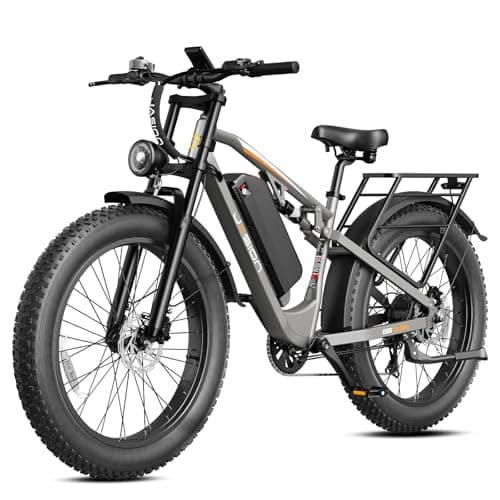
A 26x4 fat-tire ebike with a removable battery at the lowest sensible entry price. Not a dedicated hunting rig, and it does not need to be — for forest roads and gated two-tracks it does the job an expensive one does.
Best for: Finding out if an ebike suits your hunting8.7 - 2
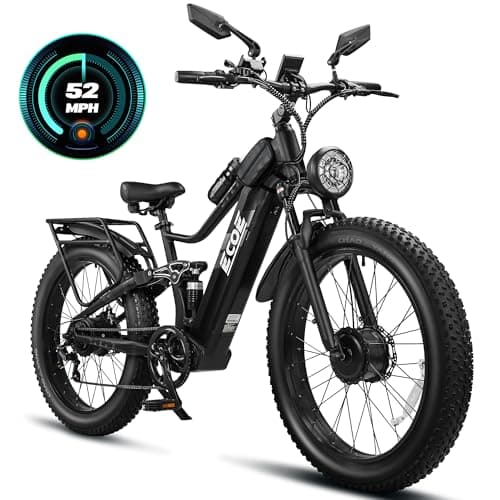
Dual motors and a large battery, which is what you want if your access involves climbing a real grade with a pack and possibly a quarter of an elk on the rack. Overkill for flat farm country.
Best for: Loaded climbing on steep ground8.5 - 3
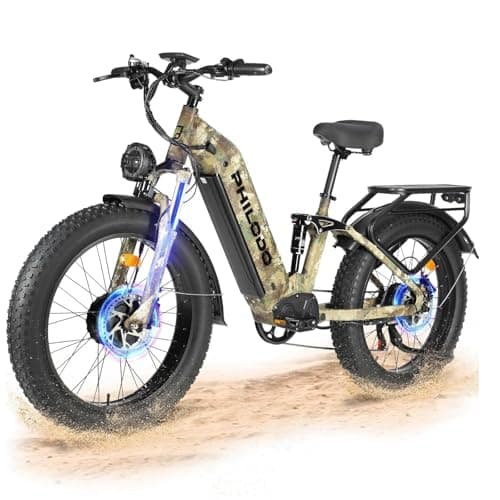
Full suspension is the upgrade that matters if your access is a rutted, rocky two-track rather than a graded forest road — it is the difference between a ride in and a beating that leaves you shaky for the shot.
Best for: Rough ground and long rides in8.4
| # | Product | Best for | Score | Price |
|---|---|---|---|---|
| 1 | Jasion EB5 Ultra Fat-Tire Electric Bike A 26x4 fat-tire ebike with a removable battery at the lowest sensible entry price. Not a dedicated hunting rig, and it does not need to be — for forest roads and gated two-tracks it does the job an expensive one does. | Finding out if an ebike suits your hunting | 8.7 | $799.99View on Amazon#ad |
| 2 | EcoE Dual Motor Fat-Tire Electric Bike Dual motors and a large battery, which is what you want if your access involves climbing a real grade with a pack and possibly a quarter of an elk on the rack. Overkill for flat farm country. | Loaded climbing on steep ground | 8.5 | Check price on Amazon#ad |
| 3 | PHILODO Falcon Full-Suspension Hunting eBike Full suspension is the upgrade that matters if your access is a rutted, rocky two-track rather than a graded forest road — it is the difference between a ride in and a beating that leaves you shaky for the shot. | Rough ground and long rides in | 8.4 | $1,399.00View on Amazon#ad |
Hunting pressure on public land is a distance function. Most hunters park, walk fifteen or twenty minutes, and sit — so the first mile from every trailhead is hunted hard and the ground beyond it is not. An ebike collapses that distance. Five miles up a gated forest road is a ninety-minute walk in the dark or a twenty-minute silent ride, and the animals at the far end of it have seen far fewer people.
That is the honest case for an ebike, and it is a good one. What follows is the rest of the story — including the legal question that determines whether the bike is useful to you at all, which we are putting second on this page because it should be the second thing you find out.
What an ebike actually does for hunting
Three things, and only one of them is speed.
It extends your usable range without exhausting you. Walking five miles in before dawn with a pack means you arrive tired and sweaty — and sweaty is a real problem, both for warmth on a long sit and for scent. Arriving fresh is a hunting advantage, not a comfort preference.
It is quiet. Compared with an ATV or a UTV — the traditional way to cover that ground — an ebike is close to silent, does not smell of exhaust, and is permitted in some places that prohibit combustion vehicles. This is the specific reason hunting-branded ebikes exist.
It changes the pack-out. A loaded rack or a small trailer turns a punishing multi-trip meat haul into something manageable solo. For anyone hunting big animals a long way from a road, this is arguably the main argument.
What it does not do is make you a better hunter. If you have not yet found ground that holds animals or learned to play the wind, an ebike moves you faster to the wrong place. See our what not to buy guide for the general version of that argument.
Where you may legally ride one
Can you ride an ebike on public hunting land? Sometimes, and the answer depends entirely on the specific land unit. Federal land managers generally treat e-bikes as motorized vehicles for trail-access purposes, which means they are typically allowed on roads and trails open to motor vehicles and typically not allowed on trails designated non-motorized — even though a mountain bike is fine there.
This catches people out constantly, because the intuition is that an ebike is a bicycle. For access purposes, on a lot of ground, it is not.
| Land type | Who decides | What to ask |
|---|---|---|
| National forest | The individual forest or ranger district | Check the Motor Vehicle Use Map (MVUM) for that forest — it shows which roads and trails are open to motorized use. |
| BLM land | The field office for that unit | Ask about the travel management plan and whether e-bikes are permitted on non-motorized routes. |
| State wildlife management area | Your state wildlife agency | Many WMAs restrict all vehicles, including e-bikes, or restrict them to designated roads only. |
| Wilderness areas | Federal statute | No bicycles of any kind, electric or not. This one is absolute. |
| Private land | The landowner | Just ask. This is the one place the answer is simple. |
Make one phone call before you spend a thousand dollars
A related point on classes: e-bikes are commonly categorized as class 1 (pedal-assist only, up to 20 mph), class 2 (throttle, up to 20 mph) and class 3 (pedal-assist to 28 mph). Class 1 is the most widely permitted, and several of the high-wattage bikes marketed online exceed all three classes — which can make them legally a motor vehicle requiring registration in some jurisdictions. The 50-plus-mph figures in some product listings are a marketing feature and an access liability.
How we picked these
A note on the field, because it affects what you see above. The dedicated hunting ebike brands — QuietKat, Bakcou, Rambo — sell primarily direct rather than through Amazon, so the picks here are capable fat-tire ebikes rather than hunting-branded ones. We think that is the right recommendation for a beginner regardless: a fat-tire ebike with a rack does the same job for roughly half the price, and finding out whether an ebike suits your hunting is worth doing cheaply before buying a specialist rig. We compared published motor output, battery capacity, tire size and suspension against the access problem beginners actually have. Our research method is published and prices are live and dated.
The specs that matter, and the ones that do not
| Spec | Why it matters | What to look for |
|---|---|---|
| Battery capacity (Wh or V × Ah) | Determines round-trip range under load — the only spec that can strand you | The biggest you can afford. Range claims assume flat ground and a light rider; halve them. |
| Tire width | Flotation on sand, mud, snow and loose gravel | 4 inches is the practical standard for hunting access. |
| Motor placement | Hub motors are simpler and cheaper; mid-drive climbs better under load | Hub is fine for forest roads. Mid-drive earns its price on steep, loaded climbs. |
| Rack and payload rating | Whether you can actually haul meat and gear | Check the rated payload including you, your pack, and the load. |
| Suspension | Fatigue and control on rough two-tracks | Front suspension is enough for graded roads; full suspension for genuinely rough ground. |
| Top speed | Almost nothing, for hunting | Ignore it. High top speeds push the bike out of legal e-bike classes. |
Battery is the one to weight most heavily, and the reason is unglamorous: cold. Lithium batteries lose meaningful capacity in cold weather, which is exactly when hunting season happens. A battery that gives 30 miles in September may give notably less on a 20°F November morning. Store it warm, carry it inside your jacket if you are stopping for hours, and plan your range with a wide margin — the ride out is the one that matters.
Hauling meat, and hauling the bike
A rear rack rated for real weight is the accessory that converts an ebike from transport into a hunting tool. Beyond that, a single-wheel bike trailer is the serious option for a full pack-out — it keeps weight off the bike's balance and can carry a boned-out animal in one trip. Both are worth planning for before you buy, because rack compatibility varies and a bike with no mounting points limits you.
Do not overlook the problem of getting the bike to the trailhead. These bikes are heavy — often 70 to 90 pounds — and lifting one into a truck bed alone in the dark is a genuine task. A hitch rack rated for e-bike weight is close to a required purchase, and a ramp is worth having if you hunt alone.
Finally: carry what you need to fix a flat, and know how. A puncture five miles up a forest road at last light with a dead-weight 80-pound bike is a long walk. A pump, a spare tube sized for a fat tire, tire levers and a multi-tool live permanently in the pack — alongside your first aid kit and a headlamp.
Should a beginner buy one at all?
Honestly, most should not — at least not first. An ebike is an access solution, and it only pays off if access is genuinely your limiting factor. If you have not yet confirmed that the ground you want to reach is legally rideable, that it holds animals, and that you can hunt effectively once you get there, the money is better spent on boots, practice ammunition, or fuel to scout more ground.
Buy one when you can name the specific place you would ride it, you have confirmed it is legal, and walking there is what is currently stopping you. That is a real problem and an ebike is a real solution to it. Buying one before that is buying the idea of hunting deeper rather than the ability to. Check the rest of your kit against the beginner gear checklist first.
The picks in detail
Jasion EB5 Ultra Fat-Tire Electric Bike
8.7/10Best for: Finding out if an ebike suits your hunting
A 26x4 fat-tire ebike with a removable battery at the lowest sensible entry price. Not a dedicated hunting rig, and it does not need to be — for forest roads and gated two-tracks it does the job an expensive one does.
- Tires
- 26" x 4" fat
- Battery
- 52V, removable
- Motor
- 2500W peak
- Best for
- Forest roads and gated tracks
- Roughly half the price of a hunting-branded equivalent
- Removable battery charges indoors or from a truck inverter
- Fat tires handle gravel, sand and light mud without technique
- No hunting-specific mounts, racks or camo — add your own
- Heavy; loading it into a truck alone is a two-step job
EcoE Dual Motor Fat-Tire Electric Bike
8.5/10Best for: Loaded climbing on steep ground
Dual motors and a large battery, which is what you want if your access involves climbing a real grade with a pack and possibly a quarter of an elk on the rack. Overkill for flat farm country.
- Drive
- Dual motor
- Battery
- 60V high capacity
- Tires
- 26" x 4" fat
- Best for
- Steep terrain, heavy loads
- Dual motors hold speed on grades that stall single-motor bikes
- Large battery gives genuine round-trip range with a load
- Handles a loaded rack far better than the budget pick
- Top-speed marketing is irrelevant and legally counterproductive
- Heavier again, and dual motors drain the battery faster under load
PHILODO Falcon Full-Suspension Hunting eBike
8.4/10Best for: Rough ground and long rides in
Full suspension is the upgrade that matters if your access is a rutted, rocky two-track rather than a graded forest road — it is the difference between a ride in and a beating that leaves you shaky for the shot.
- Suspension
- Full
- Drive
- Dual motor, 60V
- Tires
- Fat, off-road
- Best for
- Rough, rutted access routes
- Full suspension genuinely reduces fatigue on rough two-tracks
- Marketed for hunting, so rack and accessory fit is considered
- Most capable bike here on genuinely bad ground
- The most expensive pick, and suspension adds maintenance
- Unnecessary if your access is graded gravel
Prices shown are from Amazon as of Sep 5, 2026 and change often — the button always goes to the current listing. Some links may earn us a commission at no extra cost to you. How this works.
Frequently asked questions
Can you ride an ebike on public hunting land?
It depends on the specific unit. Federal land managers generally treat e-bikes as motorized vehicles for access purposes, so they are typically allowed where motor vehicles are allowed and typically not on non-motorized trails. Wilderness areas prohibit all bicycles. Call the ranger district or field office for the ground you hunt.
Are hunting ebikes worth it for beginners?
Only if access is genuinely your limiting factor. An ebike gets you past the pressured first mile of public land quietly and without arriving exhausted, and it transforms a meat pack-out. But it does not help if you have not yet found ground that holds animals, and it is a poor first purchase compared with boots and practice.
What should I look for in a hunting ebike?
Battery capacity first, because range under load in cold weather is the spec that can strand you - lithium batteries lose capacity in the temperatures hunting season happens in. Then 4-inch fat tires, a rear rack with a real payload rating, and suspension matched to how rough your access route is. Ignore top speed.
Do you need a special hunting ebike brand?
No. The dedicated hunting brands sell mostly direct rather than through Amazon, and a capable fat-tire ebike with a rack does the same job for roughly half the price. Buying an affordable one first is a sensible way to find out whether an ebike actually changes your hunting before spending more.
Sources
Keep reading
Not sure where to start?
The beginner gear checklist walks you through exactly what a first-season hunter needs — essentials first, nice-to-haves later, with one safe-default pick per category.