Bow Hunting · Roundup
The Best Arrow Rests for Beginners
The rest is the cheapest part of your bow that can ruin every shot. Here is why a beginner should buy the 'inferior' one on purpose.
Disclosure: Creek Cover is reader-supported. If you buy through our links we may earn a commission, at no extra cost to you. It never changes which pick we tell a beginner to start with. Full disclosure.
Quick picks at a glance
Tap a pick to read the full write-up, or the price button to check it on Amazon.
- 1
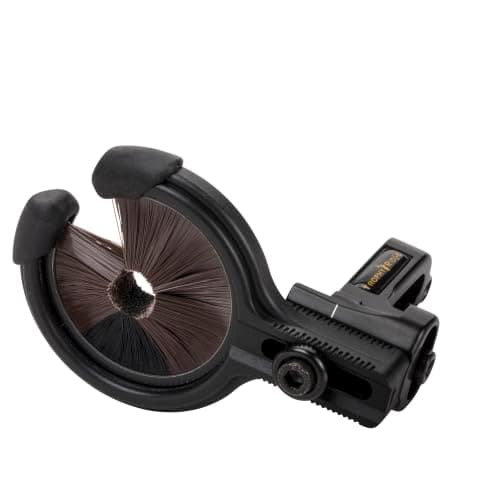
The original full-containment rest and still the correct beginner answer. The arrow cannot fall off, cannot be knocked off by a branch, and cannot come loose when you twist to take a shot behind you — which is where beginners lose deer.
Best for: The right first rest9.3 - 2
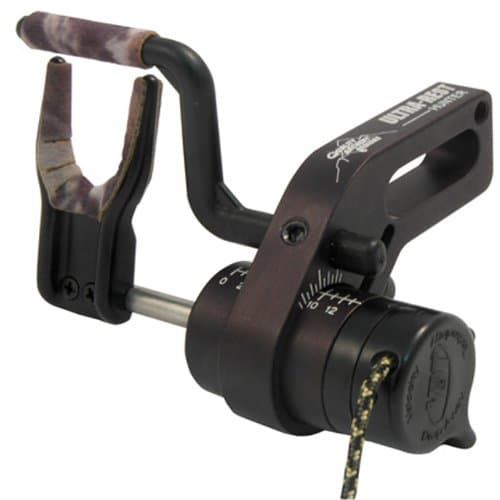
The drop-away that most pro shops fit as standard, and the one to move to in year two or three. Full capture at rest, then the arm falls away at the shot so nothing touches the fletching — the accuracy ceiling is genuinely higher.
Best for: The upgrade once your form is solid9.0 - 3
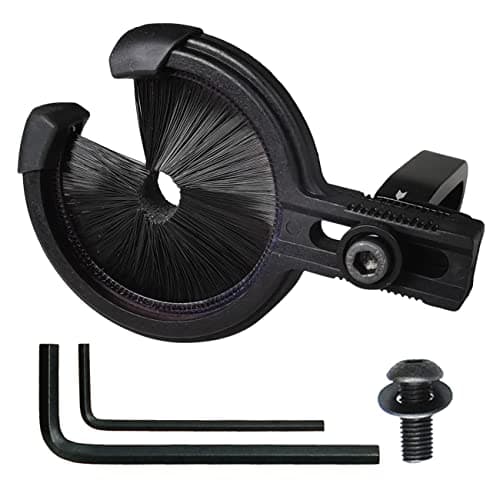
A containment brush rest for the price of a couple of arrows. It does the same job as the Whisker Biscuit with less refined materials — a sensible choice for a target bow or a spare, and a real option if the budget is genuinely tight.
Best for: A backyard target setup on a budget8.0
| # | Product | Best for | Score | Price |
|---|---|---|---|---|
| 1 | Trophy Ridge Kill Shot Whisker Biscuit The original full-containment rest and still the correct beginner answer. The arrow cannot fall off, cannot be knocked off by a branch, and cannot come loose when you twist to take a shot behind you — which is where beginners lose deer. | The right first rest | 9.3 | $48.57View on Amazon#ad |
| 2 | QAD Ultra Rest Hunter Drop-Away The drop-away that most pro shops fit as standard, and the one to move to in year two or three. Full capture at rest, then the arm falls away at the shot so nothing touches the fletching — the accuracy ceiling is genuinely higher. | The upgrade once your form is solid | 9.0 | $69.99View on Amazon#ad |
| 3 | THREE ARCHERS Capture Brush Arrow Rest A containment brush rest for the price of a couple of arrows. It does the same job as the Whisker Biscuit with less refined materials — a sensible choice for a target bow or a spare, and a real option if the budget is genuinely tight. | A backyard target setup on a budget | 8.0 | $12.99View on Amazon#ad |
The arrow rest is the small piece of hardware that supports your arrow before and during the shot, and it is the most consequential cheap component on a compound bow. Everything the arrow does in the first few inches of flight is determined by what it touches on the way out, which means a badly chosen or badly set rest produces flyers that no amount of practice will fix.
It is also where beginners are most often talked into the wrong thing. The prevailing advice is to buy a drop-away rest because that is what serious archers use. For a first season that advice is usually backwards, and the full-containment rest above is the better buy for reasons we will lay out.
What an arrow rest actually does
Two jobs. First, it holds the arrow in position while you nock it, draw, hold, and — crucially — while you move around at full draw waiting for a deer to step clear. Second, it supports the arrow during launch and then gets out of the way as cleanly as possible, because anything the fletching contacts on the way past will deflect the arrow.
Those two jobs are in direct tension. A rest that grips the arrow securely necessarily touches the fletching as it passes. A rest that touches nothing at launch has to let go of the arrow at some point, which means for part of the sequence the arrow is not held. Every rest design is a different answer to that trade-off, and which answer is right for you depends almost entirely on your experience level.
How we picked these
We weighted the first job — holding the arrow — far more heavily than the second, because that is what actually costs beginners shots. We compared containment method, adjustability, the number of things that can be set incorrectly, and how much fletching contact each design involves. Published manufacturer specifications only; we do not run a chronograph or a shooting machine and do not claim to. Our research method is public, and prices here are live and dated.
The three types, honestly compared
| Type | How it works | Strength | Weakness | Right for |
|---|---|---|---|---|
| Full containment (whisker biscuit) | Arrow passes through a ring of stiff bristles that hold it from every direction | The arrow literally cannot fall off | Bristle contact costs a little speed and wears fletching | Beginners, treestand hunters, anyone hunting in cover |
| Drop-away | A support arm holds the arrow, then falls at the shot via a cord linked to the cable | Zero fletching contact — the highest accuracy ceiling | Timing must be set correctly; more to fail in the field | Archers with consistent form and access to tuning help |
| Shoot-through / prong | Two static prongs cradle the arrow; fletching passes between them | Simple, cheap, no moving parts | Arrow falls off easily with any movement | Target shooting from a stationary position |
Shoot-through prong rests are the ones to avoid for hunting. They are perfectly good on a target range where you stand still and shoot at a known distance, and they are genuinely poor in a treestand where you need to draw slowly while twisting your torso.
Why beginners should buy the slower one
Should a beginner use a whisker biscuit or a drop-away rest? A whisker biscuit, in almost every case. Full containment means the arrow stays on the rest through any movement — drawing while seated, twisting to shoot behind you, brushing a branch, lowering the bow when a deer turns away. Drop-away rests are more accurate in theory and lose beginners shots in practice.
Picture the actual moment. You are sitting in a ladder stand at 20 feet. A deer comes in from behind your off shoulder. You have to draw slowly, rotate at the waist, and hold while it walks four more steps. With a containment rest, none of that is a problem. With a prong rest or a badly timed drop-away, the arrow comes off the rest somewhere in that sequence, and the noise of you trying to get it back on ends the encounter.
The cost of containment is real but small: a modest loss of arrow speed from bristle friction, and fletching that wears faster. Neither of those things will cause you to miss a deer inside thirty yards. Inconsistent form will, and so will an arrow that fell off the rest.
The speed argument is the least important thing about your bow
Setting one up without a pro shop
A rest has two adjustments that matter, and getting them roughly right yourself is straightforward.
Center shot (windage) is the left-right position of the rest. The starting point is to align the arrow so it points straight down the middle of the bow — with the arrow nocked, look down the shaft from behind and set the rest so the arrow lines up with the string and the center of the riser. Most bows want the arrow's center roughly 13/16 of an inch from the riser as a starting figure, but confirm against your bow manufacturer's specification.
Nock height (elevation) is the vertical position. The arrow should sit perpendicular to the string, or very slightly nock-high. A bow square is the cheap tool that makes this exact, and it costs a few dollars.
Then paper tune. Shoot an arrow through a sheet of paper at about six feet and look at the tear. A clean round hole with three fletching cuts means the arrow is flying straight. A tear to one side means adjust the rest in the direction of the tear, a little at a time. This is the single most useful hour a new archer can spend, and it costs the price of a roll of paper.
Two things worth saying plainly. First, get a pro shop to check your work once if you can — not because you cannot do it, but because seeing it done once teaches you more than reading about it. Second, retune after changing anything: arrows, points, string, or draw weight. Your broadheads in particular need their own check, because a fixed blade broadhead will fly differently from a field point through a marginal tune. That is exactly the problem our fixed vs mechanical comparison gets into.
If your bow came with one
Most beginner "ready to hunt" packages — the kind we recommend in the beginner bow roundup — include a rest already installed, and it is usually a containment brush rest. That is the correct rest for you, and the honest answer is to leave it alone for your first season.
Upgrade when one of three things is true: the bristles have worn to the point where the arrow sits loosely, you have moved past 30 yards and are chasing the last increment of accuracy, or you have changed to a significantly different arrow setup and the rest cannot be tuned to it. Until then, the money is better spent on arrows, a target, and time.
The one exception: if your package bow came with a shoot-through prong rest, replacing it with a containment rest is a genuinely worthwhile early upgrade for hunting. That is a case where the included part is the wrong tool for the job rather than merely a basic version of the right one.
The picks in detail
Trophy Ridge Kill Shot Whisker Biscuit
9.3/10Best for: The right first rest
The original full-containment rest and still the correct beginner answer. The arrow cannot fall off, cannot be knocked off by a branch, and cannot come loose when you twist to take a shot behind you — which is where beginners lose deer.
- Type
- Full containment (brush)
- Tuning
- Windage and elevation adjustable
- Moving parts
- None
- Best for
- First-season bowhunters
- Arrow stays put through any body position or movement
- Nothing to fail, time or set — it either works or it does not
- Forgiving of the inconsistent form every beginner has
- Costs a small amount of arrow speed and fletching wear
- Bristles need replacing every few seasons with heavy use
QAD Ultra Rest Hunter Drop-Away
9.0/10Best for: The upgrade once your form is solid
The drop-away that most pro shops fit as standard, and the one to move to in year two or three. Full capture at rest, then the arm falls away at the shot so nothing touches the fletching — the accuracy ceiling is genuinely higher.
- Type
- Drop-away, full capture
- Fletching contact
- None at the shot
- Setup
- Cord timed to the bow
- Best for
- Archers with consistent form
- No fletching contact means the highest accuracy potential here
- Captures the arrow at rest, unlike older drop-away designs
- The shop-standard choice, so tuning help is easy to find
- Cord timing must be set correctly or it fails at the worst moment
- Meaningfully more expensive and more to go wrong in the field
THREE ARCHERS Capture Brush Arrow Rest
8.0/10Best for: A backyard target setup on a budget
A containment brush rest for the price of a couple of arrows. It does the same job as the Whisker Biscuit with less refined materials — a sensible choice for a target bow or a spare, and a real option if the budget is genuinely tight.
- Type
- Full containment (brush)
- Fit
- Compound and recurve
- Adjustment
- Basic windage and elevation
- Best for
- Practice bows and tight budgets
- Costs less than a single broadhead
- Same containment principle as the premium option
- Fine for target practice and learning to tune
- Bristles wear faster and are less consistent
- Adjustment hardware is cruder — harder to hold a fine tune
Prices shown are from Amazon as of Sep 5, 2026 and change often — the button always goes to the current listing. Some links may earn us a commission at no extra cost to you. How this works.
Frequently asked questions
Should a beginner use a whisker biscuit or a drop-away rest?
A whisker biscuit, in almost every case. Full containment means the arrow stays on the rest through any movement - drawing while seated, twisting to shoot behind you, brushing a branch. Drop-away rests have a higher accuracy ceiling but lose beginners shots, and their cord timing must be set correctly to work.
What does an arrow rest do?
Two things: it holds the arrow in position while you nock, draw and hold, and it supports the arrow during launch before getting out of the way. Those jobs conflict - a rest that grips securely touches the fletching, and a rest that touches nothing must release the arrow at some point.
Does a whisker biscuit slow your arrow down?
Slightly, from bristle friction, and it wears fletching faster. Neither will cause you to miss a deer inside 30 yards, which is where beginners should be shooting. Arrow speed matters for long-range trajectory; at typical beginner distances the difference amounts to a fraction of an inch of drop.
Do I need to replace the arrow rest that came with my bow?
Usually not. Most beginner ready-to-hunt packages include a containment brush rest, which is the correct rest for a first season - leave it alone. The exception is if yours came with a shoot-through prong rest, which lets the arrow fall off too easily for treestand hunting and is worth replacing.
Sources
Keep reading
Not sure where to start?
The beginner gear checklist walks you through exactly what a first-season hunter needs — essentials first, nice-to-haves later, with one safe-default pick per category.