Packs & Vests · Brand Review
Simms Fishing Packs
Simms is a wader company that also makes the most sensibly laid-out packs in fly fishing. The Tributary line is one pack in four formats — sling, chest, hip and backpack — and choosing between them is a question about your water, not your gear.
Disclosure: Creek Cover is reader-supported. If you buy through our links we may earn a commission, at no extra cost to you. It never changes which pick we tell a new angler to start with. Full disclosure.
Quick picks at a glance
Tap a pick to read the full write-up, or the price button to check it on Amazon.
- 1
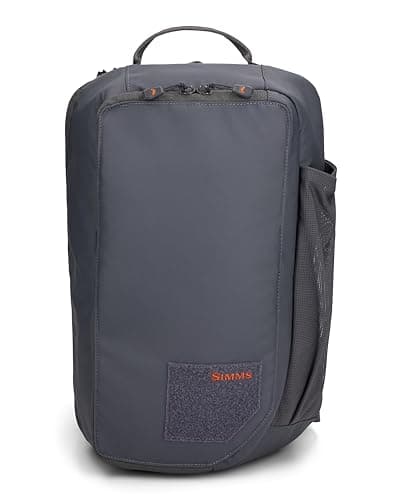
The format that replaced the vest for most fly anglers, done by a company that understands wading. It sits across the back out of the casting arm's way, rotates to the front to be worked out of without taking it off, and carries a day of gear — two fly boxes, tippet spools, tools and a jacket — without becoming a rucksack.
Best for: Best Simms pack for creek and stream fishing9.3 - 2
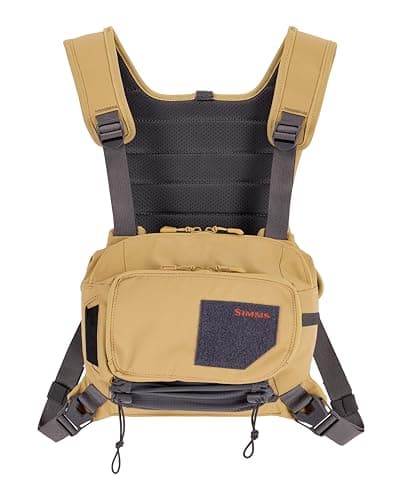
Everything at chest height, nothing behind you to snag on alders, and nothing below the water line when you wade deep. A chest pack is the correct answer on small overgrown creeks where a sling catches every branch, and it is the format that keeps working when you are in to your waist.
Best for: Best for tight brushy water and deep wading9.2 - 3
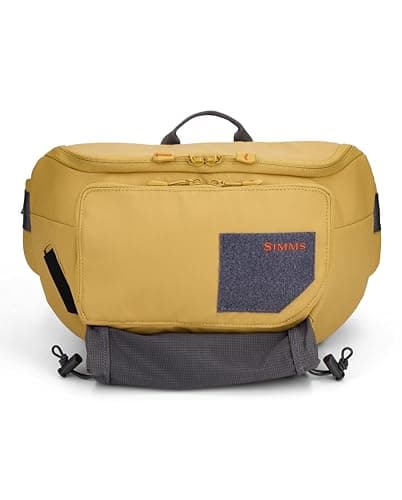
A waist belt pack that puts the weight on your hips instead of a shoulder, which is the most comfortable way to carry gear over long distances. The catch is the obvious one: it is at wader-belt height, so it is the first thing to get wet when you wade past your thighs.
Best for: Best for covering ground on foot in shallow water8.9 - 4
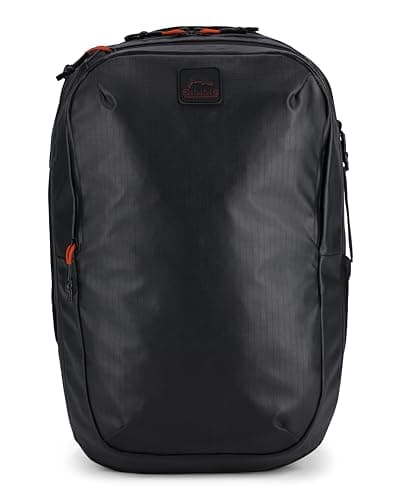
Twenty-five liters is a day-hike pack, not a fishing pack, and that is the point: it carries waders, boots, a jacket, lunch and a rod tube to a trailhead where the other three formats carry none of it. Wear it to the water, then fish out of a sling or a chest pack.
Best for: Best for long approaches and travel days8.8 - 5
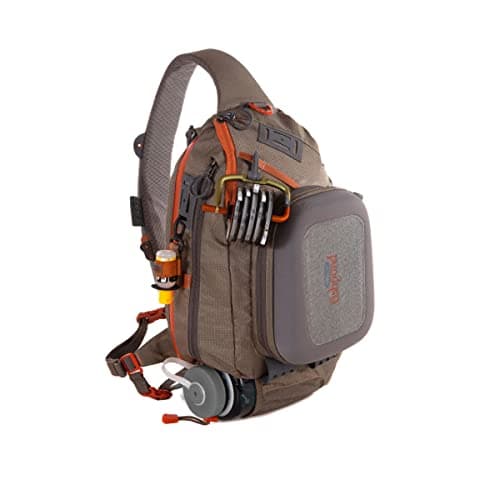
The sling most often bought instead of the Simms, from the one brand that specializes in carrying rather than waders. Comparable capacity, a similar rotate-to-the-front design, a lifetime workmanship warranty, and recycled fabrics. Choose by which layout you prefer, because the quality question is a wash.
Best for: The closest alternative if the Simms price is too much9.1
| # | Product | Best for | Score | Price |
|---|---|---|---|---|
| 1 | Simms Tributary Sling Pack The format that replaced the vest for most fly anglers, done by a company that understands wading. It sits across the back out of the casting arm's way, rotates to the front to be worked out of without taking it off, and carries a day of gear — two fly boxes, tippet spools, tools and a jacket — without becoming a rucksack. | Best Simms pack for creek and stream fishing | 9.3 | $116.29View on Amazon#ad |
| 2 | Simms Tributary Chest Pack Everything at chest height, nothing behind you to snag on alders, and nothing below the water line when you wade deep. A chest pack is the correct answer on small overgrown creeks where a sling catches every branch, and it is the format that keeps working when you are in to your waist. | Best for tight brushy water and deep wading | 9.2 | $137.62View on Amazon#ad |
| 3 | Simms Tributary Hip Pack A waist belt pack that puts the weight on your hips instead of a shoulder, which is the most comfortable way to carry gear over long distances. The catch is the obvious one: it is at wader-belt height, so it is the first thing to get wet when you wade past your thighs. | Best for covering ground on foot in shallow water | 8.9 | $116.29View on Amazon#ad |
| 4 | Simms Tailwind Backpack, 25L Twenty-five liters is a day-hike pack, not a fishing pack, and that is the point: it carries waders, boots, a jacket, lunch and a rod tube to a trailhead where the other three formats carry none of it. Wear it to the water, then fish out of a sling or a chest pack. | Best for long approaches and travel days | 8.8 | $189.95View on Amazon#ad |
| 5 | Fishpond Summit Sling 2.0, Granite The sling most often bought instead of the Simms, from the one brand that specializes in carrying rather than waders. Comparable capacity, a similar rotate-to-the-front design, a lifetime workmanship warranty, and recycled fabrics. Choose by which layout you prefer, because the quality question is a wash. | The closest alternative if the Simms price is too much | 9.1 | $129.95View on Amazon#ad |
For creek and stream fishing, buy the Simms Tributary Sling. It carries a full day of gear, stays clear of your casting arm, and swings to the front to be worked out of without coming off your shoulder. If your water is tight and overgrown, buy the Tributary Chest Pack instead — nothing behind you to snag, nothing below the water line.
Simms is a Bozeman, Montana wader and boot company first, and its packs carry that DNA: they are laid out by people who have stood in moving water needing a third hand. This page compares the four formats on specification and use case. We have not field-tested them and do not claim to have.
What Simms actually makes
Waders, boots, outerwear — and packs as a supporting line. That matters for a buyer, because it means the packs are designed to work with waders rather than as standalone luggage. Straps clear a wader belt, pockets sit above the water line, and the fabrics are chosen for things that live in a river rather than a commute.
Tributary is the accessible line. Simms splits its range by price tier, and Tributary is the entry tier — the same design philosophy as the guide-grade packs, in less exotic fabrics, at a price a weekend angler will actually pay. For most people on small water that is the right place in the range to shop.
One pack, four formats. The sling, chest and hip packs are the same design intent worn three different ways. The Tailwind backpack is a different animal entirely — a gear hauler for getting to the water, not something you fish out of.
Format decides it, not capacity
Ask how deep you wade, then how thick the brush is. Those two answers pick your format, and capacity is a distant third consideration — almost every angler carries too much rather than too little.
Wade deep: chest pack. It is the only format that stays dry when you are in to your waist, which on small streams you regularly are.
Thick brush: chest pack again. A sling across your back is a snag magnet in alders and rhododendron. Nothing behind you means nothing to catch.
Open banks and long walks: sling, or hip if you never wade deep. The sling is the best compromise and the reason it has taken over the sport; the hip pack is more comfortable over distance and wetter the moment you step in.
The range, compared
| Pack | Format | Worn | Stays dry wading deep? | Buy it for |
|---|---|---|---|---|
| Tributary Sling | Sling | Back, rotates to chest | Mostly | All-round creek and stream fishing |
| Tributary Chest Pack | Chest | Front, chest height | Yes | Tight brush and deep wading |
| Tributary Hip Pack | Hip | Waist, rotates forward | No | Long walks in shallow water |
| Tailwind Backpack 25L | Backpack | Both shoulders | n/a — not fished from | Approaches, travel, hauling waders |
Is the Simms premium worth it?
For the layout, often yes. For the fabric, only if you fish a lot. What you notice first on a well-designed pack is that you stop looking for things: nippers, tippet and the fly box you are using are where your hand goes without thinking. That is a real daily benefit and it is hard to get at the bottom of the market.
The fabric argument depends on days fished. Premium coated nylon resists abrasion from rock and brush for years. If you fish ten days a season, a $40 pack will also last years. If you fish eighty, the cheap pack's zippers are the thing that goes first.
The warranty argument is weaker here than on waders. Simms' reputation rests on its wader repair program; a pack is a simpler product with less to go wrong and less to repair. If warranty is your deciding factor, Fishpond's lifetime workmanship terms are the clearer promise — the brand-by-brand picture is in the fly fishing brand guide.
Buy the pack after the waders, not before
Cheaper packs that do the same job
At half the price: the Maxcatch and Kylebooker slings. Both carry the same gear in the same format with plainer hardware, and both are ranked against each other in the sling pack roundup. For a first pack, the honest advice is to start there and upgrade when you know what annoys you.
For chest packs specifically, the budget field is genuinely good — small chest packs are simple products — and the chest pack roundup covers the $25 to $90 range where most anglers should be shopping.
For hauling gear to the water, a standard fishing backpack with rod holders costs a fraction of the Tailwind and does the same hauling job; the fishing backpack roundup has the options. And if the premium pack brand you are actually comparing against is Patagonia, that range is covered in Patagonia fishing packs.
The closest brand comparison is Umpqua. Its ZS2 packs sit at similar prices with a snag-free exterior layout built around stripping line by hand — Umpqua fishing packs has the range.
The picks in detail
Simms Tributary Sling Pack
9.3/10Best for: Best Simms pack for creek and stream fishing
The format that replaced the vest for most fly anglers, done by a company that understands wading. It sits across the back out of the casting arm's way, rotates to the front to be worked out of without taking it off, and carries a day of gear — two fly boxes, tippet spools, tools and a jacket — without becoming a rucksack.
- Format
- Single-strap sling
- Worn
- Back, rotates to chest
- Sizing
- One size, adjustable
- Swings to the front without coming off
- Stays clear of the casting arm
- Right capacity for a full day on a creek
- One strap means one shoulder takes the load
- More pack than a two-hour evening session needs
Simms Tributary Chest Pack
9.2/10Best for: Best for tight brushy water and deep wading
Everything at chest height, nothing behind you to snag on alders, and nothing below the water line when you wade deep. A chest pack is the correct answer on small overgrown creeks where a sling catches every branch, and it is the format that keeps working when you are in to your waist.
- Format
- Chest pack
- Worn
- Front, at chest height
- Sizing
- Adjustable harness
- Nothing to snag in brush
- Stays dry when you wade deep
- Tools land where your hands already are
- Small capacity — no room for a jacket
- Sits in the way when you are playing a fish
Simms Tributary Hip Pack
8.9/10Best for: Best for covering ground on foot in shallow water
A waist belt pack that puts the weight on your hips instead of a shoulder, which is the most comfortable way to carry gear over long distances. The catch is the obvious one: it is at wader-belt height, so it is the first thing to get wet when you wade past your thighs.
- Format
- Hip / waist pack
- Worn
- On the hips, rotates forward
- Sizing
- Adjustable belt
- Most comfortable carry for long walks
- Weight off the shoulders entirely
- Rotates forward to work out of
- Gets wet the moment you wade deep
- Sits exactly where a wading belt wants to be
Simms Tailwind Backpack, 25L
8.8/10Best for: Best for long approaches and travel days
Twenty-five liters is a day-hike pack, not a fishing pack, and that is the point: it carries waders, boots, a jacket, lunch and a rod tube to a trailhead where the other three formats carry none of it. Wear it to the water, then fish out of a sling or a chest pack.
- Capacity
- 25 L
- Format
- Two-strap backpack
- Use
- Approach, travel, gear haul
- Carries wet waders and boots separately from the rest
- Comfortable over real distance
- Doubles as carry-on luggage
- You cannot fish out of it without taking it off
- Overkill for a roadside creek
Fishpond Summit Sling 2.0, Granite
9.1/10Best for: The closest alternative if the Simms price is too much
The sling most often bought instead of the Simms, from the one brand that specializes in carrying rather than waders. Comparable capacity, a similar rotate-to-the-front design, a lifetime workmanship warranty, and recycled fabrics. Choose by which layout you prefer, because the quality question is a wash.
- Format
- Single-strap sling
- Warranty
- Lifetime on workmanship
- Fabric
- Recycled nylon
- Pack specialist rather than a wader brand
- Lifetime workmanship warranty
- Widely stocked and easy to return
- Still a premium price for a bag
- Does not match Simms waders as a system
Prices shown are from Amazon as of October 20, 2026 and change often — the button always goes to the current listing. Some links may earn us a commission at no extra cost to you. How this works.
Frequently asked questions
Which Simms fishing pack is best for small streams?
The Tributary Sling for most anglers, because it carries a full day of gear, stays clear of the casting arm and rotates to the front to be worked out of. On tight overgrown creeks, or if you regularly wade to your waist, the Tributary Chest Pack is better - nothing sits behind you to snag and nothing sits below the water line.
What is the difference between the Simms Tributary sling, chest and hip packs?
Where they are worn. The sling rides on your back and rotates to your chest, the chest pack sits permanently at chest height, and the hip pack rides on your waist. The chest pack is the only one that stays dry when you wade deep; the hip pack is the most comfortable over long walks but the first to get wet.
Are Simms packs worth the money?
For the layout, usually - a well-organized pack means you stop hunting for tippet and nippers, which is a real daily benefit. For the fabric, it depends on how much you fish: premium coated nylon earns its price over 50-plus days a season, while a $40 sling will last years at ten days a season.
Can you fish out of the Simms Tailwind backpack?
Not really. It is a 25-liter two-strap backpack designed to haul waders, boots, a jacket and a rod tube to the water, and you have to take it off to reach anything. Use it for the approach, then fish out of a sling or chest pack once you are there.
Sources
Keep reading
Not sure where to start?
The beginner gear guide walks you through exactly what a new stream angler needs — the six essentials first, nice-to-haves later, with one safe-default pick per category.