Waders · Roundup
The Best Fly Fishing Waders
Fly fishing asks different things of waders than still-water fishing does: you walk more, you wade moving current, and you need to reach your own chest. That narrows the field considerably.
Disclosure: Creek Cover is reader-supported. If you buy through our links we may earn a commission, at no extra cost to you. It never changes which pick we tell a new angler to start with. Full disclosure.
Quick picks at a glance
Tap a pick to read the full write-up, or the price button to check it on Amazon.
- 1
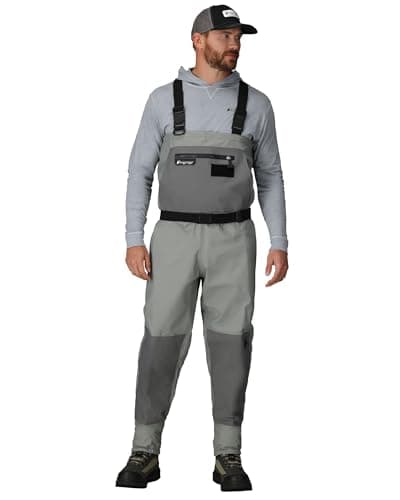
The right configuration at the right price from a brand with a long track record, in the PRO version that is current rather than the outgoing one. Breathable 4-ply upper, chest-high, stockingfoot, reinforced knees — everything a trout angler needs and nothing aimed at a duck blind.
Best for: Best fly fishing waders overall9.1 - 2
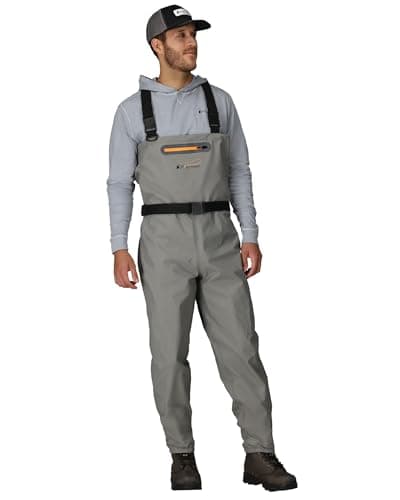
Same correct formula, lower price, thinner fabric. For a first season of stream fishing this is genuinely enough wader, and the saving goes toward boots — which you cannot skip.
Best for: Best budget breathable chest wader8.7 - 3
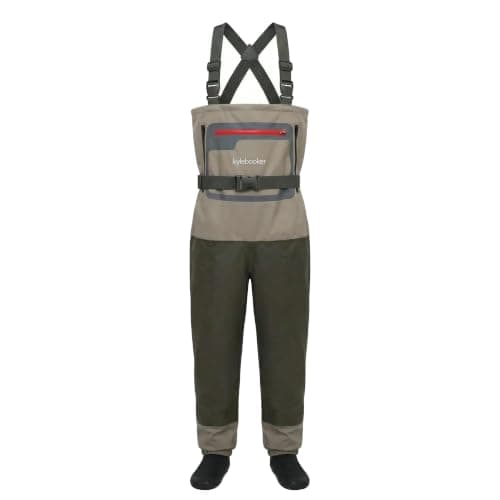
A hybrid: breathable upper with neoprene in the lower legs and booties, so your feet and shins — the parts actually in cold water all day — stay warm while your torso still vents.
Best for: Best for cold-water fly fishing8.6 - 4
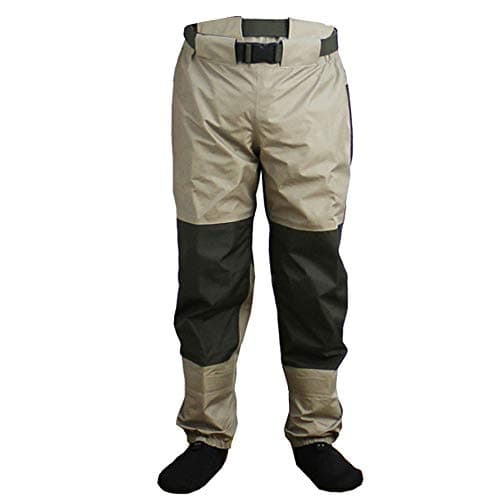
Wading pants rather than chest waders: dramatically cooler on a hot day, far less to carry, and perfectly adequate for the summer creek fishing where you never go above the waist.
Best for: Best for summer stream fishing8.5 - 5
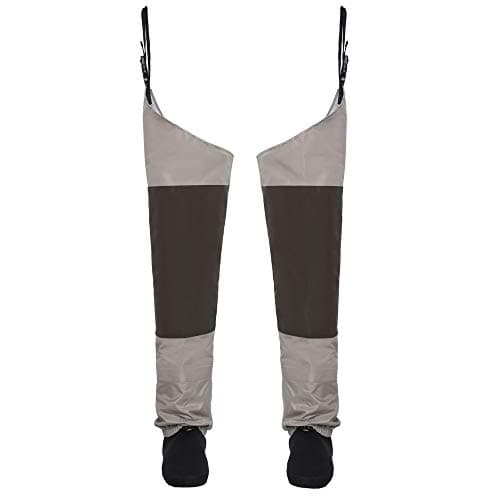
Breathable hip waders in stockingfoot — an unusual and very useful combination for small-creek fly fishing, because you get real wading boots on genuinely shallow water for not much money.
Best for: Best for small, shallow creeks8.4
| # | Product | Best for | Score | Price |
|---|---|---|---|---|
| 1 | Frogg Toggs Hellbender PRO Breathable Stockingfoot Chest Wader The right configuration at the right price from a brand with a long track record, in the PRO version that is current rather than the outgoing one. Breathable 4-ply upper, chest-high, stockingfoot, reinforced knees — everything a trout angler needs and nothing aimed at a duck blind. | Best fly fishing waders overall | 9.1 | $169.99View on Amazon#ad |
| 2 | Frogg Toggs Canyon II Breathable Stockingfoot Chest Wader Same correct formula, lower price, thinner fabric. For a first season of stream fishing this is genuinely enough wader, and the saving goes toward boots — which you cannot skip. | Best budget breathable chest wader | 8.7 | $99.99View on Amazon#ad |
| 3 | Kylebooker Breathable Neoprene Stockingfoot Chest Wader KB004 A hybrid: breathable upper with neoprene in the lower legs and booties, so your feet and shins — the parts actually in cold water all day — stay warm while your torso still vents. | Best for cold-water fly fishing | 8.6 | Check price on Amazon#ad |
| 4 | Kylebooker Breathable Stockingfoot Waist-High Pant Waders KB003 Wading pants rather than chest waders: dramatically cooler on a hot day, far less to carry, and perfectly adequate for the summer creek fishing where you never go above the waist. | Best for summer stream fishing | 8.5 | $87.99View on Amazon#ad |
| 5 | Kylebooker Breathable Stockingfoot Hip Waders Breathable hip waders in stockingfoot — an unusual and very useful combination for small-creek fly fishing, because you get real wading boots on genuinely shallow water for not much money. | Best for small, shallow creeks | 8.4 | $69.34View on Amazon#ad |
If you fly fish trout streams, buy breathable stockingfoot chest waders and a separate pair of studded rubber wading boots. That is the answer for the overwhelming majority of fly anglers, and the reasons are specific to how fly fishing is actually done rather than to any specification on the label.
How we picked these
We judged these against the particular demands of fly fishing a stream: covering ground on foot between pools, standing in moving water for long stretches, needing both hands free, and a season that starts in cold runoff and ends in low warm water. We weighted breathability and stockingfoot configuration heavily, preferred full size ranges over feature counts, and deliberately discounted the insulated bootfoot designs that dominate stationary cold-water use — different job, different requirements. We do not pressure-test fabrics; our method is on the how we research and pick page, and prices are live and dated.
The three specs that actually matter
A large share of the chest waders sold in the US are built for standing still in cold water for hours, not for walking a stream bank. They are good at that job, and several of their design choices work against a fly angler. Dual-purpose waders are everywhere, so it is worth knowing which features are aimed at you and which are not.
| Design choice | What it is for | Problem on a trout stream |
|---|---|---|
| Heavy insulation / thick neoprene | Standing in cold water without moving | You overheat and soak yourself from the inside walking the bank |
| Attached insulated bootfoot | Warmth and quick on-off | Poor ankle support on slick, rounded streambed cobble |
| Camouflage patterning | Concealment on still water | Irrelevant — trout do not care, and visibility to other anglers is a plus |
| Large cargo pockets low on the leg | Bulky items on dry ground | Underwater the moment you wade; useless for a fly box |
| Hand-warmer pocket at chest height | Cold hands | Genuinely useful — keep this one |
The practical upshot: ignore the feature list on the box and check the three things that matter — breathable fabric, chest height, stockingfoot.
Why breathable is not optional for fly fishing
Fly fishing a stream means walking. You fish a pool, you get out, you walk fifty yards of bank, you get back in. Over a day that adds up to real distance in a sealed waterproof garment.
Non-breathable waders turn your own sweat into the thing that soaks you. There is nowhere for the vapor to go, so it condenses on the inside of the fabric and runs down. Anglers routinely assume this is a leak. Breathable laminates let that vapor pass through, which is why they have taken over fly fishing entirely despite costing more and being less puncture-resistant.
And breathable does not mean cold. This is the part that confuses people. Breathable waders supply no warmth at all; you add it underneath with base layers and fleece trousers. That is a feature, not a limitation — it means one pair of waders covers February and August, which neoprene cannot. If your feet and shins are the problem rather than your body, the hybrid pick puts neoprene only in the lower legs.
What to wear underneath
The features that actually earn their keep
Gravel guards. Elastic cuffs that pull over the top of your boots and keep grit out. Without them you will have gravel grinding against the wader bootie all day, which is both uncomfortable and how booties wear through. Check whether they are included.
A chest pocket you can actually use. One zipped, waterproof pocket at chest height — above the waterline — for a phone, keys and a fly box. Low-slung cargo pockets are underwater when you wade and are the clearest sign a wader was designed for someone standing on dry ground.
Adjustable, removable suspenders and a wading belt. Suspenders that convert so you can roll the top down on a hot day effectively give you two pairs of waders. A wading belt is non-negotiable and some waders include one: worn snug, it stops the legs filling with water if you go over, which is the difference between a soaking and a genuine emergency in current.
What does not matter:published waterproof ratings (not comparable between makers), camouflage, the number of pockets, and anything described as “4-layer” without saying where.
Sizing for a fly angler
The general rule is to size for the thickest layers you will ever wear underneath. There is one fly-fishing-specific addition: check that you can reach your own chest and crouch fully. Fly fishing involves constant hand movement at chest height — changing flies, getting into a chest pocket, netting a fish — and a wader that is tight across the shoulders makes all of it tiring.
The test, done at home in your usual layers: lift a knee to your chest, crouch all the way down as if landing a fish in the water, and reach across your body to your opposite shoulder. Any hard pull at the shoulders or crotch means the size is wrong. Inseam is the measurement most often wrong, and excess bunched fabric at the crotch is a leading cause of premature seam leaks. The sizing guide has the full method and the between-sizes call.
You still need boots
Stockingfoot waders are half a purchase. The boots cost about as much again, and they are where the safety is: a laced boot in your real size supports an ankle on rounded, algae-slick cobble in a way an attached bootfoot cannot. Buy studded rubber soles unless you have checked that felt is legal in your state — several have banned it because it transports invasive organisms between watersheds.
If the two-purchase structure is the problem, a bootfoot wader is a legitimate answer and the comparison lays out the trade. Also budget for a wading staff — the cheapest safety gear in fishing, covered in the packs and nets hub. With waders sorted, the remaining decisions are the rod and the flies, both covered in the beginner gear guide.
Two related pages. For a women's-specific cut rather than a unisex one, see the best waders for women. And at the very bottom of the market, our TIDEWE waders review explains exactly what you give up to get a complete wader for forty dollars — it is breathability and fit adjustment, not waterproofing.
Two companions to this page: wading jackets and fishing rain jackets, where the sealing cuff is the detail that matters, and the best cheap waders if you want breathable construction without the brand-name price.
Two further reads if you are still deciding. For the premium direct-to-angler end of the market — heavier abrasion packages and waterproof front zips — see the DRYFT waders review. And if what you actually need is rain protection rather than a wading garment, waders vs bibs settles that question first.
If you fish enough that waders are a consumable. High quality waders built to last judges pairs on what actually fails — taped seams, knees and the bootie seam — rather than on fabric marketing, and names the brands that will repair rather than replace.
The picks in detail
Frogg Toggs Hellbender PRO Breathable Stockingfoot Chest Wader
9.1/10Best for: Best fly fishing waders overall
The right configuration at the right price from a brand with a long track record, in the PRO version that is current rather than the outgoing one. Breathable 4-ply upper, chest-high, stockingfoot, reinforced knees — everything a trout angler needs and nothing aimed at a duck blind.
- Construction
- Breathable 4-ply nylon upper
- Height
- Chest
- Foot
- Stockingfoot, 4mm neoprene
- Knees
- Double-reinforced
- Breathable — dry on the walk between pools
- Layers underneath for cold spring runoff
- Regular and stout sizes, plus a waterproof zip pocket
- Boots are a separate purchase
- Not the lightest fabric available
Frogg Toggs Canyon II Breathable Stockingfoot Chest Wader
8.7/10Best for: Best budget breathable chest wader
Same correct formula, lower price, thinner fabric. For a first season of stream fishing this is genuinely enough wader, and the saving goes toward boots — which you cannot skip.
- Construction
- Breathable, waterproof
- Height
- Chest
- Foot
- Stockingfoot
- Best for
- First breathable pair
- Cheapest sensible breathable chest wader
- Correct stockingfoot configuration
- Light and packs down small
- Thinner fabric is less abrasion-resistant
- Minimal pocket storage
Kylebooker Breathable Neoprene Stockingfoot Chest Wader KB004
8.6/10Best for: Best for cold-water fly fishing
A hybrid: breathable upper with neoprene in the lower legs and booties, so your feet and shins — the parts actually in cold water all day — stay warm while your torso still vents.
- Construction
- Breathable upper, neoprene lower
- Height
- Chest
- Foot
- Stockingfoot
- Best for
- Cold water, early season
- Warm where it matters, breathable where it matters
- Good value for a hybrid construction
- Still takes normal wading boots
- Heavier than an all-breathable pair
- Less brand support than the Frogg Toggs picks
Kylebooker Breathable Stockingfoot Waist-High Pant Waders KB003
8.5/10Best for: Best for summer stream fishing
Wading pants rather than chest waders: dramatically cooler on a hot day, far less to carry, and perfectly adequate for the summer creek fishing where you never go above the waist.
- Construction
- Breathable
- Height
- Waist (pant)
- Foot
- Stockingfoot
- Best for
- Summer, low water
- Much cooler than chest waders in summer
- Packs very small
- Full freedom of movement
- No use in deep water or cold weather
- Realistically a second pair, not your only pair
Kylebooker Breathable Stockingfoot Hip Waders
8.4/10Best for: Best for small, shallow creeks
Breathable hip waders in stockingfoot — an unusual and very useful combination for small-creek fly fishing, because you get real wading boots on genuinely shallow water for not much money.
- Construction
- Breathable
- Height
- Hip
- Foot
- Stockingfoot
- Best for
- Shallow creeks
- Breathable and stockingfoot at hip-wader prices
- Coolest option here for warm weather
- Takes proper wading boots
- Hard limit at thigh depth
- No upper-body rain protection
Prices shown are from Amazon as of October 20, 2026 and change often — the button always goes to the current listing. Some links may earn us a commission at no extra cost to you. How this works.
Frequently asked questions
What waders should I buy for fly fishing?
Breathable stockingfoot chest waders, with separate studded-rubber wading boots. Breathable fabric is essential because fly fishing involves walking between pools and non-breathable waders trap your own perspiration. Stockingfoot gives you a real laced boot in your true shoe size, which is what supports your ankle on slick streambed rock.
Can I use insulated neoprene chest waders for fly fishing?
Usually a poor fit. Heavily insulated neoprene waders are built for standing still in cold water, so they are non-breathable and often bootfoot - which means you overheat walking the bank and get little ankle support while wading. Breathable stockingfoot waders with layers underneath cover the same cold weather far better.
What do you wear under breathable waders?
Merino or synthetic base layers and fleece trousers in cold water, light synthetic trousers or shorts in summer. Never cotton, which holds moisture against your skin and chills you. Thick socks go over the wader bootie rather than under it, and two thin pairs work better than one thick pair inside a laced boot.
Do I need a wading belt with chest waders?
Yes, always, and worn snug. If you go over in current, a wading belt stops the legs of your waders filling with water, which is the difference between an unpleasant soaking and a genuine emergency. Some waders include one; if yours does not, buy one before your first trip.
Sources
Keep reading
Not sure where to start?
The beginner gear guide walks you through exactly what a new stream angler needs — the six essentials first, nice-to-haves later, with one safe-default pick per category.