Flies & Lures · Roundup
The Best Flies for Trout
Six fly fishing flies in two sizes will fish a whole season of creeks. Everything beyond that is a hobby in its own right, and it is not what is stopping you catching fish.
Disclosure: Creek Cover is reader-supported. If you buy through our links we may earn a commission, at no extra cost to you. It never changes which pick we tell a new angler to start with. Full disclosure.
Quick picks at a glance
Tap a pick to read the full write-up, or the price button to check it on Amazon.
- 1
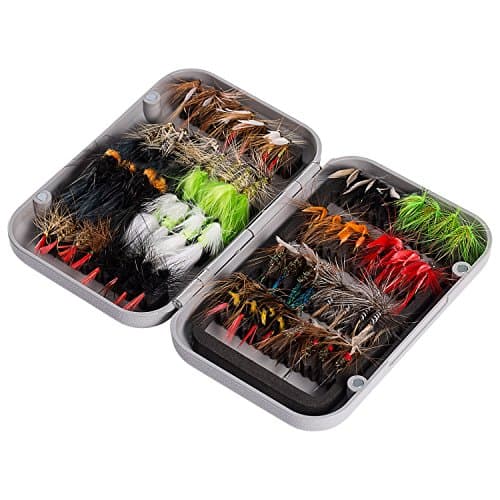
The right balance of breadth, count and price. Dries, nymphs and streamers across useful sizes, with a box included — everything a first season on a creek actually requires.
Best for: Best beginner fly assortment overall9.1 - 2
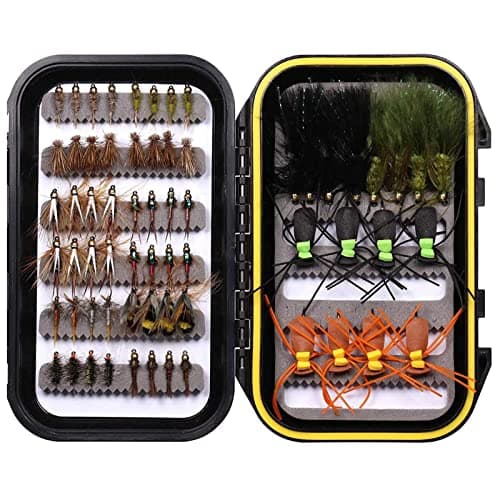
The same category spread with a genuinely waterproof box, which matters more than it sounds — a box of wet flies left closed rusts hooks and ruins the hackle on dry patterns.
Best for: Best assortment with a waterproof box8.9 - 3
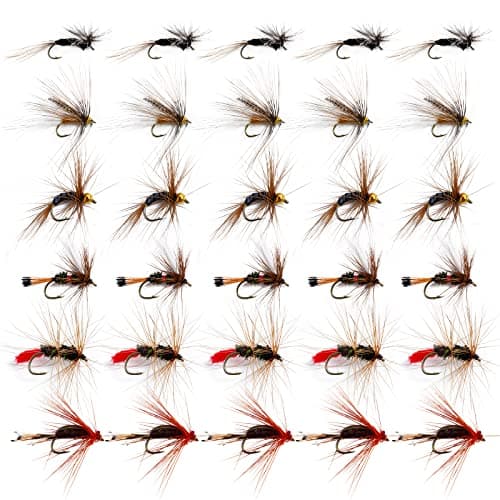
Thirty flies for the price of a sandwich. Not a long-term solution, but if you want to find out whether fly fishing suits you before spending properly, this removes the excuse.
Best for: Cheapest way to start8.3 - 4
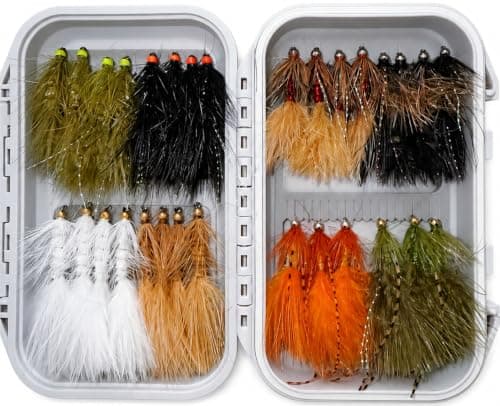
If you buy one dedicated pattern alongside an assortment, buy Woolly Buggers. It imitates anything that swims, it is the easiest fly in the world to fish, and it takes the biggest trout in a creek.
Best for: Best single pattern to add9.2 - 5
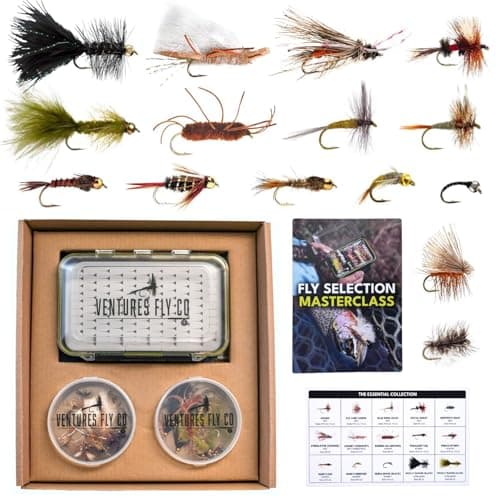
Hand-tied on good hooks, which is the one genuine weakness of budget assortments. The right upgrade once you know you are staying with fly fishing — and the hooks hold fish the cheap ones lose.
Best for: Best quality assortment9.0
| # | Product | Best for | Score | Price |
|---|---|---|---|---|
| 1 | BASSDASH 64-Piece Fly Fishing Flies Kit with Fly Box The right balance of breadth, count and price. Dries, nymphs and streamers across useful sizes, with a box included — everything a first season on a creek actually requires. | Best beginner fly assortment overall | 9.1 | $19.98View on Amazon#ad |
| 2 | Wifreo 64-Piece Fly Assortment with Waterproof Fly Box The same category spread with a genuinely waterproof box, which matters more than it sounds — a box of wet flies left closed rusts hooks and ruins the hackle on dry patterns. | Best assortment with a waterproof box | 8.9 | $24.98View on Amazon#ad |
| 3 | Goture 30-Piece Dry, Wet & Nymph Fly Assortment Kit Thirty flies for the price of a sandwich. Not a long-term solution, but if you want to find out whether fly fishing suits you before spending properly, this removes the excuse. | Cheapest way to start | 8.3 | $9.99View on Amazon#ad |
| 4 | Wooly Bugger Flies for Trout, Bass & Panfish, Sizes 4-10 If you buy one dedicated pattern alongside an assortment, buy Woolly Buggers. It imitates anything that swims, it is the easiest fly in the world to fish, and it takes the biggest trout in a creek. | Best single pattern to add | 9.2 | $26.99View on Amazon#ad |
| 5 | Ventures Fly Co. 40 Premium Hand-Tied Flies with Box Hand-tied on good hooks, which is the one genuine weakness of budget assortments. The right upgrade once you know you are staying with fly fishing — and the hooks hold fish the cheap ones lose. | Best quality assortment | 9.0 | $74.99View on Amazon#ad |
The best flies for trout, for anyone buying their first box, are the BASSDASH 64-piece assortment plus a pack of Woolly Buggers — together they cover a season of creek fishing for less than the cost of two dozen shop-tied flies. Wild stream trout are not inspecting your thread wraps, so the right fly fishing flies are the ones that cover the right sizes at the right depth, which is what this page ranks them on.
How we picked these
We compared published fly count, the categories covered (dry, nymph, streamer, terrestrial), hook sizes, tying method and whether a box is included — judged against a first season on creeks and small streams where fish are wild, opportunistic and mostly under twelve inches. We weighted category breadth and small hook sizes over count, and we treated an included waterproof box as genuine value rather than packaging. We do not fish-test every assortment and do not claim to; our method is on the how we research and pick page, and prices here are live and dated.
The six fly fishing flies that cover a season
Fly shops sell thousands of patterns. Creek trout in North America are covered by six, in two sizes each. If an assortment contains these, it is good enough.
| Pattern | Type | Sizes | When to use it |
|---|---|---|---|
| Bead-head Hare's Ear | Nymph | 14-18 | The default — insects spend most of their life underwater |
| Pheasant Tail | Nymph | 14-18 | Clearer water and slower pools; slimmer profile |
| Elk Hair Caddis | Dry | 14-18 | Riffly water, evening rises, anything caddis |
| Parachute Adams | Dry | 14-18 | The universal dry fly — looks like most mayflies |
| Woolly Bugger (olive / black) | Streamer | 8-12 | Prospecting deep pools; the biggest fish in a creek |
| A small terrestrial (ant / beetle / hopper) | Dry | 12-16 | Summer afternoons, overgrown banks, wind |
If you only fish two, fish a bead-head nymph and a Woolly Bugger. Between them they cover subsurface feeding and predatory fish, which is the great majority of creek trout behavior. Dry flies are more fun and often easier on small streams — creek trout are opportunists looking up — but they are not where most fish are caught. The subsurface half of the box is covered in detail in the best nymphs for trout.
Size matters more than pattern
This is the single most useful thing on this page. The most common correction an experienced angler makes to a beginner’s fly box is to drop two hook sizes.
Fly hooks run backwards: a bigger number is a smaller hook. A size 18 is small, a size 8 is large. Beginners consistently buy too large, because larger flies are easier to see, easier to tie on, and look more like something a fish would want. But the insects in a creek are genuinely tiny, and a trout that has refused a size 12 will frequently take the same pattern in a size 18 on the next cast.
So: carry nymphs and dries in 14 to 18, and when fish refuse, go smaller before you change pattern. It is the highest-percentage adjustment in trout fishing, and it costs nothing. Every size range worth owning, by fly type, is laid out in what size flies to use for trout.
Match the tippet to the fly size
Depth is the other half
Trout hold low. They feed in the bottom third of the water column far more than at the surface, because that is where food is carried. Beginners fish too shallow and conclude the flies are wrong.
If you are not occasionally ticking the streambed with a nymph, you are fishing above the fish. The fix is not a different pattern — it is weight. Either use a bead-head version, add a small split shot a foot above the fly, or fish a heavier nymph with a lighter one tied behind it. Then watch for the drift to pause or hesitate, which is what a take looks like on a nymph.
And drag kills more drifts than pattern ever will. A fly being pulled across the current by your line looks wrong to a trout and it will not take it, regardless of what the fly is. Short casts, a high rod tip, and getting closer to the fish — which small water lets you do — solve drag better than anything you can buy. A strike indicator helps you both detect takes and see when your drift is dragging.
The best trout flies for beginners: a six-pattern starter box
If this is your first box, you do not need more patterns — you need the right six in two sizes each. That is twelve slots, under twenty dollars of flies, and it will out-fish a hundred-fly box bought at random. Tie on a Woolly Bugger when you do not know what is happening, swap to a beadhead nymph when fish are holding deep, and keep one dry fly on hand for the last hour of light. Everything else in this guide is an upgrade on that core.
The practical beginner shortcut is to buy a prebuilt box rather than twelve individual packs: an assortment covers the categories and sizes in one purchase, and it costs less than buying the same flies loose. That is the whole case for a best fly fishing flies kit over a shopping list — and the next section is about whether the cheap ones hold up.
Is a cheap fly fishing flies kit good enough?
For creek trout, genuinely yes — with one caveat. Wild stream fish in small water are opportunistic and competitive; they are not the educated, heavily fished trout of a famous tailwater that refuse anything imperfect. A $17 assortment catches them.
The caveat is hooks. Budget assortments economize on hook steel and points, and the consequence shows up in two places: points that dull or bend after a couple of fish, and larger patterns where a soft hook can straighten under load. The practical workaround is to check and sharpen points and accept that you will retire flies faster. When you know fly fishing has stuck, the hand-tied assortment is the upgrade worth making, and the difference is almost entirely in the hooks.
The other honest weakness: assortments contain patterns nobody uses, so a 64-fly box is realistically a 25-fly box. That is still good value, and pairing an assortment with one deliberately chosen pattern — Woolly Buggers — covers the gap.
Storing them so they last
Flies are destroyed by being put away wet far more often than by fish. A used fly goes back into a closed foam box damp, the hook rusts, and the hackle on a dry fly is crushed flat and never floats again.
Two habits fix it. Keep a small patch of foam or wool on the outside of your pack and park used flies there to dry during the session, then transfer them home. And open the box to air when you get back rather than leaving it sealed in a bag.
A waterproof, slit-foam box is worth the small premium — it keeps water out, holds small hooks securely without crushing hackle, and lets you see everything at once. One box of nymphs and dries plus a few streamers in a second compartment covers a creek day, and it all fits in a shirt pocket.
Also carry floatant if you fish dries, which is a gel or powder that keeps a fly riding high after it has been sunk by a fish or a bad drift. A dry fly that has absorbed water fishes as a bad wet fly.
Next: a rod to cast them with, waders, and a rubber net. If you fish spinning gear instead, the creek lures roundup is the equivalent page, and the beginner gear guide puts the whole kit in order.
Where to go from here. If your water also holds smallmouth or panfish — and most creeks do, a mile or two downstream — see the best flies for bass and the best flies for bluegill; bluegill in particular are the fastest way to improve a fly cast. For winter, when the rivers are cold and you want the exact small sizes nobody sells, the best fly tying kit for beginners covers tying your own. And if you fish spinning tackle as well as flies, the best trout lures is the equivalent page.
Three follow-on pages narrow this down further. Species changes the answer more than most anglers expect: flies for brook trout are smaller and simpler, while flies for rainbow trout lean on nymphs, eggs and worm patterns. And if cost is the constraint, the cheap flies guide works out what the saving actually costs you per fish. By fly type, the detail pages are the best dry flies for trout and the best streamers for trout.
The picks in detail
BASSDASH 64-Piece Fly Fishing Flies Kit with Fly Box
9.1/10Best for: Best beginner fly assortment overall
The right balance of breadth, count and price. Dries, nymphs and streamers across useful sizes, with a box included — everything a first season on a creek actually requires.
- Count
- 64 flies
- Types
- Dry, wet, nymph, streamer
- Box
- Included
- Target
- Trout, bass
- Covers all three fly categories you need
- Box included at no real premium
- Cheap enough that losing flies does not sting
- Hook quality is adequate, not premium
- Some patterns you will never tie on
Wifreo 64-Piece Fly Assortment with Waterproof Fly Box
8.9/10Best for: Best assortment with a waterproof box
The same category spread with a genuinely waterproof box, which matters more than it sounds — a box of wet flies left closed rusts hooks and ruins the hackle on dry patterns.
- Count
- 64 flies
- Types
- Dry, wet, nymph, streamer
- Box
- Waterproof
- Target
- Trout, bass, panfish, salmon
- Waterproof box protects hooks and hackle
- Good spread of all four categories
- Sensible per-fly cost
- Mid-range hook quality
- Pattern mix is generic rather than regional
Goture 30-Piece Dry, Wet & Nymph Fly Assortment Kit
8.3/10Best for: Cheapest way to start
Thirty flies for the price of a sandwich. Not a long-term solution, but if you want to find out whether fly fishing suits you before spending properly, this removes the excuse.
- Count
- 30 flies
- Types
- Dry, wet, nymph
- Best for
- Trying fly fishing
- Lowest cost entry on this page
- Covers the three core categories
- Enough flies for several trips
- No box included
- Hooks are the weak point — check points before use
Wooly Bugger Flies for Trout, Bass & Panfish, Sizes 4-10
9.2/10Best for: Best single pattern to add
If you buy one dedicated pattern alongside an assortment, buy Woolly Buggers. It imitates anything that swims, it is the easiest fly in the world to fish, and it takes the biggest trout in a creek.
- Pattern
- Woolly Bugger (streamer)
- Sizes
- 4-10
- Best for
- Biggest fish in the creek
- The most productive single trout pattern ever tied
- Forgiving — no drag-free drift required
- Catches bass and panfish too
- Sizes 4-6 are larger than most creeks need
- Not a dry-fly or hatch solution
Ventures Fly Co. 40 Premium Hand-Tied Flies with Box
9.0/10Best for: Best quality assortment
Hand-tied on good hooks, which is the one genuine weakness of budget assortments. The right upgrade once you know you are staying with fly fishing — and the hooks hold fish the cheap ones lose.
- Count
- 40 flies
- Tying
- Hand-tied, premium
- Types
- Dry, wet, nymph, streamer, terrestrial
- Box
- Included
- Noticeably better hooks and durability
- Includes terrestrials, which budget kits omit
- Flies survive multiple fish
- Several times the cost per fly
- Overkill for a first season on wild creek fish
Prices shown are from Amazon as of October 20, 2026 and change often — the button always goes to the current listing. Some links may earn us a commission at no extra cost to you. How this works.
Frequently asked questions
What flies should a beginner start with for trout?
Six patterns in sizes 14 to 18: a bead-head Hare's Ear and a Pheasant Tail nymph, an Elk Hair Caddis and a Parachute Adams dry fly, a Woolly Bugger streamer in olive and black (size 8 to 12), and a small terrestrial. A 64-piece assortment box is the cheapest way to get most of them at once.
What size trout flies should I buy?
Sizes 14 to 18 for nymphs and dry flies, and 8 to 12 for streamers. Beginners consistently buy too large because bigger flies are easier to see and tie on, but creek insects are small - and a trout that refuses a size 12 will often take the same pattern in a size 18 on the next cast.
Are cheap fly assortments worth buying?
For wild creek trout, yes. Small-stream fish are opportunistic rather than educated, and a budget assortment gets you the right categories and sizes for very little. The real weakness is hook quality, so check and sharpen points, and expect to retire flies faster than you would premium hand-tied ones.
How many flies do I need for a day on a creek?
One box of 30 to 60 covering nymphs, dries and a few streamers is plenty for a whole season, let alone a day. Depth, hook size and a drag-free drift matter far more than having the exact pattern, so breadth of sizes beats breadth of patterns every time.
Sources
Keep reading
Not sure where to start?
The beginner gear guide walks you through exactly what a new stream angler needs — the six essentials first, nice-to-haves later, with one safe-default pick per category.