Packs & Nets · Roundup
The Best Fly Fishing Sling Pack
A fly fishing sling pack rides on your back while you cast and swings to your front when you need it. That single motion is why it has replaced the vest for most stream anglers.
Disclosure: Creek Cover is reader-supported. If you buy through our links we may earn a commission, at no extra cost to you. It never changes which pick we tell a new angler to start with. Full disclosure.
Quick picks at a glance
Tap a pick to read the full write-up, or the price button to check it on Amazon.
- 1
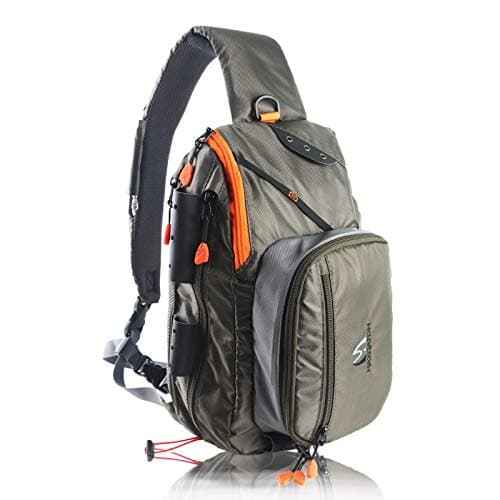
Right volume, right price, external attachment points for a net and tools. A sling is infrastructure rather than performance gear, and this is the version that does the job without taking money from the rod budget.
Best for: Best sling pack overall9.0 - 2
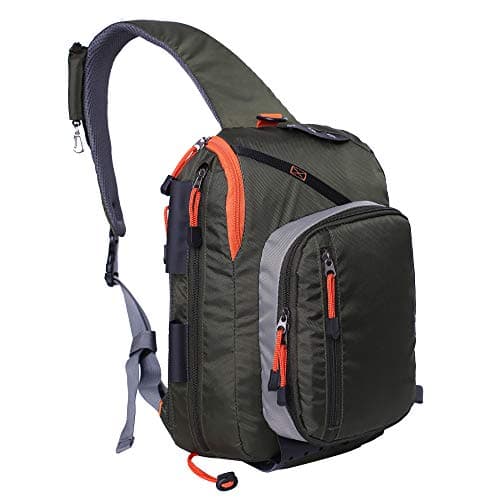
The lowest-cost way to stop carrying your gear in your pockets. Basic in every respect, and genuinely sufficient for a season of creek fishing with one fly box and a spool of tippet.
Best for: Cheapest workable sling8.5 - 3
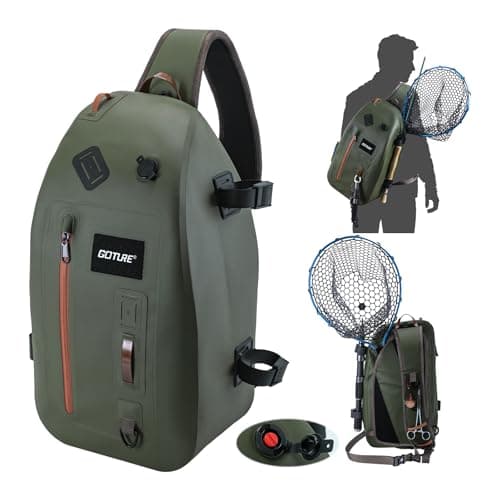
Thirteen liters of genuinely waterproof TPU with an airtight zip. If you wade deep, fish in rain, or carry a phone and a camera, this is the feature that justifies its own price.
Best for: Best waterproof sling for the money8.9 - 4
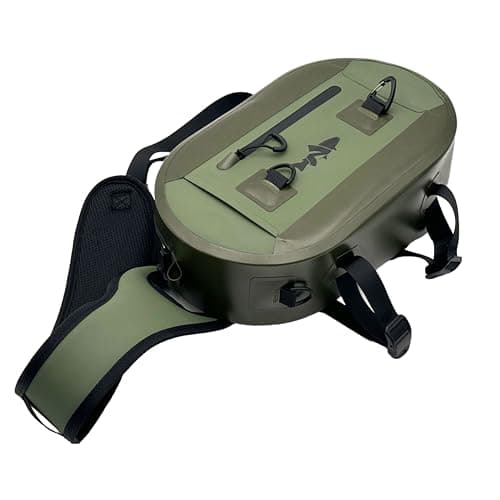
Waterproof construction in 7.5 liters, which is the honest size for a day of small-stream fishing. Less bulk to swing round, nothing rattling in empty space.
Best for: Best waterproof sling sized for creeks9.0 - 5
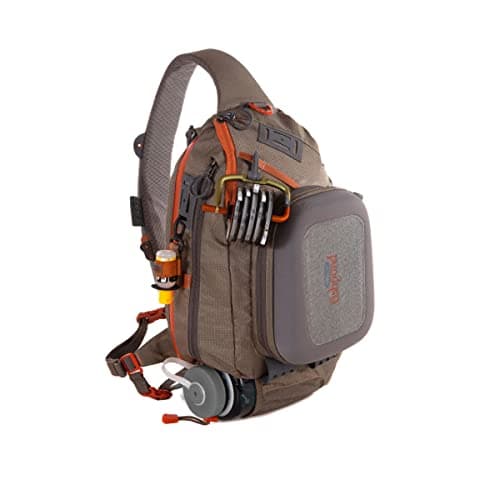
The one most guides are wearing. Better harness, better zips, better fabric and a company that supplies spares — and the difference is most obvious after four hours on the water, not in the first ten minutes.
Best for: Best premium sling9.2
| # | Product | Best for | Score | Price |
|---|---|---|---|---|
| 1 | Maxcatch Fly Fishing Sling Pack Right volume, right price, external attachment points for a net and tools. A sling is infrastructure rather than performance gear, and this is the version that does the job without taking money from the rod budget. | Best sling pack overall | 9.0 | $39.95View on Amazon#ad |
| 2 | Kylebooker Fly Fishing Sling Pack, Army Green The lowest-cost way to stop carrying your gear in your pockets. Basic in every respect, and genuinely sufficient for a season of creek fishing with one fly box and a spool of tippet. | Cheapest workable sling | 8.5 | $30.39View on Amazon#ad |
| 3 | Goture Waterproof Fly Fishing Sling Pack, 13L Thirteen liters of genuinely waterproof TPU with an airtight zip. If you wade deep, fish in rain, or carry a phone and a camera, this is the feature that justifies its own price. | Best waterproof sling for the money | 8.9 | $65.99View on Amazon#ad |
| 4 | NIRVANA On The Fly Waterproof Sling Pack, 7.5 L Olive Waterproof construction in 7.5 liters, which is the honest size for a day of small-stream fishing. Less bulk to swing round, nothing rattling in empty space. | Best waterproof sling sized for creeks | 9.0 | $89.99View on Amazon#ad |
| 5 | Fishpond Summit Sling 2.0, Granite The one most guides are wearing. Better harness, better zips, better fabric and a company that supplies spares — and the difference is most obvious after four hours on the water, not in the first ten minutes. | Best premium sling | 9.2 | $129.95View on Amazon#ad |
The best fly fishing sling pack for most stream anglers is the Maxcatch sling — the sensible default at the price. Choose the NIRVANA 7.5 L waterproof instead if you wade deep and carry a phone. A sling pack is infrastructure, not performance gear — it does not catch fish, and money spent here is money not spent on the rod and line that do. Get a competent one and move on.
How we picked these
We compared published volume, material, closure type, waterproof rating and external attachment provision against a day of creek fishing: walking stream bank, wading to thigh depth, swinging the pack round repeatedly to change flies, and needing a net reachable one-handed. We weighted volume appropriate to small water and external attachment points over feature counts and internal organization, because the things you use constantly should never be inside the bag. We do not submersion-test packs; our method is on the how we research and pick page, and prices are live and dated.
Why a sling rather than a vest or chest pack
All three solve the same problem — carrying small items where you can reach them while standing in water with both hands busy — and they solve it differently.
| Sling pack | Chest pack | Vest | |
|---|---|---|---|
| Weight while casting | On your back — clear | On your chest | Spread across torso |
| Access speed | Swing round — 2 seconds | Instant | Instant |
| Working surface | Good — flat at chest height | Small tray | None |
| Capacity | Good — a full day | Minimal | Moderate, spread out |
| Heat in summer | Cool — one strap | Cool | Hot |
| Carrying layers / lunch | Yes | No | No |
| Best for | Most stream anglers | Minimalists, deep wading | People who like fixed places |
The sling wins on the combination. While you walk and cast, the weight is on your back and out of the way. When you need something, one motion brings it to your front and gives you a flat surface at chest height to work on. That is a genuinely better ergonomic than either alternative, and it is why slings have largely taken over.
The real compromise: swinging it round is a deliberate action. Anything you reach for twenty times a day should not live inside it — see what belongs on the outside.
How much volume fishing sling packs actually need
Less than you will buy. Pack volume is the easiest specification to over-buy, and an over-large sling does two bad things: it adds bulk to swing around, and it lets you fill it with things you then carry all day for no reason.
6–8 liters is right for a creek day. Two fly boxes, tippet, leader, tools, sunscreen, water, phone, a light shell. That is a complete day and it fits in seven liters with room over — which is why the 7.5 L pick rates as highly as it does despite being smaller than its rivals.
10–13 liters makes sense if you hike in significant distance, carry lunch and a camera, or fish in weather where you need real layers. The 13 L option covers that, and is more pack than most creek anglers need.
Under 5 liters becomes a chest-pack-sized kit on a sling harness, which is a legitimate minimalist choice but means leaving the shell and the water bottle behind.
Is waterproof worth it?
It depends on one thing: how deep you wade.
If you fish small creeks and rarely go above the knee, water-resistant fabric is fine — the pack is on your back, well above the water, and rain is the only real exposure. A dry bag or a waterproof phone pouch inside a cheap pack covers the electronics for a few dollars.
If you wade to your waist or deeper, cross water, or fish in sustained rain, waterproof construction earns its premium — because a sling swung round while you are thigh-deep sits at or below the waterline, and an ordinary zip will let water in. Welded seams and an airtight zip, like the Goture and NIRVANA picks, are the real thing.
Worth noting honestly: premium does not mean waterproof. The Fishpond Summit is the best-made pack here and is not waterproof. You are paying for harness, durability and service, which are different qualities.
Protect the phone regardless
What belongs on the outside
This is the part that makes a pack work, and it has nothing to do with the pack’s internal layout.
Nippers on a zinger. A retractable spring reel clipped to the strap. You cut line on every fly change — dozens of times a day — and reaching into a bag for it is the single biggest unforced inefficiency in stream fishing.
Forceps clipped to the strap. Unhooking should take two seconds, and the fish is in the water waiting while you look for them.
The net, on a magnetic release. Clip the magnet high on the shoulder strap or the top of the pack so the handle is reachable without contorting — see the nets guide for how the release works.
A drying patch. A scrap of foam or wool on the outside where used flies go to dry during the session. Putting a wet fly straight back in a closed box rusts the hook and flattens the hackle for good.
The small combination tool kits that bundle nippers, forceps and a zinger are the cheapest meaningful upgrade to how a fishing day feels — well under the cost of a fly line, and they change the rhythm of everything.
The honest creek day packing list
Inside the pack: one or two fly or lure boxes (flies or lures), a spool of 5X tippet, one spare tapered leader, floatant if you fish dries, a few strike indicators, sunscreen, water, a light shell, and your phone in a waterproof pouch.
On the outside: nippers, forceps, net, drying patch.
That is the entire list. It fits comfortably in seven liters and weighs very little. Everything beyond it is a thing to carry, a thing to lose, and a thing to rummage past when you need something else — and the anglers who catch the most creek trout are almost always the ones carrying the least.
Next: a rubber-mesh net to clip to it, waders and boots to get into the water, and the beginner gear guide for the whole kit in buying order — the pack is sensibly the last thing you buy, not the first.
One honest limit of a sling: capacity. If you drive to a spot and stay there, or fish from a kayak, a sling is the wrong pack and the best fishing backpack is the right one — forty-two liters, rod holders and four tackle boxes, which no sling can match. Slings win when you move; backpacks win when you do not.
The other way to carry a creek day is in front of you: the best fishing chest packs covers that case, including when a chest pack beats a sling on small water.
If you are shopping one brand rather than the format, the Stealth range gets its own page: see Patagonia fishing packs for how the sling, hip pack and work station differ, and which priced alternatives match them.
At the premium end, two brands come up repeatedly. The Tributary line — sling, chest and hip packs built by a wader company, so the straps clear a wading belt — is covered in Simms fishing packs, alongside how it compares to the Fishpond slings.
Two pages to read next. Fly fishing vest vs pack is the honest comparison if you are still weighing a sling against a vest, and Umpqua fishing packs covers the ZS2 range in detail, including the Steamboat sling.
The picks in detail
Maxcatch Fly Fishing Sling Pack
9.0/10Best for: Best sling pack overall
Right volume, right price, external attachment points for a net and tools. A sling is infrastructure rather than performance gear, and this is the version that does the job without taking money from the rod budget.
- Type
- Single-strap sling
- Use
- Fly fishing, hiking
- Attachment
- External D-rings / loops
- Enough capacity for a full day on a creek
- External points for net magnet and zinger
- Swings cleanly front to back
- Water-resistant, not waterproof
- Basic strap padding
Kylebooker Fly Fishing Sling Pack, Army Green
8.5/10Best for: Cheapest workable sling
The lowest-cost way to stop carrying your gear in your pockets. Basic in every respect, and genuinely sufficient for a season of creek fishing with one fly box and a spool of tippet.
- Type
- Single-strap sling / shoulder bag
- Color
- Army Green
- Best for
- Minimal kit
- Lowest cost on this page
- Light and unobtrusive
- Big enough for the honest creek essentials
- Not waterproof
- Few organization features inside
Goture Waterproof Fly Fishing Sling Pack, 13L
8.9/10Best for: Best waterproof sling for the money
Thirteen liters of genuinely waterproof TPU with an airtight zip. If you wade deep, fish in rain, or carry a phone and a camera, this is the feature that justifies its own price.
- Volume
- 13 L
- Material
- 840D TPU
- Closure
- Airtight zipper
- Waterproof
- Yes
- Properly waterproof, not just resistant
- Large volume for a day plus layers
- Tough TPU shell
- Heavier and stiffer than fabric slings
- 13 L is more than a creek day needs
NIRVANA On The Fly Waterproof Sling Pack, 7.5 L Olive
9.0/10Best for: Best waterproof sling sized for creeks
Waterproof construction in 7.5 liters, which is the honest size for a day of small-stream fishing. Less bulk to swing round, nothing rattling in empty space.
- Volume
- 7.5 L
- Waterproof
- Yes
- Color
- Olive
- Best for
- Small-stream day trips
- Correct volume for a creek day
- Waterproof without excess bulk
- Low profile when swung to the front
- Too small if you carry lunch and layers
- Fewer external attachment points
Fishpond Summit Sling 2.0, Granite
9.2/10Best for: Best premium sling
The one most guides are wearing. Better harness, better zips, better fabric and a company that supplies spares — and the difference is most obvious after four hours on the water, not in the first ten minutes.
- Type
- Single-strap sling
- Color
- Granite
- Best for
- Anglers who fish a lot
- Noticeably better harness and load carry
- Durable fabric and hardware
- Brand with real service and spares
- Four times the price of our top pick
- Not waterproof despite the price
Prices shown are from Amazon as of October 20, 2026 and change often — the button always goes to the current listing. Some links may earn us a commission at no extra cost to you. How this works.
Frequently asked questions
Is a sling pack better than a vest for fly fishing?
For most stream anglers, yes. A sling carries a full day's gear on your back while you walk and cast, then swings to your front to give you a flat working surface at chest height. A vest keeps everything instantly accessible but is hotter in summer and cannot carry layers, water or lunch.
What size fly fishing sling pack do I need?
Six to eight liters covers a full creek day - two fly boxes, tippet, leader, tools, sunscreen, water, phone and a light shell. Go to 10 to 13 liters only if you hike in a long way or carry lunch and a camera. Over-large packs add bulk to swing around and invite you to carry things you do not need.
Do I need a waterproof fly fishing sling pack?
Only if you wade to your waist or deeper, cross water, or fish in sustained rain - a sling swung to the front while thigh-deep sits near the waterline, and an ordinary zip will let water in. For shallow creek fishing, a water-resistant pack plus a waterproof phone pouch is enough.
What should I keep outside my fly fishing pack?
Nippers on a retractable zinger, forceps clipped to the strap, the net on a magnetic release, and a foam drying patch for used flies. These are the items you reach for dozens of times a day, and having them behind a zip is the biggest unforced inefficiency in stream fishing.
Sources
Keep reading
Not sure where to start?
The beginner gear guide walks you through exactly what a new stream angler needs — the six essentials first, nice-to-haves later, with one safe-default pick per category.