Flies & Lures · Roundup
The Best Trout Lures for Rivers, Creeks and Streams
Four lures cover almost every river and creek in America. The first one on this list has caught more stream trout than everything else here combined.
Disclosure: Creek Cover is reader-supported. If you buy through our links we may earn a commission, at no extra cost to you. It never changes which pick we tell a new angler to start with. Full disclosure.
Quick picks at a glance
Tap a pick to read the full write-up, or the price button to check it on Amazon.
- 1
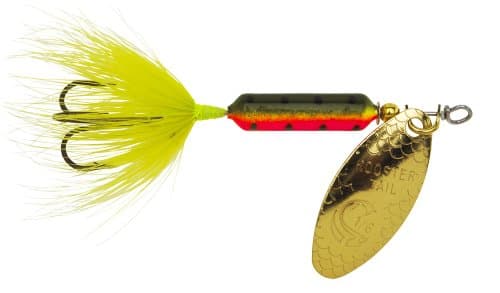
An inline spinner with a hackle tail that has been catching stream trout since 1954. Blade flash plus hackle pulse, in the exact weight a small creek wants. If you buy one lure, buy this.
Best for: The best creek trout lure, period9.5 - 2
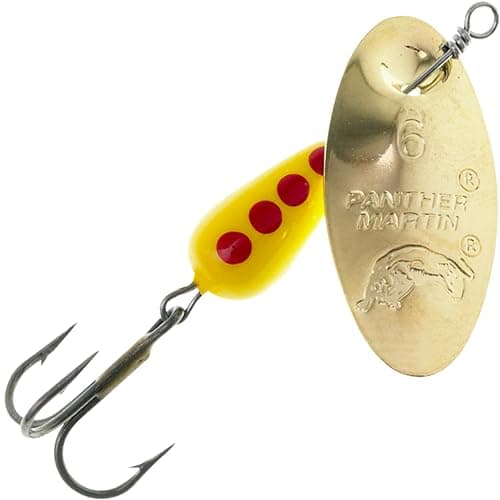
A different blade geometry to the Rooster Tail — it spins at a slower retrieve and runs deeper, which is what you want in a plunge pool or a fast chute where the lighter spinner skates.
Best for: Best spinner for faster, deeper water9.2 - 3
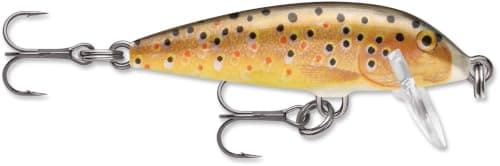
A sinking minnow plug in a brown trout finish — because the thing a big creek trout eats most is a smaller trout. This is how you target one specific good fish rather than cover water.
Best for: Best for the biggest fish in the creek9.0 - 4
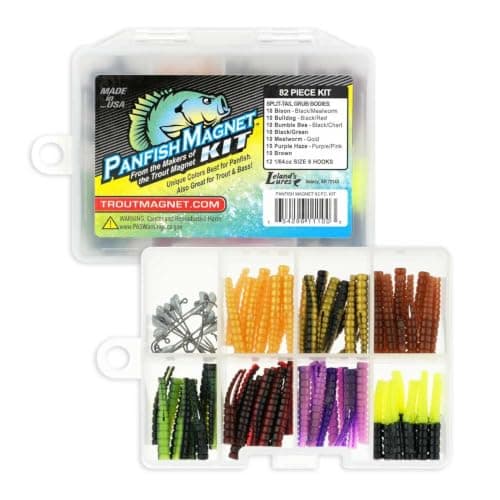
Tiny soft-plastic grubs on micro jig heads, drifted rather than retrieved. This is the answer when water is cold and clear and trout will not chase a blade — and it catches panfish all day too.
Best for: Best for cold, clear, low water8.8 - 5
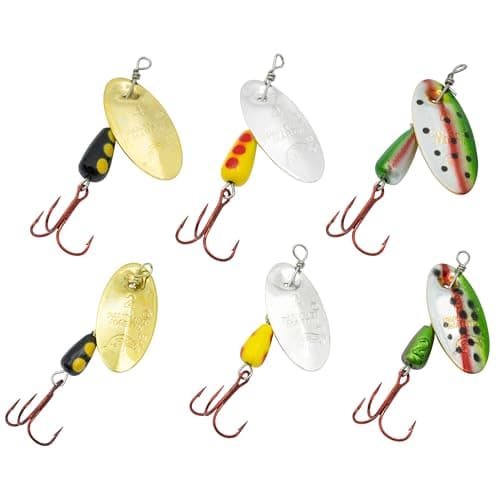
Six proven spinners across both useful creek weights in one purchase. The efficient way to get a working color and weight spread without buying lures one at a time.
Best for: Best way to buy a starter selection8.9
| # | Product | Best for | Score | Price |
|---|---|---|---|---|
| 1 | Wordens Original Rooster Tail Spinner, 1/16 oz An inline spinner with a hackle tail that has been catching stream trout since 1954. Blade flash plus hackle pulse, in the exact weight a small creek wants. If you buy one lure, buy this. | The best creek trout lure, period | 9.5 | $14.99View on Amazon#ad |
| 2 | Panther Martin Classic Regular Gold/Yellow Inline Spinner, 1/8 oz A different blade geometry to the Rooster Tail — it spins at a slower retrieve and runs deeper, which is what you want in a plunge pool or a fast chute where the lighter spinner skates. | Best spinner for faster, deeper water | 9.2 | $5.89View on Amazon#ad |
| 3 | Rapala Countdown Minnow, 2" Brown Trout A sinking minnow plug in a brown trout finish — because the thing a big creek trout eats most is a smaller trout. This is how you target one specific good fish rather than cover water. | Best for the biggest fish in the creek | 9.0 | $7.48View on Amazon#ad |
| 4 | Trout Magnet Panfish Magnet Kit, 82-Piece Tiny soft-plastic grubs on micro jig heads, drifted rather than retrieved. This is the answer when water is cold and clear and trout will not chase a blade — and it catches panfish all day too. | Best for cold, clear, low water | 8.8 | $14.99View on Amazon#ad |
| 5 | Panther Martin Best of the Best Spinner Kit, 1/16 & 1/8 oz, 6 Pack Six proven spinners across both useful creek weights in one purchase. The efficient way to get a working color and weight spread without buying lures one at a time. | Best way to buy a starter selection | 8.9 | $29.99View on Amazon#ad |
The best trout lures for rivers are 1/16 ounce inline spinners — buy three or four in silver, gold and one dark pattern, cast them upstream, and retrieve just faster than the current. That single lure type in that single weight catches more trout in moving water in North America than everything else on this page combined. The rest of the list exists for the conditions where it does not work — fast deep water, big fish, and cold clear days when nothing will chase.
This page is specifically about current: trout lures for rivers, trout lures for streams and trout lures for creeks are the same short list, because what unites them is moving water and a short casting window. If you are fishing still water, the lure list inverts completely — see the best trout lures for lakes and ponds. For the full picture across every water type, start at the best trout lures.
How we picked these
We compared published lure type, weight, size, hook configuration and finish against the specific conditions of small-stream trout fishing: casts under thirty feet, shallow pockets and plunge pools, clear to slightly colored water, and fish mostly between six and twelve inches. We weighted weight suitability for ultralight tackle and decades-long track record over novelty, and we gave credit where a lure comes with a small single hook rather than trebles. We do not run a catch-rate trial and do not claim to; our method is on the how we research and pick page, and prices here are live and dated.
Why the inline spinner wins
An inline spinner is a blade that rotates around a straight wire shaft as you pull it through water. It produces two things at once: flash, as the blade catches light, and vibration, which a trout detects through its lateral line before it ever sees the lure.
That combination triggers a reaction strike — a trout that was not feeding at all, sitting in a pocket digesting, will turn and hit a spinner out of pure reflex. This is why spinners out-fish more realistic lures on creeks: you are not persuading a feeding fish, you are provoking a resting one. It also means a spinner works when nothing is hatching, in high or colored water, and at any time of day.
The 1/16 ounce weight is the key detail. It is light enough to fish water eighteen inches deep without dragging bottom, and it sits in the middle of the range an ultralight rod can cast. On a medium rod it is uncastable — which is why rod and lure have to be chosen together.
Where a spinner stops being the right answer is low, clear water. A trout with time to inspect a piece of spinning metal often declines it, and that is the one condition where flies measurably out-fish lures — flies vs lures for creek trout works through the trade honestly, condition by condition.
The four lure types that cover rivers and creeks
| Type | When it shines | How to fish it |
|---|---|---|
| Inline spinner, 1/16-1/8 oz | Almost always — the default | Cast upstream, retrieve just faster than the current |
| Sinking minnow plug, 1-2" | Deep pools, undercut banks, big fish | Count it down, twitch it back slowly |
| Micro jig / soft plastic, 1/64 oz | Cold, low, clear water; fish refusing blades | Drift it naturally, barely retrieve at all |
| Small spoon, 1/12-1/8 oz | Wide pools, slightly stained water | Fan-cast and retrieve with a slow wobble |
That is the whole arsenal. Three or four of each type in a small box fits in a shirt pocket and covers a season. Resist the tackle wall — the variable that actually changes your catch rate on a creek is where you put the lure and how it moves, not which of forty patterns it is.
Color, simplified
Anglers argue about color endlessly. For creek trout it reduces to three rules worth following:
Silver in bright sun and clear water. Maximum flash when there is light to reflect.
Gold or brass on overcast days and in tea-stained water. Warmer tones show up better in low light and tannic water, which describes a lot of woodland creeks.
Dark or fluorescent in high, muddy water. When visibility is inches, a dark silhouette or a loud chartreuse gives the fish something to find. Fire tiger and black are both reliable.
That is three lures. If you want a fourth, a brown trout pattern minnow plug covers the big-fish case, because the main food of a large stream trout is a small one.
Use a swivel with spinners
How to fish a trout lure in a river or creek
Fish upstream. A trout faces into the current, so approaching from downstream puts you behind its field of view. Walking down a creek pushes a bow wave of alarm ahead of you and you will catch a fraction of what you otherwise would. This is the single biggest factor in creek fishing and it is free.
Cast upstream and across, then retrieve just faster than the current. The blade needs water moving past it to spin, and that is the slowest speed at which it will turn. Fish hit a spinner that is barely moving relative to the water far more often than one being dragged quickly.
Fish the small spots. On a creek the trout are in specific places: the pocket behind a boulder, the seam where fast water meets slow, the head of a pool where food washes in, the shade under one overhanging branch, and the depth of an undercut bank. Cast to those, not to the middle of the pool.
Two or three casts, then move. A creek trout decides fast. If it wanted your spinner it has already hit it, and further casts just teach it to ignore you. Covering a quarter mile of water beats flogging one pool, and keeping moving is the habit that separates people who catch creek trout from people who do not.
Swap the trebles
Nearly every lure here ships with a treble hook, and on wild stream trout you should change it. A treble finds eye, gill and tongue; it takes far longer to remove, and the handling time is what kills released fish.
Replace it with a single hook of similar size and pinch the barb down. You will lose a handful of fish a season to it — genuinely, not many — and in exchange unhooking becomes a two-second job with forceps and the fish swims off strongly. On small streams with small, local, wild populations that trade is overwhelmingly worth making, and some special-regulation waters require it anyway. Check your state rules.
The rest of good handling is simple: wet your hands, use a rubber-mesh net, keep the fish in the water while you unhook it, and let it swim off on its own rather than throwing it back.
Next: the ultralight rod to cast these with, waders to reach the water, and the fly selection if you want to try the other approach. The beginner gear guide puts the whole kit in buying order.
One last option for the days when nothing will chase a lure at all, which on a cold bright river happens more than anyone admits: the best trout baitcovers the drifted-egg and scented-dough rigs that still produce when current fishing has stopped working. Check your water's regulations first, since some river stretches are lure-only.
On the smallest, coldest creeks you are usually casting to brook trout, which are the least selective trout in the country and better served by a fly than a spinner in tight cover — the five-pattern box for them is in the best flies for brook trout.
Two narrower pages from here. The best lures for rainbow trout is the species-specific version of this list, and the best fly line for streamers covers the line you need if you fish weighted streamers on a fly rod. For the spinner weights and blade shapes in detail, see the best trout spinners for streams.
The picks in detail
Wordens Original Rooster Tail Spinner, 1/16 oz
9.5/10Best for: The best creek trout lure, period
An inline spinner with a hackle tail that has been catching stream trout since 1954. Blade flash plus hackle pulse, in the exact weight a small creek wants. If you buy one lure, buy this.
- Type
- Inline spinner
- Weight
- 1/16 oz
- Finish
- Fire Tiger (many others available)
- Rod needed
- Ultralight
- The most consistently productive creek lure there is
- 1/16 oz is ideal for small-stream casting
- Cheap enough to lose without regret
- Treble hook — swap to a single on wild water
- Spins line up without a swivel
Panther Martin Classic Regular Gold/Yellow Inline Spinner, 1/8 oz
9.2/10Best for: Best spinner for faster, deeper water
A different blade geometry to the Rooster Tail — it spins at a slower retrieve and runs deeper, which is what you want in a plunge pool or a fast chute where the lighter spinner skates.
- Type
- Inline spinner
- Weight
- 1/8 oz
- Finish
- Gold with yellow
- Best for
- Deeper pools, faster current
- Blade spins at very slow retrieve speeds
- Heavier weight gets down in fast water
- Casts further into a headwind
- 1/8 oz is too heavy for very shallow creeks
- Treble hook as supplied
Rapala Countdown Minnow, 2" Brown Trout
9.0/10Best for: Best for the biggest fish in the creek
A sinking minnow plug in a brown trout finish — because the thing a big creek trout eats most is a smaller trout. This is how you target one specific good fish rather than cover water.
- Type
- Sinking minnow plug
- Length
- 2"
- Finish
- Brown Trout
- Best for
- Deep pools, undercut banks
- Imitates what large stream trout actually eat
- Countdown sink rate lets you fish a chosen depth
- Excellent action at slow speeds
- Two trebles — more hook damage on released fish
- Snags more than a spinner in rocky water
Trout Magnet Panfish Magnet Kit, 82-Piece
8.8/10Best for: Best for cold, clear, low water
Tiny soft-plastic grubs on micro jig heads, drifted rather than retrieved. This is the answer when water is cold and clear and trout will not chase a blade — and it catches panfish all day too.
- Type
- Soft plastic + micro jig heads
- Pieces
- 82
- Hook
- Small single
- Best for
- Cold, low, clear water
- Catches trout that refuse spinners
- Single small hook is far gentler on fish
- 82 pieces lasts seasons
- Needs a very light rod to cast properly
- Slower way to cover water
Panther Martin Best of the Best Spinner Kit, 1/16 & 1/8 oz, 6 Pack
8.9/10Best for: Best way to buy a starter selection
Six proven spinners across both useful creek weights in one purchase. The efficient way to get a working color and weight spread without buying lures one at a time.
- Type
- Inline spinners
- Weights
- 1/16 oz & 1/8 oz
- Count
- 6
- Best for
- A complete starter spread
- Both useful creek weights covered
- Range of finishes in one box
- Cheaper per lure than buying singly
- You will favor two of the six
- Trebles as supplied
Prices shown are from Amazon as of October 20, 2026 and change often — the button always goes to the current listing. Some links may earn us a commission at no extra cost to you. How this works.
Frequently asked questions
What is the best lure for creek trout?
A 1/16 ounce inline spinner, such as a Rooster Tail or Panther Martin. The combination of blade flash and vibration triggers a reaction strike even from trout that are not feeding, it works in clear or colored water at any time of day, and 1/16 ounce is the ideal weight for shallow creek water on an ultralight rod.
What color lure is best for stream trout?
Silver in bright sun and clear water, gold or brass on overcast days and in tea-stained water, and dark or fluorescent patterns in high muddy water. Three finishes cover virtually every creek condition - color matters far less than where you put the lure and how fast you move it.
How do you fish a spinner in a creek?
Work upstream so you approach trout from behind, cast up and across, and retrieve just faster than the current - that is the slowest speed the blade will still turn, and it is when fish hit hardest. Target pockets behind rocks, current seams and undercut banks, then move on after two or three casts.
Should I replace the treble hooks on trout lures?
On wild stream trout, yes. Swap to a single hook of similar size and pinch the barb down. You lose very few fish, unhooking becomes a two-second job, and handling time - the thing that actually kills released fish - drops dramatically. Some special-regulation waters require single or barbless hooks anyway.
Sources
Keep reading
Not sure where to start?
The beginner gear guide walks you through exactly what a new stream angler needs — the six essentials first, nice-to-haves later, with one safe-default pick per category.