Packs & Nets · Roundup
The Best Fishing Backpack
A backpack is the right pack when you walk in, stay put and carry tackle boxes. It is the wrong one when you wade upstream all day. Here is which is which, and the five worth buying.
Disclosure: Creek Cover is reader-supported. If you buy through our links we may earn a commission, at no extra cost to you. It never changes which pick we tell a new angler to start with. Full disclosure.
Quick picks at a glance
Tap a pick to read the full write-up, or the price button to check it on Amazon.
- 1
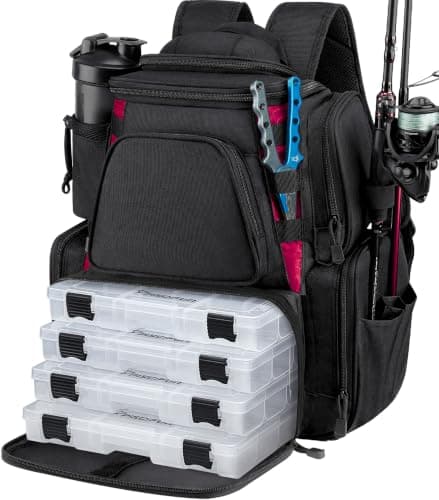
Four utility boxes included, two external rod holders and an integrated rain cover. Buying the boxes separately would cost most of the difference to the next pack up, which is what makes this the value pick rather than the cheap pick.
Best for: Best fishing backpack overall9.3 - 2
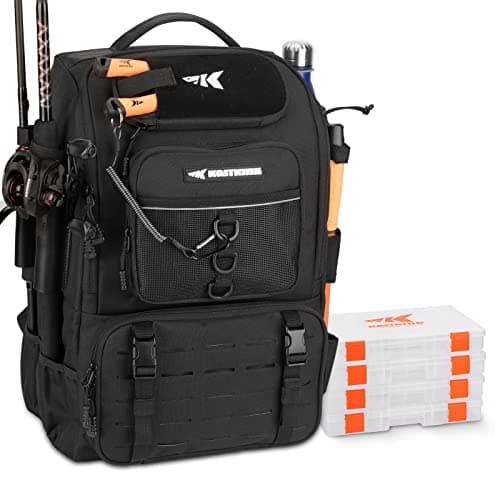
The best-made pack here. Heavier fabric, better zips and a structured back panel that carries a loaded pack properly rather than sagging into your spine on a long walk.
Best for: Best build quality9.2 - 3
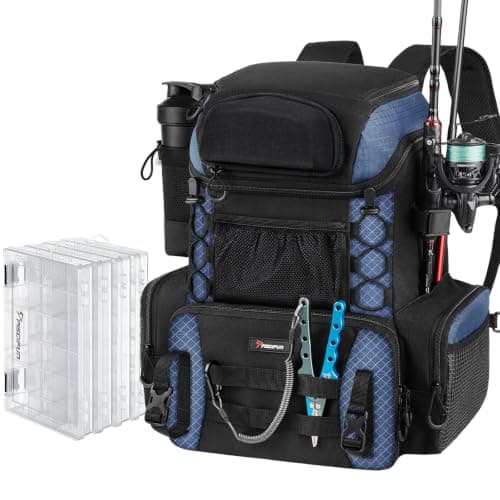
Forty-two liters and a rod carrier for around the price of a decent tackle box. Boxes are not included, which is the compromise — but if you already own utility boxes this is the efficient purchase.
Best for: Best budget pack8.8 - 4
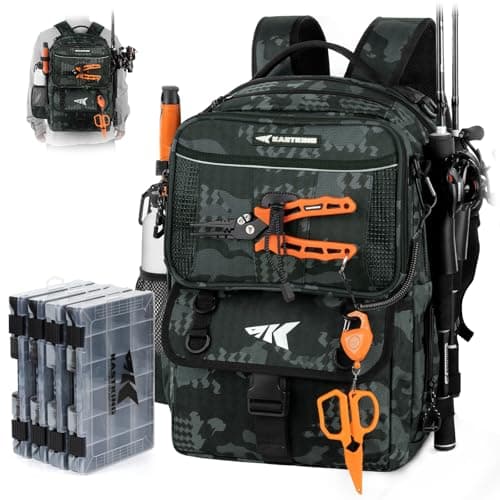
Fifty liters, four boxes and two rod holders. This is a kayak-and-boat pack, or a pack for someone who fishes for two species in a day and will not choose between tackle sets.
Best for: Best for maximum capacity9.0 - 5
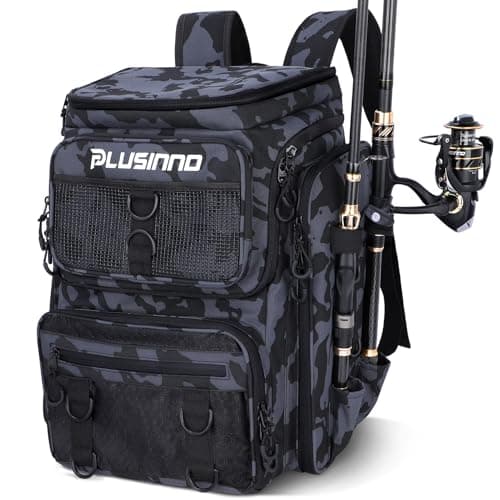
Forty-two liters in a lighter, less structured shell. The pick if you walk a long way to fish and care more about carried weight than about the pack keeping its shape when half empty.
Best for: Lightest for the volume8.6
| # | Product | Best for | Score | Price |
|---|---|---|---|---|
| 1 | Piscifun Fishing Backpack with 2 Rod Holders, 4 Tackle Boxes & Rain Cover Four utility boxes included, two external rod holders and an integrated rain cover. Buying the boxes separately would cost most of the difference to the next pack up, which is what makes this the value pick rather than the cheap pick. | Best fishing backpack overall | 9.3 | $54.99View on Amazon#ad |
| 2 | KastKing KarryAll Fishing Backpack with Rod Holder & 4 Tackle Boxes The best-made pack here. Heavier fabric, better zips and a structured back panel that carries a loaded pack properly rather than sagging into your spine on a long walk. | Best build quality | 9.2 | $67.96View on Amazon#ad |
| 3 | Piscifun Fishing Tackle Backpack, 42L Rod & Box Carrier Forty-two liters and a rod carrier for around the price of a decent tackle box. Boxes are not included, which is the compromise — but if you already own utility boxes this is the efficient purchase. | Best budget pack | 8.8 | $43.99View on Amazon#ad |
| 4 | KastKing BaitSpace 50L Fishing Backpack with 4 Tackle Boxes, 2 Rod Holders Fifty liters, four boxes and two rod holders. This is a kayak-and-boat pack, or a pack for someone who fishes for two species in a day and will not choose between tackle sets. | Best for maximum capacity | 9.0 | $89.24View on Amazon#ad |
| 5 | PLUSINNO Fishing Tackle Backpack with Rod Holders, 42L Forty-two liters in a lighter, less structured shell. The pick if you walk a long way to fish and care more about carried weight than about the pack keeping its shape when half empty. | Lightest for the volume | 8.6 | $45.56View on Amazon#ad |
The best fishing backpack is the Piscifun with two rod holders, four boxes and a rain cover — because the four utility boxes are included, and buying those separately costs most of the gap to any pack above it. If you walk a long way with a full load, the KastKing KarryAll carries weight better. If you fish from a kayak or boat and want to bring everything, the BaitSpace 50L is the capacity answer.
Before any of that, though, there is a question worth answering honestly: a backpack may be the wrong pack for how you fish. If you wade upstream all day on a creek, a sling is better, and the next section explains why.
How we picked these
We judged these on total cost to a working setuprather than sticker price — a pack without boxes is not finished, and four utility boxes is a real expense. Then on published volume, number and placement of rod holders, whether a rain cover is included, the shell's water resistance, and how the harness and back panel are constructed, because that is what decides whether 42 liters of tackle is carryable or miserable.
We did not include tackle bags without a proper harness, soft coolers, or the premium fly-fishing packs that solve a different problem — those sit in our sling pack roundup. Specifications come from the manufacturers' published listings; we do not run load tests or claim hands-on hours we have not put in. Method is on the how we research and pick page, and every price here is read live and dated.
Backpack or sling pack?
This is the decision that matters most, and it has nothing to do with which pack is better made. It is about whether you move while you fish.
| How you fish | Right pack | Why |
|---|---|---|
| Drive in, fish one spot on a bank or lake shore | Backpack | Capacity and tackle-box organization win; you are not carrying it while casting |
| Wade upstream all day, moving constantly | Sling pack | Swings to the front without taking it off; a backpack has to come off every time |
| Kayak or boat | Backpack | Sits behind the seat, holds rods and boxes, nothing needs to be worn |
| Hike a long way, then wade | Backpack in, sling on the water | Honest answer: many people own both |
| Fly fishing a small creek | Sling or chest pack | You need tippet and flies to hand, not 42 liters of boxes |
The failure mode is specific: a backpack on a wading angler means taking the pack off, standing in current, holding it with one hand while you find a lure, and putting it back on. Twenty times a day. That is why slings exist, and our fly fishing sling pack page covers them. For the bank-and-boat case, a backpack is unambiguously the better tool.
How much volume you actually need
Fishing backpacks are sold at 20 to 50 liters, and most people buy too much. Volume is not free — a bigger pack gets filled, and a filled 50-liter pack is twenty-five pounds on your back on a hot June walk.
20-30 L:a day's tackle, lunch, a jacket, two boxes. Enough for bank fishing one species. 40-42 L: the sweet spot and what three of our five picks are. Four utility boxes, spare reel, rain shell, food, water, and room to carry a jacket you took off. 50 L: a boat or kayak pack, or multi-species days.
The discipline that makes any pack work
Rod holders: what they do and do not do
Every pack here has at least one rod holder, usually a sleeve at the base and a strap higher up. They are genuinely useful and routinely misunderstood.
What they are for: carrying a made-up rod hands-free on the walk in and out, and holding a second rod while you fish the first. On a long walk to water with a rod in each hand plus a pack, this is the difference between two trips and one.
What they are not for: walking through brush. A rod tip sticking up above your shoulders finds every branch on a creek path, and broken tips are overwhelmingly acquired this way rather than on fish. On overgrown water, break the rod down and carry it in the sleeve, or carry it in your hand tip-first behind you.
Two holders beat one if you fish more than one setup — a spinning rod and a fly rod, or two line weights. If you only ever carry one rod, a single holder is fine and you can ignore it as a buying criterion.
Water-resistant, rain covers and actual waterproofing
Nearly every pack in this category is described as waterproof and almost none is. The distinction is worth understanding before you put a phone in one.
Water-resistant means a coated fabric that shrugs off spray and light rain for a while, with zips and seams that will eventually let water in. That describes every pack on this page. A rain cover — the pull-out hood on our top pick — is what actually keeps a pack dry in sustained rain, and it is a meaningful feature rather than a marketing one. Genuinely waterproof means a welded roll-top with no zips, which exists in the sling and dry-bag world but not really in tackle backpacks, because tackle backpacks are defined by their zipped compartments.
The practical answer: buy a pack with a rain cover, and put your phone, keys and wallet in a small dry bag inside it. That costs almost nothing and solves the problem completely. If you wade deep and need the pack itself to survive immersion, you want a waterproof sling instead — covered on the sling pack page.
How to pack one so it works
A fishing backpack is mostly a filing system, and the way you load it decides whether you use it or fight it.
Heavy and dense against your spine. Tackle boxes flat against the back panel, not out at the far side of the pack — weight held away from your body multiplies leverage on your shoulders on every step.
The things you need hourly go in outside pockets. Nippers or clippers, forceps, leader spools, sunscreen, phone. If it is behind a main zip you will not get it out, and the whole point of organization is reducing friction on the things you do twenty times a day.
One box per category, labeled. Spinners in one, hooks and weights in another, soft plastics in a third, spares in the fourth. Mixed boxes are how you end up emptying a tray onto a rock.
Leave the fourth box at home. Most days you need two. For what goes in them, start at the best trout lures and the best trout bait. If you are still assembling a first setup, the beginner fishing kit guide lists the whole thing in buying order.
A backpack is for carrying gear along a bank, not for protecting it in a trunk. For rod tubes, rod-and-reel cases and wader duffels, see the fly fishing travel bag roundup.
If you do not need to carry it far, a tackle bag holds more for less. The best fishing bags ranks the shoulder-carried bags built around lift-out 3600 trays — the car-to-bank option rather than the walk-in one.
The picks in detail
Piscifun Fishing Backpack with 2 Rod Holders, 4 Tackle Boxes & Rain Cover
9.3/10Best for: Best fishing backpack overall
Four utility boxes included, two external rod holders and an integrated rain cover. Buying the boxes separately would cost most of the difference to the next pack up, which is what makes this the value pick rather than the cheap pick.
- Rod holders
- 2, external
- Boxes included
- 4 utility boxes
- Rain cover
- Yes, integrated
- Best for
- Bank and lake-shore fishing
- Boxes included, so nothing else to buy
- Rain cover is genuinely useful on a long session
- Two rod holders free both hands on the walk in
- Water-resistant, not waterproof — the cover is the real defense
- Too bulky to wade in comfortably
KastKing KarryAll Fishing Backpack with Rod Holder & 4 Tackle Boxes
9.2/10Best for: Best build quality
The best-made pack here. Heavier fabric, better zips and a structured back panel that carries a loaded pack properly rather than sagging into your spine on a long walk.
- Rod holders
- Yes, external
- Boxes included
- 4 tackle boxes
- Back panel
- Structured, padded
- Best for
- Long walk-ins with a full load
- Noticeably better fabric and zips
- Structured back panel carries weight well
- Boxes included
- Heavier empty than the Piscifun packs
- No integrated rain cover at this trim
Piscifun Fishing Tackle Backpack, 42L Rod & Box Carrier
8.8/10Best for: Best budget pack
Forty-two liters and a rod carrier for around the price of a decent tackle box. Boxes are not included, which is the compromise — but if you already own utility boxes this is the efficient purchase.
- Volume
- 42 L
- Rod holders
- Yes
- Boxes included
- No
- Best for
- Anglers who already own boxes
- Lowest price here for a real fishing backpack
- 42 L is plenty for a full day
- Water-resistant shell
- No boxes, so budget for those
- Simpler harness than the KastKing
KastKing BaitSpace 50L Fishing Backpack with 4 Tackle Boxes, 2 Rod Holders
9.0/10Best for: Best for maximum capacity
Fifty liters, four boxes and two rod holders. This is a kayak-and-boat pack, or a pack for someone who fishes for two species in a day and will not choose between tackle sets.
- Volume
- 50 L
- Rod holders
- 2
- Boxes included
- 4 tackle boxes
- Best for
- Kayaks, boats, all-day multi-species
- Largest capacity on this page
- Boxes and rod holders included
- Good organization for mixed tackle
- Too big for creek walking — you will fill it and regret it
- Most expensive pack here
PLUSINNO Fishing Tackle Backpack with Rod Holders, 42L
8.6/10Best for: Lightest for the volume
Forty-two liters in a lighter, less structured shell. The pick if you walk a long way to fish and care more about carried weight than about the pack keeping its shape when half empty.
- Volume
- 42 L
- Rod holders
- Yes
- Shell
- Water-resistant, lightweight
- Best for
- Long walk-ins, hike-to water
- Lightest 42 L pack here
- Low price with rod holders included
- Packs down when not full
- Unstructured — sags when partly loaded
- No boxes included
Prices shown are from Amazon as of October 20, 2026 and change often — the button always goes to the current listing. Some links may earn us a commission at no extra cost to you. How this works.
Frequently asked questions
What is the best fishing backpack?
For most anglers, the Piscifun backpack with two rod holders, four tackle boxes and a rain cover — because the included boxes mean nothing else to buy. The KastKing KarryAll is better made and carries a heavy load more comfortably, and the KastKing BaitSpace 50L is the choice if you fish from a kayak or boat.
How many liters should a fishing backpack be?
Forty to forty-two liters is the sweet spot for a full day: four utility boxes, a spare reel, a rain shell, food and water. Twenty to thirty liters is enough for bank fishing one species. Fifty liters is a boat or kayak pack — on foot you will fill it and regret the weight.
Are fishing backpacks waterproof?
Almost none genuinely are, whatever the listing says. They are water-resistant coated fabrics with zips that eventually let water through. A pull-out rain cover is what keeps a pack dry in sustained rain. Put your phone and keys in a small dry bag inside the pack and the problem is solved cheaply.
Should I buy a fishing backpack or a sling pack?
A backpack if you drive in and fish one spot, or fish from a boat or kayak. A sling pack if you wade upstream and move constantly, because a sling swings to your front without coming off while a backpack has to be removed every time you need something.
Do I need a fishing backpack with rod holders?
They are useful for carrying a made-up rod hands-free on the walk in, and essential if you carry two setups. They are a liability in brush, though — a rod tip above your shoulders catches every branch, and that is how most tips get broken. On overgrown water, break the rod down instead.
What should I keep in a fishing backpack?
Tackle boxes flat against the back panel for weight, one box per category rather than mixed trays, and everything you reach for hourly — clippers, forceps, leader, sunscreen, phone — in outside pockets. Pack for today's fishing rather than every possible trip; most days two boxes is enough.
Sources
Keep reading
Not sure where to start?
The beginner gear guide walks you through exactly what a new stream angler needs — the six essentials first, nice-to-haves later, with one safe-default pick per category.