Waders · Buying Guide
How to Size Waders
Waders are the most returned item in fishing, and it is almost never a quality problem. It is inseam, and it is sizing for the wrong layers.
Disclosure: Creek Cover is reader-supported. If you buy through our links we may earn a commission, at no extra cost to you. It never changes which pick we tell a new angler to start with. Full disclosure.
Quick picks at a glance
Tap a pick to read the full write-up, or the price button to check it on Amazon.
- 1
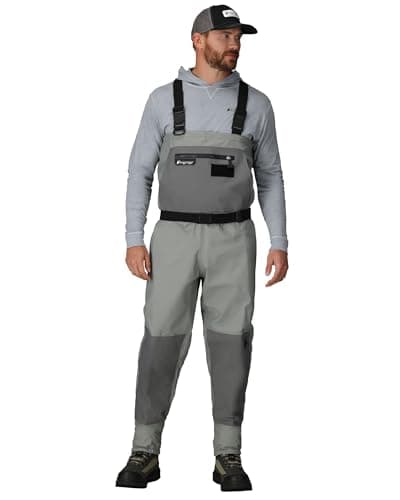
The practical advantage of a line sold in both regular and stout is that you can buy the size you measure. Breathable, chest-high, stockingfoot — and graded across a real range rather than three generic sizes.
Best for: Best size availability9.1 - 2
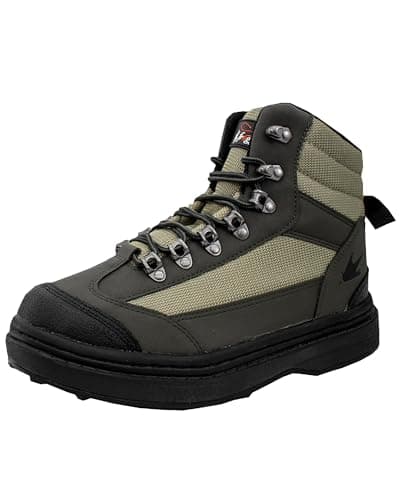
Order these one to one and a half US sizes above your street shoe size. That single adjustment prevents the most common complaint about stockingfoot setups, which is cold feet caused by compression.
Best for: Boots to size over a bootie9.0 - 3
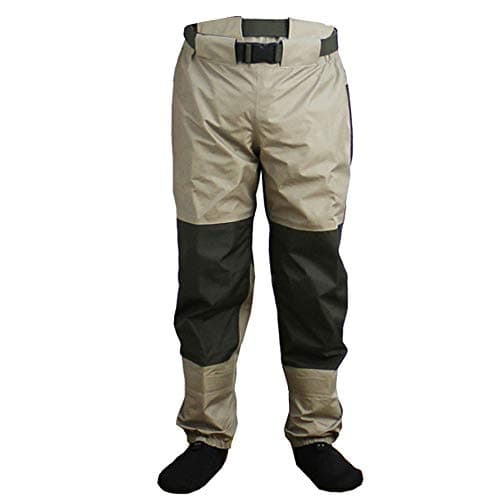
If you are tall, short, or otherwise between every chest-wader size, wading pants remove the whole torso-fit problem — there is no shoulder or chest dimension to get wrong.
Best for: Easiest fit if chest waders never fit you8.5
| # | Product | Best for | Score | Price |
|---|---|---|---|---|
| 1 | Frogg Toggs Hellbender PRO Breathable Stockingfoot Chest Wader The practical advantage of a line sold in both regular and stout is that you can buy the size you measure. Breathable, chest-high, stockingfoot — and graded across a real range rather than three generic sizes. | Best size availability | 9.1 | $169.99View on Amazon#ad |
| 2 | Frogg Toggs Hellbender Wading Boot, Cleated Order these one to one and a half US sizes above your street shoe size. That single adjustment prevents the most common complaint about stockingfoot setups, which is cold feet caused by compression. | Boots to size over a bootie | 9.0 | $89.95View on Amazon#ad |
| 3 | Kylebooker Breathable Stockingfoot Waist-High Pant Waders KB003 If you are tall, short, or otherwise between every chest-wader size, wading pants remove the whole torso-fit problem — there is no shoulder or chest dimension to get wrong. | Easiest fit if chest waders never fit you | 8.5 | $87.99View on Amazon#ad |
If you read one paragraph: size for the thickest layers you will ever wear underneath, and treat inseam as the critical measurement rather than an afterthought. Too-long legs bunch at the crotch, and that constant flexing and abrasion is a leading cause of the seam leak that kills a pair of waders in its second season. Then order your wading boots one to one and a half US sizes above your normal shoe size, because they go on over the neoprene bootie.
Why most waders get returned
Waders fail to fit in a specific, predictable way. They are not clothing — they are a sealed bag you have to move athletically inside, over other clothing, while standing in current. A fit that looks right in the mirror can still be wrong, because the test is not appearance. The test is whether you can lift a knee to your chest and crouch all the way down.
The three failure modes, in order of how often they happen: sized for summer layers and then unusable in cold water; inseam too long, causing bunching, chafing and eventual seam failure; and boots sized to a bare foot, causing cold feet that get blamed on the waders. All three are preventable with a tape measure.
The four measurements to take
Manufacturer size charts vary, so measure yourself once and keep the numbers. Take all of these wearing the layers you will fish in during cold weather — this is the whole trick.
| Measurement | How to take it | Why it matters |
|---|---|---|
| Shoe size | Your normal US shoe size | Determines the bootie size; boots are then ordered 1-1.5 larger |
| Chest | Around the fullest part, over your layers | Decides whether you can reach and move at chest height |
| Waist | At your natural waist, over layers | Where the wading belt sits; too tight is restrictive all day |
| Inseam | Crotch to the floor, in socks | The critical one — controls bunching and stride |
Many charts also list a height range and a hip measurement. If your numbers put you in different sizes on different dimensions, size to the chest and the inseam, in that order, because those two control mobility and durability.
Inseam: the one that causes leaks
This is the section worth the page. Excess leg length does not just look baggy — it destroys waders. Fabric that is too long gathers in a fold at the crotch, which is the highest-flex area of the garment. Every stride works that fold. Laminates and seam tape are not designed to be creased repeatedly in one spot, and the result is a pinhole or a delaminated seam, almost always in the second season, almost always in the same place.
Too short is the opposite problem and more immediately obvious: you cannot lift a knee onto a high bank, cannot crouch to land a fish, and the whole wader pulls down hard on your shoulders every time you stride. It is uncomfortable rather than destructive.
The target is a leg long enough that you can stride and crouch freely with the bootie sitting snug on your foot, and no more than that. If a brand offers “King”, “Stout” or “Short” variants, use them — they exist precisely because inseam and chest do not scale together.
If nothing fits your proportions
Size for your thickest layers, not your thinnest
Breathable waders supply no warmth of their own. All of it comes from what you wear underneath, which means in February you will have a merino base layer plus fleece trousers in there, and in July almost nothing.
Size for February. A wader that fits perfectly over shorts is unusable in winter, while a wader sized for fleece is merely slightly roomy in summer — and the wading belt takes up that slack. This asymmetry is why the standard advice is to size generously, and why people who ignore it end up buying twice.
The one thing not to oversize is the bootie. That should fit like a sock, snug with no slack, because slack neoprene inside a laced boot folds and rubs through. Bootie size is driven by shoe size, so it is usually fixed by whichever size you choose — another reason to check the full chart rather than just the chest.
What to do if you are between sizes
For chest and waist: size up. Extra room in the body costs you a little bulk and nothing else. Too tight across the chest makes every fly change tiring and may stop you wearing a fleece at all.
For inseam: do not size up.Go to the shorter option, or look for a “Short” or “Stout” variant that pairs a bigger body with a shorter leg. This is the opposite of the usual advice and it is the single most useful thing on this page.
For shoe size: size up slightly, accepting that a marginally loose bootie is better than a crushed foot — and then make it up with an extra thin sock rather than a thick one.
Sizing wading boots over a bootie
Boots go over the neoprene bootie plus socks, so order one to one and a half US sizes above your street shoe size. Someone who wears a 10 buys an 11 or 11.5.
Undersized boots are the cause of the most common complaint about stockingfoot setups: cold feet. Compressed neoprene and compressed socks do not insulate, and squeezing the foot restricts the blood flow that keeps it warm. People blame the waders; it is the boots.
Socks go over the bootie, never under it, and two thin pairs beat one thick pair — thinner layers trap air without compressing. Full detail is in the wading boots guide, including the rubber-versus-felt decision, which is a legal question in several states.
The three-move fit test
Do this at home, on carpet, in the layers and socks you will actually fish in, before any tags come off. It takes two minutes and it is the difference between keeping them and returning them.
One: lift one knee to your chest. This is getting onto a high bank or over a log. If the crotch or shoulders pull hard, the inseam is too short or the body is too small.
Two: crouch all the way down. This is kneeling to land and release a fish in shallow water, which you will do every time you catch one. You should be able to get fully down without the waders dragging you back up.
Three: reach across your body to the opposite shoulder, then up to your own chest. This is changing a fly, getting into a chest pocket, and reaching a net on your back. Fly fishing is constant hand movement at chest height, and a wader that fights you here is exhausting over a day.
Pass all three and buy with confidence. Then put a wading belt on, snug, every single time — it stops the legs filling if you go over in current, which is the one wader-related thing that is genuinely dangerous.
Ready to choose a pair? The waders roundup has the full ranked list, the fly fishing waders guide covers breathable picks specifically, and stockingfoot vs bootfoot settles the configuration. For the whole kit in buying order, start at the beginner gear guide.
Two sizing notes beyond the measurements above. Women's waders are cut to a different pattern, not a smaller one, and the chart to use is on the best waders for women. And once the wader is sized, the boots go over the bootie — so size them one to two full sizes up, as the women's wading boots page sets out in a table.
Two pages worth reading alongside this one: what to wear under waders, because the layers inside are what you are sizing around, and the men's wading boot guide for boot sizing over a stockingfoot bootie.
One last check before you order: are waders the right garment at all? Bibs take ordinary clothing sizes and forgive a guess, waders need all four measurements above, and the two are not interchangeable — waders vs bibs settles which one your fishing actually calls for.
If the chart does not have a row for you, the problem is the cut, not the size. Stout and King patterns add girth and length rather than another letter — the best waders for big guys lists the pairs that offer them. And if you are not sure which height or fabric to size in the first place, start with types of waders explained. The boot half of the sizing question, including how far to size up over a neoprene bootie, is in wading boots for wide feet.
The picks in detail
Frogg Toggs Hellbender PRO Breathable Stockingfoot Chest Wader
9.1/10Best for: Best size availability
The practical advantage of a line sold in both regular and stout is that you can buy the size you measure. Breathable, chest-high, stockingfoot — and graded across a real range rather than three generic sizes.
- Construction
- Breathable 4-ply nylon upper
- Height
- Chest
- Foot
- Stockingfoot, 4mm neoprene
- Sizing
- Regular and stout
- Regular and stout sizing rather than S/M/L only
- Breathable, so you can layer up or down
- Established brand with published size charts
- Boots are a separate purchase
- Sizes sell out in peak season
Frogg Toggs Hellbender Wading Boot, Cleated
9.0/10Best for: Boots to size over a bootie
Order these one to one and a half US sizes above your street shoe size. That single adjustment prevents the most common complaint about stockingfoot setups, which is cold feet caused by compression.
- Sole
- Cleated rubber
- Closure
- Laced
- Sizing
- Order 1-1.5 US sizes up
- Laced fit lets you tune the hold
- Legal rubber sole in every state
- Room for the bootie plus two thin socks
- Adds meaningfully to the total cost
- Needs drying between waters
Kylebooker Breathable Stockingfoot Waist-High Pant Waders KB003
8.5/10Best for: Easiest fit if chest waders never fit you
If you are tall, short, or otherwise between every chest-wader size, wading pants remove the whole torso-fit problem — there is no shoulder or chest dimension to get wrong.
- Height
- Waist (pant)
- Construction
- Breathable
- Foot
- Stockingfoot
- No chest or shoulder fit to resolve
- Much cooler in warm weather
- Full freedom of movement
- No use in deep water
- No upper-body rain protection
Prices shown are from Amazon as of October 20, 2026 and change often — the button always goes to the current listing. Some links may earn us a commission at no extra cost to you. How this works.
Frequently asked questions
What size waders should I buy?
Size by shoe size, chest, waist and inseam, measured while wearing the thickest layers you will ever fish in. If your measurements fall between sizes, size up on chest and waist but not on inseam - excess leg length bunches at the crotch and is a leading cause of premature seam leaks.
Should waders be loose or tight?
Loose enough to lift a knee to your chest, crouch fully and reach your own shoulder while wearing cold-weather layers - and no looser in the legs than that. Breathable waders provide no warmth themselves, so you must leave room for base layers and fleece, which is why sizing generously in the body is standard advice.
How do I know if my waders are too big?
Look at the legs. If fabric gathers in a fold at the crotch, the inseam is too long, and that fold will abrade and eventually leak. A roomy chest and waist are harmless and taken up by the wading belt; excess leg length is the dimension that actually causes damage.
What size wading boots do I need with stockingfoot waders?
One to one and a half US sizes above your normal shoe size, because the boot goes over the neoprene bootie plus socks. Sizing to your bare foot compresses everything and restricts circulation, which is the real cause of the cold feet usually blamed on the waders.
Sources
Keep reading
Not sure where to start?
The beginner gear guide walks you through exactly what a new stream angler needs — the six essentials first, nice-to-haves later, with one safe-default pick per category.