Trout & Ultralight · Comparison
Fly Fishing vs Spinning for Trout
A fly fishing rod vs spinning rod decision costs twice as much one way and takes a season to learn. It is also, on the right water, considerably more effective. The honest answer depends on the creek, not on the angler.
Disclosure: Creek Cover is reader-supported. If you buy through our links we may earn a commission, at no extra cost to you. It never changes which pick we tell a new angler to start with. Full disclosure.
Quick picks at a glance
Tap a pick to read the full write-up, or the price button to check it on Amazon.
- 1
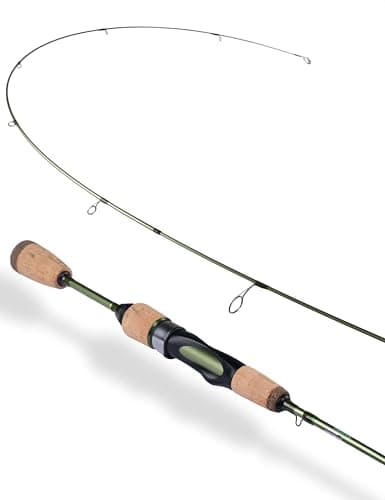
Available in 5'6" through 7', which is the whole argument for spinning on tight creeks: you can buy a rod short enough to fish water a fly rod cannot reach.
Best for: The spinning pick — fastest route to fish9.1 - 2
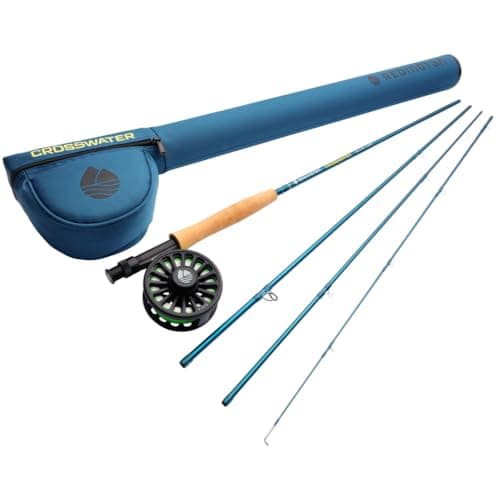
The fly side done properly in one box: rod, reel, a genuinely good Rio Mainstream line and a travel case. The line is why this beats cheaper fly kits — it is what everyone else economizes on.
Best for: The fly pick — complete outfit, quality line9.0 - 3
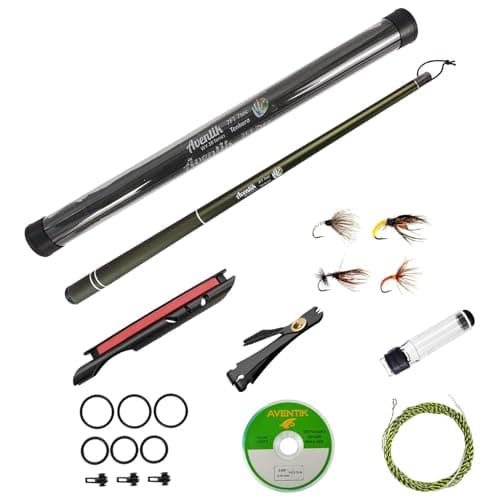
Tenkara is a fly rod with line tied to the tip and no reel at all. It removes most of the fly-casting learning curve and is startlingly effective on small creeks — the genuine middle path.
Best for: The third option — fly fishing without the casting8.6
| # | Product | Best for | Score | Price |
|---|---|---|---|---|
| 1 | LITTMA Wild Streams Ultralight Trout Rod, 2-Piece Available in 5'6" through 7', which is the whole argument for spinning on tight creeks: you can buy a rod short enough to fish water a fly rod cannot reach. | The spinning pick — fastest route to fish | 9.1 | $38.52View on Amazon#ad |
| 2 | Redington Crosswater Fly Fishing Outfit, 9' 5WT The fly side done properly in one box: rod, reel, a genuinely good Rio Mainstream line and a travel case. The line is why this beats cheaper fly kits — it is what everyone else economizes on. | The fly pick — complete outfit, quality line | 9.0 | $229.99View on Amazon#ad |
| 3 | Aventik FreshStart Tenkara Fly Fishing Rod Combo, 7ft Tenkara is a fly rod with line tied to the tip and no reel at all. It removes most of the fly-casting learning curve and is startlingly effective on small creeks — the genuine middle path. | The third option — fly fishing without the casting | 8.6 | $35.87View on Amazon#ad |
Fly fishing vs spinning, decided by your water: start with spinning if your creek is tight and overgrown, or if you want to catch a trout in your first hour. Start with fly if your water is open and you are drawn to the craft. Both catch fish. Neither is morally superior, whatever the fishing press implies. And the most common path among experienced small-stream anglers is simply to own both and choose by the day.
What follows is the comparison without the snobbery, including the two factors that genuinely decide it for most people: overhead cover, and how much frustration you are willing to absorb before your first fish.
Fly rod vs spinning rod, head to head
| Spinning (ultralight) | Fly | |
|---|---|---|
| Cost of a working setup | Lower | Roughly double |
| Time to first fish | Minutes | A trip or three |
| Tight overhead cover | Excellent — sideways flick cast | Poor without roll-cast skill |
| Wind | Barely affected | Genuinely difficult |
| Covering water quickly | Excellent | Slower |
| High or colored water | Better — flash and vibration | Harder |
| Surface-feeding trout | Poor | Unbeatable |
| Drag-free drift at current speed | Not possible | The whole point |
| Very small offerings (size 18) | No | Yes |
| Hook damage to released fish | More (trebles) unless you swap | Less (small single, often barbless) |
| Gear to carry | A rod and a small box | Rod, reel, leader, tippet, floatant, boxes |
Cost to get fishing
Spinning is the cheaper entry by a clear margin. A rod, a 1000-size reel, a spool of 4 lb monofilament and a handful of spinners gets you completely equipped. There is nothing else you need.
Fly fishing has more required parts. Rod, reel, a fly line matched to the rod, a tapered leader, tippet, and flies — six things rather than four, and the line alone can cost what an entire spinning reel does. A matched combo kit brings the first three down to one purchase and is how most people should start, but it is still roughly double the spinning route.
One honest note in fly fishing’s favor: the ongoing cost is lower. Flies are cheap and you lose them slowly; lures are more expensive each and a snagged spinner on a rocky creek is gone for good.
Fly fishing rod vs spinning rod: the learning curve, honestly
Spinning takes about five minutes. Open the bail, flick, close the bail, reel. The skill in spinning is reading water and choosing a retrieve speed — real skills, but ones you learn while catching fish.
Fly casting takes an hour on grass to become functional and a season to become good. That is less than its reputation suggests, but it is not nothing, and the first few trips can be genuinely frustrating because you are managing a line that behaves unlike anything else in fishing. Add the knots — you will need to tie a leader to a line and a fly to a tippet, repeatedly, with cold hands.
If you choose fly, do the grass hour
Tight water: the decisive factor
This is the one that settles it for many creek anglers, and it is rarely discussed honestly.
A fly cast needs room behind you. The line has to travel backwards before it travels forwards. On an open stream that is fine. On a creek with alders arching overhead and a rhododendron thicket at your back, a conventional overhead cast is impossible. Experienced fly anglers solve this with roll casts, bow-and-arrow casts and sidearm presentations — all learnable, none available to a beginner.
A short spinning rod does not care.A 5′6" ultralight flicks a 1/16 ounce spinner twenty feet sideways under a branch with a flick of the wrist. On genuinely brushy water, spinning does not just compete — it reaches fish a fly rod simply cannot.
So: go and look at your water first. If you can see sky behind your casting position for most of the stream, either works. If it is a green tunnel, buy spinning (or consider tenkara, below) and save yourself a season of picking flies out of trees.
Which actually catches more trout
It depends entirely on what the fish are doing, and both sides overclaim.
Spinning catches more when fish are not surface feeding — which is most of the time. A spinner cast upstream and retrieved slightly faster than the current triggers a reaction strike from a trout that was not actively feeding at all, and it works in colored and high water where a fly is invisible. It also covers water far faster, which matters on a creek where you are prospecting pocket by pocket.
Fly catches more when trout are feeding on insects — a hatch, a spinner fall, terrestrials blowing in on a summer afternoon. At those moments fish will refuse everything that is not a small drifting insect, and a fly is the only thing that can be one. Fly also wins in very clear slow water where a lure spooks fish, and it is the only way to present something at the exact speed of the current with no drag, which is the fundamental trick of trout fishing.
This is a rod comparison, but the tackle on the end is the same argument. If what you are really weighing is what to tie on rather than what to hold, flies vs lures for creek trout compares the two on cover, water clarity, cost and release survival.
The release argument favors fly, and it is worth weighing on small streams with wild populations. A small single barbless hook does far less damage than a treble, and unhooking is much faster. You can close most of that gap on spinning gear by swapping trebles for single hooks and pinching the barbs, which costs you very few fish — and if you fish spinning on wild creeks, you should.
The third option nobody mentions
Tenkara is a Japanese method: a long telescopic rod with a fixed length of line tied directly to the tip, and no reel at all. It is fly fishing stripped to its essential act — putting a small fly on the water and drifting it without drag.
On small creeks it is remarkably good, and it short-circuits the main objection to fly fishing: there is almost no casting to learn, because the rod length does the work and the line is a fixed length. There is also nothing to carry — no reel, no spare spools, no line management. The limits are real: you cannot change the line length mid-session, you cannot reach across a wide river, and a fish that runs hard has nothing to run against. For pocket-water creek trout, none of those come up often. The tenkara combo is a cheap way to try a genuinely different approach.
How to choose
Buy spinning if: your creek has heavy overhead cover; you want to catch a fish on your first trip; budget is the binding constraint; you fish in wind; or you want to cover a lot of water in an afternoon.
Buy fly if: your water is open enough to backcast; you have seen trout rising and want to fish to them; you are drawn to the craft of it; or you intend to release everything and want the gentlest hooks.
Buy tenkara if: your water is small, you want fly presentation, and you would rather not learn to cast a fly line or carry a bag of gear.
And the genuinely good news: these are not exclusive. A complete ultralight setup is cheap enough that adding one later is a minor decision, and most people who fish small streams for a few years end up with both in the truck. Start with whichever matches your water, learn to read a stream — which is the skill that transfers — and add the other when you want it.
Next: the ultralight rod roundup or the beginner fly rod roundup, depending on which way you landed. Either way you need waders and something to tie on — lures or flies. The beginner gear guide covers both routes with a running cost total.
If this page pushed you toward spinning, two more will finish the job: the best fishing rods for beginners for the rod and reel, and the best trout lures for what to tie on — including the size mistake that makes most people conclude small lures do not work.
The picks in detail
LITTMA Wild Streams Ultralight Trout Rod, 2-Piece
9.1/10Best for: The spinning pick — fastest route to fish
Available in 5'6" through 7', which is the whole argument for spinning on tight creeks: you can buy a rod short enough to fish water a fly rod cannot reach.
- Type
- Ultralight spinning
- Lengths
- 5'6" / 6' / 6'6" / 7'
- Pieces
- 2
- Pair with
- 1000-size reel, 4 lb mono
- Fishes brush-choked water a fly rod cannot
- Learn in minutes, not a season
- Cheapest complete setup
- Cannot match a drifted fly on surface-feeding trout
- Less line control through complex current
Redington Crosswater Fly Fishing Outfit, 9' 5WT
9.0/10Best for: The fly pick — complete outfit, quality line
The fly side done properly in one box: rod, reel, a genuinely good Rio Mainstream line and a travel case. The line is why this beats cheaper fly kits — it is what everyone else economizes on.
- Type
- Fly — 9'0" 5WT, 4-piece
- Reel
- Redington Crosswater
- Line
- Rio Mainstream WF5F
- Case
- Zippered travel case
- Ships with a line you will not replace
- Unbeatable for surface-feeding trout
- Brand warranty on rod and reel
- Needs room behind you for a backcast
- Roughly double the spinning setup
Aventik FreshStart Tenkara Fly Fishing Rod Combo, 7ft
8.6/10Best for: The third option — fly fishing without the casting
Tenkara is a fly rod with line tied to the tip and no reel at all. It removes most of the fly-casting learning curve and is startlingly effective on small creeks — the genuine middle path.
- Type
- Tenkara (fixed line, no reel)
- Length
- 7ft (2.1m)
- Includes
- Rod + line combo
- Best for
- Small creeks, minimal gear
- Fly presentation with a very short learning curve
- No reel, no line management, almost nothing to carry
- Superb drag-free drifts at close range
- Fixed line length — no casting distance options
- Cannot handle a large fish that runs
Prices shown are from Amazon as of October 20, 2026 and change often — the button always goes to the current listing. Some links may earn us a commission at no extra cost to you. How this works.
Frequently asked questions
Is a fly rod or spinning rod better for trout?
Spinning is better on brush-choked creeks where a backcast is impossible, in wind, in colored water, and for covering ground quickly - and it is cheaper and faster to learn. Fly is better when trout are feeding on insects at the surface and when you need a drag-free drift in clear, slow water.
Should a beginner start with a fly rod or spinning rod?
Spinning, in most cases. You will catch trout on your first trip, the complete setup costs about half as much, and the stream-reading skills you learn transfer directly to fly fishing later. Start with fly only if your water is open enough to backcast and you are specifically drawn to fly casting.
Can you fly fish a small overgrown creek?
Yes, but not with a conventional overhead cast - there is no room behind you. It requires roll casts, bow-and-arrow casts and sidearm presentations, which are learnable but not beginner skills. A short spinning rod or a tenkara rod handles heavy cover far more easily.
What is tenkara fishing?
A Japanese method using a long telescopic rod with a fixed length of line tied straight to the tip and no reel. It gives you fly presentation with almost no casting to learn and nothing to carry, which makes it very effective on small creeks. The limits are fixed line length and no ability to let a big fish run.
Sources
Keep reading
Not sure where to start?
The beginner gear guide walks you through exactly what a new stream angler needs — the six essentials first, nice-to-haves later, with one safe-default pick per category.