Flies & Lures · Roundup
The Best Flies for Bluegill and Panfish
Bluegill on a fly rod is the most fun-per-dollar in fishing and the best way to learn to cast. They are abundant, aggressive, and they eat a foam popper off the top all summer.
Disclosure: Creek Cover is reader-supported. If you buy through our links we may earn a commission, at no extra cost to you. It never changes which pick we tell a new angler to start with. Full disclosure.
Quick picks at a glance
Tap a pick to read the full write-up, or the price button to check it on Amazon.
- 1
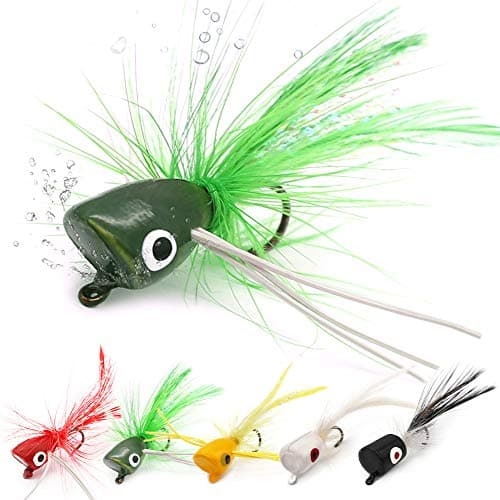
Small foam poppers in panfish-appropriate sizes, which is the specification that matters — most popper assortments are sized for bass and a bluegill cannot get them in its mouth.
Best for: Best bluegill flies overall9.3 - 2
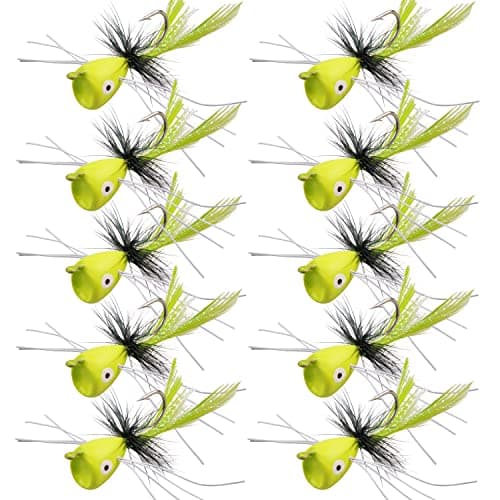
Closed-cell foam bodies that sit high and keep sitting high after a dozen fish, where cheaper cork and painted-balsa bugs waterlog. Bright colors, which matters more for you spotting the fly than for the fish.
Best for: Best floating foam bodies9.1 - 3
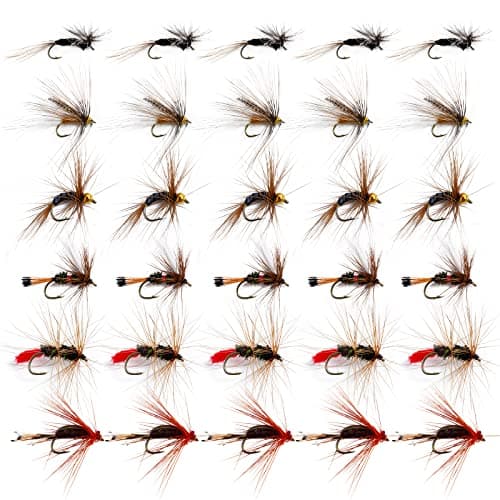
Poppers stop working when the sun is high and the fish go down, and this is the answer: small nymphs and wets fished a foot under a float. Also the fly box that doubles for trout.
Best for: Best subsurface flies8.9 - 4
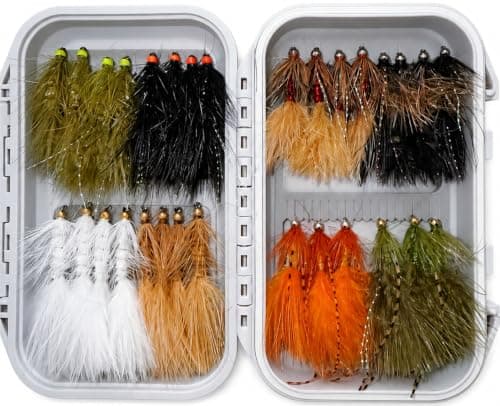
A size 10 Woolly Bugger stripped slowly past a weed edge finds the larger bluegill and the occasional crappie, which the smallest flies tend to miss because the small fish get there first.
Best for: Best for bigger panfish8.8 - 5
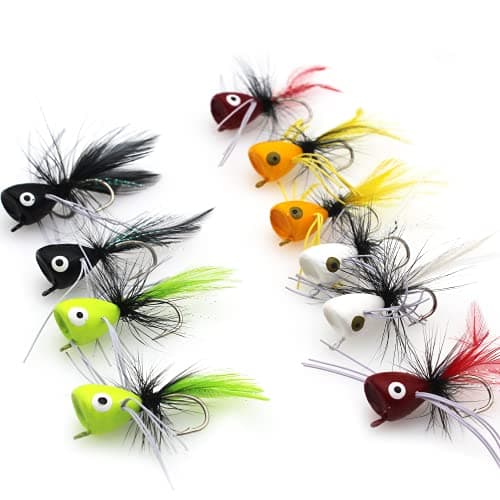
Under seven dollars for a set of panfish poppers. The hooks are soft and the paint chips, and for teaching a child to fly fish off a dock neither of those matters at all.
Best for: Cheapest way to start8.4
| # | Product | Best for | Score | Price |
|---|---|---|---|---|
| 1 | Fly Fishing Poppers Kit for Crappie, Bluegill and Panfish Small foam poppers in panfish-appropriate sizes, which is the specification that matters — most popper assortments are sized for bass and a bluegill cannot get them in its mouth. | Best bluegill flies overall | 9.3 | $12.99View on Amazon#ad |
| 2 | OROOTL Fly Fishing Popper Flies Kit, Foam Popping Bugs Closed-cell foam bodies that sit high and keep sitting high after a dozen fish, where cheaper cork and painted-balsa bugs waterlog. Bright colors, which matters more for you spotting the fly than for the fish. | Best floating foam bodies | 9.1 | $8.99View on Amazon#ad |
| 3 | Goture 30-Piece Dry, Wet & Nymph Fly Assortment Kit Poppers stop working when the sun is high and the fish go down, and this is the answer: small nymphs and wets fished a foot under a float. Also the fly box that doubles for trout. | Best subsurface flies | 8.9 | $9.99View on Amazon#ad |
| 4 | Wooly Bugger Flies for Trout, Bass & Panfish, Sizes 4-10 A size 10 Woolly Bugger stripped slowly past a weed edge finds the larger bluegill and the occasional crappie, which the smallest flies tend to miss because the small fish get there first. | Best for bigger panfish | 8.8 | $26.99View on Amazon#ad |
| 5 | Fly Fishing Poppers, Topwater Lures for Crappie, Bluegill and Sunfish Under seven dollars for a set of panfish poppers. The hooks are soft and the paint chips, and for teaching a child to fly fish off a dock neither of those matters at all. | Cheapest way to start | 8.4 | $6.49View on Amazon#ad |
The best flies for bluegill are small foam poppers — start with the panfish popper kit and add the Goture nymph and dry assortment for the middle of the day when fish go down. That is roughly twenty dollars of flies and it is a complete panfish setup.
If you are choosing a fishery to learn fly casting on, choose this one. Bluegill are in almost every pond in America, they are aggressive, they are not remotely leader-shy, and they will forgive a cast that a trout would punish. A child can catch them. You can catch forty in an evening.
How we picked these
One specification dominated: hook size relative to a bluegill's mouth. A bluegill has a small mouth for its body, and most popper assortments on the market are sized for bass. A bass-sized popper gets attacked by bluegill all evening and hooks almost none of them, which looks like bad luck and is actually a sizing error.
After that we looked at body material and flotation (closed-cell foam against cork and painted balsa), count per pack against how fast panfish destroy a fly, and whether an assortment includes anything that works subsurface. We chose one option per job rather than five popper kits — though poppers do take three of the five places, because on bluegill they genuinely are the answer.
We do not run comparative catch tests. Our method is on the how we research and pick page, and every price here is read live and dated rather than written into the text.
Why foam poppers dominate
Bluegill feed upward. Their eyes are positioned to look up and forward, they spend summer in shallow warm water, and a large part of their diet is insects that fall onto the surface. A popper is not an approximation of that — it is a direct match.
The practical consequence is that bluegill will take a surface fly in bright daylight, which trout mostly will not. You do not need dawn, you do not need dusk, and you do not need to match a hatch. Mid-afternoon in July, a popper two feet from a weed edge gets eaten.
Then there is the part that actually matters: you can see it happen. Every take is visible — a swirl, a pop, the fly gone. For a beginner this is enormously valuable, because the hardest thing about subsurface fly fishing is knowing a fish has taken. With a popper the feedback is immediate and obvious, and that is how casting improves quickly.
The retrieve that catches most
Size: the only spec that matters
Everything else about panfish fly selection is negotiable. Size is not.
| Hook size | Suits | What happens if you get it wrong |
|---|---|---|
| Size 10-12 | Bluegill, sunfish — the right default | Nothing. This is the band to buy in |
| Size 8 | Larger bluegill, crappie, small bass | Smaller fish will miss it, which can be the point |
| Size 6 and larger | Bass | Bluegill attack it all evening and hook almost never |
| Size 14 and smaller | Trout nymphs | Works, but you will hook every tiny fish in the pond |
Buy size 10 and 12 and you are done. If you are fishing a pond with genuinely big bluegill — the hand-sized ones — a size 8 filters out the small fish and is worth carrying. Anything larger belongs on the bass fly page.
When poppers stop working
Two situations, and both have a straightforward answer.
Bright sun, high noon, clear water. Panfish drop into deeper shade and stop looking up. Switch to a small wet fly or nymph suspended a foot or two under a small indicator, cast to the same cover, and fish it almost static. That is what the nymph and dry assortment is for.
Cold water, spring and autumn.Below about 60 °F bluegill are sluggish and surface feeding largely stops. Same answer — go subsurface and slow down. A size 10 Woolly Bugger stripped very slowly also works well here, and it finds the larger fish.
If the pond also holds trout, the same subsurface box covers both, which is a real convenience — the best flies for trout covers the patterns in more depth.
Why bluegill is the best way to learn
If you have a fly rod and have not yet caught much on it, stop fishing for trout for a week and fish a bluegill pond instead. Four reasons:
Volume. You will get dozens of takes in an evening, which means dozens of hook-sets, dozens of fish played and dozens of repetitions of everything that is currently hard. Trout fishing offers a handful.
Forgiveness. Bluegill do not care about leader diameter, drag-free drift or a slightly heavy landing. The things that spook a trout do not register. That lets you work on the mechanics of casting without the water punishing every error.
Short casts. Panfish hold tight to cover, usually within thirty feet of the bank. That is exactly the range creek trout fishing demands, so the casting you learn transfers directly.
Any rod works. A 3 to 5-weight is ideal and a 5-weight — the most common first fly rod in existence — is perfect. No new gear needed. If you do not have one yet, the beginner fly rod roundup and the combo page cover the options, and the fly line roundup covers what actually does the casting.
Where to find them, and when
Bluegill are the easiest fish in America to locate. Find shallow water with structure — a weed edge, overhanging branches, a fallen tree, a dock, lily pads — in any pond, lake margin or slow river backwater, and there will be bluegill in it. They school, so one fish means more fish in the same spot.
May is the peak and it is not subtle. Bluegill spawn in late spring, building saucer-shaped nests in shallow water, and during spawning they are both concentrated and extremely aggressive. A popper dropped near a visible bed gets attacked instantly. Demand for panfish flies peaks May through July for exactly this reason.
June to August stays excellent, especially the last two hours of light. September to October is good but the fish are deeper and less surface-oriented. Winter is a tying season rather than a bluegill one — see the fly tying kit roundup, since foam poppers are among the easiest and most satisfying flies to learn to tie.
One courtesy, since it matters more than people assume: during the spawn, fish are sitting on nests they are defending. Taking a few for the pan is fine and bluegill populations are usually over-abundant, but if you are releasing, do it quickly and in the same spot so the fish returns to its bed.
Same water, bigger fish, heavier rod. If the smallmouth in your creek start eating the poppers meant for panfish, the best fly rod for bass covers the rod that delivers a bigger bug. For the spinning alternative on the same water, the best panfish rods ranks the ultralight rods that cast a 1/32 oz jig.
The picks in detail
Fly Fishing Poppers Kit for Crappie, Bluegill and Panfish
9.3/10Best for: Best bluegill flies overall
Small foam poppers in panfish-appropriate sizes, which is the specification that matters — most popper assortments are sized for bass and a bluegill cannot get them in its mouth.
- Type
- Foam poppers, topwater
- Sizing
- Panfish-appropriate small sizes
- Target
- Bluegill, crappie, sunfish
- Rod
- 3-5wt
- Sized for panfish mouths, not bass
- Topwater takes you can see
- Cheap enough to fish tight to cover
- Foam bodies tear after several fish
- Hooks are soft — check the point after each fish
OROOTL Fly Fishing Popper Flies Kit, Foam Popping Bugs
9.1/10Best for: Best floating foam bodies
Closed-cell foam bodies that sit high and keep sitting high after a dozen fish, where cheaper cork and painted-balsa bugs waterlog. Bright colors, which matters more for you spotting the fly than for the fish.
- Type
- Foam popping bugs
- Flotation
- Closed-cell foam — stays up
- Target
- Bluegill, sunfish, small bass
- Colors
- Bright, high-visibility
- Floats high through a long session
- Easy to see on the water in low light
- Legs and tails add movement at rest
- Bulkier to cast than a flat popper
- Some sizes in the kit are bass-sized
Goture 30-Piece Dry, Wet & Nymph Fly Assortment Kit
8.9/10Best for: Best subsurface flies
Poppers stop working when the sun is high and the fish go down, and this is the answer: small nymphs and wets fished a foot under a float. Also the fly box that doubles for trout.
- Type
- Dry, wet and nymph assortment
- Count
- 30
- Target
- Panfish and trout
- Presentation
- Under an indicator, or dead-drifted
- Covers the hours when poppers fail
- Doubles as a trout box
- Very low cost per fly
- No takes to watch — less fun than poppers
- Some patterns are too large for small bluegill
Wooly Bugger Flies for Trout, Bass & Panfish, Sizes 4-10
8.8/10Best for: Best for bigger panfish
A size 10 Woolly Bugger stripped slowly past a weed edge finds the larger bluegill and the occasional crappie, which the smallest flies tend to miss because the small fish get there first.
- Type
- Weighted streamer
- Sizes
- 4-10 (use 10 for panfish)
- Target
- Larger bluegill, crappie, bass
- Presentation
- Slow strip near cover
- Selects for the bigger fish in the school
- Also catches trout and bass
- Hard to fish wrong
- Sizes 4-6 are too big for most bluegill
- Weighted, so it hangs in weed
Fly Fishing Poppers, Topwater Lures for Crappie, Bluegill and Sunfish
8.4/10Best for: Cheapest way to start
Under seven dollars for a set of panfish poppers. The hooks are soft and the paint chips, and for teaching a child to fly fish off a dock neither of those matters at all.
- Type
- Foam poppers
- Target
- Bluegill, crappie, sunfish
- Best for
- Teaching, dock fishing, losing freely
- Rod
- 3-5wt
- Lowest price on this page
- Ideal for teaching someone else
- Losing them costs nothing
- Soft hooks bend on a decent fish
- Bodies will not survive a season
Prices shown are from Amazon as of October 20, 2026 and change often — the button always goes to the current listing. Some links may earn us a commission at no extra cost to you. How this works.
Frequently asked questions
What are the best flies for bluegill?
Small foam poppers in size 10 to 12 — bluegill feed upward and will take a surface fly in bright daylight, which trout mostly will not. Add a small nymph and wet fly assortment for the middle of the day when fish drop into shade. Roughly twenty dollars of flies covers the whole fishery.
What size fly hook for bluegill?
Size 10 or 12. A bluegill has a small mouth for its body, and most popper assortments are sized for bass — a size 6 popper gets attacked all evening and hooks almost nothing, which looks like bad luck but is a sizing error. Size 8 is worth carrying for genuinely large bluegill because it filters out the small fish.
Can you catch bluegill on a fly rod?
Easily, and it is the best way to learn fly fishing. Bluegill are in almost every pond, they are aggressive, they hold within thirty feet of the bank and they are not leader-shy. A 3 to 5-weight rod is ideal, so the common first fly rod works perfectly with no new gear.
How do you fish a popper for bluegill?
Cast near cover, then do nothing until the rings disappear completely — often ten to fifteen seconds. Then one small twitch, and stop again. Bluegill inspect a motionless fly before committing, so a continuously retrieved popper moves away from fish that were about to eat it.
What flies work for panfish when poppers do not?
Small wet flies and nymphs suspended a foot or two under a small indicator, fished almost static next to the same cover. That is the answer in bright midday sun and in water below about 60 degrees, when bluegill stop surface feeding. A size 10 Woolly Bugger stripped slowly also works and finds the larger fish.
When is the best time to fly fish for bluegill?
May, during the spawn, when fish are concentrated on shallow nests and extremely aggressive — a popper near a visible bed gets attacked instantly. June through August stays excellent, especially the last two hours of light. September and October are good but the fish are deeper.
Sources
Keep reading
Not sure where to start?
The beginner gear guide walks you through exactly what a new stream angler needs — the six essentials first, nice-to-haves later, with one safe-default pick per category.