Flies & Lures · Roundup
The Best Fly Tying Kit for Beginners
Tying your own flies does not save money for about two years. What it does immediately is let you make the exact size nobody sells — which on small creeks is the whole point.
Disclosure: Creek Cover is reader-supported. If you buy through our links we may earn a commission, at no extra cost to you. It never changes which pick we tell a new angler to start with. Full disclosure.
Quick picks at a glance
Tap a pick to read the full write-up, or the price button to check it on Amazon.
- 1
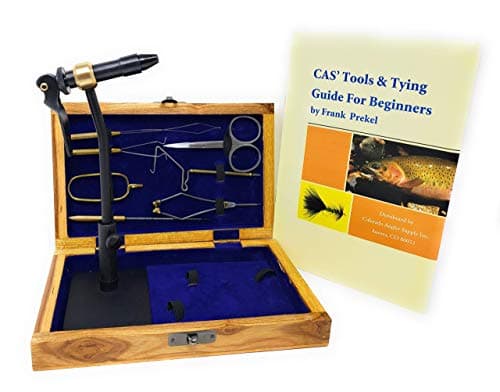
A rotary vise, bobbin, scissors, whip finisher, hackle pliers and bodkin with an instruction book, in a wooden box. The best balance of a usable vise and a complete tool set at the lowest sensible price.
Best for: Best fly tying kit overall9.2 - 2
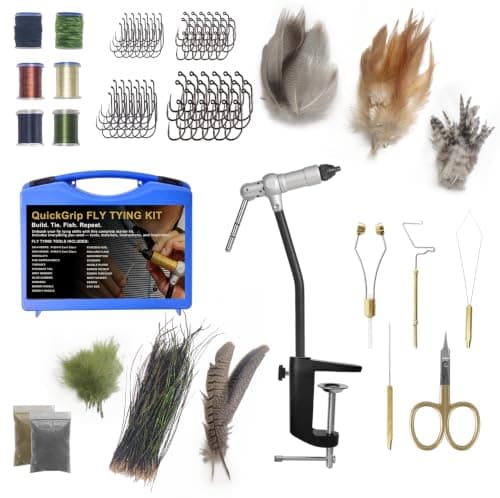
The practical pick if you own nothing: vise, tools, hooks, thread and feathers in one box, so you can tie a fly the evening it arrives rather than placing a second order for materials.
Best for: Best with materials included9.1 - 3
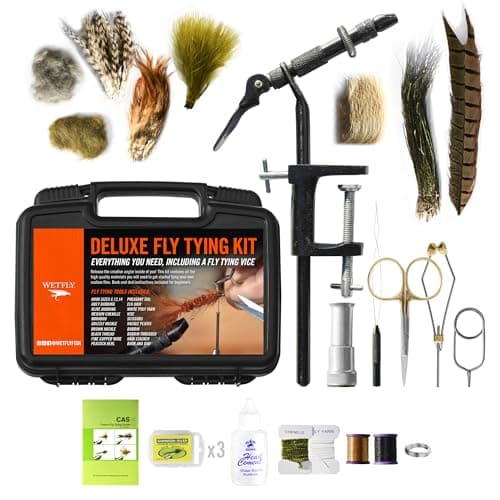
The most complete learning package here — vise, tools, materials and both a book and a DVD. Tying is taught far better by watching hands than by reading, and this is the only kit that acknowledges that.
Best for: Best for learning9.0 - 4
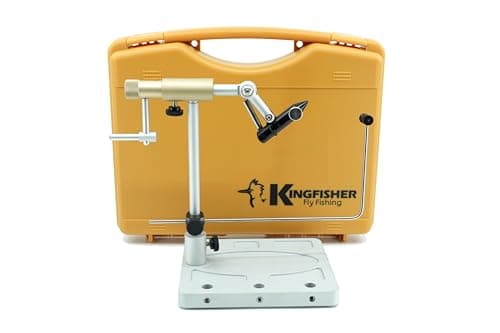
The best vise on this page, and the reason to buy it is longevity — the jaws hold small hooks without slipping, which is the one failure that makes beginners quit. Buy this if you already suspect tying will stick.
Best for: Best vise quality9.3 - 5
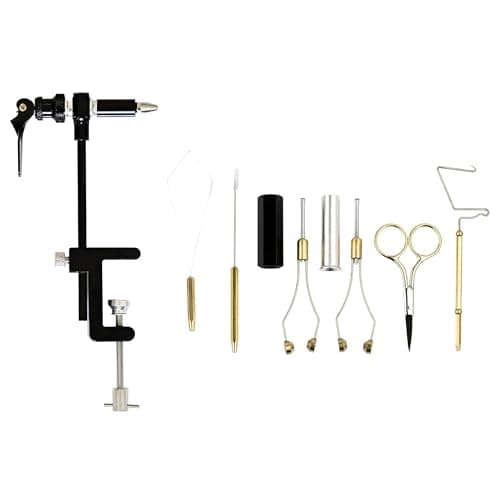
The cheapest way to find out whether you enjoy tying. A 360-degree rotating vise and a basic tool set — adequate throughout, remarkable nowhere, and complete.
Best for: Best budget kit8.4
| # | Product | Best for | Score | Price |
|---|---|---|---|---|
| 1 | Colorado Anglers Fly Tying Standard Tool Kit with Rotary Vise, Wooden Box & Book A rotary vise, bobbin, scissors, whip finisher, hackle pliers and bodkin with an instruction book, in a wooden box. The best balance of a usable vise and a complete tool set at the lowest sensible price. | Best fly tying kit overall | 9.2 | $39.92View on Amazon#ad |
| 2 | EUPHENG Fly Tying Kit with Lightweight Rotary Vise, Feathers, Hooks & Materials The practical pick if you own nothing: vise, tools, hooks, thread and feathers in one box, so you can tie a fly the evening it arrives rather than placing a second order for materials. | Best with materials included | 9.1 | $59.99View on Amazon#ad |
| 3 | Deluxe Fly Tying Vise & Tools Kit with Materials and Book/DVD The most complete learning package here — vise, tools, materials and both a book and a DVD. Tying is taught far better by watching hands than by reading, and this is the only kit that acknowledges that. | Best for learning | 9.0 | $84.00View on Amazon#ad |
| 4 | Kingfisher Clarkfork Fly Tying Vise Kit with Tools The best vise on this page, and the reason to buy it is longevity — the jaws hold small hooks without slipping, which is the one failure that makes beginners quit. Buy this if you already suspect tying will stick. | Best vise quality | 9.3 | $99.95View on Amazon#ad |
| 5 | Fly Tying Kit & Rotary Fly Tying Vise for Beginners, 360° Vise The cheapest way to find out whether you enjoy tying. A 360-degree rotating vise and a basic tool set — adequate throughout, remarkable nowhere, and complete. | Best budget kit | 8.4 | $54.95View on Amazon#ad |
The best fly tying kit for beginners is the Colorado Anglers standard tool kit — a rotary vise, a full tool set and an instruction book for about forty dollars. If you own nothing at all and want to tie a fly the evening it arrives, the EUPHENG kit includes materials too. And if you already suspect tying will stick, skip the entry kits and buy the Kingfisher Clarkfork, whose jaws actually hold a size 18 hook.
One expectation to set honestly up front: tying does not save you money for a long time. What it buys immediately is the ability to make the exact fly nobody sells — which on small creeks, where the useful sizes are smaller than commercial boxes carry, is a genuine advantage.
How we picked these
We weighted the vise above everything else, because the vise is the only part of a kit you keep. Tools wear out and get replaced individually; a vise that cannot hold a small hook without it rotating under thread tension makes tying impossible and is the most common reason beginners stop.
After that we judged tool completeness against the standard six, whether instruction is included and in what form, whether materials are included, and how small a hook the jaws are specified to hold. Specifications come from the manufacturers' published listings; we do not run durability tests or claim bench hours we have not put in. The method is on the how we research and pick page, and every price here is read live and dated.
The vise is the whole decision
A fly tying vise holds the hook while you wrap thread around it under tension. It sounds trivial and it is where cheap kits fail.
Two things matter. First, jaw grip on small hooks. Trout flies for creeks are size 14 to 20, and a 20 is very small. If the jaws cannot clamp it without the hook rotating when you pull thread tight, every fly you tie will come out crooked and you will conclude you lack the dexterity. You do not — the vise does.
Second, rotation. A rotary vise spins the hook on its axis so you can wrap a body evenly and inspect the far side without unclamping. Every kit here is at least nominally rotary; the difference is whether rotation is smooth and whether the hook stays on the axis while it turns.
| Vise feature | Why it matters | Which picks have it |
|---|---|---|
| Grips size 18-20 hooks | Small creek flies are the useful sizes | Clarkfork best; entry kits struggle below 16 |
| True rotary | Even bodies, inspect both sides | Clarkfork, Colorado Anglers, EUPHENG |
| Heavy or clamped base | Does not shift under thread tension | Clarkfork, Colorado Anglers |
| Adjustable jaw angle | Comfort over a long session | Varies — check the listing |
The six tools you need, and the ones you do not
The standard set is six items, and every kit on this page includes them. It is worth knowing what each is for, because kit listings assume you already do.
Bobbin — holds the thread spool and lets you apply steady tension. The most used tool on the bench. Scissors — fine-point, for trimming thread and hackle. The first tool worth upgrading in a budget kit, because blunt scissors crush material instead of cutting it. Whip finisher — ties the final knot. Awkward for about ten flies, then automatic. Hackle pliers — grip a feather tip while you wrap it. Bodkin — a needle in a handle, for picking out fibers and applying head cement. Hair stacker — aligns hair tips for wings; the only one of the six you can skip at first.
What you do not need: a second vise, a material spring, a dubbing twister, a gallows tool, or any of the specialist items sold for particular patterns. Those come later and only if you tie those patterns.
The one thing to buy separately on day one
Materials: what a beginner kit leaves out
Two of our picks include materials and three do not, and the distinction catches people out. A “tool kit” means vise plus tools; you supply thread, hooks, feathers and dubbing.
If you are buying materials separately, the shortest useful list is: black and olive thread in 6/0 or 8/0; hooks in sizes 12, 14 and 16; brass or tungsten beads for nymph heads; a pack of marabou and a saddle hackle for Woolly Buggers; pheasant tail fibers; and a dubbing in hare's ear. That is roughly thirty dollars and it ties four of the six patterns that actually catch creek trout.
Material quantities in combined kits are genuinely small — enough for a dozen flies, not a season. That is not a flaw so much as a design choice: the point is to get you tying, and restocking individual materials is cheap once you know which ones you use.
The best flies for beginners to tie
Tie in this order. Each one teaches a technique the next one needs, which is why the sequence matters more than the patterns.
1. Woolly Bugger. The first fly everyone ties, and genuinely one of the most effective flies in existence. It teaches thread control, tying in a tail, and wrapping hackle. Your first one will be ugly and will still catch fish.
2. Beadhead nymph (Hare's Ear or Pheasant Tail). Teaches working around a bead, tapered bodies and dubbing. These are the flies that catch most trout most of the time, so this is the pattern you will tie by the dozen.
3. San Juan Worm. Almost insultingly simple — thread and a length of chenille — and effective out of proportion to its difficulty. Good for rebuilding confidence after a frustrating session.
4. Elk Hair Caddis. Your first dry fly, and the step up: it teaches measuring and stacking hair, which is the fiddliest basic technique in tying.
If you are not yet sure which patterns your water needs, our best flies for trout page covers the six that matter and the sizes to tie them in. For bass and panfish patterns, see the best flies for bass and the best flies for bluegill — foam poppers are easy ties and extremely satisfying.
Does tying your own flies save money?
Here is the honest arithmetic. A kit plus initial materials is roughly $70 to $120. Shop-tied flies cost around two dollars each; materials work out at roughly thirty cents a fly once you have the kit. So the break-even is somewhere around forty to sixty flies, which sounds quick until you account for the dozen unusable ones at the start and the fact that a creek angler loses perhaps thirty flies a season.
Call it two seasons to break even, and that is before you buy the second vise, the bucktail you did not need and the five thread colors you will never use. Anyone who tells you tying saves money is not counting the materials drawer.
The real returns are different and they arrive immediately. You can tie the exact size you need — and for small creeks that matters, because commercial boxes rarely go small enough. You can replace a pattern that is working the same evening, rather than ordering more and missing the window. And tying is a genuinely pleasant winter occupation, which is why demand for tying kits peaks in November and December: the rivers are cold, and the bench is warm.
If you want the flies without the hobby, a prebuilt assortment is the rational purchase — the best flies for trout covers those, and the fly box roundup covers storing what you tie.
Two related pages: the best fly tying vises if you would rather buy the vise on its own and choose your own tools, and fly fishing gifts for men if you are buying a tying setup for somebody else.
The picks in detail
Colorado Anglers Fly Tying Standard Tool Kit with Rotary Vise, Wooden Box & Book
9.2/10Best for: Best fly tying kit overall
A rotary vise, bobbin, scissors, whip finisher, hackle pliers and bodkin with an instruction book, in a wooden box. The best balance of a usable vise and a complete tool set at the lowest sensible price.
- Vise
- Rotary
- Tools
- Full standard set
- Materials
- Not included
- Includes
- Instruction book, wooden storage box
- Rotary vise at the entry price point
- Complete tool set — nothing missing
- Instruction book, which most kits omit
- No materials, so budget for thread, hooks and feathers
- Wooden box is charming rather than practical
EUPHENG Fly Tying Kit with Lightweight Rotary Vise, Feathers, Hooks & Materials
9.1/10Best for: Best with materials included
The practical pick if you own nothing: vise, tools, hooks, thread and feathers in one box, so you can tie a fly the evening it arrives rather than placing a second order for materials.
- Vise
- Lightweight rotary
- Tools
- Full set
- Materials
- Hooks, thread, feathers included
- Best for
- Starting from absolutely nothing
- Tie a fly the day it arrives
- Materials included remove a second purchase
- Rotary vise, not a fixed-jaw
- Material quantities are small — you will restock quickly
- Lightweight vise base can shift under heavy thread tension
Deluxe Fly Tying Vise & Tools Kit with Materials and Book/DVD
9.0/10Best for: Best for learning
The most complete learning package here — vise, tools, materials and both a book and a DVD. Tying is taught far better by watching hands than by reading, and this is the only kit that acknowledges that.
- Vise
- Included
- Tools
- Full set
- Materials
- Included
- Instruction
- Book and DVD
- Video instruction, which is how tying is actually learned
- Materials and tools both included
- Enough to tie several pattern types immediately
- Twice the price of our top pick
- DVD assumes you still own a player
Kingfisher Clarkfork Fly Tying Vise Kit with Tools
9.3/10Best for: Best vise quality
The best vise on this page, and the reason to buy it is longevity — the jaws hold small hooks without slipping, which is the one failure that makes beginners quit. Buy this if you already suspect tying will stick.
- Vise
- Clarkfork, true rotary
- Jaws
- Holds small trout hooks securely
- Tools
- Included
- Materials
- Not included
- Jaws grip size 18-20 hooks without slipping
- Smooth true rotation for body wrapping
- The vise you keep after the kit tools wear out
- Most expensive kit here
- No materials included
Fly Tying Kit & Rotary Fly Tying Vise for Beginners, 360° Vise
8.4/10Best for: Best budget kit
The cheapest way to find out whether you enjoy tying. A 360-degree rotating vise and a basic tool set — adequate throughout, remarkable nowhere, and complete.
- Vise
- 360-degree rotating
- Tools
- Basic set
- Materials
- Partial
- Best for
- Trying tying out
- Lowest price for a complete kit
- Rotating vise rather than a fixed clamp
- Enough to tie a Woolly Bugger on day one
- Scissors are the weak point — replace them early
- Jaws struggle with hooks smaller than size 16
Prices shown are from Amazon as of October 20, 2026 and change often — the button always goes to the current listing. Some links may earn us a commission at no extra cost to you. How this works.
Frequently asked questions
What is the best fly tying kit for beginners?
The Colorado Anglers standard tool kit for most people: a rotary vise, a complete tool set and an instruction book for around forty dollars. If you own nothing and want materials included, the EUPHENG kit lets you tie a fly the day it arrives. If you already expect tying to stick, buy the Kingfisher Clarkfork for its vise.
What should I look for in a fly tying vise?
Jaw grip on small hooks and smooth rotation. Creek trout flies are size 14 to 20, and a vise whose jaws let the hook rotate under thread tension makes every fly come out crooked — which beginners usually blame on themselves. A true rotary vise also lets you wrap even bodies and inspect the far side without unclamping.
What flies should a beginner tie first?
A Woolly Bugger first — it teaches thread control, tails and hackle, and it is one of the most effective flies there is. Then a beadhead Hare's Ear or Pheasant Tail nymph, then a San Juan Worm, then an Elk Hair Caddis as your first dry fly. Each one teaches a technique the next needs.
Does tying your own flies save money?
Eventually, but not soon. A kit plus materials is roughly $70 to $120, shop flies cost about two dollars each and home-tied ones about thirty cents, so break-even is around forty to sixty usable flies — realistically two seasons for a creek angler. The immediate benefits are making exact sizes nobody sells and replacing a working pattern the same evening.
What do I need to buy on top of a fly tying kit?
Head cement, almost always — it seals the knot and stops flies unravelling, and most kits either omit it or include a bottle that dries out. Fine-point scissors if your kit's are soft, since blunt scissors crush material rather than cutting it. And materials, if you bought a tool-only kit.
Is fly tying hard to learn?
The first three flies are frustrating and the tenth is fine. It is a manual skill, so video instruction helps far more than reading — which is why a kit that includes a DVD or book is worth a premium. The common early blocker is a vise that will not hold the hook, not a lack of dexterity.
Sources
Keep reading
Not sure where to start?
The beginner gear guide walks you through exactly what a new stream angler needs — the six essentials first, nice-to-haves later, with one safe-default pick per category.