Flies & Lures · Roundup
The Best Flies for Brook Trout
Brook trout live in the smallest, coldest, most overgrown water in the country, and they are the least fussy trout you will ever cast to. That changes what you need: presentation and a fly you can see, not an exact hatch match.
Disclosure: Creek Cover is reader-supported. If you buy through our links we may earn a commission, at no extra cost to you. It never changes which pick we tell a new angler to start with. Full disclosure.
Quick picks at a glance
Tap a pick to read the full write-up, or the price button to check it on Amazon.
- 1
The kit to start with. Brook trout do not need species-specific patterns; they need a dry you can see in broken water, a nymph that gets down in a plunge pool and a small streamer to pull through the undercut banks. This kit covers all three without the filler that bulk assortments pad themselves out with.
Best for: Best overall — the right spread for a headwater creek9.2 - 2
Eighteen flies across seven classic patterns, which is almost exactly the right number for a brook trout box. Classic patterns are not nostalgia on brookie water — Adams, caddis and soft hackles were developed on small cold streams and they work there for the same reasons they did a century ago.
Best for: Best classic-pattern set for small cold water9.1 - 3
If you fish one fly for brookies, fish a small Woolly Bugger. Pulled through an undercut bank or swung below a plunge pool it imitates everything a brook trout eats that is not an insect — a sculpin, a leech, a crayfish. Buy size 10 and 12 in black and olive; the bigger sizes are for other fish.
Best for: Best single pattern for brook trout under cover9.3 - 4
Brook trout fishing is hard on flies: you will hook alders, rhododendron and your own hat, and a bulk fly comes apart after four fish. Hand-tied patterns hold hackle and body, which on water where you are casting into tunnels means fewer flies lost to failure rather than to trees.
Best for: Best quality — flies that survive a season of brush9.0 - 5
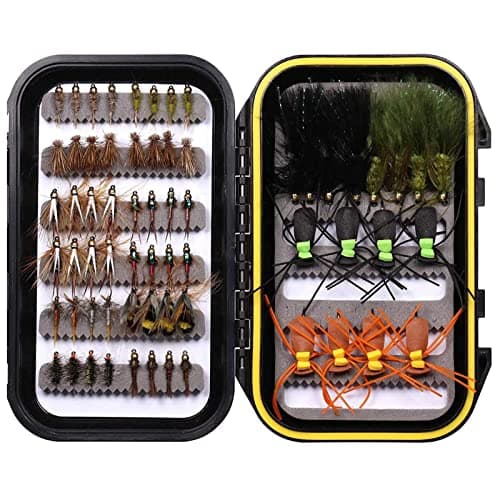
Brook trout streams eat flies. A 64-fly assortment with a waterproof box means the fly in the willow costs you cents and the one in the rhododendron does not end your afternoon. Assortment-grade hooks are fine for 8-inch brookies, which is most of what a headwater creek holds.
Best for: Best value — the box to lose flies out of8.8
| # | Product | Best for | Score | Price |
|---|---|---|---|---|
| 1 | Postfly Trout Fly Fishing Kit: Flies for Rainbow, Brown and Brook Trout The kit to start with. Brook trout do not need species-specific patterns; they need a dry you can see in broken water, a nymph that gets down in a plunge pool and a small streamer to pull through the undercut banks. This kit covers all three without the filler that bulk assortments pad themselves out with. | Best overall — the right spread for a headwater creek | 9.2 | $34.95View on Amazon#ad |
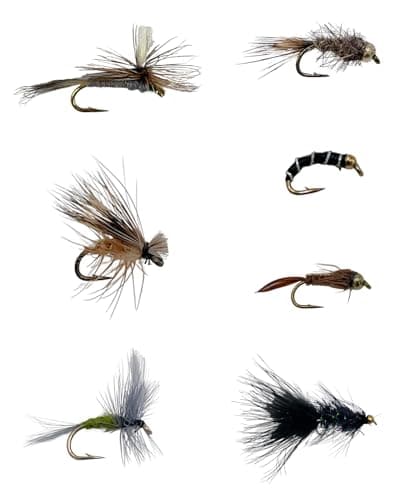
| 2 | Feeder Creek Fly Fishing Assortment, 18-Piece Spring Creek Collection, 7 Classic Patterns Eighteen flies across seven classic patterns, which is almost exactly the right number for a brook trout box. Classic patterns are not nostalgia on brookie water — Adams, caddis and soft hackles were developed on small cold streams and they work there for the same reasons they did a century ago. | Best classic-pattern set for small cold water | 9.1 | $19.99View on Amazon#ad |
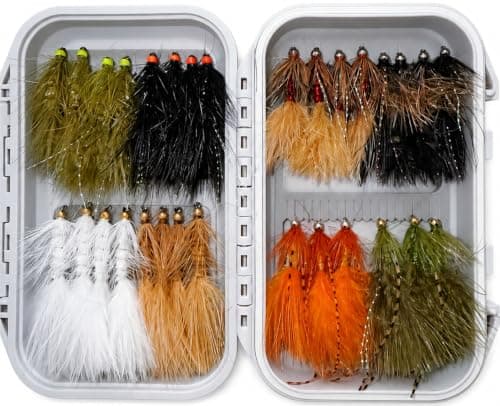
| 3 | Wooly Bugger Flies for Trout, Bass & Panfish, Sizes 4-10 If you fish one fly for brookies, fish a small Woolly Bugger. Pulled through an undercut bank or swung below a plunge pool it imitates everything a brook trout eats that is not an insect — a sculpin, a leech, a crayfish. Buy size 10 and 12 in black and olive; the bigger sizes are for other fish. | Best single pattern for brook trout under cover | 9.3 | $26.99View on Amazon#ad |
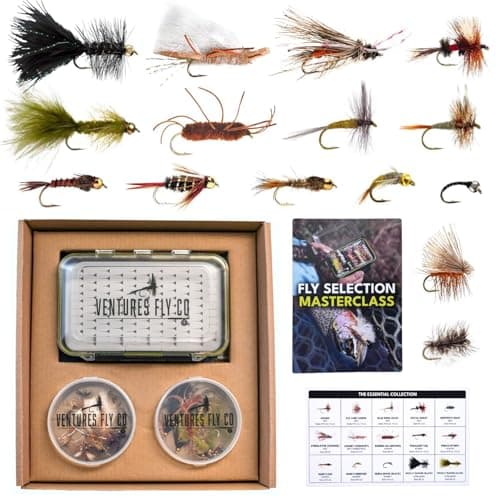
| 4 | Ventures Fly Co. 40 Premium Hand-Tied Flies with Box Brook trout fishing is hard on flies: you will hook alders, rhododendron and your own hat, and a bulk fly comes apart after four fish. Hand-tied patterns hold hackle and body, which on water where you are casting into tunnels means fewer flies lost to failure rather than to trees. | Best quality — flies that survive a season of brush | 9.0 | $74.99View on Amazon#ad |
| 5 | Wifreo 64-Piece Fly Assortment with Waterproof Fly Box Brook trout streams eat flies. A 64-fly assortment with a waterproof box means the fly in the willow costs you cents and the one in the rhododendron does not end your afternoon. Assortment-grade hooks are fine for 8-inch brookies, which is most of what a headwater creek holds. | Best value — the box to lose flies out of | 8.8 | $24.98View on Amazon#ad |
The best flies for brook trout are a small dry you can see, a bead-head nymph, and a size 10 Woolly Bugger — and the Postfly trout kit is the simplest way to own all three. If you want a small, deliberate box rather than an assortment, the 18-piece classic-pattern set is close to the ideal brook trout selection. And if you fish one fly, fish a small Woolly Bugger.
Brook trout are the native char of small cold headwaters in the eastern US and the introduced population of a lot of mountain creeks in the west. They are also the least selective trout in North America, and that single fact should change what you buy.
Brook trout are not selective
They live in food-poor water, so they eat first and inspect later. A headwater creek carries a fraction of the insect life of a tailwater, and a fish that hesitates in that environment goes hungry. Brookies are opportunists: a reasonable fly drifting naturally gets eaten more often than a perfect fly drifting badly.
That means you can stop buying patterns and start buying sizes. The angler who turns up with six patterns in two sizes each will out-fish the angler with forty patterns, because the first one is spending their attention on where the fly lands rather than which fly it is.
It also means attractor patterns genuinely work. A Royal Coachman or a bright foam dry does not imitate anything specific, and brook trout take them happily — partly because they are opportunists and partly because you can see a bright fly in the broken water of a plunge pool, which is the real reason to fish one.
The five patterns that matter
| Pattern type | Size | When | Why it works on brookies |
|---|---|---|---|
| High-visibility dry (attractor) | 14 to 16 | All season, especially summer | Opportunistic takes, and you can see it in broken water |
| Elk hair caddis | 14 to 16 | Late spring to fall | Floats in plunge pools; caddis are the dominant creek insect |
| Bead-head nymph (hare's ear or pheasant tail) | 14 to 18 | Year-round, best in spring | Gets down fast in short pockets |
| Small Woolly Bugger | 10 to 12 | High water, fall, undercuts | Imitates sculpin, leech and crayfish at once |
| Soft hackle / wet fly | 14 to 16 | Spring and fall | Fished on a swing — the oldest and easiest creek method |
That is the whole box. Two of each in two sizes is twenty flies, which fits in a shirt-pocket box and covers a full season on any brook trout stream in the country. The box options are in the fly box roundup.
Size is the one thing to get right
Go smaller than the assortment suggests. Headwater brook trout are commonly 6 to 10 inches, and a fly tied for a western river is simply too big for the mouth of an 7-inch fish. Where a general kit gives you size 12s, you want 14s and 16s.
The exception is the streamer. A size 10 Woolly Bugger looks absurdly large next to the fish you are catching, and brookies attack it anyway — predatory response rather than feeding. That is why it is the single most reliable fly on the list.
Assortment kits run a size large as a rule. It is the most consistent criticism of bulk flies and it matters more on brookie water than anywhere else. Check the hook sizes on the listing before you buy, and if the kit is all 10s and 12s, treat it as a streamer and nymph box and buy dries separately — the quality tiers are explained in the cheap flies guide.
Barbless, or pinch the barb
Presentation beats pattern, always
The cast is short and the approach is everything. Brook trout water is twenty-foot casts in tunnels of alder, and the fish are three feet from your boots. If a brookie sees you, no fly works; if it does not, almost any fly works. Move slowly, stay low, and fish upstream so you are behind them.
Fish the plunge pool, not the run. Headwater creeks are a staircase of small drops, and the fish hold in the pocket of soft water behind each one. One good cast into the foam at the head of each plunge pool is worth ten casts down the middle of the shallow run below it.
A short rod matters more than the fly. You cannot present a fly accurately in a tunnel with a nine-foot rod, which is why brook trout fishing is the one place a 7 to 8 foot 3 weight is genuinely the right tool — the case is in the small-stream rod guide.
Through the season
Spring: nymphs, deep. High cold water means fish sitting on the bottom in the slowest water they can find. A bead-head nymph bounced through a plunge pool is the whole tactic, and the Woolly Bugger works for the same reason.
Summer: dries, all day. This is the season brook trout fishing is famous for. Warm water, active fish, terrestrial insects falling off the bank, and a brookie that will come up for a visible dry fly at noon. One fly, one box, no indicator.
Fall: streamers, and leave the spawners alone. Brook trout spawn in autumn, and fish on gravel beds in shallow water should be walked around rather than cast to. Fish the deep pools instead. Seasons, closures and tackle rules vary by state and change — check your state wildlife agency, which is the only reliable source on it. For the broader fly selection across all trout, start at the best flies for trout, and for rainbows specifically see the best flies for rainbow trout.
The picks in detail
Postfly Trout Fly Fishing Kit: Flies for Rainbow, Brown and Brook Trout
9.2/10Best for: Best overall — the right spread for a headwater creek
The kit to start with. Brook trout do not need species-specific patterns; they need a dry you can see in broken water, a nymph that gets down in a plunge pool and a small streamer to pull through the undercut banks. This kit covers all three without the filler that bulk assortments pad themselves out with.
- Covers
- Dries, nymphs and streamers
- Species
- Brook, brown and rainbow trout
- Size
- Curated rather than bulk
- Right spread for small cold water
- Curated — few patterns you will not fish
- Sized for creek trout rather than rivers
- Costs more per fly than a bulk kit
- No fly box included
Feeder Creek Fly Fishing Assortment, 18-Piece Spring Creek Collection, 7 Classic Patterns
9.1/10Best for: Best classic-pattern set for small cold water
Eighteen flies across seven classic patterns, which is almost exactly the right number for a brook trout box. Classic patterns are not nostalgia on brookie water — Adams, caddis and soft hackles were developed on small cold streams and they work there for the same reasons they did a century ago.
- Count
- 18 flies
- Patterns
- 7 classics
- Water
- Spring creeks and headwaters
- Small, deliberate selection — no filler
- Classic patterns proven on cold small water
- Easy to learn: seven flies you will actually know
- Only 18 flies — you will need backups
- No streamers in the set
Wooly Bugger Flies for Trout, Bass & Panfish, Sizes 4-10
9.3/10Best for: Best single pattern for brook trout under cover
If you fish one fly for brookies, fish a small Woolly Bugger. Pulled through an undercut bank or swung below a plunge pool it imitates everything a brook trout eats that is not an insect — a sculpin, a leech, a crayfish. Buy size 10 and 12 in black and olive; the bigger sizes are for other fish.
- Sizes
- 4 to 10 — fish the 10s
- Type
- Weighted streamer
- Fish it
- Undercuts, plunge pools, swung
- Highest-percentage single fly on brookie water
- Gets down in a plunge pool without added weight
- Cheap enough to fish in heavy cover
- Not a dry — you still need surface flies
- The larger sizes are oversized for headwater brookies
Ventures Fly Co. 40 Premium Hand-Tied Flies with Box
9.0/10Best for: Best quality — flies that survive a season of brush
Brook trout fishing is hard on flies: you will hook alders, rhododendron and your own hat, and a bulk fly comes apart after four fish. Hand-tied patterns hold hackle and body, which on water where you are casting into tunnels means fewer flies lost to failure rather than to trees.
- Count
- 40 hand-tied flies
- Mix
- Dries, nymphs, streamers
- Box
- Included
- Holds shape after fish, unlike bulk flies
- Box included
- General trout spread suits brookies well
- Several times the cost per fly of bulk kits
- Patterns are general, not headwater-specific
Wifreo 64-Piece Fly Assortment with Waterproof Fly Box
8.8/10Best for: Best value — the box to lose flies out of
Brook trout streams eat flies. A 64-fly assortment with a waterproof box means the fly in the willow costs you cents and the one in the rhododendron does not end your afternoon. Assortment-grade hooks are fine for 8-inch brookies, which is most of what a headwater creek holds.
- Count
- 64 flies
- Mix
- Dry, wet, nymph, streamer
- Box
- Waterproof, included
- Cheap enough to fish in heavy cover
- Waterproof box included
- Broad spread across all three types
- Assortment-grade hooks and durability
- Sizes run a shade large for headwater fish
Prices shown are from Amazon as of October 20, 2026 and change often — the button always goes to the current listing. Some links may earn us a commission at no extra cost to you. How this works.
Frequently asked questions
What is the best fly for brook trout?
A size 10 or 12 Woolly Bugger if you fish one fly, because it imitates a sculpin, a leech and a crayfish at once and gets down in a plunge pool without added weight. For surface fishing, a high-visibility attractor dry in size 14 to 16 - brook trout are opportunists and you need to be able to see the fly in broken water.
Are brook trout selective about flies?
No - they are the least selective trout in North America. Headwater creeks are food-poor, so a fish that hesitates goes hungry, which means brookies eat first and inspect later. A reasonable fly drifting naturally beats a perfect fly drifting badly, so presentation matters far more than pattern.
What size flies for brook trout?
Smaller than most assortments supply. Headwater brook trout are commonly 6 to 10 inches, so dries and nymphs want to be size 14 to 16 rather than the 10s and 12s bulk kits are full of. The exception is the streamer: a size 10 Woolly Bugger triggers a predatory response regardless of fish size.
How many flies do you need for brook trout?
About twenty. Two each of five pattern types in two sizes - an attractor dry, an elk hair caddis, a bead-head nymph, a small Woolly Bugger and a soft hackle - covers a full season on any brook trout stream. That fits in a shirt-pocket fly box.
Sources
Keep reading
Not sure where to start?
The beginner gear guide walks you through exactly what a new stream angler needs — the six essentials first, nice-to-haves later, with one safe-default pick per category.