Flies & Lures · Roundup
The Best Flies for Rainbow Trout
Rainbows feed below the surface far more than they feed on it, and on stocked water they eat things no insect ever looked like. Get the nymphs right and the eggs in the box, and the dry fly becomes a bonus rather than the plan.
Disclosure: Creek Cover is reader-supported. If you buy through our links we may earn a commission, at no extra cost to you. It never changes which pick we tell a new angler to start with. Full disclosure.
Quick picks at a glance
Tap a pick to read the full write-up, or the price button to check it on Amazon.
- 1
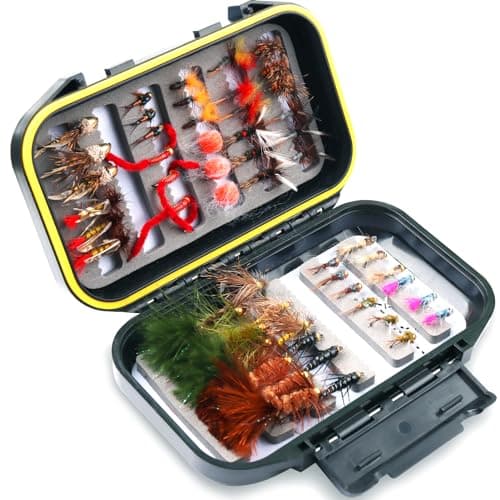
The one kit on this page built the way a rainbow actually feeds. Alongside the usual dries and nymphs it carries San Juan worms and egg patterns, which are the two highest-percentage flies on stocked rainbow water and almost never appear in general trout assortments. Buy this first and build around it.
Best for: Best overall — the only assortment with eggs and worms in it9.3 - 2
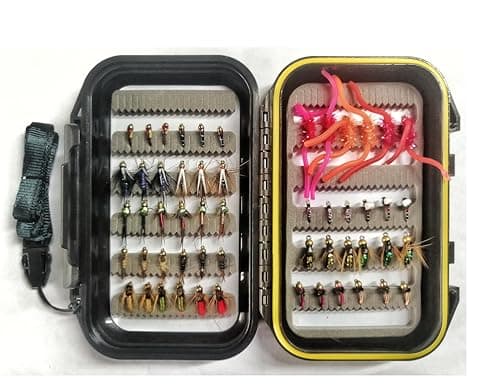
A nymph-only assortment, which sounds narrow until you accept that rainbows take subsurface food several times more often than they take dries. Fifty-four bead-head nymphs and wet flies with a waterproof box is the single most useful fly purchase for anyone who wants to catch rainbows rather than watch for rises.
Best for: Best nymph box — where rainbows do most of their eating9.2 - 3
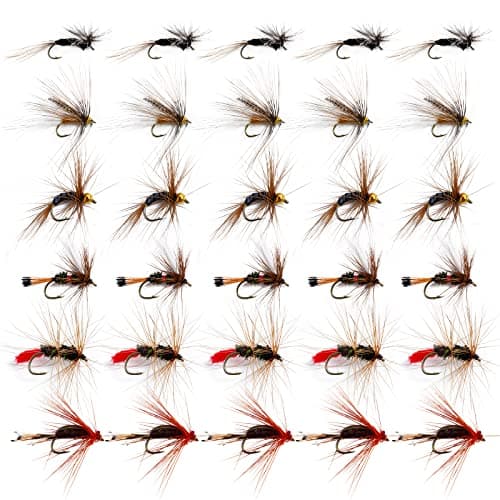
Thirty flies across dries, wets and nymphs, which is roughly a season of creek fishing without paying for patterns you will never tie on. The nymph weighting suits rainbow behavior, and if you would rather learn six flies properly than own sixty, this is where to start.
Best for: Best small kit — one season, no waste8.9 - 4
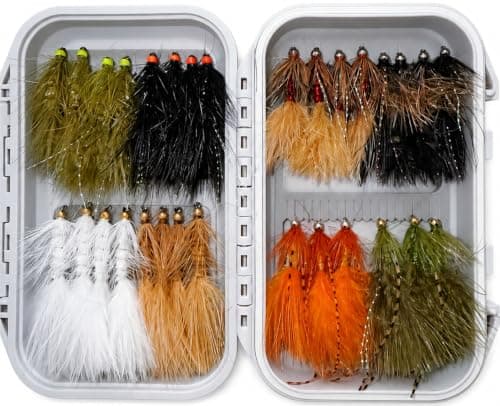
The search fly. When nothing is rising and you do not know where the fish are, a Woolly Bugger stripped through a pool covers water and provokes a reaction that a dead-drifted nymph will not. Olive and black in size 8 and 10 for rainbows, which run bigger than brookies and will take a bigger fly.
Best for: Best single pattern for a rainbow you cannot find9.1 - 5
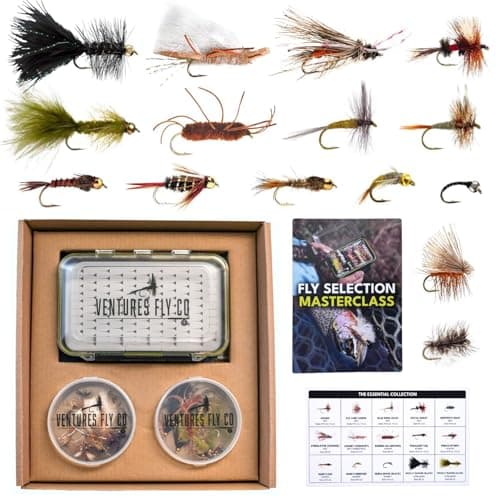
Wild rainbows in clear water are genuinely more selective than stocked ones, and that is the situation where tying quality starts to matter: a proper hackle profile and a body that has not unwound. Forty hand-tied flies with a box, and the right purchase once you have learned which patterns your river wants.
Best for: Best quality — for wild rainbows that get a second look9.0
| # | Product | Best for | Score | Price |
|---|---|---|---|---|
| 1 | 54-Piece Trout Fly Assortment: Dries, Nymphs, San Juan Worms, Salmon Eggs & Woolly Buggers The one kit on this page built the way a rainbow actually feeds. Alongside the usual dries and nymphs it carries San Juan worms and egg patterns, which are the two highest-percentage flies on stocked rainbow water and almost never appear in general trout assortments. Buy this first and build around it. | Best overall — the only assortment with eggs and worms in it | 9.3 | $49.99View on Amazon#ad |
| 2 | Wifreo 54-Piece Bead-Head Nymph & Wet Fly Assortment with Waterproof Fly Box A nymph-only assortment, which sounds narrow until you accept that rainbows take subsurface food several times more often than they take dries. Fifty-four bead-head nymphs and wet flies with a waterproof box is the single most useful fly purchase for anyone who wants to catch rainbows rather than watch for rises. | Best nymph box — where rainbows do most of their eating | 9.2 | $22.99View on Amazon#ad |
| 3 | Goture 30-Piece Dry, Wet & Nymph Fly Assortment Kit Thirty flies across dries, wets and nymphs, which is roughly a season of creek fishing without paying for patterns you will never tie on. The nymph weighting suits rainbow behavior, and if you would rather learn six flies properly than own sixty, this is where to start. | Best small kit — one season, no waste | 8.9 | $9.99View on Amazon#ad |
| 4 | Wooly Bugger Flies for Trout, Bass & Panfish, Sizes 4-10 The search fly. When nothing is rising and you do not know where the fish are, a Woolly Bugger stripped through a pool covers water and provokes a reaction that a dead-drifted nymph will not. Olive and black in size 8 and 10 for rainbows, which run bigger than brookies and will take a bigger fly. | Best single pattern for a rainbow you cannot find | 9.1 | $26.99View on Amazon#ad |
| 5 | Ventures Fly Co. 40 Premium Hand-Tied Flies with Box Wild rainbows in clear water are genuinely more selective than stocked ones, and that is the situation where tying quality starts to matter: a proper hackle profile and a body that has not unwound. Forty hand-tied flies with a box, and the right purchase once you have learned which patterns your river wants. | Best quality — for wild rainbows that get a second look | 9.0 | $74.99View on Amazon#ad |
The best flies for rainbow trout are bead-head nymphs, and the 54-piece assortment with San Juan worms and egg patterns is the kit to buy — because it is the only one here that includes the two patterns stocked rainbows eat most readily. If you want to go all-in on the highest-percentage approach, buy the nymph-only box and accept that you will be fishing below the surface.
Rainbow trout are the most widely stocked trout in the United States and the fish most anglers learn on. They are also the species where received fly-fishing wisdom — match the hatch, fish the dry — is furthest from what actually catches them.
How rainbows actually feed
Below the surface, most of the time. Trout take the overwhelming majority of their food subsurface, because that is where the overwhelming majority of it is — nymphs drifting in the current, not adults on the film. A nymph fished at the right depth is simply a higher-percentage fly than a dry, on most days, on most water.
Rainbows hold in faster water than brook or brown trout. They will sit in the seam of a riffle where food is delivered fastest, which means your fly has to get down quickly in a short window. That is why bead heads matter: weight at the front of the fly is what gets it to depth in a four-foot drift.
And they are aggressive, which is useful. A rainbow will chase a stripped streamer in a way a brown trout often will not, so when you cannot find fish, covering water with a Woolly Bugger is a genuinely productive search method rather than a desperate one.
The five flies that matter
| Fly | Size | Fish it | Why rainbows eat it |
|---|---|---|---|
| Bead-head pheasant tail / hare's ear nymph | 14 to 18 | Dead drift, under an indicator | Imitates the mayfly nymphs that make up most of their diet |
| San Juan worm | 12 to 16 | Dead drift, deep, after rain | Aquatic worms wash free in high water — an easy large meal |
| Egg pattern | 14 to 16 | Dead drift, bottom | Stocked fish are reared on pellets and key on egg-shaped food |
| Woolly Bugger | 8 to 10 | Stripped or swung | Provokes a chase from an aggressive fish; covers water |
| Parachute or attractor dry | 14 to 18 | Upstream, dead drift | For actual rises, and as an indicator over a nymph |
Two of each in two sizes is twenty flies and a complete box. The storage options are in the fly box roundup; the honest cost tiers across assortment and hand-tied flies are in the cheap flies guide.
Stocked rainbows are a different fish
Recently stocked rainbows eat shape and color, not species. They were raised on extruded pellets, so they key on roughly pellet-sized, pellet-colored items drifting past. That is the real reason egg patterns and bright attractors work on freshly stocked water and feel like cheating.
After a few months in a river they wise up considerably. Fish that have survived a season start behaving like wild trout: holding in better water, refusing sloppy drifts, and responding to actual insect patterns. The same stream can need two different boxes depending on when the truck came.
Wild rainbows are the selective ones. In clear water, a wild rainbow gets a long look at your fly and the drift has to be right. This is the one situation on this page where hand-tied quality and exact size are worth the money rather than a nicety.
If you only learn one technique, learn the indicator nymph
Eggs and worms, and why they work
A San Juan worm is a piece of red chenille on a hook, and it is deadly. Aquatic worms genuinely live in river silt and genuinely wash free when water rises, so after rain it is an honest imitation of a large easy meal. Fish it deep and dead-drifted, not swung.
An egg pattern is a bead of yarn, and it works for two reasons. On rivers with spawning fish it imitates a real loose egg drifting downstream. On stocked water it looks like a feed pellet. Either way it is a fly that requires no entomology and catches rainbows consistently.
Both are the patterns purists leave out of their boxes. They are also the patterns that will save a day in high water in March, which is when rainbow fishing most needs saving. If you prefer imitating insects, the general trout selection is in the best flies for trout.
Through the season
Early spring: worms and eggs, deep. High cold water, fish on the bottom in the slowest seams. This is San Juan worm season and the time of year a dry fly is a waste of a drift.
Late spring to summer: nymphs all day, dries in the evening. The mayfly and caddis hatches arrive, fish move into faster water, and the indicator nymph is the method. Evening rises are when the dry box earns its place.
Fall: streamers, and eggs again. Rainbows get aggressive as water cools, which makes a stripped Woolly Bugger the fly of the season, and wherever other species are spawning the egg pattern comes back. Seasons and tackle rules vary by state and change — check your state wildlife agency. For brook trout, which feed differently, see the best flies for brook trout, and for the spinning alternative on the same water, the best trout lures.
If you fish spinning gear for the same fish. The best lures for rainbow trout covers the spinners, spoons and soft plastics that take rainbows in the same creeks.
The picks in detail
54-Piece Trout Fly Assortment: Dries, Nymphs, San Juan Worms, Salmon Eggs & Woolly Buggers
9.3/10Best for: Best overall — the only assortment with eggs and worms in it
The one kit on this page built the way a rainbow actually feeds. Alongside the usual dries and nymphs it carries San Juan worms and egg patterns, which are the two highest-percentage flies on stocked rainbow water and almost never appear in general trout assortments. Buy this first and build around it.
- Count
- 54 flies
- Includes
- Dries, nymphs, San Juan worms, eggs, buggers
- Best on
- Stocked and wild rainbows
- Egg and worm patterns included, not just insects
- Broad enough to cover a whole season
- Covers the stocked-fish situation most anglers actually fish
- Assortment-grade hooks and durability
- No fly box included
Wifreo 54-Piece Bead-Head Nymph & Wet Fly Assortment with Waterproof Fly Box
9.2/10Best for: Best nymph box — where rainbows do most of their eating
A nymph-only assortment, which sounds narrow until you accept that rainbows take subsurface food several times more often than they take dries. Fifty-four bead-head nymphs and wet flies with a waterproof box is the single most useful fly purchase for anyone who wants to catch rainbows rather than watch for rises.
- Count
- 54 flies
- Type
- Bead-head nymphs and wet flies
- Box
- Waterproof, included
- Bead heads get down without added weight
- Nymphs are the highest-percentage rainbow fly
- Waterproof box included
- No dries at all — a second purchase
- Assortment-grade construction
Goture 30-Piece Dry, Wet & Nymph Fly Assortment Kit
8.9/10Best for: Best small kit — one season, no waste
Thirty flies across dries, wets and nymphs, which is roughly a season of creek fishing without paying for patterns you will never tie on. The nymph weighting suits rainbow behavior, and if you would rather learn six flies properly than own sixty, this is where to start.
- Count
- 30 flies
- Mix
- Dry, wet and nymph
- Box
- Included
- Right size for one season
- Nymph-weighted mix
- Lowest total spend here
- No egg or worm patterns
- Thirty flies goes fast in snaggy water
Wooly Bugger Flies for Trout, Bass & Panfish, Sizes 4-10
9.1/10Best for: Best single pattern for a rainbow you cannot find
The search fly. When nothing is rising and you do not know where the fish are, a Woolly Bugger stripped through a pool covers water and provokes a reaction that a dead-drifted nymph will not. Olive and black in size 8 and 10 for rainbows, which run bigger than brookies and will take a bigger fly.
- Sizes
- 4 to 10 — fish 8 and 10
- Type
- Weighted streamer
- Fish it
- Stripped or swung through pools
- Covers water fast when you are searching
- Provokes reaction strikes from inactive fish
- Cheap enough to fish in snaggy water
- Not a hatch-matching fly
- Heavier to cast on a light rod
Ventures Fly Co. 40 Premium Hand-Tied Flies with Box
9.0/10Best for: Best quality — for wild rainbows that get a second look
Wild rainbows in clear water are genuinely more selective than stocked ones, and that is the situation where tying quality starts to matter: a proper hackle profile and a body that has not unwound. Forty hand-tied flies with a box, and the right purchase once you have learned which patterns your river wants.
- Count
- 40 hand-tied flies
- Mix
- Dries, nymphs, streamers
- Box
- Included
- Holds shape after fish
- Better profile for selective wild fish
- Box included
- Several times the cost per fly of bulk kits
- General patterns, not river-specific
Prices shown are from Amazon as of October 20, 2026 and change often — the button always goes to the current listing. Some links may earn us a commission at no extra cost to you. How this works.
Frequently asked questions
What is the best fly for rainbow trout?
A bead-head nymph - a pheasant tail or hare's ear in size 14 to 18 - dead-drifted under a small indicator. Trout take the large majority of their food below the surface, and the bead head is what gets the fly to depth inside the short drift a riffle seam gives you.
Do egg patterns work for rainbow trout?
Yes, and unusually well. On rivers with spawning fish an egg pattern imitates a real loose egg drifting downstream; on stocked water it looks like the extruded feed pellet the fish were reared on. Either way it needs no entomology and catches rainbows consistently, especially in early spring.
What is a San Juan worm and when do you fish it?
A piece of red chenille on a hook, imitating the aquatic worms that live in river silt and wash free when water rises. Fish it deep and dead-drifted after rain and in high early-season water. It is one of the two most productive rainbow flies and the one purists most often leave out of the box.
Are stocked rainbow trout easier to catch than wild ones?
Much easier, at first. Recently stocked rainbows were reared on pellets and key on roughly pellet-sized, pellet-colored items, which is why eggs and bright attractors work so well on them. After a few months in a river they start behaving like wild fish - holding in better water and refusing sloppy drifts.
What size flies for rainbow trout?
Nymphs in 14 to 18, dries in 14 to 18, San Juan worms in 12 to 16 and Woolly Buggers in 8 to 10. Rainbows run larger than headwater brook trout so they will take a bigger streamer, but the nymphs and dries still need to be small enough to match real insects.
Sources
Keep reading
Not sure where to start?
The beginner gear guide walks you through exactly what a new stream angler needs — the six essentials first, nice-to-haves later, with one safe-default pick per category.