Flies & Lures · Roundup
The Best Trout Bait
Bait out-fishes everything on cold water and stocked ponds, and almost nobody explains how to rig it. Six baits, what each one is actually for, and the one rule that keeps fish releasable.
Disclosure: Creek Cover is reader-supported. If you buy through our links we may earn a commission, at no extra cost to you. It never changes which pick we tell a new angler to start with. Full disclosure.
Quick picks at a glance
Tap a pick to read the full write-up, or the price button to check it on Amazon.
- 1
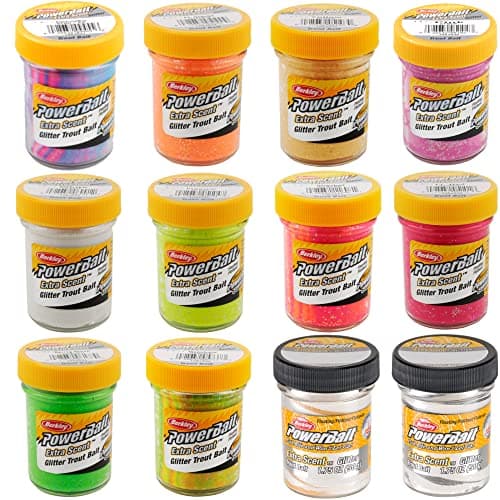
The default trout bait in North America, and deservedly. A moldable scented dough that floats a hook just off the bottom — which is exactly where a stocked trout expects food to be, because that is how it was fed in the hatchery.
Best for: Best trout bait overall9.4 - 2
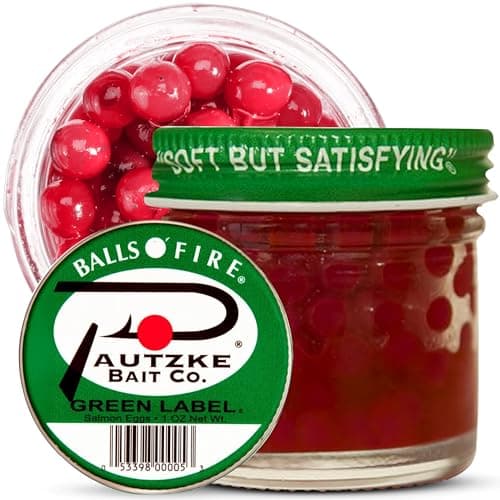
Real cured salmon eggs, and the bait wild stream trout take most readily — because a drifting egg is a thing they genuinely encounter. Single egg, small hook, drifted through a pool, and nothing else comes close in a cold river.
Best for: Best natural bait9.2 - 3
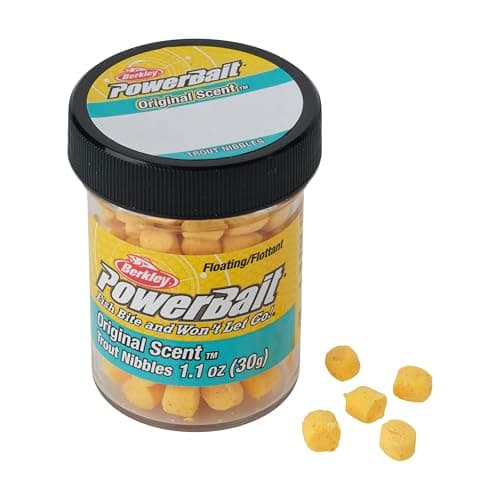
Pea-sized firm pellets that stay on a tiny hook, which the soft dough baits do not. Their real job is tipping a micro jig or a bare hook under a float with scent that will not wash off in ten minutes.
Best for: Best for tipping hooks and jigs9.0 - 4
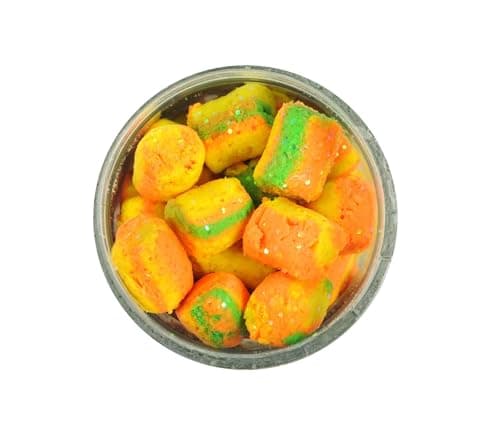
The Gulp! formula releases scent into the water far more aggressively than standard dough, which is what you want when the water is cold and fish are not moving to find food.
Best for: Best scent dispersion8.8 - 5
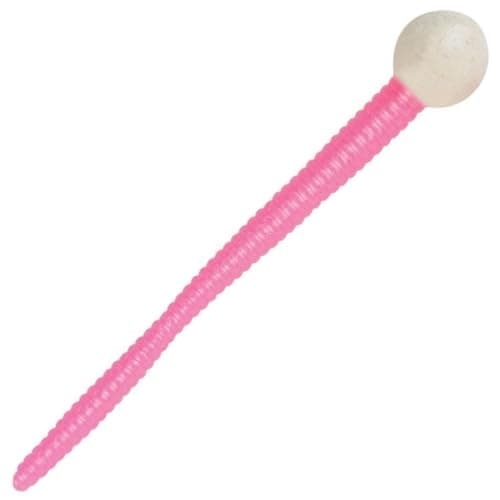
A pre-formed body with a soft tail that wiggles in the slightest flow, so it works like a lure but fishes like a bait. The easiest option here for anyone who does not want to mold dough onto a hook in the cold.
Best for: Best ready-to-fish bait8.6 - 6
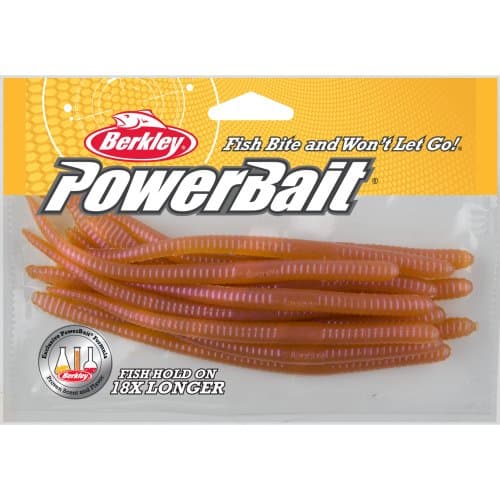
A scented artificial nightcrawler that behaves like the real thing without a tub of live worms in your pack. Cut it in half for trout — a whole six-inch worm is a bass bait.
Best for: Best worm substitute8.4
| # | Product | Best for | Score | Price |
|---|---|---|---|---|
| 1 | Berkley PowerBait Glitter Trout Bait, Rainbow The default trout bait in North America, and deservedly. A moldable scented dough that floats a hook just off the bottom — which is exactly where a stocked trout expects food to be, because that is how it was fed in the hatchery. | Best trout bait overall | 9.4 | $6.97View on Amazon#ad |
| 2 | Pautzke Balls O' Fire Salmon Eggs Real cured salmon eggs, and the bait wild stream trout take most readily — because a drifting egg is a thing they genuinely encounter. Single egg, small hook, drifted through a pool, and nothing else comes close in a cold river. | Best natural bait | 9.2 | $11.99View on Amazon#ad |
| 3 | Berkley PowerBait Trout Nibbles Dough Bait Pea-sized firm pellets that stay on a tiny hook, which the soft dough baits do not. Their real job is tipping a micro jig or a bare hook under a float with scent that will not wash off in ten minutes. | Best for tipping hooks and jigs | 9.0 | $6.99View on Amazon#ad |
| 4 | Berkley Gulp! Trout Nuggets, Rainbow Candy The Gulp! formula releases scent into the water far more aggressively than standard dough, which is what you want when the water is cold and fish are not moving to find food. | Best scent dispersion | 8.8 | $7.97View on Amazon#ad |
| 5 | Berkley PowerBait Floating Mice Tails A pre-formed body with a soft tail that wiggles in the slightest flow, so it works like a lure but fishes like a bait. The easiest option here for anyone who does not want to mold dough onto a hook in the cold. | Best ready-to-fish bait | 8.6 | $4.25View on Amazon#ad |
| 6 | Berkley PowerBait Power Nightcrawler, 6 in A scented artificial nightcrawler that behaves like the real thing without a tub of live worms in your pack. Cut it in half for trout — a whole six-inch worm is a bass bait. | Best worm substitute | 8.4 | $5.17View on Amazon#ad |
The best trout bait for most people is a jar of rainbow glitter PowerBait — specifically for stocked ponds and lakes, where it out-fishes almost everything else and costs a few dollars. If you fish wild trout in cold rivers instead, buy Pautzke Balls O' Fire salmon eggs, because a single drifting egg is something a stream trout actually recognizes as food.
Bait has a reputation problem in fishing media and a very good record on the water. On a cold morning in March, in a stocked lake, or in high colored water after rain, a static scented bait will out-catch the best lure in your box several times over. The skill is not in the choosing — it is in the rigging, which is where almost every guide stops short.
How we picked these
We selected six baits that between them cover every trout situation, rather than six dough baits that do the same job. For each we judged published composition and presentation, how well it stays on a hook, whether it floats or sinks, how it stores between trips, and which fish it suits — hatchery trout and wild trout respond to quite different things.
We do not run comparative catch trials; honest ones are nearly impossible outside a hatchery raceway. What we can assess is specification, format, rigging practicality and decades of documented commercial use. The method is on the how we research and pick page, and prices here are read live and dated rather than typed into the copy.
Stocked trout and wild trout want different things
This single distinction explains most arguments about trout bait, and almost no one states it plainly.
A stocked trout was raised on floating pellets. For its whole life, food appeared from above, smelled strongly, and did not move. That is precisely what a ball of PowerBait floating eighteen inches off the bottom looks and smells like. It is not that PowerBait imitates anything in nature — it imitates the hatchery, which is why it works so disproportionately well on recently stocked fish.
A wild stream trout has never seen a pellet.It eats insect larvae, drifting nymphs, small minnows and — in rivers with a salmon or trout run — loose eggs. Which is why the egg bait and the artificial worm out-perform dough on genuinely wild water, and why some experienced stream anglers conclude “bait does not work” after trying the wrong bait on the wrong fish.
| Fish | First bait | Second choice | Rig |
|---|---|---|---|
| Recently stocked pond or lake trout | Glitter dough bait | Nibbles on a micro jig | Sliding sinker, 18-24 in leader |
| Wild stream or river trout | Single salmon egg | Half an artificial nightcrawler | Split shot, free drift |
| Cold water, nothing feeding | Gulp! nugget | Dough bait | Static on the bottom, long leader |
| High, colored water after rain | Artificial nightcrawler | Dough bait | Heavier split shot, fish the edges |
How to rig trout bait
Two rigs cover everything on this page, and both take under a minute.
The sliding sinker rig, for still water. Thread a small sliding egg sinker onto your main line, tie on a swivel to stop it, then an 18 to 24 inch length of lighter line to a single size 12 hook. Mold a pea-sized ball of dough bait over the hook so the hook point stays proud. The bait floats up off the bottom while the sinker holds position, and a trout can take it without feeling the weight.
The split-shot drift, for current. Pinch one or two small split shot 12 to 18 inches above a size 12 to 14 hook, bait with a single salmon egg or half an artificial worm, and cast upstream. Let it roll along the bottom at the speed of the current with the rod tip following it, keeping just enough contact to feel a stop. Takes feel like the bait has snagged — set the hook at anything that is not obviously rock.
Match the hook to the bait, not the fish
Keeping bait-caught trout releasable
There is one real cost to bait fishing, and pretending otherwise would be dishonest: trout swallow bait. A fish that takes a lure is almost always hooked in the jaw; a fish that takes a static bait it has had time to inspect is often hooked deeper, and deeply hooked trout die at a much higher rate even when released carefully.
If you intend to release your fish, three habits make most of the difference. Never leave the rod unattended — strike early, at the first movement, rather than letting a trout swallow. Use a single barbless or pinched-barb hook, so a jaw-hooked fish comes off in seconds. And if a fish is hooked deep, cut the line rather than digging for the hook; survival rates with a cut line are far better than with an extracted gut hook.
If you plan to release everything you catch, lures are the kinder choice — see the best trout lures. If you are fishing a stocked put-and-take water where fish are intended for the table, bait is the efficient tool and this concern largely falls away.
When bait beats lures
Bait demand climbs from roughly 2,900 searches a month in January to over 12,000 in April, and the curve tracks spring stocking almost exactly. But the real seasonal logic is about water temperature and fish behavior.
Bait wins in cold water— below about 45 °F a trout will not chase a spinner twenty feet but will eat something sitting in front of it. Bait wins on recently stocked water, for the hatchery-pellet reason above. Bait wins in high colored water, where scent carries and sight does not. And bait wins when you are fishing with children, because a rod in a rest with a bell on the tip produces fish without an hour of casting practice first.
Lures win when you need to cover water, in summer when fish are active, and anywhere you intend to release everything. Most people who fish seriously for trout carry both and switch when one stops producing.
Where bait is not allowed
Many of the best trout streams in America have special regulations, and a large share of those are artificial-lures-only or fly-fishing-only stretches where every bait on this page is prohibited. Some waters also ban scented soft plastics under the same rule, which catches people out.
These rules are set per water body, sometimes per mile of river, and they change between seasons. Check your state wildlife agency's current regulations for the specific stretch before you fish it. We deliberately do not publish a state-by-state summary here: it would go stale, and being wrong about it costs you a citation rather than a fish.
If the water you want to fish is lure-only, the equivalent page is the best trout lures; for fly-only water, start at the best flies for trout. For the rod to fish bait on, an ultralight spinning setup is ideal and the beginner rod roundup covers the sensible options.
The picks in detail
Berkley PowerBait Glitter Trout Bait, Rainbow
9.4/10Best for: Best trout bait overall
The default trout bait in North America, and deservedly. A moldable scented dough that floats a hook just off the bottom — which is exactly where a stocked trout expects food to be, because that is how it was fed in the hatchery.
- Type
- Moldable dough bait
- Presentation
- Floats off bottom on a split-shot rig
- Best water
- Stocked ponds, lakes, slow pools
- Shelf life
- Years in a sealed jar
- Highest hit rate on stocked trout of anything here
- Molds onto a bare hook in seconds
- One jar lasts several seasons
- Classed as bait — banned on lure-only and fly-only water
- Easy to deep-hook a fish if you leave the rod unattended
Pautzke Balls O' Fire Salmon Eggs
9.2/10Best for: Best natural bait
Real cured salmon eggs, and the bait wild stream trout take most readily — because a drifting egg is a thing they genuinely encounter. Single egg, small hook, drifted through a pool, and nothing else comes close in a cold river.
- Type
- Cured natural salmon eggs
- Presentation
- Single egg on a size 12-14 hook
- Best water
- Cold rivers, wild trout streams
- Storage
- Sealed jar, refrigerate after opening
- The most natural-looking bait on this page
- Works on wild trout, not just stocked fish
- Drifts beautifully in current
- Soft — comes off the hook on a hard cast
- Needs refrigeration once opened
Berkley PowerBait Trout Nibbles Dough Bait
9.0/10Best for: Best for tipping hooks and jigs
Pea-sized firm pellets that stay on a tiny hook, which the soft dough baits do not. Their real job is tipping a micro jig or a bare hook under a float with scent that will not wash off in ten minutes.
- Type
- Firm scented pellets
- Presentation
- One or two on a small hook or jig
- Best water
- Stocked ponds, float fishing
- Pairs with
- Micro jigs, bare size 14 hooks
- Stays on the hook far better than soft dough
- Converts any small jig into a scented bait
- Very low cost per fishing session
- Less scent dispersion than a dough ball
- Dries out if the jar is left open
Berkley Gulp! Trout Nuggets, Rainbow Candy
8.8/10Best for: Best scent dispersion
The Gulp! formula releases scent into the water far more aggressively than standard dough, which is what you want when the water is cold and fish are not moving to find food.
- Type
- Water-based scented nuggets
- Presentation
- One nugget on a bare hook
- Best water
- Cold water, winter, deep pools
- Size
- 1 oz jar
- Strongest scent trail of the dough baits here
- Holds shape better than moldable dough
- Good in very cold water when fish will not search
- The jar liquid is messy and smells strongly
- Dries out quickly if left on the hook
Berkley PowerBait Floating Mice Tails
8.6/10Best for: Best ready-to-fish bait
A pre-formed body with a soft tail that wiggles in the slightest flow, so it works like a lure but fishes like a bait. The easiest option here for anyone who does not want to mold dough onto a hook in the cold.
- Type
- Pre-formed floating soft bait
- Length
- 3"
- Presentation
- Single hook plus split shot
- Best water
- Stocked ponds, slow creeks
- No molding or mess
- Tail moves in almost no current
- Single hook, so release is clean
- Fewer pieces per pack than a dough jar
- Less effective than dough on heavily stocked water
Berkley PowerBait Power Nightcrawler, 6 in
8.4/10Best for: Best worm substitute
A scented artificial nightcrawler that behaves like the real thing without a tub of live worms in your pack. Cut it in half for trout — a whole six-inch worm is a bass bait.
- Type
- Scented artificial worm
- Length
- 6" (13 per pack)
- Presentation
- Half a worm, size 10-12 hook
- Best water
- Rivers after rain, deep pools
- No live bait to keep alive or refrigerate
- Excellent in high, colored water
- 13 worms is a lot of fishing
- Must be cut down for trout-sized hooks
- A real nightcrawler still edges it on a wild river
Prices shown are from Amazon as of October 20, 2026 and change often — the button always goes to the current listing. Some links may earn us a commission at no extra cost to you. How this works.
Frequently asked questions
What is the best bait for trout?
Rainbow glitter PowerBait for stocked ponds and lakes, and single cured salmon eggs for wild trout in cold rivers. The difference matters: stocked trout were raised on floating pellets and respond strongly to scented dough, while wild stream trout have never seen a pellet and take natural baits like eggs and worms far more readily.
How do you rig PowerBait for trout?
Use a sliding sinker rig. Thread a small egg sinker on the main line, tie a swivel below it to stop it, then an 18 to 24 inch lighter leader to a single size 12 hook. Mold a pea-sized ball of dough over the hook leaving the point proud. The bait floats off the bottom while the sinker holds position.
What hook size should I use for trout bait?
Size 12 for a pea of dough bait or a single salmon egg, and size 14 for nibbles or pellets. Too large a hook is the most common bait mistake — it holds plenty of bait and catches very few trout, because the fish feels metal before it feels food.
Is trout bait better than lures?
In cold water, on recently stocked ponds, in high colored water and when fishing with children, yes. Lures are better when you want to cover water, in warm active conditions, and whenever you intend to release every fish, because bait-caught trout are hooked deeper and survive release less often.
Can I use trout bait anywhere?
No. Many of the best trout streams have artificial-lures-only or fly-fishing-only sections where every scented bait is prohibited, and some also ban scented soft plastics. The rules are set per water body and change between seasons, so check your state wildlife agency's current regulations for the specific stretch before you fish.
How long does trout bait last?
Sealed jars of dough bait keep for years and are good for several seasons. Opened salmon eggs need refrigerating. Nibbles and nuggets dry out if the jar is left open, so close them between casts. Artificial worms keep indefinitely in their sealed pack.
Sources
Keep reading
Not sure where to start?
The beginner gear guide walks you through exactly what a new stream angler needs — the six essentials first, nice-to-haves later, with one safe-default pick per category.