Flies & Lures · Roundup
The Best Trout Lures for Lakes and Ponds
Still water removes the current that does half the work in a creek. What replaces it is depth control — and that changes the lure list completely.
Disclosure: Creek Cover is reader-supported. If you buy through our links we may earn a commission, at no extra cost to you. It never changes which pick we tell a new angler to start with. Full disclosure.
Quick picks at a glance
Tap a pick to read the full write-up, or the price button to check it on Amazon.
- 1
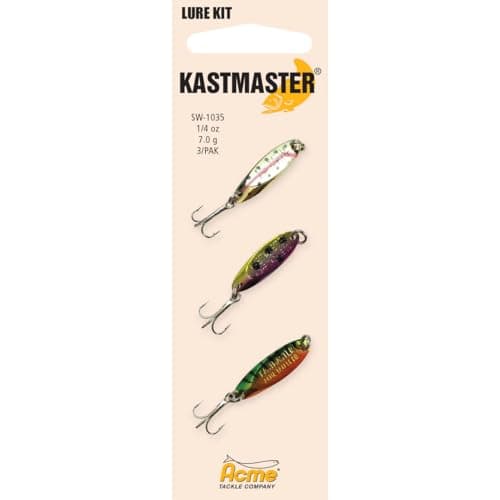
The machined brass body makes this the longest-casting lure on the page, which matters more in a lake than anything else — bank anglers are usually fishing the first 40 yards of water and the fish are often beyond it.
Best for: Best lake trout lure overall9.4 - 2
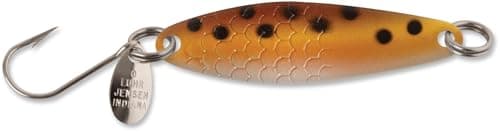
A thin, slow-rolling spoon designed to be pulled rather than cast, and the classic lake-trout and kokanee trolling lure in the west. At walking-pace speeds it has an erratic roll nothing else reproduces.
Best for: Best trolling lure9.1 - 3

A large floating balsa minnow trolled or retrieved slowly near the surface. It catches far fewer trout than a spoon and a much higher proportion of large ones, because it looks like a meal rather than a snack.
Best for: Best for big lake trout8.9 - 4
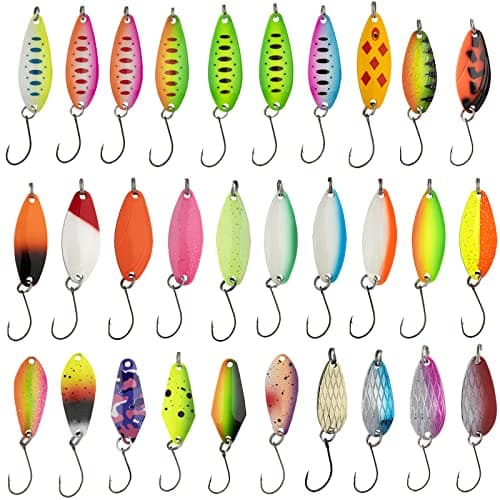
Thirty casting and trolling spoons across a range of sizes and finishes for the price of two branded ones. The finishes are not Acme's, but for learning which size and color your lake responds to it is the efficient purchase.
Best for: Best budget assortment8.5 - 5
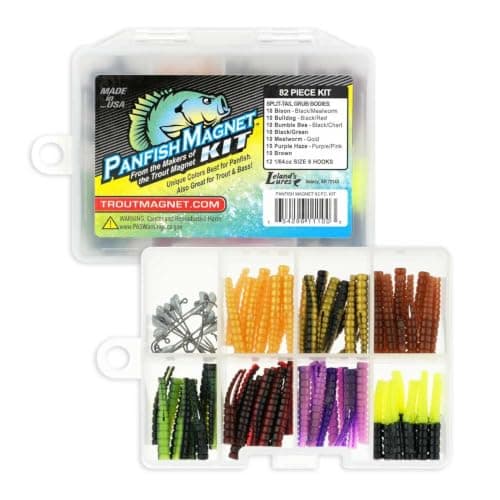
A 1/64 ounce split-tail grub under a small float, left almost motionless. It is the single most effective thing on a recently stocked pond, because hatchery trout feed on small slow objects and nothing else here is small or slow.
Best for: Best for stocked ponds9.0 - 6
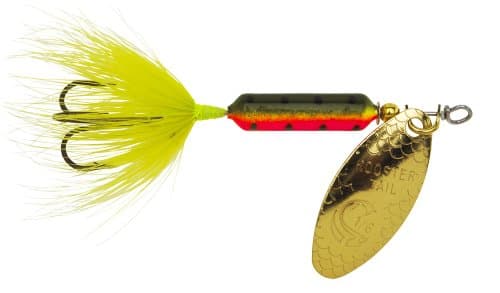
The creek spinner still earns a place in still water, but only in a specific spot: the shallow margins, and especially around an inlet stream where moving water concentrates fish.
Best for: Best for pond margins and inlets8.6
| # | Product | Best for | Score | Price |
|---|---|---|---|---|
| 1 | Acme Tackle Kastmaster Trout Spoon, 1/4 oz, 3 Pack The machined brass body makes this the longest-casting lure on the page, which matters more in a lake than anything else — bank anglers are usually fishing the first 40 yards of water and the fish are often beyond it. | Best lake trout lure overall | 9.4 | $14.99View on Amazon#ad |
| 2 | Luhr Jensen Needlefish Spoon, Size 2, Brown Trout / Brass Back A thin, slow-rolling spoon designed to be pulled rather than cast, and the classic lake-trout and kokanee trolling lure in the west. At walking-pace speeds it has an erratic roll nothing else reproduces. | Best trolling lure | 9.1 | $10.87View on Amazon#ad |
| 3 | Rapala Original Floater Balsa Minnow, 4-3/8", Rainbow Trout A large floating balsa minnow trolled or retrieved slowly near the surface. It catches far fewer trout than a spoon and a much higher proportion of large ones, because it looks like a meal rather than a snack. | Best for big lake trout | 8.9 | $8.97View on Amazon#ad |
| 4 | QualyQualy Fishing Spoon Assortment, 30-Piece Trout Lure Set Thirty casting and trolling spoons across a range of sizes and finishes for the price of two branded ones. The finishes are not Acme's, but for learning which size and color your lake responds to it is the efficient purchase. | Best budget assortment | 8.5 | $24.99View on Amazon#ad |
| 5 | Trout Magnet Panfish Magnet Kit, 82-Piece A 1/64 ounce split-tail grub under a small float, left almost motionless. It is the single most effective thing on a recently stocked pond, because hatchery trout feed on small slow objects and nothing else here is small or slow. | Best for stocked ponds | 9.0 | $14.99View on Amazon#ad |
| 6 | Wordens Original Rooster Tail Spinner, 1/16 oz The creek spinner still earns a place in still water, but only in a specific spot: the shallow margins, and especially around an inlet stream where moving water concentrates fish. | Best for pond margins and inlets | 8.6 | $14.99View on Amazon#ad |
The best trout lure for lakes is a 1/4 ounce Acme Kastmaster spoon — for anyone fishing from the bank, which is most people. It casts further than anything else here, and distance is the constraint that actually decides a lake session. If you fish from a boat or kayak, the Luhr Jensen Needlefish is the better buy, because it is built to be pulled slowly rather than cast. For small stocked ponds, neither is right: buy the Trout Magnet kit.
That three-way split is the whole point of this page. “Lake” covers a 2,000-acre reservoir and a half-acre town pond, and a lure that is correct for one is useless on the other.
How we picked these
We judged these on the two properties still water actually demands: castable distance and controllable sink rate. A creek lure needs neither — the current carries it and the water is three feet deep. In a lake, the fish may be sixty yards out and eighteen feet down, and a lure that cannot reach both is a decoration.
We then selected one lure per job rather than six of the same type, and checked published weights, body material, intended retrieve or trolling speed, and hook configuration from the manufacturers' own listings. We do not run sonar-verified depth tests or claim fishing hours we have not logged; the method is on the how we research and pick page. Every price here is read live and dated.
Why lake lures differ from creek lures
In a creek, current does most of the work. It carries scent, it animates the lure, it holds fish in predictable seams, and the whole river is shallow enough that depth is barely a decision. A 1/16 ounce spinner is perfect because you only need to cast fifteen feet.
A lake removes all of that. There is no current to animate the lure, no seams to read, and fish distribute themselves by temperature and oxygen through a water column that can be forty feet deep. What replaces current is you: your retrieve provides the action, your casting provides the search, and your count-down provides the depth.
| Factor | Creek or river | Lake or reservoir |
|---|---|---|
| Lure weight | 1/16 - 1/8 oz | 1/4 - 3/8 oz |
| Why | Short casts, current animates it | Distance and sink rate |
| Best type | Inline spinner | Casting spoon |
| Depth control | Barely needed | The main skill |
| Finding fish | Read the current seams | Search by depth and temperature |
If your water is moving, this is the wrong page — see the best trout lures for rivers and creeks. For the full picture across all water types, start at the best trout lures.
From the bank, and from a boat
From the bank, you are fishing a wedge of water and the limit is your cast. Buy weight. A 1/4 ounce spoon on 6 lb line reaches genuinely useful water; a 1/16 ounce spinner does not. Fan your casts to cover the wedge, count the spoon down a different number of seconds on each pass, and keep a note of the count that produced a take — that number is your depth for the rest of the session.
From a boat or kayak, the problem inverts. Distance stops mattering and speed control starts. A trolling spoon at 1 to 2 mph covers far more water than any number of casts, and the needlefish profile is built for exactly that speed band. Troll in a zigzag rather than a straight line: the speed change on the turns is often what triggers the take.
The one piece of kit that changes lake fishing
Depth: the whole problem in still water
Trout need cold, oxygenated water, and in a lake that depth moves through the year. Get the depth right with a mediocre lure and you catch fish; get it wrong with a perfect lure and you do not.
Spring and autumn: surface water is cool, so trout are shallow and spread out — often in the top ten feet and close to the bank. This is the easiest time to fish from shore and the reason lake-lure demand peaks in October. Summer: the lake stratifies and trout drop below the thermocline, frequently 20 to 40 feet down. From the bank this is close to hopeless in the middle of the day; fish dawn and dusk when they come up, or troll deep from a boat. Winter: fish are deep and slow. Count the spoon well down and retrieve at half the speed that feels right.
The practical method for a spoon is simple. Cast, count “one, two, three” as it sinks, then retrieve. Next cast, count to six. Then nine. You are mapping the water column in three-second slices, and once a fish takes you have the answer and stop guessing.
Trout lures for ponds, which is a different job
Small stocked ponds are the most common trout water in America and they behave nothing like a reservoir. The water is shallow, the fish are recently stocked, and casting distance stops being the constraint entirely — you can reach the whole pond with a 1/16 ounce lure.
What changes is the fish. A hatchery trout spent its life eating small floating pellets that did not move, so it responds to small, slow and static far better than to flash and speed. That is exactly why the Trout Magnet under a float out-fishes every spoon on this page in a stocked pond, and why the heavy-spoon approach that works in a reservoir is actively wrong here.
If the pond is not producing on lures at all — common in the cold weeks right after stocking — bait is the honest answer, and the best trout bait page covers the rigs. Check the regulations for the specific water first, since some stocked fisheries are lure-only.
Season by season, including the October peak
Lake and pond lure demand has two peaks a year, and both are explained by water temperature. October is the bigger one: surface water has cooled, trout move shallow and feed hard before winter, and autumn stocking programs put fresh fish in. It is the best month of the year to fish a lake from the bank.
The second peak runs May to July, which is spring stocking plus the window before summer stratification pushes fish deep. In between, August is the hardest month from shore and February the slowest overall.
One seasonal gear note: autumn and spring lake fishing means standing in cold shallow water or on a wet bank for hours. Waders and boots extend the season more than any lure does, and a fishing backpack is more useful on a lake shore than the sling packs that suit a creek, because you are walking to a spot and staying rather than moving constantly.
The picks in detail
Acme Tackle Kastmaster Trout Spoon, 1/4 oz, 3 Pack
9.4/10Best for: Best lake trout lure overall
The machined brass body makes this the longest-casting lure on the page, which matters more in a lake than anything else — bank anglers are usually fishing the first 40 yards of water and the fish are often beyond it.
- Type
- Casting spoon
- Weight
- 1/4 oz
- Body
- Machined brass
- Use
- Casting from bank, or trolled
- Casts further than anything else here
- Sinks at a countable rate for depth control
- Flutters on the drop, which triggers takes
- Too heavy for a creek or a small pond margin
- Needs a light or medium-light rod, not an ultralight
Luhr Jensen Needlefish Spoon, Size 2, Brown Trout / Brass Back
9.1/10Best for: Best trolling lure
A thin, slow-rolling spoon designed to be pulled rather than cast, and the classic lake-trout and kokanee trolling lure in the west. At walking-pace speeds it has an erratic roll nothing else reproduces.
- Type
- Trolling spoon
- Size
- 2
- Speed
- Slow — 1-2 mph
- Use
- Trolled behind a boat or kayak
- Purpose-built for slow trolling speeds
- Long-standing record on western lakes
- Works behind a kayak as well as a boat
- Too light to cast any distance
- Needs a rod holder and a known trolling speed to shine
Rapala Original Floater Balsa Minnow, 4-3/8", Rainbow Trout
8.9/10Best for: Best for big lake trout
A large floating balsa minnow trolled or retrieved slowly near the surface. It catches far fewer trout than a spoon and a much higher proportion of large ones, because it looks like a meal rather than a snack.
- Type
- Floating minnow plug
- Length
- 4-3/8"
- Depth
- Shallow — surface to 3 ft
- Use
- Trolled or cast near shallows
- Selects for the largest fish in the lake
- Balsa body has a lively roll at low speed
- Excellent in the shallows at dawn and dusk
- Far too big for stocked pond trout
- Two trebles, so release handling is slower
QualyQualy Fishing Spoon Assortment, 30-Piece Trout Lure Set
8.5/10Best for: Best budget assortment
Thirty casting and trolling spoons across a range of sizes and finishes for the price of two branded ones. The finishes are not Acme's, but for learning which size and color your lake responds to it is the efficient purchase.
- Type
- Mixed casting / trolling spoons
- Count
- 30 spoons
- Sizes
- Multiple, mixed finishes
- Use
- Casting and trolling
- Covers a wide range of sizes in one purchase
- Lowest cost per lure on this page
- Good for working out what your lake likes
- Hook and split-ring quality is the weak point
- Finishes wear faster than machined brass
Trout Magnet Panfish Magnet Kit, 82-Piece
9.0/10Best for: Best for stocked ponds
A 1/64 ounce split-tail grub under a small float, left almost motionless. It is the single most effective thing on a recently stocked pond, because hatchery trout feed on small slow objects and nothing else here is small or slow.
- Type
- Micro jig and soft body
- Jig weight
- 1/64 oz
- Count
- 82 pieces
- Use
- Under a float, barely moving
- Unmatched on stocked pond trout
- Also the best panfish lure made
- 82 pieces lasts years
- Needs an ultralight rod and 2-4 lb line to cast
- No use at all for distance or trolling
Wordens Original Rooster Tail Spinner, 1/16 oz
8.6/10Best for: Best for pond margins and inlets
The creek spinner still earns a place in still water, but only in a specific spot: the shallow margins, and especially around an inlet stream where moving water concentrates fish.
- Type
- Inline spinner
- Weight
- 1/16 oz
- Depth
- Surface to 4 ft
- Use
- Margins, inlets, shallow bays
- Excellent around inlet streams and shallow bays
- Works at a very slow retrieve
- Costs very little
- Will not cast far enough for open-water fish
- Cannot reach depth in a deep lake
Prices shown are from Amazon as of October 20, 2026 and change often — the button always goes to the current listing. Some links may earn us a commission at no extra cost to you. How this works.
Frequently asked questions
What is the best trout lure for lakes?
A 1/4 ounce casting spoon such as the Acme Kastmaster if you are fishing from the bank, because distance is the real constraint from shore. From a boat or kayak, a slow trolling spoon like the Luhr Jensen Needlefish is better, since it is built for 1 to 2 mph rather than for casting.
What lures work for trout in ponds?
Small, slow ones. A 1/64 ounce micro jig under a float out-fishes spoons and spinners on stocked ponds, because hatchery trout were raised on small pellets that did not move. Heavy spoons are the right answer in a reservoir and the wrong answer in a half-acre pond.
How deep should I fish for trout in a lake?
It changes with the season. In spring and autumn trout are often in the top ten feet and close to shore. In summer the lake stratifies and they drop to 20 to 40 feet, so fish dawn and dusk from the bank or troll deep from a boat. In winter they are deep and slow. Count a spoon down in three-second increments until you find them, then repeat the count.
Can I use creek lures in a lake?
In the shallow margins and around inlet streams, yes — a 1/16 ounce spinner is genuinely good there. In open water it is too light to cast far enough or sink deep enough to matter. Lake fishing needs more weight than creek fishing, typically 1/4 ounce rather than 1/16.
What is the best time of year for lake trout fishing?
October is the strongest month from the bank: surface water has cooled, trout move shallow to feed before winter, and autumn stocking adds fresh fish. May through July is the second window, after spring stocking and before summer stratification pushes fish deep. August is hardest from shore.
What rod do I need for lake trout lures?
A light or medium-light spinning rod of about 7 feet, which casts a 1/4 ounce spoon properly and gives you distance from the bank. A true ultralight is the wrong tool here — it cannot cast the weight you need. Keep the ultralight for creeks and stocked ponds.
Sources
Keep reading
Not sure where to start?
The beginner gear guide walks you through exactly what a new stream angler needs — the six essentials first, nice-to-haves later, with one safe-default pick per category.