Flies & Lures · Roundup
The Best Trout Lures
Six lures cover trout everywhere in America. The hard part is not which brand — it is matching size and sink rate to the water in front of you.
Disclosure: Creek Cover is reader-supported. If you buy through our links we may earn a commission, at no extra cost to you. It never changes which pick we tell a new angler to start with. Full disclosure.
Quick picks at a glance
Tap a pick to read the full write-up, or the price button to check it on Amazon.
- 1
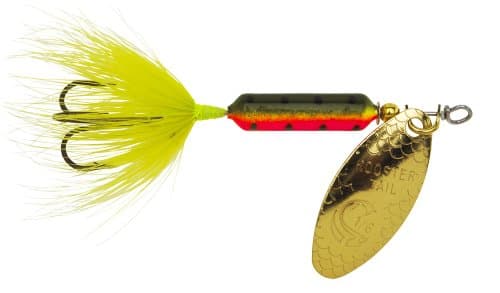
The inline spinner is the most productive trout lure ever made, and the 1/16 ounce Rooster Tail is its purest form. Flash, vibration and a hackle tail that pulses at a crawl — which matters because trout chase slowly in cold water.
Best for: Best trout lure overall9.5 - 2
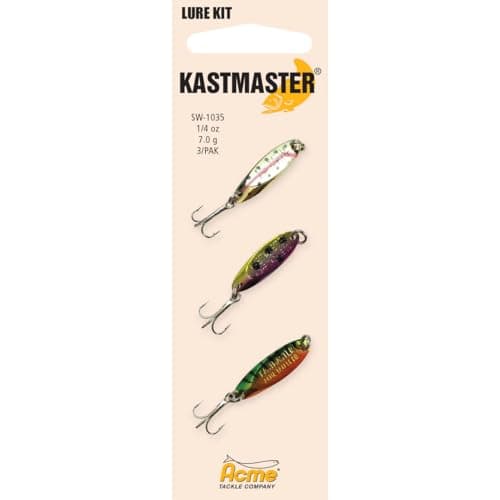
A casting spoon is what you reach for when the spinner cannot get there or cannot get down. The Kastmaster's machined brass body casts like a bullet into wind and flutters on the drop, which is when most takes happen.
Best for: Best for distance and deep water9.2 - 3
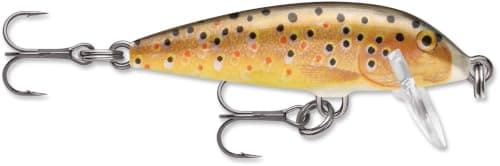
A sinking balsa minnow that counts down at a known rate, so you can fish a specific depth on purpose rather than by luck. It catches fewer trout than a spinner and a higher proportion of large ones.
Best for: Best for big trout and clear water9.0 - 4
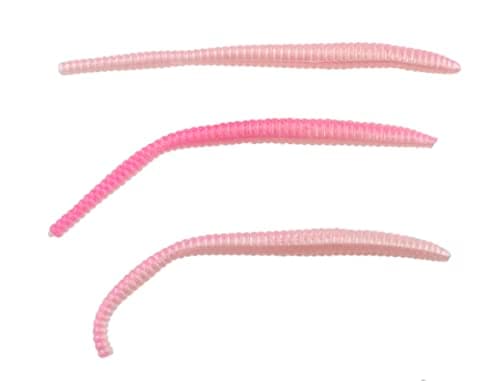
Half lure, half bait, and the answer on the cold bright days when trout refuse to move for a spinner. Rigged on a small hook above a split shot it floats just off the bottom and gets eaten by fish that are not feeding.
Best for: Best when nothing will chase8.8 - 5
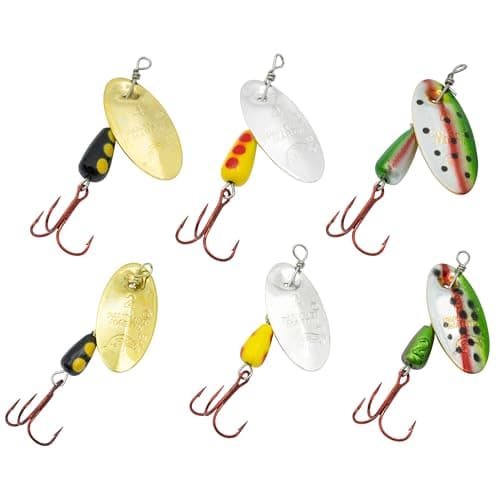
Six proven spinner patterns across the two weights that matter, in one purchase. The fastest way to find out which color your water likes without buying twenty singles to learn it.
Best for: Best starter assortment8.9 - 6
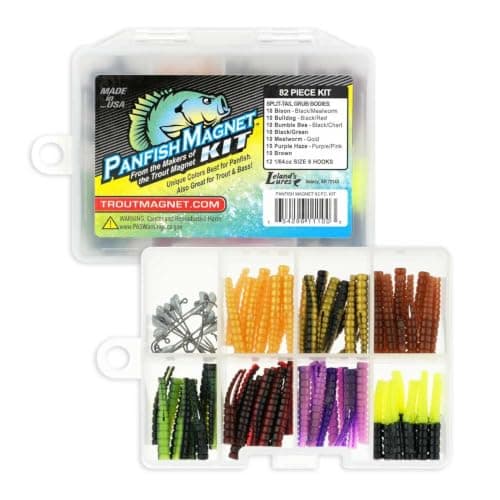
A tiny split-tail grub on a 1/64 ounce jig head, fished slowly under a float. It looks like nothing and catches trout that have seen every spinner in the county.
Best for: Best micro-jig system8.6
| # | Product | Best for | Score | Price |
|---|---|---|---|---|
| 1 | Wordens Original Rooster Tail Spinner, 1/16 oz The inline spinner is the most productive trout lure ever made, and the 1/16 ounce Rooster Tail is its purest form. Flash, vibration and a hackle tail that pulses at a crawl — which matters because trout chase slowly in cold water. | Best trout lure overall | 9.5 | $14.99View on Amazon#ad |
| 2 | Acme Tackle Kastmaster Trout Spoon, 1/4 oz, 3 Pack A casting spoon is what you reach for when the spinner cannot get there or cannot get down. The Kastmaster's machined brass body casts like a bullet into wind and flutters on the drop, which is when most takes happen. | Best for distance and deep water | 9.2 | $14.99View on Amazon#ad |
| 3 | Rapala Countdown Minnow, 2" Brown Trout A sinking balsa minnow that counts down at a known rate, so you can fish a specific depth on purpose rather than by luck. It catches fewer trout than a spinner and a higher proportion of large ones. | Best for big trout and clear water | 9.0 | $7.48View on Amazon#ad |
| 4 | Berkley PowerBait Power Floating Trout Worm, 3 in Half lure, half bait, and the answer on the cold bright days when trout refuse to move for a spinner. Rigged on a small hook above a split shot it floats just off the bottom and gets eaten by fish that are not feeding. | Best when nothing will chase | 8.8 | $5.99View on Amazon#ad |
| 5 | Panther Martin Best of the Best Spinner Kit, 1/16 & 1/8 oz, 6 Pack Six proven spinner patterns across the two weights that matter, in one purchase. The fastest way to find out which color your water likes without buying twenty singles to learn it. | Best starter assortment | 8.9 | $29.99View on Amazon#ad |
| 6 | Trout Magnet Panfish Magnet Kit, 82-Piece A tiny split-tail grub on a 1/64 ounce jig head, fished slowly under a float. It looks like nothing and catches trout that have seen every spinner in the county. | Best micro-jig system | 8.6 | $14.99View on Amazon#ad |
The best trout lure is a 1/16 ounce Wordens Original Rooster Tail — for anyone fishing creeks, small rivers or stocked ponds with an ultralight spinning rod, which is most trout anglers in America. If you fish lakes or big open water instead, the 1/4 ounce Acme Kastmaster is the better first buy, because distance and sink rate matter more there than finesse.
That is the short answer. The longer one is that trout lures are not really ranked against each other — they are ranked against conditions. A spinner that is unbeatable in a knee-deep creek is uncastable on a windy reservoir, and the spoon that solves the reservoir is far too heavy for the creek. This page is organized around that, so you can match the lure to your water rather than to a review score.
How we picked these
We selected for coverage first: six lures that between them handle every trout water type and every mood a trout has, rather than six versions of the same thing. For each category we then chose the pattern with the longest commercial track record in that niche, the weight range that suits small-to-medium water, and a price that lets you lose it in a tree without caring.
We do not run controlled fishing tests, and nobody honestly can — catch rates depend on water, weather and the angler far more than on the lure. What we can judge is published specification, weight and size options, hook configuration, how each type behaves mechanically in current and still water, and how each one is actually fished. Our method is on the how we research and pick page, and every price here is read live and dated rather than written into the text.
What lures to use for trout, by water
This is the question behind almost every trout-lure search, and it has a short answer per water type:
| Your water | First choice | Why | Weight |
|---|---|---|---|
| Small creek, overgrown | Inline spinner | Short casts, instant blade rotation, works at a crawl | 1/16 oz |
| Medium river, some current | Inline spinner or sinking minnow | Needs to hold depth against flow without snagging | 1/8 oz |
| Lake or reservoir | Casting spoon | Distance from the bank and a controllable sink rate | 1/4 - 3/8 oz |
| Stocked pond | Micro jig or scented soft plastic | Hatchery trout feed on small, slow, pellet-like things | 1/64 - 1/32 oz |
| Cold, bright, nothing moving | Floating trout worm on a split shot | Fish that will not chase will still eat something static | Hook plus shot |
One honest simplification: if you only ever fish one of these waters, you only need one or two lures from this page, and the rest is curiosity. The anglers who need all six are the ones who travel between creek, river and lake in the same season.
Size is the decision that matters
Nearly every beginner buys trout lures that are too big, and it costs them more fish than any other single mistake. Walk into a store and the eye-catching lures are 1/4 and 3/8 ounce, because those are the sizes that sell for bass. Stream trout eat insects and minnows an inch long. A 1/16 ounce spinner looks absurdly small in the hand and is exactly right in the water.
There is a mechanical reason the size question is really a rod question. A 1/16 ounce lure will not load a medium-power rod, so it cannot be cast more than a few feet — which is why people conclude small lures “do not work” and go back to the big ones. Fix the rod and the problem disappears. The ultralight rod roundup covers the blanks rated for this, and the combo page covers buying the rod and reel matched in one box.
The one-size-up exception
Trout lures for a spinning rod: the setup
Every lure on this page is a spinning-rod lure, and three details in the setup matter more than which one you tie on.
Line: 4 lb monofilament. Light enough to cast a tiny lure, stretchy enough to forgive a hard strike on a short line, and cheap. Braid is thinner and more sensitive but has no stretch, which costs you hooked fish at close range on an ultralight rod.
Reel: a 1000-size spinning reel. A 2500 is the default on the shelf and it is too heavy for an ultralight blank; the combination casts badly and feels dead. Our ultralight reel guide covers the sizing in detail.
A snap, not a knot, on spinners. Inline spinners twist line. A small snap swivel at the lure costs a fraction of the flash and saves you re-rigging twice a day. Tie direct to spoons and minnow plugs, which do not twist.
Trout lures and bait: where the line is
Two of our picks blur the line deliberately. The PowerBait trout worm and the Trout Magnet grub are soft plastics — lures by construction — but they are scented and fished slowly, which is bait behavior. That matters for two reasons.
First, it is why they work when nothing else does. A trout in 38-degree water will not chase a spinner twenty feet, but it will eat a scented grub drifting past its nose. Second, it is a regulations question: some special-regulation waters are lure-only or fly-only, and scented soft plastics are classed as bait on several of them.The rules vary by state and by individual stretch of river, so check your state wildlife agency's regulations for the specific water before you fish it. We do not publish regulation summaries here because they change and getting them wrong costs you a fine.
If you want the pure bait side of this — dough baits, salmon eggs and nightcrawlers — that is a separate page: the best trout bait.
How to fish each type
Inline spinner, in current: cast upstream at roughly 45 degrees and retrieve just fast enough to feel the blade turning. The lure should swing across and below you, not straight back at you. In still water, cast out and count down a few seconds before starting a slow, steady retrieve.
Casting spoon: cast long, let it sink, then lift-and-drop the rod tip through the retrieve. Most takes come as the spoon flutters down, so the pause is the presentation and the retrieve is just moving between pauses.
Sinking minnow plug: count it down to a known depth and retrieve slowly with occasional twitches. Keep a note of the count that produced the take — repeating the depth is the entire point of this lure.
Soft plastics and micro jigs: as slowly as you can bear. Under a small float in still water, or dead-drifted with a split shot in a slow pool. If it feels too slow, slow down again.
What to tie on through the season
Trout-lure demand peaks in April for a reason: water warms, fish start chasing, and spring stocking puts naive trout everywhere. That is the inline spinner's best month of the year and the easiest time to learn on.
Early spring, cold and high: a 1/8 ounce spinner or the countdown minnow, fished deep and slow. Late spring into summer: 1/16 ounce spinners, everywhere, all day. High summer, low clear water: go smaller and fish at dawn and dusk — micro jigs and the smallest spinner you can cast. Autumn: brown trout get aggressive before spawning, so the minnow plug earns its place. Winter: scented soft plastics and patience.
For moving water specifically, our trout lures for rivers and creeks page goes deeper on reading current and fishing pocket water. For still water, see trout lures for lakes and ponds. And if you would rather fish flies than lures, the comparison is laid out in fly fishing vs spinning.
Two pages for buyers rather than anglers: trout fishing gifts covers these lures as gifts in the sizes that actually suit trout, and what gear to use for trout fishing sets out the rod, reel and line sizes to put behind them.
If you also fish a fly rod on the same water, the fly equivalent of this list for the most widely stocked trout in the country is in the best flies for rainbow trout — including the egg and worm patterns that work on stocked fish for exactly the reasons a PowerBait nugget does.
Fishing specifically for rainbows? The best lures for rainbow trout narrows this list to the sizes and blade finishes that work on stocked and wild rainbows, and the trout spinner roundup goes deeper on the one lure category that out-fishes everything on a creek.
The picks in detail
Wordens Original Rooster Tail Spinner, 1/16 oz
9.5/10Best for: Best trout lure overall
The inline spinner is the most productive trout lure ever made, and the 1/16 ounce Rooster Tail is its purest form. Flash, vibration and a hackle tail that pulses at a crawl — which matters because trout chase slowly in cold water.
- Type
- Inline spinner
- Weight
- 1/16 oz
- Water
- Creeks, rivers, stocked ponds
- Rod
- Ultralight spinning, 2-6 lb line
- Works in every trout water type
- Still spins at very slow retrieve speeds
- Cheap enough to lose without flinching
- Too light to cast far on anything but an ultralight rod
- Treble hook is hard on fish you intend to release
Acme Tackle Kastmaster Trout Spoon, 1/4 oz, 3 Pack
9.2/10Best for: Best for distance and deep water
A casting spoon is what you reach for when the spinner cannot get there or cannot get down. The Kastmaster's machined brass body casts like a bullet into wind and flutters on the drop, which is when most takes happen.
- Type
- Casting spoon
- Weight
- 1/4 oz
- Water
- Lakes, reservoirs, big rivers
- Pack
- 3 spoons
- Longest casting lure on this page
- Sinks fast and flutters on the fall
- Brass body resists dings better than plated steel
- Too heavy for a small creek
- Needs a light or medium-light rod to cast properly
Rapala Countdown Minnow, 2" Brown Trout
9.0/10Best for: Best for big trout and clear water
A sinking balsa minnow that counts down at a known rate, so you can fish a specific depth on purpose rather than by luck. It catches fewer trout than a spinner and a higher proportion of large ones.
- Type
- Sinking minnow plug
- Length
- 2"
- Water
- Deep pools, clear rivers, lake margins
- Action
- Counts down at a measurable rate
- Fish a chosen depth deliberately
- Selects for larger trout
- Realistic profile for clear, pressured water
- Two trebles make catch-and-release handling slower
- Costs several times a spinner
Berkley PowerBait Power Floating Trout Worm, 3 in
8.8/10Best for: Best when nothing will chase
Half lure, half bait, and the answer on the cold bright days when trout refuse to move for a spinner. Rigged on a small hook above a split shot it floats just off the bottom and gets eaten by fish that are not feeding.
- Type
- Scented soft plastic
- Length
- 3"
- Rig
- Small hook plus split shot
- Water
- Stocked ponds, slow pools, winter
- Works when active lures are ignored
- Single hook is release-friendly
- One pack lasts a long season
- Slow, static fishing — not for covering water
- Check local rules: scented baits count as bait in some fly-only waters
Panther Martin Best of the Best Spinner Kit, 1/16 & 1/8 oz, 6 Pack
8.9/10Best for: Best starter assortment
Six proven spinner patterns across the two weights that matter, in one purchase. The fastest way to find out which color your water likes without buying twenty singles to learn it.
- Type
- Inline spinner kit
- Weights
- 1/16 oz and 1/8 oz
- Count
- 6 spinners
- Water
- Creeks through to rivers
- Covers both useful spinner weights
- Panther Martin's in-line blade starts turning instantly
- Cheaper than buying the six separately
- You will favor two of the six and ignore the rest
- No box included
Trout Magnet Panfish Magnet Kit, 82-Piece
8.6/10Best for: Best micro-jig system
A tiny split-tail grub on a 1/64 ounce jig head, fished slowly under a float. It looks like nothing and catches trout that have seen every spinner in the county.
- Type
- Micro jig and soft body
- Jig weight
- 1/64 oz
- Count
- 82 pieces
- Water
- Stocked ponds, slow creeks, winter trout
- Catches pressured and stocked trout reliably
- Doubles as the best panfish lure made
- 82 pieces is effectively a lifetime supply
- Needs 2-4 lb line and an ultralight rod to cast at all
- Fiddly to rig in cold hands
Prices shown are from Amazon as of October 20, 2026 and change often — the button always goes to the current listing. Some links may earn us a commission at no extra cost to you. How this works.
Frequently asked questions
What is the best all-round trout lure?
A 1/16 ounce inline spinner such as the Wordens Original Rooster Tail. It works in creeks, rivers, stocked ponds and lake margins, it keeps spinning at the slow retrieve speeds trout prefer in cold water, and it costs very little to lose. If you fish mainly open lakes, a 1/4 ounce casting spoon is the better single choice because distance and sink rate matter more there.
What size trout lures should I use?
Smaller than instinct suggests. For stream and creek trout, 1/16 ounce spinners and 1/32 to 1/64 ounce jigs match the insects and small minnows trout actually eat. Move up to 1/8 ounce when water is high, fast or colored, and to 1/4 ounce only for lakes and big rivers where you need casting distance.
What lures work for trout in a lake?
Casting spoons first, because they cast furthest from the bank and sink at a rate you can control. Small spinners work close in, and micro jigs under a float are very effective on stocked lake trout. Spoons and minnow plugs also work behind a boat at trolling speed.
Do I need a special rod for trout lures?
An ultralight spinning rod rated for 1/32 to 1/4 ounce, with a 1000-size reel and 4 lb monofilament. This matters more than the lure: a 1/16 ounce spinner cannot load a medium-power rod, so it will not cast, and most people conclude small lures do not work when the real problem is the rod.
Are trout lures better than bait?
They cover water faster and select for actively feeding fish, which usually means more fish per hour and fewer deeply hooked ones. Bait tends to out-fish lures in very cold water and on heavily stocked ponds. Many anglers carry both and switch when a lure is ignored. Check your water's regulations first, as some stretches are lure-only or fly-only.
What color trout lure should I buy?
Silver or gold blades cover most conditions: silver in bright light and clear water, gold in low light and stained water. Add one dark pattern for very clear, pressured water. Color matters far less than size, depth and retrieve speed, so buy two or three and spend the rest on the right rod.
Sources
- Yakima Bait / Wordens — Rooster Tail spinner specifications and weight range
- Acme Tackle — Kastmaster construction and weight options
- Rapala — Countdown series sink rate and size chart
- Berkley — PowerBait Floating Trout Worm product specifications
- Panther Martin — in-line spinner design and kit contents
Keep reading
Not sure where to start?
The beginner gear guide walks you through exactly what a new stream angler needs — the six essentials first, nice-to-haves later, with one safe-default pick per category.