Fly Rods · Buying Guide
The Best Fly Rod Weight for Trout
Three weights cover every trout stream in America, and the 4wt vs 5wt fork is where almost everyone stalls. One is more fun, the other more useful — and which matters depends entirely on your creek.
Disclosure: Creek Cover is reader-supported. If you buy through our links we may earn a commission, at no extra cost to you. It never changes which pick we tell a new angler to start with. Full disclosure.
Quick picks at a glance
Tap a pick to read the full write-up, or the price button to check it on Amazon.
- 1
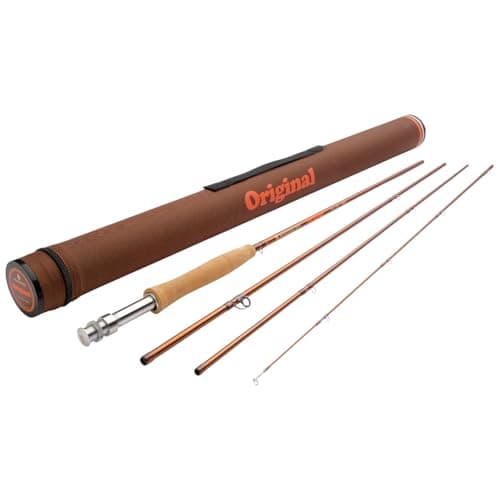
The 5-weight case in one rod: medium-fast, 9 feet, from the brand's current entry line-up. Nothing about creek or river trout fishing is outside its range, which is exactly what a first rod should be.
Best for: The 5-weight pick — buy this if you own one rod9.2 - 2
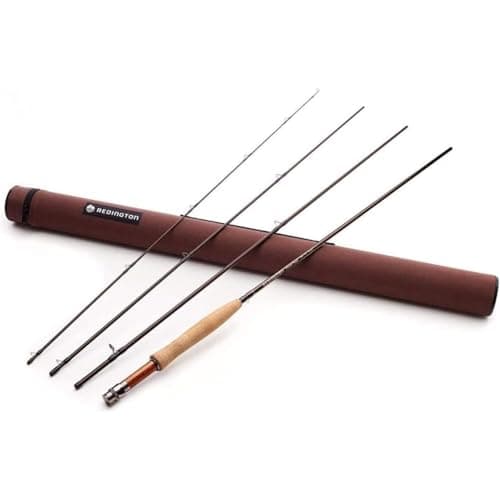
A deliberately moderate-action trout rod that bends deep on a twenty-foot cast. This is the character people are reaching for when they ask about a 4-weight: delicate presentation, tippet protection, and a rod that loads close in.
Best for: The lighter-line pick — dry flies and short casts9.0 - 3
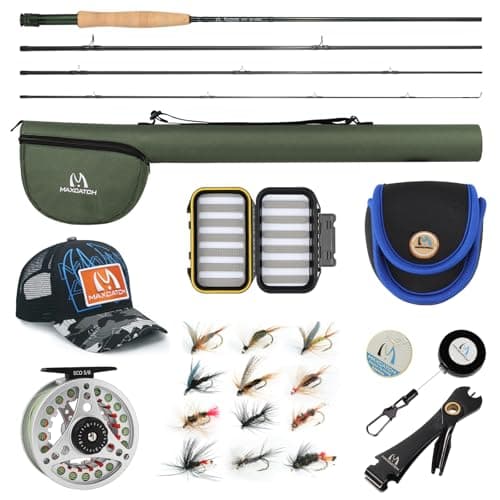
For brush-choked creeks where neither a 4 nor a 5 is the point, a matched 3-weight outfit is the honest recommendation — and this is the cheapest way to get one without assembling it yourself.
Best for: If the real answer is a 3-weight8.7
| # | Product | Best for | Score | Price |
|---|---|---|---|---|
| 1 | Redington Original 5wt 9'0" Medium-Fast The 5-weight case in one rod: medium-fast, 9 feet, from the brand's current entry line-up. Nothing about creek or river trout fishing is outside its range, which is exactly what a first rod should be. | The 5-weight pick — buy this if you own one rod | 9.2 | $99.99View on Amazon#ad |
| 2 | Redington Classic Trout 4-Piece, Moderate Action A deliberately moderate-action trout rod that bends deep on a twenty-foot cast. This is the character people are reaching for when they ask about a 4-weight: delicate presentation, tippet protection, and a rod that loads close in. | The lighter-line pick — dry flies and short casts | 9.0 | $199.99View on Amazon#ad |
| 3 | Maxcatch Extreme Fly Fishing Combo Kit, 3wt option For brush-choked creeks where neither a 4 nor a 5 is the point, a matched 3-weight outfit is the honest recommendation — and this is the cheapest way to get one without assembling it yourself. | If the real answer is a 3-weight | 8.7 | $84.95View on Amazon#ad |
The best fly rod weight for trout, if you are buying one rod, is a 5-weight. It does everything a 4-weight does plus the things a 4-weight cannot — wind, bigger flies, a hooked fish in fast current, the occasional bass. The 4-weight is a genuinely lovelier rod to fish on small, calm water, and it is the right second rod for a lot of people. But as a first and only rod it narrows your options for a gain you will not notice until you are already good.
That is the verdict. Below is the reasoning, the handful of situations that reverse it, and the third option that is often the real answer for creek anglers.
What fly rod weight actually controls
Rod weight is the mass of fly line the rod is built to cast, numbered 1 to 15. It is not how heavy the rod is, and it is not a quality rating. Because the rod is powered by the weight of the line in the air, the number determines three things at once:
How big a fly you can cast. Heavier line carries more air resistance, so a 5-weight throws a bushy size 10 dry fly or a small weighted streamer that a 4-weight will wobble.
How well you cope with wind. Heavier line cuts through a breeze. This is the single most underrated difference, and the one beginners discover on their first genuinely windy afternoon.
How delicately the line lands. Lighter line settles with less disturbance, which matters on flat, clear, slow water where a trout can see the splash.
Which fly rod weight for which trout water
Trout fly rods run from 2-weight to 6-weight, and only three of those weights are worth a beginner's money. The rest are specialist tools. Matched to water, the choice is almost mechanical:
| Weight | The water it suits | What it struggles with |
|---|---|---|
| 3-weight | Brushy creeks under 15 feet wide, small wild trout, short casts under cover | Any wind at all; flies above size 12; a long cast across current |
| 4-weight | Small to medium streams, calm days, dry flies and small nymphs | Sustained wind; weighted streamers; big fish in heavy flow |
| 5-weight | Creeks through to full rivers, wind, nymph rigs, the occasional bass | Nothing a trout angler normally meets — it is the default for a reason |
| 6-weight | Big water, heavy streamers, consistent wind | Overkill on a creek; it flattens the feel of a 10-inch wild trout |
If your honest answer to “what water will I fish most?” is “a bit of everything,” that is the 5-weight's case in one line. The rest of this page is the 4wt vs 5wt decision in detail, because that is the fork almost everyone actually stalls at.
4wt vs 5wt fly rod, head to head
| 4-weight | 5-weight | |
|---|---|---|
| Wind | Noticeably struggles | Handles a normal breeze |
| Fly size range | Size 14-20 comfortably | Size 8-20 comfortably |
| Weighted nymphs / streamers | Awkward | Fine |
| Delicacy on flat water | Better | Good enough |
| Tippet protection (6X, 7X) | Better — softer cushion | Adequate |
| Fish-fighting in fast current | Slower | Faster, less exhausting for the fish |
| Fun on a 9-inch brook trout | Excellent | Muted |
| Also usable for bass / panfish | Marginal | Yes |
| Right as your only rod | Only if your water is small and calm | Yes |
Read down the table and a pattern emerges: the 4-weight wins on refinement, the 5-weight wins on capability. Refinement is worth a lot once you can already cast well and you know the water you fish. Capability is worth more when you do not yet know either.
When the 4-weight is genuinely better
Your water is small, clear and slow. Spring creeks, meadow streams, flat pools in low summer water. Where a trout has time to inspect the fly and the line landing is the thing that spooks it, lighter is better.
You fish dry flies most of the time. Small dries are what a 4-weight is built around, and a softer rod presents them beautifully. Our lighter-line pick is here specifically for this angler.
You fish 6X and 7X tippet. A lighter, softer rod cushions the take. On a stiff 5-weight, a hard take on 7X breaks off more often.
The fish are small and you want to feel them. This is not a trivial reason. Most creek trout are six to eleven inches, and on a 5-weight they barely register. Playing the same fish on a 4-weight is simply more enjoyable, and enjoyment is why you are doing this.
Action matters as much as weight
When the 5-weight is the only sane choice
It is your first rod. You do not yet know what water you will end up fishing or what techniques you will like. A 5-weight keeps every door open.
You will also fish rivers or lakes. A 4-weight on a wide river in a breeze, trying to reach a far seam, is an exercise in frustration.
You intend to nymph with weight. A bead-head nymph plus a split shot plus an indicator is a clumsy rig by design, and a 5-weight casts clumsy rigs better. Since nymphing catches most creek trout most of the year, this matters more than it sounds. (If nymphing is your main plan, a long light rod is better still — see the 10-foot option in the fly rod roundup.)
You might catch something bigger than a trout. Smallmouth bass and panfish live in a lot of the same creeks and take the same flies. A 5-weight handles them; a 4-weight is outgunned.
The option nobody mentions: a 3-weight
Here is the thing about this debate: a lot of people asking “4 or 5?” are really describing a rod they want for tight, brushy creek fishing — and for that, the honest answer is often a short 3-weight.The gap between a 4 and a 5 is genuinely small. The gap between a 9-foot 5-weight and a 7′6" 3-weight on a tunnel-like creek is enormous: the short rod fits between the branches, loads on a fifteen-foot cast, and turns a frustrating stretch of water into the best fishing you have.
So the decision tree is simpler than it looks. One rod for everything? 5-weight, 9 foot — the Redington Original. One rod, and your water is small, clear and calm? A moderate-action trout rod in 4 or 5, like our lighter-line pick. A dedicated creek rod, with a 5-weight already in the cupboard? A short 3-weight — the matched 3wt outfit is the cheapest route.
Whichever you land on, the reel is a minor decision on small water (reel guide) and the line is a major one. If you would rather buy it all in one box, the complete outfits guide covers matched kits in both weights, and the beginner gear guide lists what else goes with it. Still not sure a fly rod is right for your creek at all? Read fly rod vs spinning rod for trout.
Once the weight is settled, two pages finish the decision: the best fly line, because the line you put on the rod changes its action more than a weight change does, and the best fly rod brands, which covers which makers build the softer actions small water rewards.
Length is the other half of this decision. Weight decides what you can cast; length decides whether you can cast it where you are standing, and on a creek that is the binding constraint — the small-stream rod guide covers the 7 to 8 foot band. If you would rather choose by maker, the fly fishing brand guide sorts the companies by what each is actually good at. The third variable, after weight and length, is fast versus moderate action.
The picks in detail
Redington Original 5wt 9'0" Medium-Fast
9.2/10Best for: The 5-weight pick — buy this if you own one rod
The 5-weight case in one rod: medium-fast, 9 feet, from the brand's current entry line-up. Nothing about creek or river trout fishing is outside its range, which is exactly what a first rod should be.
- Line weight
- 5wt
- Length
- 9'0"
- Action
- Medium-fast
- Status
- Current Redington line-up
- Handles wind and bigger flies a 4wt cannot
- Works on creeks and rivers equally
- Current production, so it stays available and supported
- Slightly heavy-handed on very small fish
- Less delicate than a 4wt on flat, clear water
Redington Classic Trout 4-Piece, Moderate Action
9.0/10Best for: The lighter-line pick — dry flies and short casts
A deliberately moderate-action trout rod that bends deep on a twenty-foot cast. This is the character people are reaching for when they ask about a 4-weight: delicate presentation, tippet protection, and a rod that loads close in.
- Action
- Moderate
- Pieces
- 4
- Use
- Freshwater trout
- Included
- Case
- Loads properly at short creek distances
- Protects fine tippet on a hard take
- The nicest dry-fly rod here
- More expensive than the 5-weight pick
- Struggles to punch into real wind
Maxcatch Extreme Fly Fishing Combo Kit, 3wt option
8.7/10Best for: If the real answer is a 3-weight
For brush-choked creeks where neither a 4 nor a 5 is the point, a matched 3-weight outfit is the honest recommendation — and this is the cheapest way to get one without assembling it yourself.
- Weights
- 3 / 5 / 6 / 8wt
- Includes
- Rod, reel, line, case
- Best for
- Dedicated small-stream setups
- Matched 3-weight outfit in one purchase
- Lightest practical line weight for creek trout
- Case included
- Useless in wind
- Not enough rod for a river day
Prices shown are from Amazon as of October 20, 2026 and change often — the button always goes to the current listing. Some links may earn us a commission at no extra cost to you. How this works.
Frequently asked questions
Is a 4wt or 5wt fly rod better for trout?
A 5-weight is better as your only rod: it casts larger flies, handles wind, and copes with weighted nymph rigs that a 4-weight fumbles. A 4-weight is better on small, clear, calm water, protects fine tippet, and is more enjoyable on small fish - which makes it an excellent second rod rather than a first one.
Can a 4wt fly rod handle wind?
Poorly. Lighter fly line carries less mass and is more easily pushed around, so a 4-weight becomes hard work in anything more than a light breeze. This is the most commonly underestimated difference between the two weights, and it is usually what convinces people to keep a 5-weight in the car.
What weight fly rod is best for small creeks?
A 3-weight or 4-weight in a short length, around 7 feet 6 inches to 8 feet 6 inches. The short length matters more than the weight on brushy water, because it lets you load the rod on a fifteen-foot cast and fit it between overhanging branches. A 9-foot rod of any weight is awkward in tight cover.
Should my first fly rod be a 4wt or 5wt?
A 5-weight. As a first rod it keeps every option open - creeks, rivers, dry flies, nymph rigs, wind, and the occasional bass - while a 4-weight narrows your range for refinement you will not notice until you can already cast well. Buy the 4-weight later, once you know you want it.
Sources
Keep reading
Not sure where to start?
The beginner gear guide walks you through exactly what a new stream angler needs — the six essentials first, nice-to-haves later, with one safe-default pick per category.