Fly Rods & Reels · Comparison
Fast vs Moderate Action Fly Rods
Action is where a rod bends, not how strong it is — and the fishing-shop assumption that faster is better is wrong for most people who fish small water. Here is what each action does, and four rods that sit at different points on the scale.
Disclosure: Creek Cover is reader-supported. If you buy through our links we may earn a commission, at no extra cost to you. It never changes which pick we tell a new angler to start with. Full disclosure.
Quick picks at a glance
Tap a pick to read the full write-up, or the price button to check it on Amazon.
- 1
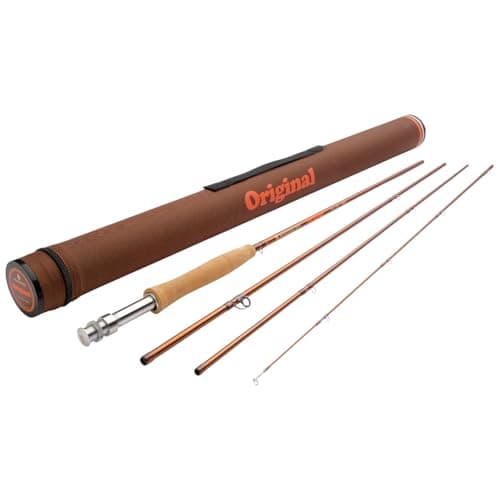
The middle of the action scale and the sensible place to start. A medium-fast blank bends through the top third under load, which gives you enough feel to know where the line is at fifteen feet and enough recovery speed to deal with wind and a weighted fly at thirty. In a 9 ft 5-weight that is the most generally useful trout rod specification there is, and this one carries it at a price that leaves money for a line.
Best for: Medium-fast — the default, and the right answer for most anglers - 2
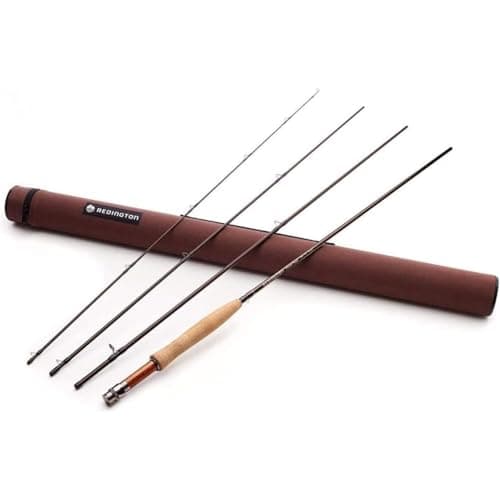
The moderate-action pick, and the one most creek anglers would actually enjoy more. A rod that bends deeper into the blank loads properly with very little line out, which is the defining problem of small-stream casting, and it cushions a take on 6X instead of snapping it. The cost is distance and wind performance: at forty feet into a breeze a moderate rod is working harder than a fast one.
Best for: Moderate — dry flies, short casts and fine tippet - 3
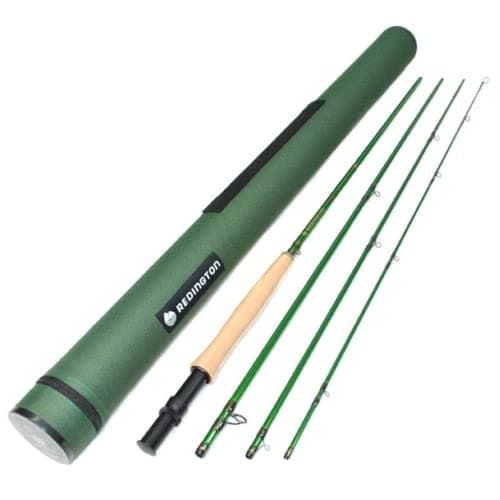
The fast-action example, and a legitimate choice if your fishing involves wind, weight or distance. A stiffer blank that bends mostly near the tip stores and releases energy quickly: line speed goes up, loops get tighter, and a heavy nymph rig or a streamer stops collapsing the cast. It asks more of your timing, which is why it is a poor first rod and a good second one.
Best for: Fast — wind, distance and heavy flies - 4
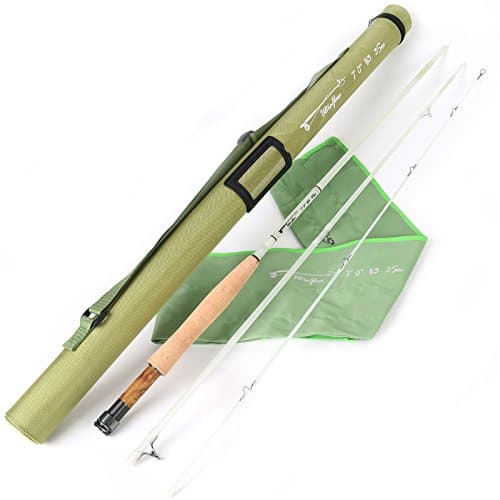
Included to show where the scale ends. Fiberglass bends deeply and recovers slowly, which makes it hopeless at distance and delightful at fifteen feet — you feel the rod load on a cast most graphite rods would not notice. On a brushy headwater creek holding small wild trout, a slow 3-weight glass rod is arguably the correct tool and definitely the most enjoyable one.
Best for: Slow — the far end of the scale, and the most fun on tiny water
| # | Product | Best for | Score | Price |
|---|---|---|---|---|
| 1 | Redington Original, 5wt 9'0" Medium-Fast The middle of the action scale and the sensible place to start. A medium-fast blank bends through the top third under load, which gives you enough feel to know where the line is at fifteen feet and enough recovery speed to deal with wind and a weighted fly at thirty. In a 9 ft 5-weight that is the most generally useful trout rod specification there is, and this one carries it at a price that leaves money for a line. | Medium-fast — the default, and the right answer for most anglers | — | $99.99View on Amazon#ad |
| 2 | Redington Classic Trout 4-Piece, Moderate Action The moderate-action pick, and the one most creek anglers would actually enjoy more. A rod that bends deeper into the blank loads properly with very little line out, which is the defining problem of small-stream casting, and it cushions a take on 6X instead of snapping it. The cost is distance and wind performance: at forty feet into a breeze a moderate rod is working harder than a fast one. | Moderate — dry flies, short casts and fine tippet | — | $199.99View on Amazon#ad |
| 3 | Redington Vice Fly Rod, 5wt 9 ft 4-Piece with Tube The fast-action example, and a legitimate choice if your fishing involves wind, weight or distance. A stiffer blank that bends mostly near the tip stores and releases energy quickly: line speed goes up, loops get tighter, and a heavy nymph rig or a streamer stops collapsing the cast. It asks more of your timing, which is why it is a poor first rod and a good second one. | Fast — wind, distance and heavy flies | — | $279.99View on Amazon#ad |
| 4 | Maxcatch Fiberglass Fly Fishing Rod, 3wt Included to show where the scale ends. Fiberglass bends deeply and recovers slowly, which makes it hopeless at distance and delightful at fifteen feet — you feel the rod load on a cast most graphite rods would not notice. On a brushy headwater creek holding small wild trout, a slow 3-weight glass rod is arguably the correct tool and definitely the most enjoyable one. | Slow — the far end of the scale, and the most fun on tiny water | — | $79.00View on Amazon#ad |
Buy medium-fast if you are buying one fly rod — the Redington Original 5wt is that rod at a sensible price. Buy moderate if you fish small water with dry flies and fine tippet, which is what the Classic Trout is for. Buy fast only if wind, distance or heavy flies are a real part of your fishing, as with the Redington Vice.
Action describes where along the blank a rod bends when it is loaded. A fast rod bends mostly in the top quarter and stays stiff below it. A moderate rod bends through the top half. A slow rod bends almost all the way into the handle. That is the whole definition, and almost every other difference people describe follows from it.
What action actually means
A fly cast is a spring being loaded and released. The weight of the fly line bends the rod on the back cast; the rod straightening again throws the line forward. Action tells you how much of the rod participates in that, which decides how much line it takes to load, how fast the line leaves, and how much you feel.
Fast rods need more weight outside the tip to load. A stiff blank does not bend under ten feet of line, so at creek range a fast rod is barely working — you are throwing the line with your arm rather than casting it with the rod. Put thirty-five feet out and the same rod comes alive.
Slower rods load with very little line and feel like something is happening. That feedback is not sentiment; it is information. Knowing when the rod is loaded is how you time a cast, which is why beginners usually learn faster on slower rods.
Action is not power, and not stiffness
Power is line weight: the number on the rod. A 5-weight is built to cast a 5-weight line, and that number tells you how much mass the rod is designed to move. Action is a separate axis entirely — you can buy a fast 3-weight and a moderate 8-weight. Keeping the two ideas apart solves most of the confusion in rod shopping.
A fast rod is not a stronger rod. Lifting power in a fish fight comes from the butt section and the line weight, not from tip stiffness. A moderate 5-weight will land exactly the same trout as a fast 5-weight; it simply bends further doing it, which most people enjoy rather than resent.
And a fast rod is not a more accurate rod. Fast blanks throw tighter loops, which helps accuracy at distance. At fifteen feet, accuracy comes from feel and timing, and a rod you cannot feel loading is harder to place precisely. The relevant question is not which rod is more accurate but at what range.
If you only remember one thing
What each action does well
| Action | Bends | Strong at | Weak at |
|---|---|---|---|
| Slow (glass) | Almost to the handle | Very short casts, delicate presentation, fine tippet, feel | Distance, wind, weighted flies |
| Moderate | Through the top half | Short to medium casts, dry flies, protecting 5X and 6X | Long casts into a breeze, heavy nymph rigs |
| Medium-fast | Through the top third | Everything, moderately well — the all-round default | Nothing badly; excels at nothing |
| Fast | Mostly the top quarter | Distance, wind, streamers, heavy tungsten nymphs | Short-range loading, feel, cushioning fine tippet |
Why creeks favor the slower end
Because the casts are short, and short casts cannot load a fast rod. A small-stream cast is a flick with ten or fifteen feet of line out, often from a kneeling position with brush behind you. That is not enough mass to bend a stiff blank, so a fast rod gives you none of its advantages and all of its drawbacks.
Because creek trout are small and tippet is fine. A seven-inch wild brook trout taking a size 18 dry at close quarters on 6X is exactly the situation where a soft tip earns its keep — it cushions the set instead of breaking the tippet or pulling the hook.
Because there is nothing to gain from distance. You cannot usefully cast thirty-five feet down a creek that is twelve feet wide with alders overhead. The whole benefit of a fast action is available only at ranges small water never offers. The length side of the same argument is in the small-stream rod roundup.
With one real exception: weighted nymph rigs. If your creek fishing is mostly tightline nymphing with heavy tungsten flies, a stiffer rod handles the weight better — which is the case made in the euro nymphing rod guide, where length matters more than action anyway.
The scale, with the four picks on it
| Rod | Action | Weight | Where it sits |
|---|---|---|---|
| Maxcatch Fiberglass | Slow, deep-loading | 3wt | The far soft end — tiny water specialist |
| Redington Classic Trout | Moderate | Trout weights | The dry fly and short-cast choice |
| Redington Original | Medium-fast | 5wt | The default, all-round trout rod |
| Redington Vice | Fast | 5wt | Wind, distance and heavy flies |
Three of the four are 5-weights or trout weights on purpose. Holding the line weight roughly constant is the only way to see action as its own variable. If you want the line weight question instead, that is 4wt vs 5wt.
Three things people get wrong
“Fast action is for experts.” Half true, and badly framed. A fast rod demands sharper timing and punishes a slow stroke, so it is harder to learn on. That is not the same as being better once you can cast — plenty of very good anglers fish moderate and glass rods by preference because they suit the water.
“A fast rod casts further, so it is more versatile.” It casts further at the top of its range and worse at the bottom. Versatility across the ranges you actually fish is what medium-fast is for, which is why it is the default on almost every all-round trout rod — see the beginner rod roundup.
“Action is the most important thing about a rod.” It is third. Line weight comes first, length second, action third — and the fly line you put on it affects how the rod feels more than a step on the action scale does. An underweighted line makes a moderate rod feel fast and a fast rod feel dead; the detail is in the fly line roundup.
Which to buy
One rod for everything: medium-fast, 9 ft, 5-weight. It is the least interesting answer and the correct one. It loads at creek range, it handles a breeze, and it throws a streamer on the trip where you fish a bigger river. The Redington Original is that rod cheaply.
Mostly dry flies on small streams: moderate, and shorter if you can. A moderate 8 ft to 8 ft 6 in 4-weight is close to the ideal creek dry fly rod. The Classic Trout is the moderate action; the length options are in how to choose a fly rod.
Wind, streamers or big water: fast. If your fishing regularly involves casting into a breeze, throwing weighted flies, or covering open water, buy the fast rod and accept that it will feel stiff on the creek. A bass or streamer rod is the clearest case for it.
A second rod for fun: glass. Once you own a working all-rounder, a slow fiberglass 3-weight is the cheapest way to make a small creek feel completely different. It is a luxury rather than a tool, and a fairly inexpensive one.
The picks in detail
Redington Original, 5wt 9'0" Medium-Fast
Best for: Medium-fast — the default, and the right answer for most anglers
The middle of the action scale and the sensible place to start. A medium-fast blank bends through the top third under load, which gives you enough feel to know where the line is at fifteen feet and enough recovery speed to deal with wind and a weighted fly at thirty. In a 9 ft 5-weight that is the most generally useful trout rod specification there is, and this one carries it at a price that leaves money for a line.
- Line weight
- 5wt
- Length
- 9'0"
- Action
- Medium-fast
- Status
- Current Redington line-up
- Covers short creek casts and open-water distance
- Forgiving of a developing casting stroke
- The best value on this page by a clear margin
- Master of nothing in particular
- Nine feet is long for very tight creeks
Redington Classic Trout 4-Piece, Moderate Action
Best for: Moderate — dry flies, short casts and fine tippet
The moderate-action pick, and the one most creek anglers would actually enjoy more. A rod that bends deeper into the blank loads properly with very little line out, which is the defining problem of small-stream casting, and it cushions a take on 6X instead of snapping it. The cost is distance and wind performance: at forty feet into a breeze a moderate rod is working harder than a fast one.
- Action
- Moderate
- Pieces
- 4
- Use
- Freshwater trout
- Included
- Case
- Loads with almost no line out — made for short casts
- Protects fine tippet on a close-range hook set
- More pleasant to cast slowly, which is how creeks are fished
- Gives up distance and wind penetration
- Less comfortable with heavy weighted rigs
Redington Vice Fly Rod, 5wt 9 ft 4-Piece with Tube
Best for: Fast — wind, distance and heavy flies
The fast-action example, and a legitimate choice if your fishing involves wind, weight or distance. A stiffer blank that bends mostly near the tip stores and releases energy quickly: line speed goes up, loops get tighter, and a heavy nymph rig or a streamer stops collapsing the cast. It asks more of your timing, which is why it is a poor first rod and a good second one.
- Line weight
- 5wt
- Length
- 9 ft, 4-piece
- Action
- Fast
- Included
- Tube
- Highest line speed here — cuts wind and reaches further
- Handles weighted nymph rigs and streamers without folding
- Tighter loops for accuracy at range
- Needs a developed casting stroke to load at short range
- Transmits less feel, and breaks fine tippet more easily
Maxcatch Fiberglass Fly Fishing Rod, 3wt
Best for: Slow — the far end of the scale, and the most fun on tiny water
Included to show where the scale ends. Fiberglass bends deeply and recovers slowly, which makes it hopeless at distance and delightful at fifteen feet — you feel the rod load on a cast most graphite rods would not notice. On a brushy headwater creek holding small wild trout, a slow 3-weight glass rod is arguably the correct tool and definitely the most enjoyable one.
- Material
- Fiberglass
- Weight
- 3wt
- Action
- Slow, deep-loading
- Loads on the shortest casts a creek offers
- Most feedback per cast of anything here
- Cheapest rod on this page
- No use beyond about thirty feet
- Struggles with wind and weighted flies
Prices shown are from Amazon as of October 20, 2026 and change often — the button always goes to the current listing. Some links may earn us a commission at no extra cost to you. How this works.
Frequently asked questions
What is the difference between fast and moderate action fly rods?
Where the rod bends. A fast rod bends mostly in the top quarter and stays stiff below, which produces high line speed and suits long casts, wind and heavy flies. A moderate rod bends through the top half, loads with much less line out, and suits short casts, dry flies and fine tippet.
Is a fast action fly rod better for beginners?
Usually not. A fast rod needs more line outside the tip before it loads and punishes slow timing, both of which make it harder to learn on. A medium-fast rod is the standard recommendation for a first rod, and a moderate action is even easier to feel at short range.
What action fly rod is best for small streams?
Moderate, or slow if you enjoy glass. Creek casts are often under twenty-five feet, which is not enough line to load a fast blank, and the fine tippet and small fish of small water both reward a softer tip. A fast rod gives you distance you cannot use on a twelve-foot-wide creek.
Does a faster rod cast further?
At the top of its range, yes — a stiffer blank generates more line speed and tighter loops, which is what reaches distance and cuts wind. At short range it casts worse, because there is not enough line weight outside the tip to bend it. Range is the whole variable.
Is action the same as power on a fly rod?
No. Power is the line weight — the number printed on the rod — and it tells you how much mass the rod is built to cast. Action is where the rod bends, and the two are independent: fast 3-weights and moderate 8-weights both exist. Choose line weight first, then length, then action.
Sources
Keep reading
Not sure where to start?
The beginner gear guide walks you through exactly what a new stream angler needs — the six essentials first, nice-to-haves later, with one safe-default pick per category.