Fly Rods · Roundup
The Best Fly Rod for Steelhead
Steelhead rods are 7 and 8 weights, and the real question is how many hands you want on them. These five cover a tributary single-hander, a budget switch rod and a full two-handed rod, with the sizing rules that decide between them.
Disclosure: Creek Cover is reader-supported. If you buy through our links we may earn a commission, at no extra cost to you. It never changes which pick we tell a new angler to start with. Full disclosure.
Quick picks at a glance
Tap a pick to read the full write-up, or the price button to check it on Amazon.
- 1
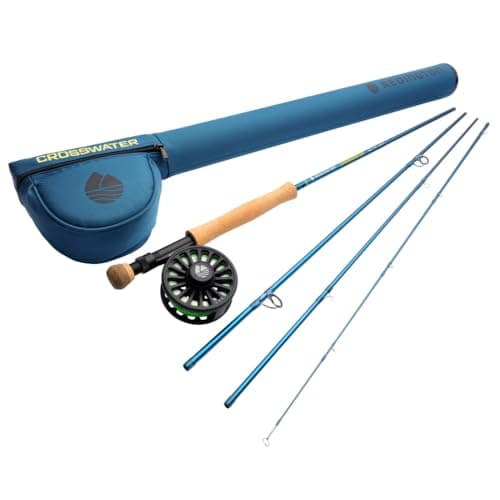
Rod, reel and Rio Mainstream line matched in one box at the weight steelhead actually require. A 9 foot 8-weight is the all-purpose answer on tributaries and smaller rivers: enough backbone to turn a fish out of fast water, enough rod to throw a weighted fly, and short enough to fish from a wooded bank. Lifetime rod warranty to the original owner.
Best for: Best complete steelhead setup for a first season9.2 - 2
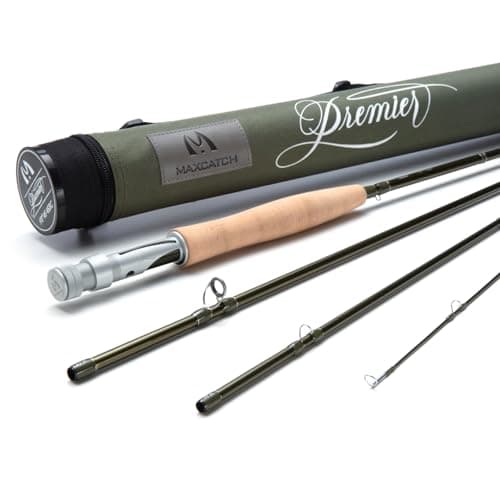
The cheapest 8-weight worth fishing for steelhead. A moderately fast IM8 blank with enough tip to protect a hooked fish and enough butt to lift one, sold with a case at a price that makes a dedicated steelhead rod reasonable even if you only chase them a few weeks a year.
Best for: Best budget single-hand 8wt8.9 - 3
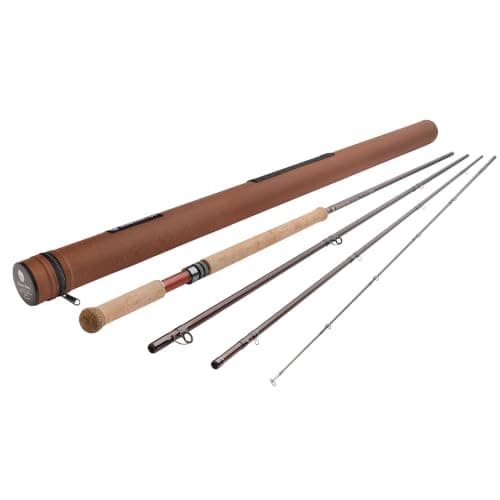
Eleven and a half feet of two-handed rod, which is what you want the moment the water is wider than you can cover and you plan to swing flies all day. Two hands means no shoulder fatigue and no back-cast room needed, which on a tree-lined tributary is the whole argument. It is a specialist tool, not a first rod.
Best for: Best two-handed rod for swinging flies9.1 - 4
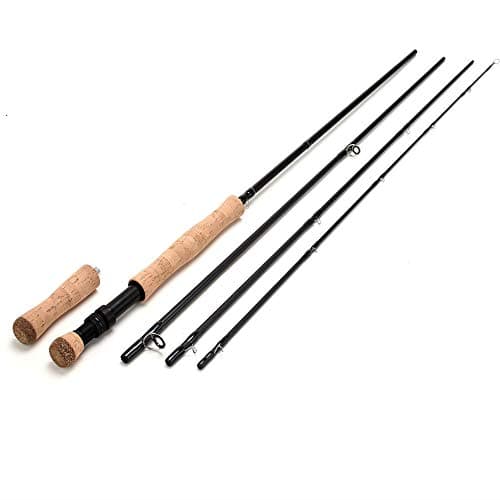
A switch rod is a long single-hander with a fighting butt you can add a second hand to, which makes it the cheapest way to find out whether two-handed casting suits you. At 10 feet 9 inches it also gives line control a 9-footer cannot, which matters when you are holding a drift across conflicting currents.
Best for: Best budget switch rod — one rod, two grips8.6 - 5
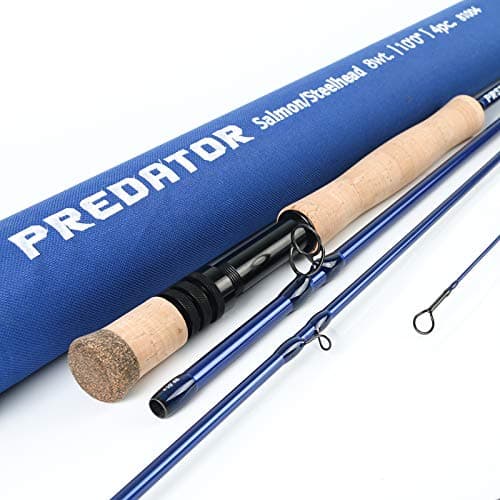
A fast, stiff 8/9-weight built to throw heavy things in bad weather. Steelhead fishing in late fall means sink tips, weighted intruders and a wind coming up the valley, and a stiffer blank is what loads and delivers that without collapsing. Less pleasant to fish than the Premier X on a calm day.
Best for: Best for wind and big weighted flies8.7
| # | Product | Best for | Score | Price |
|---|---|---|---|---|
| 1 | Redington Crosswater Fly Fishing Outfit, 4-Piece 9' 8WT Rod, reel and Rio Mainstream line matched in one box at the weight steelhead actually require. A 9 foot 8-weight is the all-purpose answer on tributaries and smaller rivers: enough backbone to turn a fish out of fast water, enough rod to throw a weighted fly, and short enough to fish from a wooded bank. Lifetime rod warranty to the original owner. | Best complete steelhead setup for a first season | 9.2 | $229.99View on Amazon#ad |
| 2 | Maxcatch Premier X Fly Fishing Rod, IM8 Graphite, 8wt with Carrying Case The cheapest 8-weight worth fishing for steelhead. A moderately fast IM8 blank with enough tip to protect a hooked fish and enough butt to lift one, sold with a case at a price that makes a dedicated steelhead rod reasonable even if you only chase them a few weeks a year. | Best budget single-hand 8wt | 8.9 | $85.95View on Amazon#ad |
| 3 | Redington Classic Spey Steelhead Fly Rod with Tube, 4-Piece, 8WT 11'6" Eleven and a half feet of two-handed rod, which is what you want the moment the water is wider than you can cover and you plan to swing flies all day. Two hands means no shoulder fatigue and no back-cast room needed, which on a tree-lined tributary is the whole argument. It is a specialist tool, not a first rod. | Best two-handed rod for swinging flies | 9.1 | $399.99View on Amazon#ad |
| 4 | Carbon Fiber Switch Fly Fishing Rod, 10'9" 7/8wt, 4-Piece with Extra Handle A switch rod is a long single-hander with a fighting butt you can add a second hand to, which makes it the cheapest way to find out whether two-handed casting suits you. At 10 feet 9 inches it also gives line control a 9-footer cannot, which matters when you are holding a drift across conflicting currents. | Best budget switch rod — one rod, two grips | 8.6 | Check price on Amazon#ad |
| 5 | Maxcatch Predator Fly Fishing Rod, 9 ft 4-Piece, 8/9 Weight A fast, stiff 8/9-weight built to throw heavy things in bad weather. Steelhead fishing in late fall means sink tips, weighted intruders and a wind coming up the valley, and a stiffer blank is what loads and delivers that without collapsing. Less pleasant to fish than the Premier X on a calm day. | Best for wind and big weighted flies | 8.7 | $103.95View on Amazon#ad |
The best fly rod for steelhead for most anglers is a 9 foot 8-weight, and the Redington Crosswater 8WT outfit is the right first one — rod, reel and line matched in a box for around $200, because steelhead gear fails as a system rather than as a rod. If you already own an 8-weight and want to swing flies across wider water, the rod to add is a two-hander: the 11'6" Classic Spey.
This page is written for the angler fishing steelhead on tributaries and smaller rivers — walk-and-wade water you can cross, with trees behind you. That is the water this site covers, and it genuinely changes the answer: on big open rivers the received wisdom is longer and heavier than what follows.
What weight rod for steelhead
Seven or eight, and eight if you are only buying one. A steelhead is a sea-run rainbow that commonly runs 5 to 12 pounds, often hooked in fast winter water, and frequently fished for with weighted flies and sink tips. Each of those three facts pushes the weight up from trout tackle.
| Weight | Fish and water | Fly size | Verdict |
|---|---|---|---|
| 6wt | Small tributary fish, summer-run, low clear water | Small wets, soft hackles | Sporting but under-gunned in current |
| 7wt | Tributary steelhead, moderate flows | Medium wets, light tips | The specialist's choice for small water |
| 8wt | Everything from tributaries to a main river | Weighted flies, sink tips | The one-rod answer |
| 9wt and up | Big open rivers, heavy intruders, wind | Large streamers, heavy tips | More rod than tributary water needs |
The weight is about the fly and the current, not the fish. An 8-weight is not there because a steelhead would break a 6 — it is there because you cannot cast a weighted fly on a sink tip into a headwind with a 6, and because lifting a fish out of heavy water needs butt power a trout rod does not have.
Single-hand, switch or spey
Single-hand if you are nymphing or fishing tight water. A 9 foot 8-weight does everything a tributary asks: dead-drift a nymph under an indicator, throw a streamer across a pool, fight a fish in close quarters. It is also the rod you already know how to cast.
Two-handed if you are swinging flies across wide water. A spey rod loads off the water rather than off a back-cast, so you can fish a run with a cliff or a treeline right behind you, and the two-handed stroke means your shoulder still works after six hours. The cost is a dedicated line system and a genuine new skill.
Switch if you are undecided. A switch rod is a long single-hander with a second grip, usable either way. It is a compromise at both jobs and the cheapest way to find out which one you actually want — which is exactly what a first steelhead season is for.
Borrow a two-hander before you buy one
Length, and why tributaries change it
Nine feet is the default, and 10 to 11 feet buys line control. Extra length lets you hold line off conflicting currents and mend further, which is the single biggest factor in a drag-free presentation. That is why switch rods are long.
But length costs you in cover. On a tributary with alders at your back and a 30-foot casting lane, an 11-foot rod is a liability in exactly the way a 9-footer is not. If your water is small and wooded, stay at 9 feet and accept the shorter reach — the same logic that governs small-stream rod choice, just four line weights up.
Four-piece, always. Steelhead water is usually a drive and a walk, and a 4-piece 9-footer packs to about 29 inches. If the walk is a long one, the packing logic in the backpacking rod guide applies unchanged at this weight.
The reel and line matter more here
This is the one fishery where the drag is real. On a trout stream a reel is a line holder with a brake. A hooked steelhead in current will take you well into the backing, which means you need a reel that holds 150 yards of 20-pound backing plus the fly line, and a drag that does not grab when it heats up. A sealed drag earns its money on a winter river.
Match the line to the job, not to the box. A weight-forward floater handles indicator nymphing. Swinging flies wants a sink tip or an interchangeable-tip head. This is the point in a setup where paying for a known line brand — the reasoning is in the brand guide — pays back immediately.
Backing is not optional. Fill the arbor with 20-pound Dacron before the fly line goes on, and check the knots at the start of each season. The step-by-step is in how to set up a fly rod; the only change at this weight is that the backing is the part that gets used.
A note on where Creek Cover fishes
We cover small water, and this page stays inside that. Everything above is written for tributary and small-river steelhead that you walk to and wade — the gear choices, the rod lengths and the casting room assumptions all come from that water. Boat-based big-river work, and the tactics and travel that go with it, are outside what this site covers.
We also do not publish regulations. Steelhead runs are among the most tightly managed fisheries in the country, and seasons, gear restrictions and wild-fish release rules change year to year and river to river. Check your state wildlife agency before you go — that is the only source worth trusting on it.
If you want a single rod for trout and the occasional steelhead, the honest answer is that no rod does both well: a 5-weight is overwhelmed and an 8-weight is miserable on 12-inch trout. Buy the trout rod you will fish fifty days a year from the main fly rod roundup, and add an 8-weight outfit for the few weeks you chase something bigger.
The picks in detail
Redington Crosswater Fly Fishing Outfit, 4-Piece 9' 8WT
9.2/10Best for: Best complete steelhead setup for a first season
Rod, reel and Rio Mainstream line matched in one box at the weight steelhead actually require. A 9 foot 8-weight is the all-purpose answer on tributaries and smaller rivers: enough backbone to turn a fish out of fast water, enough rod to throw a weighted fly, and short enough to fish from a wooded bank. Lifetime rod warranty to the original owner.
- Weight
- 8wt
- Length
- 9 ft, 4-piece
- Includes
- Reel, Rio line, case
- Complete and correctly balanced out of the box
- Lifetime rod warranty at an entry price
- Right length for banks with trees behind you
- Reel drag is adequate rather than sealed
- Not a rod you would choose for all-day two-handed work
Maxcatch Premier X Fly Fishing Rod, IM8 Graphite, 8wt with Carrying Case
8.9/10Best for: Best budget single-hand 8wt
The cheapest 8-weight worth fishing for steelhead. A moderately fast IM8 blank with enough tip to protect a hooked fish and enough butt to lift one, sold with a case at a price that makes a dedicated steelhead rod reasonable even if you only chase them a few weeks a year.
- Weight
- 8wt (3-12wt range available)
- Blank
- IM8 graphite, mod-fast
- Case
- Included
- Dedicated 8wt for the price of a trout rod
- Mod-fast action is forgiving on the hookset
- Case included
- Limited warranty — no no-fault repair
- Fittings are plain compared to the premium brands
Redington Classic Spey Steelhead Fly Rod with Tube, 4-Piece, 8WT 11'6"
9.1/10Best for: Best two-handed rod for swinging flies
Eleven and a half feet of two-handed rod, which is what you want the moment the water is wider than you can cover and you plan to swing flies all day. Two hands means no shoulder fatigue and no back-cast room needed, which on a tree-lined tributary is the whole argument. It is a specialist tool, not a first rod.
- Weight
- 8wt, two-handed
- Length
- 11 ft 6 in, 4-piece
- Tube
- Included
- No back-cast room required
- All-day casting without shoulder fatigue
- Covers water a single-hander cannot reach
- Needs its own specialist line system
- Overkill on water under 40 feet wide
Carbon Fiber Switch Fly Fishing Rod, 10'9" 7/8wt, 4-Piece with Extra Handle
8.6/10Best for: Best budget switch rod — one rod, two grips
A switch rod is a long single-hander with a fighting butt you can add a second hand to, which makes it the cheapest way to find out whether two-handed casting suits you. At 10 feet 9 inches it also gives line control a 9-footer cannot, which matters when you are holding a drift across conflicting currents.
- Weight
- 7/8wt
- Length
- 10 ft 9 in, 4-piece
- Grips
- Single-hand plus extension handle
- Cheapest way to try two-handed casting
- Extra length gives real line control
- Usable one-handed when the water is tight
- Compromised at both jobs compared to dedicated rods
- Switch lines are a second purchase and a learning curve
Maxcatch Predator Fly Fishing Rod, 9 ft 4-Piece, 8/9 Weight
8.7/10Best for: Best for wind and big weighted flies
A fast, stiff 8/9-weight built to throw heavy things in bad weather. Steelhead fishing in late fall means sink tips, weighted intruders and a wind coming up the valley, and a stiffer blank is what loads and delivers that without collapsing. Less pleasant to fish than the Premier X on a calm day.
- Weight
- 8/9wt
- Length
- 9 ft, 4-piece
- Action
- Fast
- Throws sink tips and weighted flies easily
- Holds a loop in wind
- Plenty of lifting power
- Stiff enough to pull hooks on a soft hookset
- Tiring over a long day
Prices shown are from Amazon as of October 20, 2026 and change often — the button always goes to the current listing. Some links may earn us a commission at no extra cost to you. How this works.
Frequently asked questions
What weight fly rod is best for steelhead?
An 8-weight if you are buying one rod. The weight is driven by the flies and the current rather than the fish - you need to cast weighted flies and sink tips into wind, and lift a fish out of fast water. A 7-weight is the specialist choice for smaller tributaries and summer-run fish in low clear water.
Do I need a spey rod for steelhead?
No, but it helps if you swing flies across wide water. A two-handed rod loads off the water instead of a back-cast, so it fishes runs with a treeline behind you, and the two-handed stroke prevents shoulder fatigue over a long day. For indicator nymphing or tight tributary water, a 9 foot 8-weight single-hander is the better tool.
How long should a steelhead fly rod be?
Nine feet for single-hand work on tributaries, 10 to 11 feet if line control matters more than casting room, and 11 to 13 feet for a dedicated two-handed rod. Extra length lets you mend further and hold line off conflicting currents, but it becomes a liability on small wooded water with a short casting lane.
What reel do you need for steelhead?
One that holds about 150 yards of 20-pound backing plus the fly line, with a drag that stays smooth as it heats up. Steelhead is the fishery where a fly reel drag is genuinely used - a hooked fish in current runs into the backing - which is the opposite of trout fishing, where the reel is mostly a line holder.
Sources
Keep reading
Not sure where to start?
The beginner gear guide walks you through exactly what a new stream angler needs — the six essentials first, nice-to-haves later, with one safe-default pick per category.