Gear · Roundup
The Best Duck Decoys for Beginners
Nobody's first spread fails because the decoys were not realistic enough. It fails because there were six of them, in the wrong water, sitting perfectly still.
Disclosure: Creek Cover is reader-supported. If you buy through our links we may earn a commission, at no extra cost to you. It never changes which pick we tell a beginner to start with. Full disclosure.
Quick picks at a glance
Tap a pick to read the full write-up, or the price button to check it on Amazon.
- 1
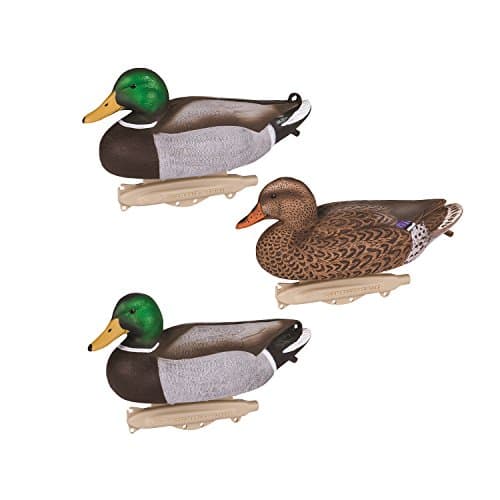
Full-size mallard floaters at the price where buying two packs is realistic. The keel has four tie-off points and an eyelet for depth adjustment, so the same six decoys work in a creek current and in dead-flat pond water.
Best for: The best beginner duck decoys9.2 - 2
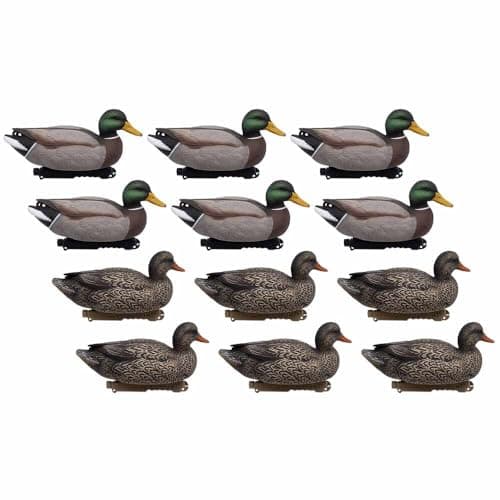
A complete dozen - six drakes, six hens - in a single purchase, in a compact 12-inch body that packs down far better than full-size decoys. If you are walking into your water rather than driving to it, this is the smarter buy.
Best for: Best full dozen in one box9.0 - 3
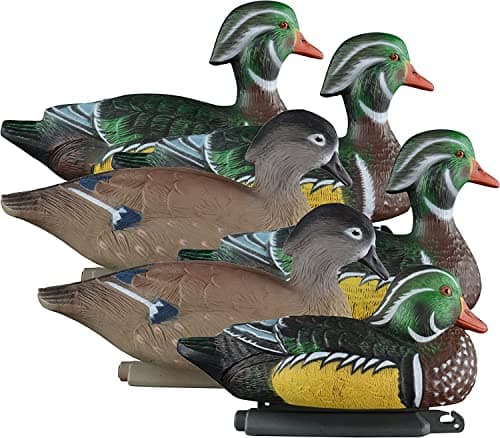
Wood ducks do not decoy to mallards, and a lot of beginner water is exactly where wood ducks live. Foam-filled bodies mean a pellet hole does not end the decoy's life, which matters more than it sounds.
Best for: Best for flooded timber and small creeks8.8 - 4
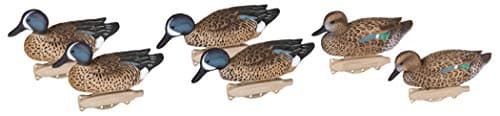
Early teal season is the most beginner-friendly waterfowl hunting in the country - warm weather, shallow water, birds that decoy hard. Six small teal decoys and a whistle will do more in September than a dozen mallards will.
Best for: Best for the early teal season8.6 - 5
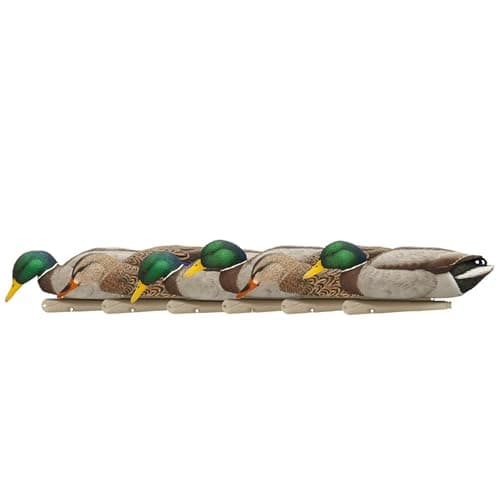
Oversized feeder-posture mallards on a weight-forward keel that swims the decoy in almost no breeze. This is what you buy when the birds on your water have already seen every plastic duck in the county.
Best for: Best for clear water and pressured birds8.9 - 6
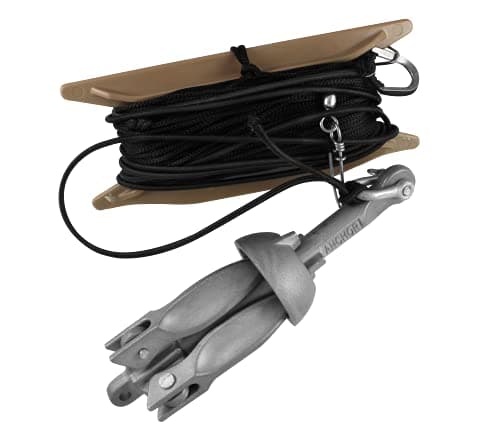
Ninety feet of cord, six drops and a pull line. You lie in the grass, pull, and six decoys ripple the water - the single highest-value thing a beginner can add to a spread, and it is legal everywhere a decoy is.
Best for: Best motion for the money9.1 - 7
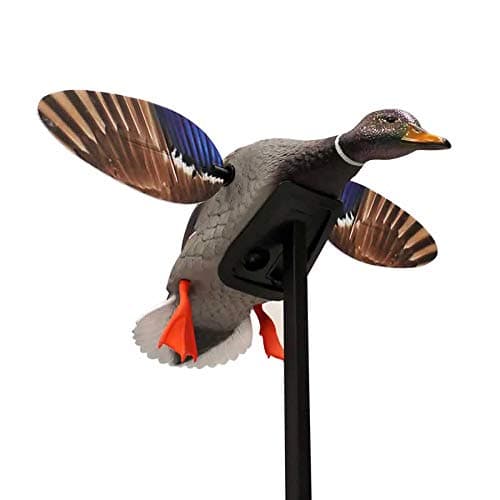
The flash of spinning wings pulls distant birds better than anything else on this page. It is also the one item here you must check your state and area regulations for before you buy - and the one that can push late-season birds away.
Best for: Best spinning-wing decoy, where it is legal8.3 - 8
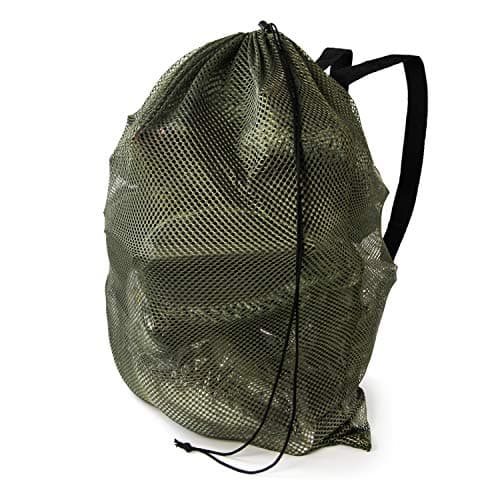
You cannot carry a dozen decoys in your arms in the dark, and the box they came in disintegrates the first time it gets wet. A mesh bag with backpack straps costs less than one decoy and drains as you walk out.
Best for: The accessory you need on day one8.7
| # | Product | Best for | Score | Price |
|---|---|---|---|---|
| 1 | Flambeau Storm Front 2 Mallard Classic Floaters (6-Pack) Full-size mallard floaters at the price where buying two packs is realistic. The keel has four tie-off points and an eyelet for depth adjustment, so the same six decoys work in a creek current and in dead-flat pond water. | The best beginner duck decoys | 9.2 | $37.99View on Amazon#ad |
| 2 | Final Approach Last Pass Mallard Floaters (12-Pack) A complete dozen - six drakes, six hens - in a single purchase, in a compact 12-inch body that packs down far better than full-size decoys. If you are walking into your water rather than driving to it, this is the smarter buy. | Best full dozen in one box | 9.0 | $79.99View on Amazon#ad |
| 3 | Higdon Outdoors Standard Wood Duck Floater Decoys (6-Pack) Wood ducks do not decoy to mallards, and a lot of beginner water is exactly where wood ducks live. Foam-filled bodies mean a pellet hole does not end the decoy's life, which matters more than it sounds. | Best for flooded timber and small creeks | 8.8 | $69.99View on Amazon#ad |
| 4 | Flambeau Storm Front 2 Blue-Winged Teal Decoys (6-Pack) Early teal season is the most beginner-friendly waterfowl hunting in the country - warm weather, shallow water, birds that decoy hard. Six small teal decoys and a whistle will do more in September than a dozen mallards will. | Best for the early teal season | 8.6 | $46.00View on Amazon#ad |
| 5 | Avian X Topflight Backwater Mallards (6-Pack) Oversized feeder-posture mallards on a weight-forward keel that swims the decoy in almost no breeze. This is what you buy when the birds on your water have already seen every plastic duck in the county. | Best for clear water and pressured birds | 8.9 | $99.99View on Amazon#ad |
| 6 | Cupped Waterfowl Snap Back String Jerk Rig Ninety feet of cord, six drops and a pull line. You lie in the grass, pull, and six decoys ripple the water - the single highest-value thing a beginner can add to a spread, and it is legal everywhere a decoy is. | Best motion for the money | 9.1 | $34.99View on Amazon#ad |
| 7 | MOJO Elite Series Mini Mallard Spinning Wing Duck Decoy (Drake) The flash of spinning wings pulls distant birds better than anything else on this page. It is also the one item here you must check your state and area regulations for before you buy - and the one that can push late-season birds away. | Best spinning-wing decoy, where it is legal | 8.3 | $86.36View on Amazon#ad |
| 8 | GUGULUZA Mesh Decoy Bag You cannot carry a dozen decoys in your arms in the dark, and the box they came in disintegrates the first time it gets wet. A mesh bag with backpack straps costs less than one decoy and drains as you walk out. | The accessory you need on day one | 8.7 | $13.99View on Amazon#ad |
Decoys are the part of duck hunting that looks like it should be simple and is not. A beginner buys six mallards because six is what the pack holds, sets them in a neat line twenty yards out, and then watches birds slide past all morning without a look. Nothing about that failure is the decoys' fault. The number was wrong, the water was probably wrong, and the spread had no movement in it. This page is about fixing those three things first, and only then about which plastic ducks to buy.
If you have not sorted the paperwork yet, do that before you spend a dollar here. Waterfowl carries an extra federal layer that no other hunting does — a state license, HIP registration, any state waterfowl stamp, and the federal duck stamp — plus a federal requirement to shoot non-toxic shot. The whole sequence is in duck hunting for beginners, and the gear order is in the first duck hunt checklist.
How we picked these
Our criteria for this page, in order. Cost per decoy came first, because the single biggest determinant of whether a beginner spread works is how many decoys are in it, and that is a budget question before it is a quality question. Then keel design — whether the decoy rides upright and moves in a light breeze, which is a function of the keel and not of the paint. Then species relevance to small water, because most beginners hunt a creek, a beaver pond or a flooded field corner rather than a big open marsh. Then durability, specifically whether a body is hollow or foam filled, since someone in your blind will eventually put a pellet through a decoy. Paint realism came last on purpose: it is the spec that sells decoys and the one that matters least at the distances a beginner is actually hunting.
Every product here was confirmed as a live, in-stock listing before it went on the page, and every spec quoted comes from the manufacturer's or the retailer's own published figures. We do not run a decoy test tank and we do not pretend to — our method is on the how we research and pick page. Prices are live and dated; the price brackets in the writing are qualitative on purpose, because a number typed into an article is stale the week after it is written.
How many decoys do you actually need?
The honest answer is that it depends entirely on your water, and the range is wider than beginners expect: six is genuinely enough in the right place, and six is hopeless in the wrong one. The variable is how far a duck can see your spread from, and how much competition it has.
On a small creek, a beaver pond, a flooded ditch or the corner of a flooded field, birds are working at close range and committing from low altitude. They see your spread from a hundred yards, not a mile. Six to a dozen decoys look natural there — and a dozen looks better than six mostly because it fills the landing hole rather than because it is more visible. On big open water, or a public marsh with other hunters spread across it, you are competing for attention against groups running four and six dozen decoys, and a small spread simply does not get seen. That is not a problem you solve by buying more decoys as a beginner. It is a problem you solve by not hunting that water yet.
| Your water | Decoys to start with | Why |
|---|---|---|
| Creek, ditch or beaver pond | 6 to 12 | Birds commit at close range; a small spread reads as natural |
| Flooded timber | 6 wood ducks, or 6-12 mallards | Visibility is short; the calling and the hole matter more than the count |
| Corner of a flooded field | 12 | Enough to fill the hole, still one bag to carry |
| Small public lake, low pressure | 12 to 18 | You need to be seen from further out |
| Big open marsh with other hunters | Not yet | You will be out-competed; find smaller water first |
| Early teal season, shallow water | 6 teal | Teal decoy hard to small, species-correct spreads |
This is why the top pick on this page is a six-pack rather than a dozen. Two six-packs of the same decoy costs less than most twelve-packs and gives you the flexibility to hunt six on a creek and twelve on a pond out of the same bag. If you would rather buy once and be done, the Final Approach dozen is the cheaper route per bird.
Which species to buy first
Mallards first, almost without exception. They are the most widely distributed duck in North America, they are the species most other puddle ducks will decoy to, and a mallard spread is never actively wrong. Every beginner spread should start with mallard floaters, and the question of a second species should not come up until you have hunted your water a few times and know what is actually using it.
There are two exceptions worth knowing. If your water is flooded timber, a creek bottom or a wooded beaver pond, wood ducks may be the bird you actually see — and wood ducks are notably indifferent to mallard decoys. A half-dozen wood duck floaters in that water outperforms two dozen mallards. And if your state has an early teal season, six teal decoys in September is the single most productive small purchase in waterfowling: warm weather, shallow water, and birds that drop into small spreads with very little persuasion.
What you do not need is a mixed bag of five species. Beginners see a spread photo with pintails, wigeon, gadwall and mallards in it and assume variety is the point. It is not — that spread belongs to someone hunting water where all of those birds are present in numbers. Species-correct beats species-varied every time, and on most beginner water the correct species is mallard.
Confidence decoys are a later purchase
Two spreads that work on small water
You do not need a repertoire of spread shapes. You need two, and they both do the same job: leave an obvious, open landing hole in front of your blind, within range, with the wind at the ducks' faces as they drop into it. Ducks land into the wind. Everything else about placement follows from that one fact.
The first is the J-hook. Put the long arm of the J upwind, curving down and around so the hook of the letter sits in front of you, and leave the inside of the hook empty. Birds follow the line of decoys along the arm, and the empty pocket at the end is where they want to land. Keep the pocket at fifteen to twenty-five yards — closer than most beginners set it, because your instinct will be to place it at the edge of your range rather than the middle of it.
The second is the split spread: two loose groups with an open lane of water between them, the lane running straight out from your blind and into the wind. Ducks read the lane as the gap in a raft of feeding birds and drop into it. This one is more forgiving than the J-hook because there is no shape to get wrong, and it works well with as few as six decoys.
In both cases the mistakes are the same three. Spreading the decoys too evenly, so it looks arranged rather than fed-out — real ducks clump. Setting the hole too far out. And putting yourself in the wrong place relative to the sun, so you are squinting into it at exactly the moment birds commit. Fix the third one by scouting the spot in daylight the day before, which is the same trip that tells you where the birds actually want to be.
Motion: jerk cord vs spinner
A spread of perfectly still decoys on flat water looks dead, and ducks read dead water exactly the way you would. Adding motion is the biggest single improvement available to a beginner spread — bigger than doubling the decoy count, and far bigger than upgrading the paint. There are two ways to do it, and they are not equivalent.
A jerk cord is a length of line running from your blind out to a handful of decoys. You pull it, the decoys bob and the water ripples outward. That ripple is the cue — it is what a raft of feeding ducks makes, it is visible from the air in a way that a static spread is not, and it is entirely under your control. You use it when birds are circling and stop when they commit. It costs very little, has nothing to break, and there is no jurisdiction where it is restricted.
A spinning-wing decoy is a motorized decoy with rotating wings that flash white and dark. It pulls birds from much further out than a jerk cord can, and on early-season and migrating birds it is genuinely, sometimes unfairly, effective. It also has three real costs. It runs on batteries, which fade in the cold. Late-season birds that have been hunted over spinners all fall learn to flare from them. And the legality is not uniform: several states restrict motorized and electronic decoys by season or area, and on National Wildlife Refuges simulated wing-movement decoys are unlawful to possess or use through the regular duck season. Check your state's current waterfowl regulations and the rules for the specific area you hunt before you buy one.
If you buy one motion item, buy the jerk cord
Rigging, anchors and the tangle problem
Decoys ship with cord and weights that are, charitably, a starting point. The two things that will ruin a morning are a decoy that drags out of position and a bag of decoys whose lines have knitted themselves into one object in the dark. Both are rigging problems, and both are cheap to solve.
On depth: your anchor line needs to be roughly one and a half times the water depth. Too short and the decoy sits at an angle or pulls under; too long and it swings around the anchor and drifts into its neighbors. Most beginner water is shallow — knee to waist deep — so three to four feet of line is usually right, and the factory cord is often much longer than that. Shortening it is free and it fixes most drift complaints.
On tangles: the fix is either wrapping each line properly around its own keel every single time, or moving to tangle-free rigging. Texas-style rigs — a length of coated cable with a weight on one end and a clip on the other — hang each decoy on its own line with nothing to wrap around anything else, and they turn a bag of decoys back into a bag of decoys rather than a knot. They cost more than the factory cord and they are the upgrade most waterfowlers make second, after they have carried one tangled bag out of the marsh in the dark.
Whatever you rig with, put the whole spread in a mesh bag rather than the box it shipped in, and set it in the water in the same order every time. Repeating the same setup in the same order is how a twenty-minute fumble in the dark becomes a five-minute routine — which matters, because the difference between shooting legal light and setting up during it is often the difference between a hunt and a walk.
What to skip in your first season
Skip the premium decoys until you have hunted a few times. The Avian-X pack on this page is genuinely better plastic than the Flambeau, and it is the wrong first purchase for almost everyone, because twelve cheaper decoys beat six expensive ones on every water a beginner will hunt. Paint realism earns its money on clear water in front of pressured birds — a situation you will not be in during your first season.
Skip full-body field decoys and goose spreads. They belong to field hunting, which is a different game with a different access problem. Skip silhouettes for the same reason. And skip the impulse to buy a second species pack after one slow morning; a slow morning is almost always a location problem, not a species problem.
What you should spend on instead is everything that decides whether you can stay out there. Waders that actually fit over layers are the foundation of a duck hunt, and the difference between insulated neoprene and a breathable fishing wader is the difference between a full morning and an hour. Rain gear and base layers are the same argument. A double-reed duck call costs less than two decoys and does more for you than six more plastic ducks would. And if you have not settled the gun question, the best beginner hunting shotgun covers it, including the non-toxic shot requirement that catches out every new waterfowler.
The through-line of this whole page: a dozen inexpensive mallards, a jerk cord, a mesh bag and water you scouted the day before will out-hunt six beautiful decoys set in a straight line in front of a blind you found on a map. Buy the count, buy the motion, and let the paint wait.
The picks in detail
Flambeau Storm Front 2 Mallard Classic Floaters (6-Pack)
9.2/10Best for: The best beginner duck decoys
Full-size mallard floaters at the price where buying two packs is realistic. The keel has four tie-off points and an eyelet for depth adjustment, so the same six decoys work in a creek current and in dead-flat pond water.
- Size
- Full size, 14"
- Pack
- 2 active drakes, 1 semi-resting drake, 3 semi-resting hens
- Body
- Polymer blend
- Keel
- 4 tie-off points, depth-adjust eyelet
- Cheap enough that a dozen is a realistic first purchase
- Four keel tie-off points let you change how the decoy rides in current
- Three-to-three drake and hen mix looks right without buying two packs first
- UVision paint scheme, and the paint holds up better than the bargain-bin brands
- Hollow bodies - a pellet hole will eventually sink one
- Full-size decoys take up real space in a bag and a truck
- Six is not a spread; plan on the cost of two packs, not one
Final Approach Last Pass Mallard Floaters (12-Pack)
9.0/10Best for: Best full dozen in one box
A complete dozen - six drakes, six hens - in a single purchase, in a compact 12-inch body that packs down far better than full-size decoys. If you are walking into your water rather than driving to it, this is the smarter buy.
- Size
- Compact, 12" bill to tail
- Pack
- 12 (6 drakes, 6 hens)
- Body
- One-piece high-density polyethylene
- Keel
- Weighted, integrated cord lock
- A full dozen in one box - no second order, no mismatched paint
- Compact 12-inch bodies mean the whole spread fits one bag
- One-piece HDPE construction with no seam to split
- Weighted keel rides upright without adding a keel weight yourself
- Undersized bodies show less well on big, open water
- Costs more up front than a single six-pack, even though it is cheaper per bird
- Integrated cord lock is convenient but locks you into its rigging style
Higdon Outdoors Standard Wood Duck Floater Decoys (6-Pack)
8.8/10Best for: Best for flooded timber and small creeks
Wood ducks do not decoy to mallards, and a lot of beginner water is exactly where wood ducks live. Foam-filled bodies mean a pellet hole does not end the decoy's life, which matters more than it sounds.
- Size
- Standard, 13" beak to tail
- Pack
- 6 (4 drakes, 2 hens, mixed postures)
- Body
- Foam filled
- Keel
- Weighted, short-string design
- Foam filled - it will not sink when it takes a pellet
- Right species for creeks, beaver ponds and flooded timber
- Short-string keel design is quick to rig and quick to pick up
- Six is a genuinely sufficient wood duck spread, unlike six mallards
- Species-specific - a wood duck spread does very little for mallards
- Standard size is slightly undersized against a live bird
- Foam-filled bodies are heavier to carry than hollow ones
Flambeau Storm Front 2 Blue-Winged Teal Decoys (6-Pack)
8.6/10Best for: Best for the early teal season
Early teal season is the most beginner-friendly waterfowl hunting in the country - warm weather, shallow water, birds that decoy hard. Six small teal decoys and a whistle will do more in September than a dozen mallards will.
- Size
- 10.5" tail to breast
- Pack
- 2 active drakes, 2 skimmer drakes, 1 resting hen, 1 dabbler hen
- Weight
- About 4.4 lb for the six-pack
- Keel
- 4 tie-off points
- Small and light - six of them barely register in a pack
- Teal genuinely decoy to teal, so a small spread punches above its size
- Same four-point keel as the mallard pack above
- One of the cheapest ways into a real, species-correct spread
- A short season in most states - this is a specialist purchase
- Too small to carry a spread on its own outside early season
- Blue-wings are largely gone from northern states by late October
Avian X Topflight Backwater Mallards (6-Pack)
8.9/10Best for: Best for clear water and pressured birds
Oversized feeder-posture mallards on a weight-forward keel that swims the decoy in almost no breeze. This is what you buy when the birds on your water have already seen every plastic duck in the county.
- Size
- Oversized, about 14.5" breast to tail
- Pack
- 6 (4 drakes - 2 surface feeders, 2 feeders - and 2 feeder hens)
- Keel
- Weight-forward with integral swim clip
- Paint
- No-flake finish
- Feeding postures read as relaxed birds, which is what a pressured duck looks for
- Weight-forward swim keel creates motion in the slightest breeze
- Paint durability is the real reason to pay more here
- Oversized bodies show from further out on open water
- Roughly triple the per-decoy cost of the Flambeau pack
- All-feeder postures need a few upright decoys mixed in to look natural
- Bulky - six of these fill a decoy bag on their own
Cupped Waterfowl Snap Back String Jerk Rig
9.1/10Best for: Best motion for the money
Ninety feet of cord, six drops and a pull line. You lie in the grass, pull, and six decoys ripple the water - the single highest-value thing a beginner can add to a spread, and it is legal everywhere a decoy is.
- Cord
- 90 ft PVC cord
- Drops
- 6 decoy drops
- Pull line
- 5 ft
- Power
- None - hand pulled
- Ripples on the water are the motion cue ducks actually respond to
- No batteries, no motor, nothing to fail in the cold
- Legal wherever decoys are legal - no spinning-wing restrictions to check
- Costs a fraction of a motion decoy and works on late-season birds that flare from spinners
- You have to be in position and awake to work it - it does nothing on its own
- Six drops is the practical limit; it moves part of a spread, not all of it
- Setting it up in the dark takes practice, and tangled cord is a miserable start
MOJO Elite Series Mini Mallard Spinning Wing Duck Decoy (Drake)
8.3/10Best for: Best spinning-wing decoy, where it is legal
The flash of spinning wings pulls distant birds better than anything else on this page. It is also the one item here you must check your state and area regulations for before you buy - and the one that can push late-season birds away.
- Type
- Motorized spinning wing
- Power
- 4 AA batteries (not included)
- Wings
- Magnetically attached
- Mount
- Cam-lock support pole
- Nothing else turns birds from as far away
- Magnetic wings pop off for transport instead of snapping
- Motor and battery mount on the pole rather than in a hollow body, so it runs quieter
- Genuinely effective on early-season and migrating birds
- Restricted or banned in some states, and on National Wildlife Refuges during regular duck season - check your regulations before buying
- Batteries are not included, and cold weather shortens their life
- Late-season birds that have been shot at over spinners will flare from one
- Costs more than a six-pack of decoys that will work everywhere
GUGULUZA Mesh Decoy Bag
8.7/10Best for: The accessory you need on day one
You cannot carry a dozen decoys in your arms in the dark, and the box they came in disintegrates the first time it gets wet. A mesh bag with backpack straps costs less than one decoy and drains as you walk out.
- Size
- About 37.5" x 31.5"
- Capacity
- Roughly two dozen standard floaters
- Material
- Tear-resistant nylon mesh
- Carry
- Adjustable backpack shoulder straps
- Mesh drains and dries instead of holding a gallon of marsh water
- Backpack straps keep both hands free for a gun and a light
- Cheap enough to buy two and split the spread between them
- Drawstring closure means nothing falls out on the walk
- Mesh snags on brush and briars, and will eventually tear
- A loaded bag of full-size decoys is an awkward, wide load in thick cover
- No structure - it sags and swings if you underfill it
Prices shown are from Amazon as of Sep 8, 2026 and change often — the button always goes to the current listing. Some links may earn us a commission at no extra cost to you. How this works.
Frequently asked questions
How many duck decoys does a beginner need?
Six to twelve for small water - a creek, a beaver pond, a flooded ditch or a field corner. Birds commit at close range there, so a small spread reads as natural. On big open water where you compete with other hunters running four to six dozen, a small spread does not get seen; the fix is hunting smaller water, not buying more decoys.
What duck decoys should I buy first?
Mallard floaters. Mallards are the most widely distributed duck in North America and most other puddle ducks will decoy to them, so a mallard spread is never actively wrong. Buy wood duck decoys instead only if you hunt flooded timber or a wooded creek, and add teal only if your state has an early teal season.
Is a jerk cord better than a spinning-wing decoy?
For a beginner, yes. A jerk cord costs a fraction as much, has no batteries or motor to fail, is legal wherever decoys are legal, and puts ripples on the water - the motion cue ducks actually respond to. A spinner pulls birds from further out but is restricted in some states and on National Wildlife Refuges during regular duck season, and late-season birds learn to flare from one.
How long should a duck decoy anchor line be?
Roughly one and a half times the water depth. Most beginner water is knee to waist deep, so three to four feet is usually right - and factory cord is often much longer than that. Too short and the decoy pulls under or sits at an angle; too long and it swings around its anchor and drifts into its neighbors.
Where do you put duck decoys?
Leave an open landing hole fifteen to twenty-five yards in front of the blind, with the wind at the ducks' faces as they drop into it, because ducks land into the wind. A J-hook with the empty pocket in front of you, or two loose groups with an open lane between them, both work. Clump the decoys rather than spacing them evenly - real ducks are not arranged.
Sources
- Flambeau Outdoors — Storm Front 2 decoy specifications
- Higdon Outdoors — Standard floater decoy specifications
- Avian-X — Topflight Backwater Mallards specifications
- Final Approach — Last Pass mallard floater specifications
- MOJO Outdoors — Elite Series Mini Mallard specifications
- U.S. Fish & Wildlife Service — federal duck stamp and waterfowl hunting regulations
- Ducks Unlimited — waterfowl behavior and decoy spread guidance
Keep reading
Not sure where to start?
The beginner gear checklist walks you through exactly what a first-season hunter needs — essentials first, nice-to-haves later, with one safe-default pick per category.