Starter kit · Turkey
Your First Turkey Hunt: The Complete Kit List
Turkeys do not smell you and they do not care about wind. They see, and they see better than you think. Almost everything in this kit exists to solve that one problem, plus the calling that gets a bird to come looking.
Disclosure: Creek Cover is reader-supported. If you buy through our links we may earn a commission, at no extra cost to you. It never changes which pick we tell a beginner to start with. Full disclosure.
Quick picks at a glance
Tap a pick to read the full write-up, or the price button to check it on Amazon.
- 1
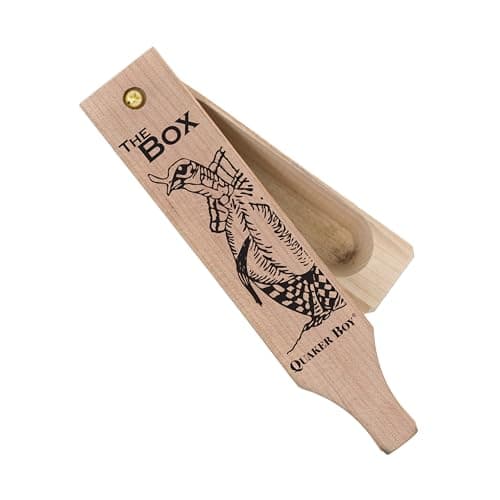
Loud, realistic and playable on day one. A box call carries farther than anything else in this kit, which is exactly what a beginner needs for locating a gobbler at first light.
Best for: The one call to buy first9.3 - 2
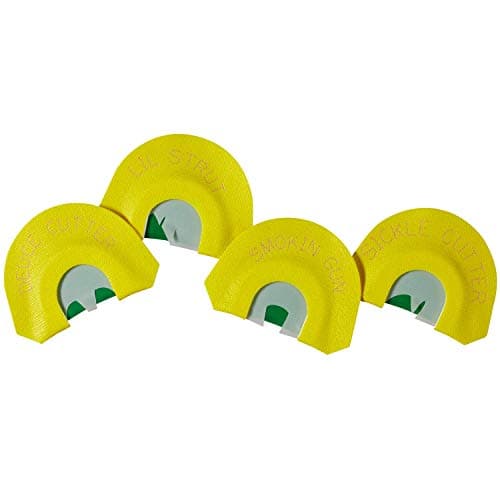
The call that finishes the hunt. Once a gobbler is in close, you cannot move your hands — a mouth call runs entirely off your tongue and jaw, which is the whole reason it is worth the learning curve.
Best for: The close-range call, hands-free8.7 - 3
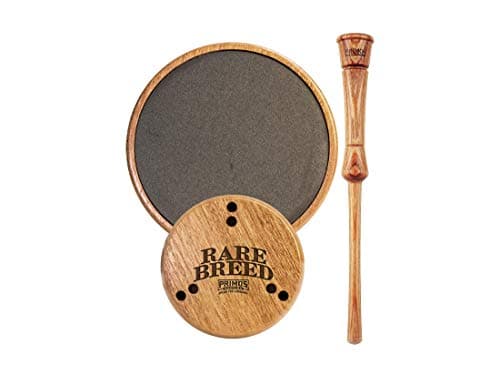
A slate pot call makes the softest, most convincing purrs and clucks in the kit — the sounds that close the last hundred yards after the box call has done the locating.
Best for: Soft, realistic calling in close8.5 - 4
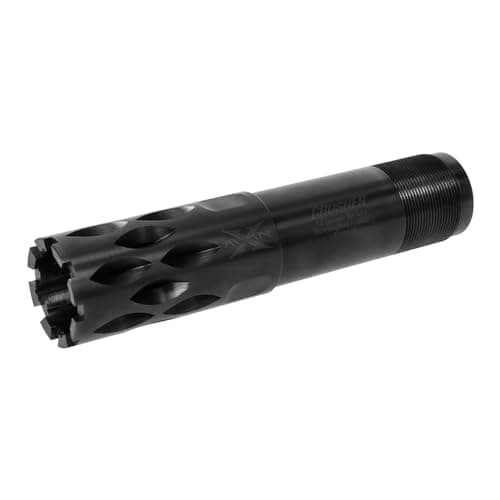
A dedicated turkey choke tightens the pattern enough to matter on a head-and-neck target at forty yards. It is the single highest-value change you can make to a gun you already own.
Best for: The cheapest meaningful upgrade to your shotgun8.9 - 5
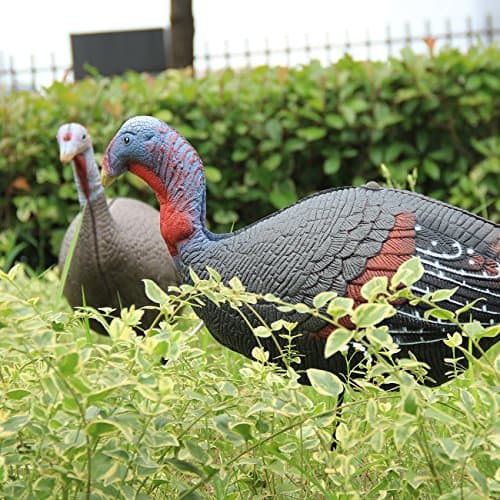
A hen-and-jake pair is the standard beginner setup and it solves a specific problem: it gives the bird a reason to commit the last sixty yards instead of standing and gobbling out of range.
Best for: Giving a hung-up gobbler something to look at8.2 - 6
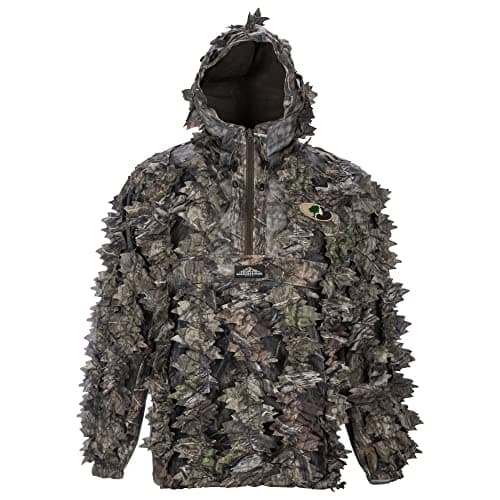
Turkey hunting is the one hunt where camo genuinely earns its price, because the bird beats you with its eyes at twenty yards. A leafy layer breaks your outline better than a flat printed pattern.
Best for: Breaking your outline where it matters8.4 - 7
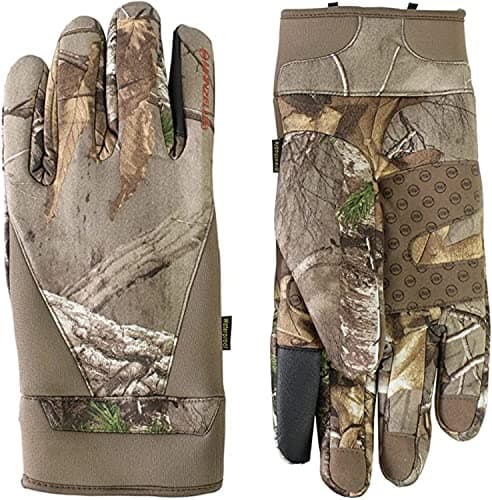
Bare hands are the single most common thing that gives a turkey hunter away. Thin stretch gloves cover them without taking the feel out of a safety or a trigger.
Best for: The detail beginners always miss8.6 - 8
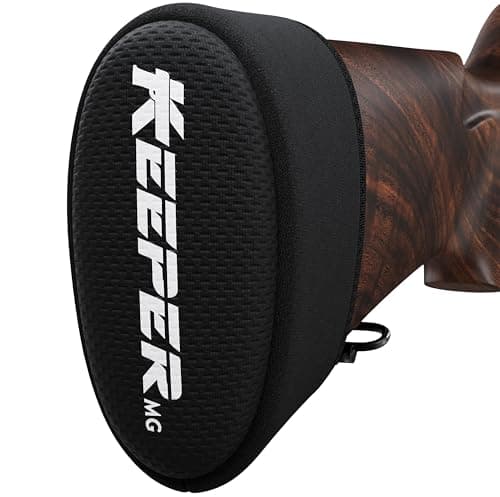
Turkey loads are among the heaviest shells a shotgun fires, and you have to shoot enough of them to pattern the gun. A slip-on pad is the cheap fix for the flinch that develops on the bench.
Best for: Making patterning day survivable8.0
| # | Product | Best for | Score | Price |
|---|---|---|---|---|
| 1 | Quaker Boy The Box Turkey Call Loud, realistic and playable on day one. A box call carries farther than anything else in this kit, which is exactly what a beginner needs for locating a gobbler at first light. | The one call to buy first | 9.3 | $21.99View on Amazon#ad |
| 2 | Hunters Specialties Premium Flex Four Diaphragm Calls, 4-Pack The call that finishes the hunt. Once a gobbler is in close, you cannot move your hands — a mouth call runs entirely off your tongue and jaw, which is the whole reason it is worth the learning curve. | The close-range call, hands-free | 8.7 | $10.74View on Amazon#ad |
| 3 | Primos Rare Breed Slate Turkey Pot Call A slate pot call makes the softest, most convincing purrs and clucks in the kit — the sounds that close the last hundred yards after the box call has done the locating. | Soft, realistic calling in close | 8.5 | $41.40View on Amazon#ad |
| 4 | Avian-X Turkey Extended Choke Tube (Rem-Choke) A dedicated turkey choke tightens the pattern enough to matter on a head-and-neck target at forty yards. It is the single highest-value change you can make to a gun you already own. | The cheapest meaningful upgrade to your shotgun | 8.9 | $47.11View on Amazon#ad |
| 5 | TargetEvo Hen and Jake Turkey Decoy Combo (2-Pack) A hen-and-jake pair is the standard beginner setup and it solves a specific problem: it gives the bird a reason to commit the last sixty yards instead of standing and gobbling out of range. | Giving a hung-up gobbler something to look at | 8.2 | $31.99View on Amazon#ad |
| 6 | North Mountain Gear Leafy Camo Hunting Jacket Turkey hunting is the one hunt where camo genuinely earns its price, because the bird beats you with its eyes at twenty yards. A leafy layer breaks your outline better than a flat printed pattern. | Breaking your outline where it matters | 8.4 | $69.99View on Amazon#ad |
| 7 | Manzella Stretch Coyote Hunting Glove Bare hands are the single most common thing that gives a turkey hunter away. Thin stretch gloves cover them without taking the feel out of a safety or a trigger. | The detail beginners always miss | 8.6 | $50.00View on Amazon#ad |
| 8 | KEEPER MG Gel Slip-On Recoil Pad Turkey loads are among the heaviest shells a shotgun fires, and you have to shoot enough of them to pattern the gun. A slip-on pad is the cheap fix for the flinch that develops on the bench. | Making patterning day survivable | 8.0 | $12.99View on Amazon#ad |
If you have already read the first deer hunt kit, almost none of it transfers. Deer hunting is a scent-and-stillness problem solved with wind discipline and warm boots. Turkey hunting is a vision problem solved with concealment, plus a conversation problem solved with a call. The kit reflects that, and the good news is that it is cheaper — there is no treestand, no harness, and the whole thing happens in mild spring weather.
Why turkey gear is nothing like deer gear
A wild turkey has poor smell and excellent eyesight — the reverse of a whitetail. You can hunt them from downwind, upwind or standing in your own scent cloud and it makes no difference. What ends a turkey hunt is being seen: a hand moving to a call, a pale face turning, a knee shifting because you have been sitting on a root for forty minutes.
That single fact explains this list. The leafy layer, the gloves and the seated stillness all exist because the bird will beat you with its eyes at twenty yards. The calls exist because, unlike deer hunting, this is a hunt where you are actively inviting the animal to walk to you. Turkey hunting for beginners covers how that conversation actually goes; this page covers what you need to have in the vest before it starts.
Calls: buy two, learn one
The advice to buy one call and master it is well-meant and slightly wrong. You want two types, because they do different jobs at different distances. A box call is loud and carries — it is what you use at first light to get a gobbler to answer from a ridge four hundred yards away. It is also playable on your first afternoon, which no other call is. A soft call — a slate pot or a diaphragm — is what finishes the job once he is coming, when loud yelping starts to sound wrong and moving your hands starts to be dangerous to the hunt.
Buy the box call and one soft call. Learn the box call properly before opening day and practice the soft one all season without any pressure to be good at it. The diaphragm is the one worth persisting with over years, because hands-free calling with a bird at forty yards is a genuine advantage — but nobody should be relying on it in their first spring. Our best turkey calls for beginners roundup compares the full field if you want the detail behind these picks.
| Call type | What it is for | How long to learn |
|---|---|---|
| Box | Locating a bird at distance; loud yelps and cutts | An afternoon |
| Slate pot | Soft yelps, clucks and purrs in close | A few sessions |
| Diaphragm | Hands-free calling when he is already looking | Weeks to months |
| Locator (owl/crow) | Getting a shock gobble without turkey-calling | Minutes — optional |
Concealment, and what beginners get wrong
Everyone buys the jacket. Almost nobody buys the gloves and the face covering, and those are the two things that actually give you away. Your hands are pale, they are at the front of your body, and they move every time you pick up a call. Your face is pale, it is at the top of your outline, and it turns toward whatever you are looking at. A leafy jacket over a bare face and bare hands is a solved problem for the turkey.
Get gloves, and get a head net, a face mask or paint — any of the three works and all three are cheap. Then sit against something wider than your shoulders so you have no outline against the sky, and accept that you will need to sit far stiller than feels natural. Setting up correctly matters more than any garment: pick a tree with a clear shooting lane and get settled before you call rather than after.
Spring is warmer than you plan for, and colder at dawn
The gun, the choke and patterning
We are not naming a shotgun on this page, because legal gauges, shot sizes and shot materials for turkey vary by state and the regulations change. If you are still choosing, the best beginner hunting shotguns and 12 gauge vs 20 gauge cover the decision — and for turkey specifically, a 20 gauge with modern loads is a far more legitimate choice than it used to be.
What matters more than the gun is the choke and the patterning. A turkey target is a head and neck, not a body — you are aiming at something the size of a fist and you need enough pellets in it at whatever range you take the shot. A dedicated turkey choke tightens the pattern substantially, and it is the cheapest meaningful upgrade to a shotgun you already own. Check your barrel’s thread pattern before ordering; the shotgun choke guide opens with that warning for good reason.
Then actually pattern it. Put a turkey head target at forty yards, shoot it with the shells you intend to hunt with, and count. That tells you your real maximum range, which is frequently shorter than the box claims. Do this before the season, wear hearing protection, and expect it to be unpleasant — turkey loads are heavy, which is why the recoil pad is on this list.
Do you need decoys?
No, but they solve a specific and very common beginner problem. A gobbler that answers your call will often walk to a spot he can see from, then stand there and gobble, waiting for the hen to come to him — which is what real hens do. That is the classic hang-up, and it happens at seventy yards with maddening regularity. A decoy gives him something to see, which sometimes converts a hang-up into a bird that commits.
The hen-and-jake pair is the standard beginner setup because it adds a second motivation: a dominant tom does not just want the hen, he wants the young male away from her. Set them fifteen to twenty yards out, in a place you can see and shoot to. And carry them covered on public ground — a turkey decoy on your back looks exactly like a turkey to another hunter.
The safety rule that is specific to turkeys
Turkey hunting takes one rule more seriously than any other hunt on this site, because the conditions are uniquely dangerous: hunters are camouflaged head to toe, deliberately hidden, making turkey sounds, in woods that may contain other hunters doing exactly the same thing.
Never stalk a gobble.If you hear calling and think it might be a bird, it might equally be a hunter. Sit down, call, and let the bird come to you — which is how the hunt is supposed to work anyway. Never wear red, white or blue, the exact colors of a gobbler’s head. Set up against a tree wider than your shoulders so nothing can approach from behind you. Identify a beard and a full head before the safety comes off, every time. And on public land, if another hunter is working the same bird, leave — speak up, be seen, and go find another one.
What to skip
Skip the turkey vest for your first season if money is tight; a cheap seat cushion and any pack you own do the same job, and you will know after one spring whether the vest’s pockets are worth it to you. Skip the full decoy spread — one pair is plenty and more is heavier. Skip strutting or motion decoys entirely until you have hunted a season, because they can intimidate subordinate birds as easily as they attract dominant ones.
And skip buying four calls. The failure mode for beginners is not owning too few calls, it is owning five and being able to run none of them convincingly. Two calls, practiced, beat a vest full of them. The gear that wastes beginners’ money covers the rest of the pattern.
The picks in detail
Quaker Boy The Box Turkey Call
9.3/10Best for: The one call to buy first
Loud, realistic and playable on day one. A box call carries farther than anything else in this kit, which is exactly what a beginner needs for locating a gobbler at first light.
- Type
- Friction — box
- Learning curve
- An afternoon
- Best at
- Loud yelps and cutts, long range
- Usable well on the first afternoon of practice — no other call is
- Louder than pot or diaphragm calls, which is what locates a distant bird
- Hard to make a genuinely bad sound with once the lid is chalked
- Two-handed operation, so it is the wrong call when a gobbler is already at sixty yards and watching
- Wet weather kills a friction call — the lid needs to stay dry to sound like anything
- Needs chalk periodically, and that is one more thing to have forgotten in the truck
Hunters Specialties Premium Flex Four Diaphragm Calls, 4-Pack
8.7/10Best for: The close-range call, hands-free
The call that finishes the hunt. Once a gobbler is in close, you cannot move your hands — a mouth call runs entirely off your tongue and jaw, which is the whole reason it is worth the learning curve.
- Type
- Diaphragm / mouth call
- Count
- 4 cuts in the pack
- Hands
- Hands-free
- Completely hands-free at the moment when moving your hands ends the hunt
- Four different cuts in one pack, so you can find the one your mouth gets along with
- Costs less than a tank of gas and lives permanently in a vest pocket
- The steepest learning curve in this kit — expect weeks, not an afternoon
- Gag reflex is a real and common problem; some people never get on with them
- Latex degrades — they need refrigerating between seasons and replacing regularly
Primos Rare Breed Slate Turkey Pot Call
8.5/10Best for: Soft, realistic calling in close
A slate pot call makes the softest, most convincing purrs and clucks in the kit — the sounds that close the last hundred yards after the box call has done the locating.
- Type
- Friction — pot and striker
- Surface
- Slate
- Best at
- Soft yelps, clucks and purrs
- The most realistic soft calling available to a beginner without a mouth call
- Easier to run than a diaphragm and far more subtle than a box
- Slate is forgiving — light pressure on the striker still sounds like a turkey
- Two hands again, so it has the same close-range problem as the box call
- Slate must be conditioned with a scuff pad and kept bone dry to sound right
- Not loud enough to locate a bird at distance — this is a finishing call, not a starting one
Avian-X Turkey Extended Choke Tube (Rem-Choke)
8.9/10Best for: The cheapest meaningful upgrade to your shotgun
A dedicated turkey choke tightens the pattern enough to matter on a head-and-neck target at forty yards. It is the single highest-value change you can make to a gun you already own.
- Type
- Extended turkey choke
- Thread
- Rem-Choke pattern
- Purpose
- Tight pattern at 30-40 yd
- Turns a general-purpose shotgun into a turkey gun for a fraction of the price of a new barrel
- A tighter pattern on a small vital area is a genuine ethics improvement, not just a spec
- Extended design makes it easy to swap without a wrench in the field
- Thread patterns are not universal — the wrong thread does not fit, and it is not always obvious which you have
- You must pattern your gun with your actual shells to know what it does; the choke alone proves nothing
- Useless if you are hunting with a fixed-choke or non-threaded barrel
TargetEvo Hen and Jake Turkey Decoy Combo (2-Pack)
8.2/10Best for: Giving a hung-up gobbler something to look at
A hen-and-jake pair is the standard beginner setup and it solves a specific problem: it gives the bird a reason to commit the last sixty yards instead of standing and gobbling out of range.
- Contents
- Hen and jake pair
- Setup
- Stake-in, collapsible
- Placement
- 15-20 yd, in view of your setup
- Pulls a hung-up gobbler's attention off you and onto the decoy, which is exactly when you can move
- The hen-jake pair provokes a dominant tom rather than just reassuring him
- Collapses small enough to carry on a long walk in
- Genuine safety consideration on public land — carry them covered, never place them where another hunter could stalk them
- Some pressured birds hang up because of decoys rather than in spite of them
- One more thing to set up in the dark when you should be getting settled
North Mountain Gear Leafy Camo Hunting Jacket
8.4/10Best for: Breaking your outline where it matters
Turkey hunting is the one hunt where camo genuinely earns its price, because the bird beats you with its eyes at twenty yards. A leafy layer breaks your outline better than a flat printed pattern.
- Type
- Leafy / 3D camo layer
- Worn
- Over your existing layers
- Season
- Spring
- Three-dimensional leafy material breaks your outline in a way a flat print cannot
- Goes over whatever you already own, so it is not a whole new wardrobe
- Light enough for spring temperatures, which most insulated hunting jackets are not
- Leafy material snags on briars and thorns constantly
- Warm and airless on a still spring morning once the sun is up
- Does nothing about the two things that actually give beginners away: hands and face
Manzella Stretch Coyote Hunting Glove
8.6/10Best for: The detail beginners always miss
Bare hands are the single most common thing that gives a turkey hunter away. Thin stretch gloves cover them without taking the feel out of a safety or a trigger.
- Type
- Thin stretch shooting glove
- Purpose
- Concealment, not warmth
- Dexterity
- Retained
- Covers the pale, moving thing a turkey notices from sixty yards away
- Thin enough that trigger feel and safety operation are unaffected
- Also solves the face problem's smaller sibling — bare wrists between cuff and sleeve
- Almost no warmth, which is correct for spring and useless in November
- Thin fabric snags and wears through faster than a heavier glove
- Does not cover your face — you still need a mask, a head net or face paint
KEEPER MG Gel Slip-On Recoil Pad
8.0/10Best for: Making patterning day survivable
Turkey loads are among the heaviest shells a shotgun fires, and you have to shoot enough of them to pattern the gun. A slip-on pad is the cheap fix for the flinch that develops on the bench.
- Type
- Slip-on gel pad
- Fits
- Over an existing stock
- Fitted in
- Seconds, no gunsmith
- Costs almost nothing and takes the edge off the shells that cause beginner flinch
- Slips on and off — no permanent change to the gun and no gunsmith
- Most useful exactly when you need it most: patterning day, not the hunt
- Adds length of pull, which can make a properly fitted gun fit you worse
- Slip-on pads can shift or snag on clothing when you mount the gun
- It manages recoil; it does not fix a gun that genuinely does not fit you
Prices shown are from Amazon as of Sep 6, 2026 and change often — the button always goes to the current listing. Some links may earn us a commission at no extra cost to you. How this works.
Frequently asked questions
What do I need for my first turkey hunt?
A license and turkey tag, a legal shotgun with a turkey choke, one loud call and one soft call, concealment for your hands and face as well as your body, and something comfortable to sit on. Decoys help with hung-up birds but are not required. The whole kit is cheaper than a deer setup because there is no treestand or cold-weather clothing.
What turkey call should a beginner learn first?
A box call. It is loud enough to locate a gobbler at distance, it is realistic, and it is playable on your first afternoon of practice - no other call is. Add a slate pot call for soft calling in close, and treat a diaphragm as a multi-season project rather than something to rely on in your first spring.
Do I need decoys for turkey hunting?
No, but they solve the most common beginner frustration: a gobbler that answers, walks partway in, then stands out of range waiting for the hen to come to him. A hen-and-jake pair set 15-20 yards out gives him something to see. Always carry decoys covered on public land - to another hunter they look exactly like a turkey.
Do I need a special choke for turkey hunting?
It is the cheapest meaningful upgrade you can make to a shotgun you already own. A turkey choke tightens the pattern for a head-and-neck target at 30-40 yards. Check your barrel's thread pattern before ordering, and pattern the gun with the shells you will actually hunt with - the choke alone tells you nothing.
Why can't you stalk a gobbling turkey?
Because in spring woods another camouflaged, hidden hunter making turkey sounds is indistinguishable from a turkey until you are dangerously close. Turkey hunting is the hunt with the most hunter-on-hunter incidents for exactly this reason. Sit, call, and let the bird come to you - which is how the hunt is designed to work.
Sources
Keep reading
Not sure where to start?
The beginner gear checklist walks you through exactly what a first-season hunter needs — essentials first, nice-to-haves later, with one safe-default pick per category.