Starter kit · Waterfowl
Your First Duck Hunt: The Complete Kit List
Duck hunting is the one hunt where being cold and wet is the default state rather than a mistake. Almost everything in this kit exists to keep you dry, and the rest is there to convince a bird to turn.
Disclosure: Creek Cover is reader-supported. If you buy through our links we may earn a commission, at no extra cost to you. It never changes which pick we tell a beginner to start with. Full disclosure.
Quick picks at a glance
Tap a pick to read the full write-up, or the price button to check it on Amazon.
- 1
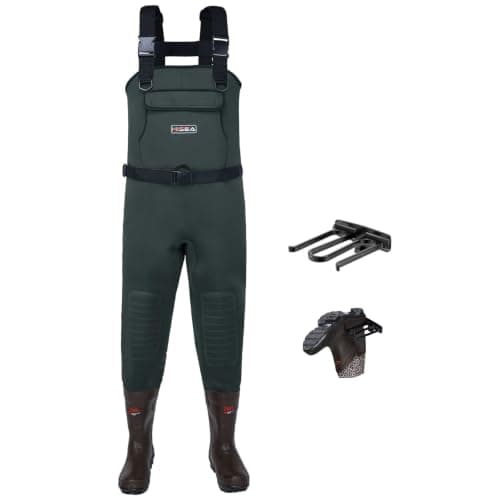
Chest-high neoprene with the boots built in and cleated soles. This is the piece of kit that separates people who go duck hunting from people who talk about it, and it should be the first thing you buy.
Best for: The item that makes the hunt possible9.0 - 2
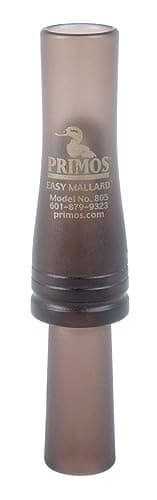
A forgiving call built to be blown badly and still sound like a duck. That is exactly the right specification for someone who has never called before and does not want to educate every bird in the county.
Best for: The first call to actually learn8.8 - 3
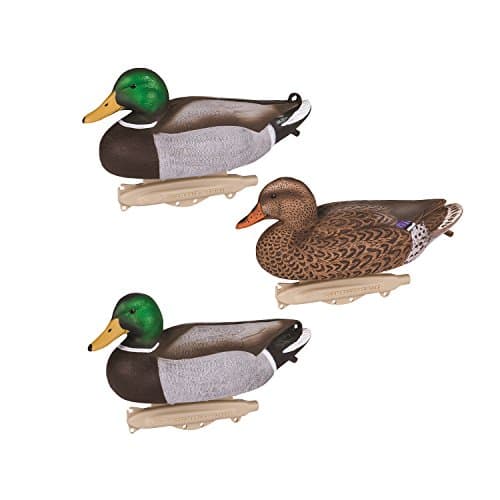
Six decoys is a real spread for small water, and small water is where beginners should be hunting. Buying a dozen and a half before your first morning is the classic waterfowl over-purchase.
Best for: A starter spread that is actually enough8.5 - 4
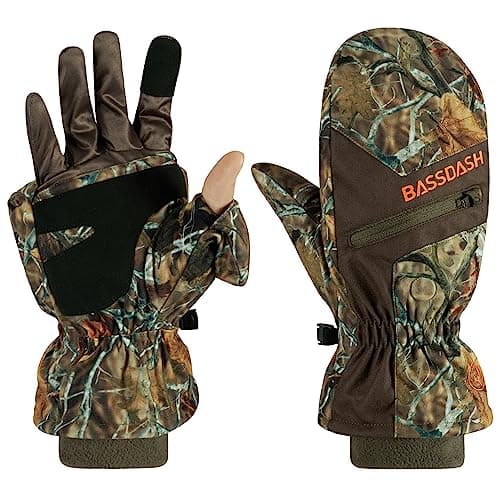
Waterfowl hunting destroys hands: you set decoys with bare fingers in cold water at 5 a.m., then sit still. Insulated, water-resistant mittens are what let you keep hunting after that.
Best for: Hands that have been in the water8.4 - 5
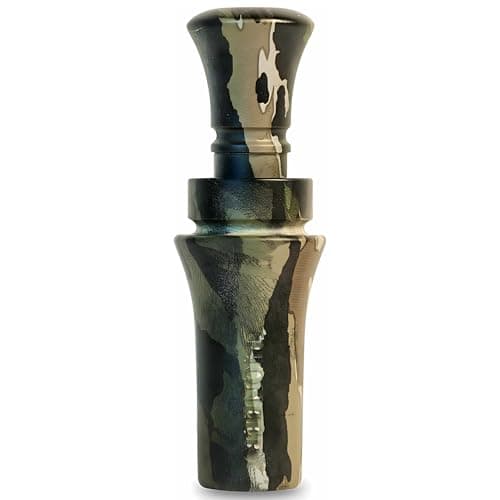
Double-reed calls are raspier and more forgiving of imperfect air control than single reeds, which makes this a sensible second call and a very defensible only call.
Best for: The step up once you can make a sound8.3 - 6
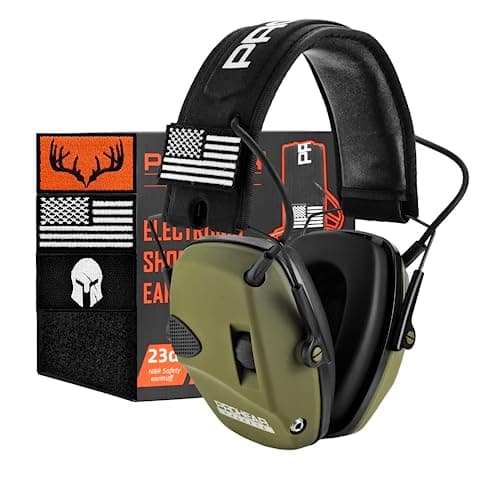
Several people firing 12-gauges within a few feet of each other in a confined blind is genuinely damaging. Electronic muffs amplify the conversation and the wingbeats while cutting the shots.
Best for: The blind is louder than you think8.7 - 7
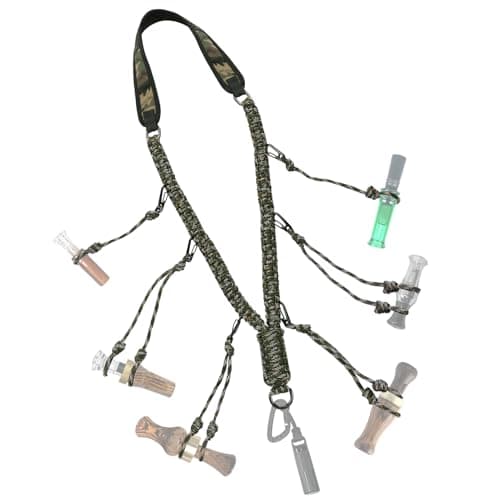
A trivial item that solves a very real problem: a call in a pocket is a call you cannot reach with cold hands, and a call you are holding is a call you will eventually drop into the water.
Best for: Not dropping your call in four feet of water8.0
| # | Product | Best for | Score | Price |
|---|---|---|---|---|
| 1 | HISEA Neoprene Bootfoot Chest Waders Chest-high neoprene with the boots built in and cleated soles. This is the piece of kit that separates people who go duck hunting from people who talk about it, and it should be the first thing you buy. | The item that makes the hunt possible | 9.0 | $102.99View on Amazon#ad |
| 2 | Primos 805 Easy Mallard Duck Call A forgiving call built to be blown badly and still sound like a duck. That is exactly the right specification for someone who has never called before and does not want to educate every bird in the county. | The first call to actually learn | 8.8 | $19.98View on Amazon#ad |
| 3 | Flambeau Storm Front 2 Mallard Decoys (6-Pack) Six decoys is a real spread for small water, and small water is where beginners should be hunting. Buying a dozen and a half before your first morning is the classic waterfowl over-purchase. | A starter spread that is actually enough | 8.5 | $37.99View on Amazon#ad |
| 4 | BASSDASH Insulated Camo Hunting Mittens Waterfowl hunting destroys hands: you set decoys with bare fingers in cold water at 5 a.m., then sit still. Insulated, water-resistant mittens are what let you keep hunting after that. | Hands that have been in the water | 8.4 | $32.98View on Amazon#ad |
| 5 | Duck Commander Pioneer Double-Reed Duck Call Double-reed calls are raspier and more forgiving of imperfect air control than single reeds, which makes this a sensible second call and a very defensible only call. | The step up once you can make a sound | 8.3 | $30.43View on Amazon#ad |
| 6 | PROHEAR Electronic Ear Protection Several people firing 12-gauges within a few feet of each other in a confined blind is genuinely damaging. Electronic muffs amplify the conversation and the wingbeats while cutting the shots. | The blind is louder than you think | 8.7 | $29.99View on Amazon#ad |
| 7 | PAMASE Duck Call Lanyard A trivial item that solves a very real problem: a call in a pocket is a call you cannot reach with cold hands, and a call you are holding is a call you will eventually drop into the water. | Not dropping your call in four feet of water | 8.0 | $12.99View on Amazon#ad |
Duck hunting has the highest gear floor of any hunt on this site, and the reason is simple: you cannot participate at all without a way to stand in cold water. Everything else — calls, decoys, camo, a blind bag — is optional or borrowable. Waders are not. That single fact should shape how you spend, and it is why this list is ordered the way it is.
The paperwork that is different for ducks
This is the part beginners get wrong, and it is the only item on this page that can get you cited. Waterfowl are federally regulated migratory birds, which means the requirements stack on top of your normal state license:
You need your state hunting license, you need a federal Migratory Bird Hunting and Conservation Stamp— the “duck stamp” — if you are sixteen or older, and you need to be registered with the Harvest Information Program (HIP)in every state you hunt in. Many states also require their own additional waterfowl stamp or permit. None of these are expensive; all of them are separate, and none of them can be bought at 4 a.m. on the way to the water. Sort it weeks in advance and check your state agency’s site rather than this page, because the details differ and they change.
Three federal rules that surprise first-timers
Waders first, everything else second
If your budget only covers one item on this page, it is the waders, and it is not close. You will use them to walk in, to set decoys, to reposition when the wind changes, and to pick up birds. Without them you are limited to hunting from a bank, which on public water is usually the worst spot available.
Bootfoot versus stockingfoot is the decision to understand. Bootfoot waders have the boots built in — quicker on and off, warmer, and one purchase instead of two. Stockingfoot waders take a separate wading boot, walk far better over distance, and cost more. For a beginner hunting close to where the truck parks, bootfoot is the right call. For long walks into timber, stockingfoot starts to earn its price. Our hunting waders vs fishing waders comparison covers the rest of the differences, including why an angler’s breathable waders are usually the wrong tool for a January morning.
One safety note that is not optional: chest waders and deep water are a genuine drowning risk. Wear a belt cinched at the waist so a fall does not fill the legs, know the bottom you are walking on before you commit, and never wade water you cannot see the depth of in the dark. More waterfowl hunters are killed by water and boats than by any other cause.
How many decoys you actually need
Fewer than the internet tells you. The classic beginner mistake is buying three dozen decoys, discovering they weigh as much as a child, and then never carrying them past the first hundred yards. Six decoys on the right pothole beats thirty-six in the truck.
| Where you are hunting | Decoys to start with | Why |
|---|---|---|
| Small creek, ditch or pothole | Half a dozen | Ducks expect small numbers on small water |
| Flooded timber | Half a dozen to a dozen | Visibility is short; a spread is wasted |
| Small pond or beaver flowage | A dozen | Room for a landing hole in the middle |
| Big open water | Several dozen | A numbers game — and not where beginners should start |
Leave a landing hole — an obvious gap of open water your decoys are grouped around, ideally upwind of where you are sitting, because ducks land into the wind. That single piece of placement does more than doubling your decoy count.
Calling: the beginner’s real risk
In deer hunting a bad call is usually harmless. In duck hunting it is actively expensive: a badly blown call flares birds that were already coming. The most useful advice for a first season is genuinely to call less than you want to, and to stop calling entirely once birds have committed and are working the spread.
Buy a forgiving beginner call, practice it in the truck for weeks before opening day, and learn exactly two things — a basic greeting call and a feed chuckle. That is enough. If you are hunting with someone experienced, let them do the calling and spend your first season watching what they do and when they shut up. Our best duck calls for beginners roundup compares the field in more detail.
Steel shot, and what it changes
Non-toxic shot is federally required for waterfowl, and steel behaves differently from the lead you may have patterned with. It is lighter for the same pellet size, so it sheds velocity faster and hits with less energy downrange. The practical consequences for a beginner are that you generally step up a shot size or two compared with a lead load, and that you should take shorter shots than you think you can make.
Steel is also harder than lead, which is why older or fixed-choke shotguns can have restrictions on what constrictions are safe with it — check your barrel and your manual rather than assuming. Pattern your gun with the actual shells you intend to hunt with, at a realistic distance, before the season. If you are still choosing a gun, the best beginner hunting shotguns and 12 gauge vs 20 gauge are the pages for that decision.
Staying warm when everything is wet
Duck hunting inverts the usual layering advice, because you are not generating heat by walking — you are standing still in water that is conducting heat away from you far faster than air would. The base layer rule from what to wear hunting still applies and matters more here than anywhere: no cotton, ever. A cotton layer under neoprene stays damp all morning and you will be genuinely cold.
Layer synthetic or merino under the waders, add an insulating mid-layer, and keep a dry pair of gloves in a sealed bag for after the decoys are set. The single most effective comfort upgrade in waterfowl hunting is a spare dry pair of anything — gloves, socks, a hat.
What to skip
Skip the blind bag for a first season; a dry bag or any pack you own will do. Skip motion and spinning-wing decoys until you have hunted enough to know whether the birds where you hunt are pressured enough to be wary of them — in some regions they help and in others they are a liability, and it is a regional question, not a product question. Skip the layout boat, the dog, and the custom acrylic call, all of which are season-two-or-later decisions.
And skip buying a dozen and a half decoys before your first morning. Six, on small water, placed with a landing hole and hunted patiently, will teach you more than a big spread you are too tired to carry. Duck hunting for beginners covers how the hunt itself actually unfolds, and it is worth reading before you spend anything.
The picks in detail
HISEA Neoprene Bootfoot Chest Waders
9.0/10Best for: The item that makes the hunt possible
Chest-high neoprene with the boots built in and cleated soles. This is the piece of kit that separates people who go duck hunting from people who talk about it, and it should be the first thing you buy.
- Type
- Chest waders, bootfoot
- Material
- Neoprene
- Sole
- Cleated
- Coverage
- Chest-high
- Bootfoot design means no separate wading boots to buy, fit or lose
- Neoprene insulates as well as seals, which matters in near-freezing water
- Cleated soles help on the mud and slick banks where most falls actually happen
- Neoprene is hot and airless on a mild morning or a long walk to the water
- Bootfoot waders are bulkier and worse for walking distance than stockingfoot plus boots
- One puncture ends the day — carry a patch kit and treat barbed wire with respect
Primos 805 Easy Mallard Duck Call
8.8/10Best for: The first call to actually learn
A forgiving call built to be blown badly and still sound like a duck. That is exactly the right specification for someone who has never called before and does not want to educate every bird in the county.
- Type
- Mallard hail and greeting call
- Difficulty
- Beginner-forgiving
- Species
- Mallard
- Designed to be forgiving, which is the single most important spec in a beginner's first call
- Cheap enough that you are not precious about learning on it
- Mallard sounds cover most of what a beginner needs on public water
- Forgiving calls have a narrower range — you will outgrow it if you get serious
- Any duck call in untrained hands flares more ducks than it turns; practice before opening day
- Cold and moisture affect reeds — you will be blowing water out of it all morning
Flambeau Storm Front 2 Mallard Decoys (6-Pack)
8.5/10Best for: A starter spread that is actually enough
Six decoys is a real spread for small water, and small water is where beginners should be hunting. Buying a dozen and a half before your first morning is the classic waterfowl over-purchase.
- Count
- 6 decoys
- Species
- Mallard
- Use
- Small water, timber, potholes
- Six is genuinely enough for a pothole, a creek bend or flooded timber
- Light enough to carry in with everything else you are already carrying
- Mallard decoys pull more than mallards on most public water
- Not enough spread for big open water, where the numbers game is real
- Decoy line and weights are a separate purchase and a separate tangle problem
- They take up more storage room at home than anything else in this kit
BASSDASH Insulated Camo Hunting Mittens
8.4/10Best for: Hands that have been in the water
Waterfowl hunting destroys hands: you set decoys with bare fingers in cold water at 5 a.m., then sit still. Insulated, water-resistant mittens are what let you keep hunting after that.
- Type
- Insulated mitten
- Water
- Water resistant
- Pattern
- Camo
- Mittens beat gloves for warmth, which is the correct trade when you are sitting still
- Water resistance matters more here than in any other kind of hunting
- Warm hands are what let you keep calling and shooting late in a cold morning
- Water resistant is not waterproof — hands in the water are still going to get wet
- Mittens cost you dexterity for calls, shells and the safety
- You will take them off to set decoys, which is when your hands actually get cold
Duck Commander Pioneer Double-Reed Duck Call
8.3/10Best for: The step up once you can make a sound
Double-reed calls are raspier and more forgiving of imperfect air control than single reeds, which makes this a sensible second call and a very defensible only call.
- Type
- Double reed
- Difficulty
- Forgiving
- Tone
- Raspy, ducky
- Double reeds are more forgiving of inconsistent air than single reeds
- Raspy tone is convincing on the close, quiet calling that actually finishes birds
- Well-known name that is easy to find replacement reeds for
- Takes more air than a single reed, which is tiring on a long hail call
- Less volume ceiling than a single reed for reaching distant birds
- Redundant if you already own a beginner call and have not learned it yet
PROHEAR Electronic Ear Protection
8.7/10Best for: The blind is louder than you think
Several people firing 12-gauges within a few feet of each other in a confined blind is genuinely damaging. Electronic muffs amplify the conversation and the wingbeats while cutting the shots.
- Type
- Electronic muffs
- Amplification
- 4x
- Rating
- NRR 23 dB
- Amplifies quiet sound while cutting the shot, so you hear more rather than less
- A blind is the worst acoustic environment in hunting — several guns, close, often under a roof
- Hearing damage is permanent and cumulative; this is the cheapest insurance in the kit
- Bulky under a hood and awkward with a gun mount until you get used to it
- Batteries, and cold weather shortens them
- Muffs get wet in a duck blind, and electronics plus water is a known relationship
PAMASE Duck Call Lanyard
8.0/10Best for: Not dropping your call in four feet of water
A trivial item that solves a very real problem: a call in a pocket is a call you cannot reach with cold hands, and a call you are holding is a call you will eventually drop into the water.
- Type
- Call lanyard
- Loops
- 10 removable drops
- Worn
- Around the neck, over waders
- Keeps the call reachable without digging through a wader chest pocket
- Removable drops let you carry two calls without them clattering together
- Costs almost nothing and prevents an expensive, hunt-ending loss
- One more thing around your neck along with muffs, a face covering and a gun sling
- Cheap lanyards can snag on brush and blind frames
- Genuinely pointless until you own more than one call
Prices shown are from Amazon as of Sep 6, 2026 and change often — the button always goes to the current listing. Some links may earn us a commission at no extra cost to you. How this works.
Frequently asked questions
What do I need for my first duck hunt?
Chest waders first - they are what make the hunt possible. Then your state license, a federal duck stamp if you are 16 or older, HIP registration, any state waterfowl stamp, a shotgun plugged to three shells, non-toxic shot, a forgiving beginner call, half a dozen decoys, warm water-resistant hand protection and hearing protection.
Do I need a federal duck stamp to hunt ducks?
Yes, if you are 16 or older. The federal Migratory Bird Hunting and Conservation Stamp is required nationwide on top of your state license, and you also need to be registered with the Harvest Information Program in each state you hunt. Many states add their own waterfowl stamp. None can be sorted on the drive to the water - do it weeks ahead.
How many duck decoys do beginners need?
About half a dozen if you hunt small water, which is where beginners should start. Six decoys on a pothole or creek bend with a clear landing hole left open beats three dozen you are too tired to carry in. Big open water is a numbers game, but it is also not where a first season should happen.
Can you use lead shot for duck hunting?
No. Non-toxic shot is federally required for all waterfowl hunting in the United States. Steel is the common choice; it is lighter than lead for the same pellet size, so it loses velocity faster. Step up a size or two from your lead equivalent, keep shots closer, and check that your barrel and choke are rated for steel.
Are chest waders dangerous?
They deserve respect. A fall in deep water with uncinched waders is a genuine drowning risk, and water is the leading cause of waterfowl hunting fatalities. Wear a wading belt cinched at the waist, know the bottom before you commit to a step, and never wade water in the dark whose depth you have not confirmed in daylight.
Sources
- U.S. Fish and Wildlife Service — Federal Duck Stamp requirements
- U.S. Fish and Wildlife Service — Migratory Bird Hunting regulations and non-toxic shot
- Harvest Information Program (HIP) — registration requirement
- HISEA — neoprene bootfoot chest wader product specifications
- Flambeau Outdoors — Storm Front 2 decoy specifications
Keep reading
Not sure where to start?
The beginner gear checklist walks you through exactly what a first-season hunter needs — essentials first, nice-to-haves later, with one safe-default pick per category.