Gear · Roundup
The Best Turkey Decoys for Beginners
A gobbler that answers, walks halfway in and stands at seventy yards is the most common spring frustration there is. One hen decoy, set in the right place, is the cheapest fix for it.
Disclosure: Creek Cover is reader-supported. If you buy through our links we may earn a commission, at no extra cost to you. It never changes which pick we tell a beginner to start with. Full disclosure.
Quick picks at a glance
Tap a pick to read the full write-up, or the price button to check it on Amazon.
- 1
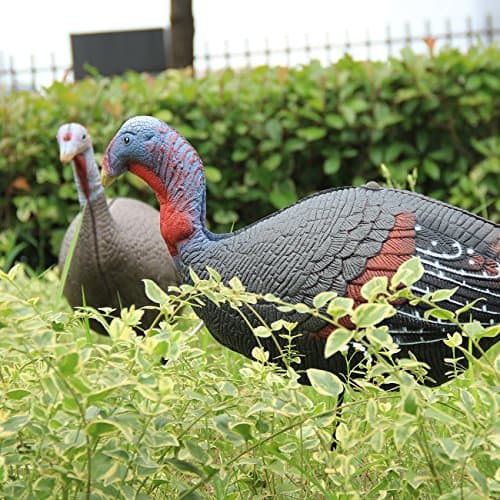
A hen and a jake in one box, in soft EVA foam that rolls up small and rides in a vest pouch, with two stakes and a mesh bag included. It is not the most realistic decoy on this page and it does not need to be - it is the right pair, at the price where a first-timer actually buys it.
Best for: The best beginner turkey decoys9.0 - 2
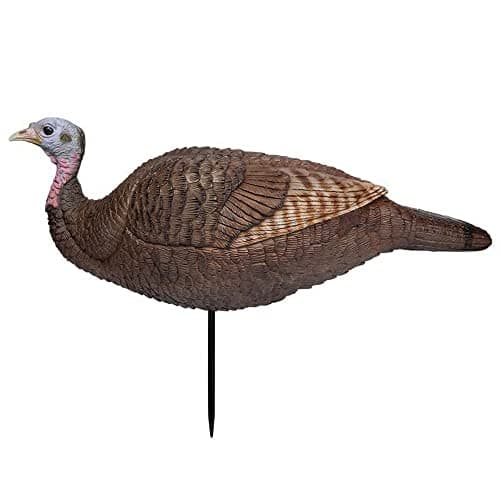
If you only want to carry one decoy, this is the one. A deliberately undersized hen with a good head posture, a two-piece stake and a collapsible body, from a brand that has been making turkey gear for decades. The small profile is the point: a gobbler reads it as an easy, non-threatening bird.
Best for: Best single hen decoy8.9 - 3
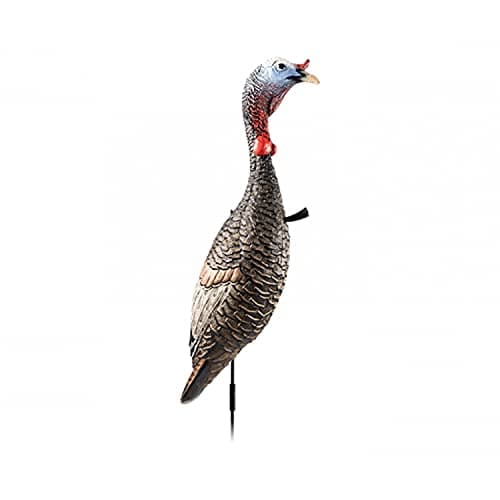
A skinny, oversized-headed, thoroughly unimpressive young tom - which is exactly what you want a dominant gobbler to see next to your hen. It is built to be bullied. The pre-attached beard and fold-away stake make it a one-piece, thirty-second setup.
Best for: Best jake to pair with a hen8.7 - 4
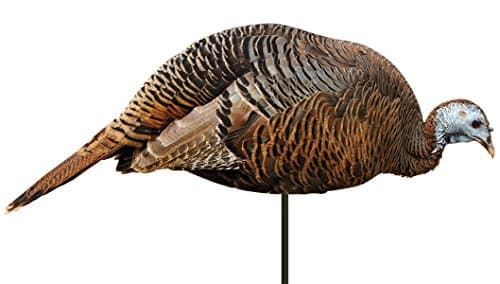
A two-dimensional photo decoy of a real feeding hen that weighs eight ounces with the stake and folds to the size of a paperback. If you are hunting public ground and covering miles between gobbles, this is the decoy you will actually still be carrying at 10 a.m.
Best for: Best for public land and long walks8.6 - 5
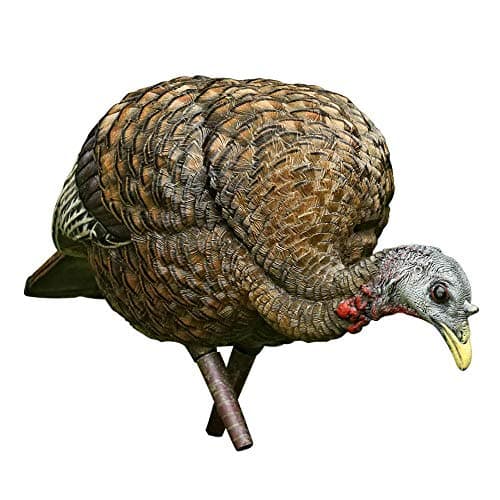
The hen serious turkey hunters end up with. Dura-rubber body that quiets down instead of clacking, a feeding posture that says everything is fine, a carbon stake that lets it swivel in a breeze, and paint that holds up for seasons. Buy it second, after a first spring has told you that you like this.
Best for: Best realism upgrade8.8 - 6
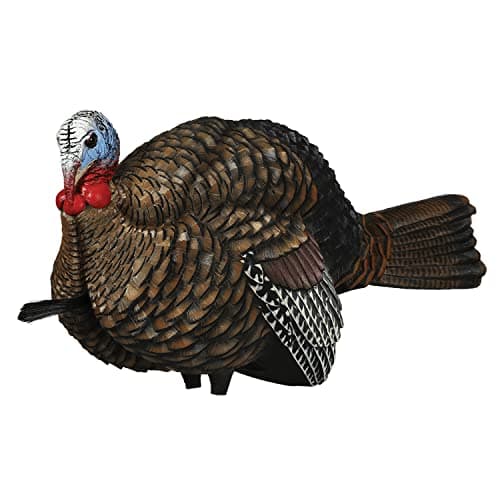
The half-strut posture is a young bird that is trying it on, and a dominant gobbler treats it accordingly. Same collapsible dura-rubber body and carbon stake as the Feeder Hen, with a pre-attached beard. It is excellent and it is the wrong first purchase for a beginner, for reasons the body of this page explains.
Best for: Best premium jake, for later8.4 - 7
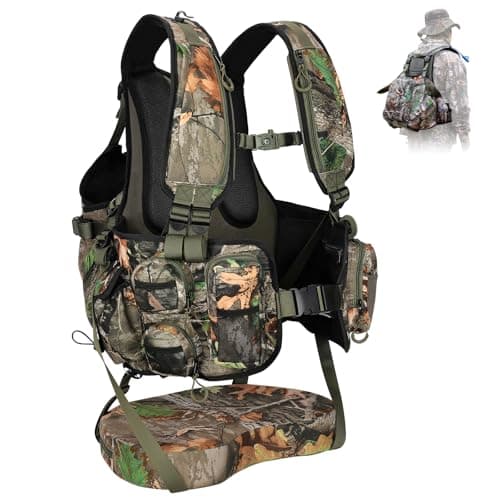
The accessory that turns the safety rule on this page into a habit. A turkey vest with a game pouch and a seat pad means your folded decoys ride out of sight without you thinking about it, and you have somewhere to sit when the bird takes an hour to come in.
Best for: How you carry a decoy covered8.3
| # | Product | Best for | Score | Price |
|---|---|---|---|---|
| 1 | TargetEvo Hen and Jake Turkey Decoy Combo (2-Pack) A hen and a jake in one box, in soft EVA foam that rolls up small and rides in a vest pouch, with two stakes and a mesh bag included. It is not the most realistic decoy on this page and it does not need to be - it is the right pair, at the price where a first-timer actually buys it. | The best beginner turkey decoys | 9.0 | $31.99View on Amazon#ad |
| 2 | Primos Lil Gobstopper Hen Turkey Decoy If you only want to carry one decoy, this is the one. A deliberately undersized hen with a good head posture, a two-piece stake and a collapsible body, from a brand that has been making turkey gear for decades. The small profile is the point: a gobbler reads it as an easy, non-threatening bird. | Best single hen decoy | 8.9 | $35.52View on Amazon#ad |
| 3 | Flextone Funky Chicken Gen II Turkey Decoy A skinny, oversized-headed, thoroughly unimpressive young tom - which is exactly what you want a dominant gobbler to see next to your hen. It is built to be bullied. The pre-attached beard and fold-away stake make it a one-piece, thirty-second setup. | Best jake to pair with a hen | 8.7 | $34.99View on Amazon#ad |
| 4 | Montana Decoy Dinner Belle Hen Decoy A two-dimensional photo decoy of a real feeding hen that weighs eight ounces with the stake and folds to the size of a paperback. If you are hunting public ground and covering miles between gobbles, this is the decoy you will actually still be carrying at 10 a.m. | Best for public land and long walks | 8.6 | $40.08View on Amazon#ad |
| 5 | Avian-X LCD Feeder Hen Turkey Decoy The hen serious turkey hunters end up with. Dura-rubber body that quiets down instead of clacking, a feeding posture that says everything is fine, a carbon stake that lets it swivel in a breeze, and paint that holds up for seasons. Buy it second, after a first spring has told you that you like this. | Best realism upgrade | 8.8 | $65.00View on Amazon#ad |
| 6 | Avian-X LCD Half-Strut Jake Turkey Decoy The half-strut posture is a young bird that is trying it on, and a dominant gobbler treats it accordingly. Same collapsible dura-rubber body and carbon stake as the Feeder Hen, with a pre-attached beard. It is excellent and it is the wrong first purchase for a beginner, for reasons the body of this page explains. | Best premium jake, for later | 8.4 | $120.44View on Amazon#ad |
| 7 | Kalkal Turkey Vest with Seat The accessory that turns the safety rule on this page into a habit. A turkey vest with a game pouch and a seat pad means your folded decoys ride out of sight without you thinking about it, and you have somewhere to sit when the bird takes an hour to come in. | How you carry a decoy covered | 8.3 | $39.99View on Amazon#ad |
Turkey decoys are the one piece of spring gear that beginners either overbuy or skip entirely, and both mistakes come from the same misunderstanding: that the decoy is there to attract the bird. It is not. Your calling attracts the bird. The decoy is there to solve a very specific problem that happens after the calling has already worked — a gobbler that answers, comes partway, and then stops in the open and waits for the hen he heard to come to him, because that is what real hens do. When he can see a hen where the sound came from, his reason to stand there disappears. That is the whole job, and a single hen decoy does it.
Everything on this page follows from that. You do not need a spread. You do not need a strutting gobbler with a real fan. You need one convincing hen, possibly one jake to give a dominant bird a reason to hurry, a way to carry both of them covered, and a clear idea of where to stake them. If you have not read the spring plan yet, start with turkey hunting for beginners and the buy-order in the first turkey hunt kit list; this page is the decoy chapter of both.
How we picked these
Our criteria, in order. Posture came first — whether a decoy shows a bird the right thing, which for a beginner means a relaxed, non-threatening hen and, if a male at all, a young one that looks easy to bully. A beautiful full-strut gobbler is the wrong posture for most first-season situations and no amount of paint fixes that. Then weight and packed size, because a turkey hunter walks, often for miles, and a decoy that stays in the truck because it is heavy is worth nothing. Then whether it can be carried covered — a body that folds or rolls into a vest pouch is a safety feature, not a convenience, and the safety section below explains why. Then setup speed, since you are usually staking a decoy in the dark or with a bird already gobbling. Paint realism came last on purpose. It is what sells decoys in the store and it is the spec that matters least at the twenty yards where a beginner's decoy actually sits.
Every product here was confirmed as a live, in-stock listing before it went on the page, and every spec quoted comes from the manufacturer's or the retailer's own published figures — the weights marked "listing" are the retailer's numbers, not ours. We do not field-test decoys against live birds and we do not pretend to; the method is on the how we research and pick page. Prices on the page are live and dated, and the price brackets in the writing are deliberately qualitative, because a number typed into an article is wrong by the following week.
Do you need a decoy at all?
Honestly: not on your first morning, and not on every hunt. Plenty of turkeys are killed every spring by hunters who sat against a tree, called, and let the bird walk into range with nothing in the open at all. If your budget is tight, the money goes to a box call, a turkey choke and concealment for your hands and face before it goes to a decoy — those three decide whether you get a bird to come at all.
Where a decoy earns its place is the hang-up. A bird that gobbles back and forth with you, closes to seventy or eighty yards, then plants his feet in a spot he can see from and waits. That happens constantly, it happens to everyone, and it is maddening. A hen decoy that he can see from where he stands removes his reason to wait, and a jake next to her gives a dominant tom a reason to come at a run. Not every hung-up bird commits to a decoy — pressured public birds that have been shot at over plastic learn — but enough do that one inexpensive hen is the best small purchase a beginner can make after the call.
The situations where a decoy actively hurts are worth knowing too. Late in the season, when hens are on nests and gobblers have been burned a few times, a decoy is as likely to stop a bird as pull him. And any male decoy — jake, half-strut or full strutter — can make a subordinate two-year-old decide he wants no part of the fight. If a bird sees your setup and turns away, take the jake down for the next one.
Hen, jake or both: what to buy first
A hen first, without exception. A lone feeding or upright hen is the safest thing you can show a turkey: it never intimidates, it works early season and late, and it is the setup that experienced hunters go back to when the birds get difficult. If you buy one decoy this spring, it is a hen, and the Primos Lil Gobstopper or the Montana Dinner Belle are the two we would pick depending on whether you drive to your spot or walk to it.
The hen-and-jake pair is the standard beginner setup because it adds a second motivation. A dominant tom does not just want the hen; he wants the young male away from her, and a submissive-looking jake beside a hen has pulled more hung-up gobblers the last thirty yards than any other combination. That is why the TargetEvo pair is the top pick — it is both decoys, for less than most single hens — and why the Flextone Funky Chicken is the jake to pair with a better hen if you upgrade later. Note what those jakes have in common: they look weak. A skinny young bird with its head up is a target; a puffed-up strutter is a rival, and a rival makes some birds leave.
| Situation | Set out | Why |
|---|---|---|
| First hunt, unsure of the birds | One hen | Never intimidates; the safe default |
| Early season, gobblers sorting the pecking order | Hen + jake | A dominant tom will come to run the jake off |
| Public land, walking in miles | One flat hen (2D) | Weight decides whether the decoy is with you at all |
| Bird hangs up in a field at 70-80 yards | Hen + jake, in the open | Gives him something to see and someone to fight |
| Late season, hens nesting, birds burned | One hen, or none | Male decoys push wary birds away |
| Bird flares from your setup | Pull the jake | The male decoy is almost always the reason |
What you do not need is a flock. Four-packs, breeding pairs plus a strutter, two hens and two jakes — these belong to hunters working specific field birds on private ground where they know the flock. For a beginner, more decoys means more weight, more time exposed in the open setting them, and more chances to show a bird something he does not like.
Where to put a turkey decoy
Fifteen to twenty yards from your tree — closer than instinct says. The decoy is a range-finder as much as a lure: if the bird is at the decoy, he is in range, and you do not have to judge distance on a bird whose size fools everyone. The National Wild Turkey Federation's guidance is about twenty yards; we would not set one further than that with a shotgun.
Set it slightly to one side rather than straight out in front of you, so that a bird walking to it has his attention on the decoy and not on the tree you are sitting against, and so you are not shooting directly over your own decoy. Put it where it can be seen from the direction the bird will come — a hen in a dip that a gobbler cannot see from eighty yards accomplishes nothing, and this is the single most common placement mistake. Field edges, logging roads and open hardwoods are decoy country; a thick creek bottom where a bird cannot see ten yards is not, and there you leave the decoy in the vest.
If you run a jake, face him toward your position. An approaching tom wants to confront the jake head-on, so he circles to face it — which puts him broadside or facing you, standing still, at a known distance. Face the hen wherever looks natural; she is scenery. And before you stake anything, do what the NWTF recommends and establish a clear line of sight for at least a hundred yards along the direction you expect the bird, both so you see him coming and so you see anyone else coming.
Stake it, then sit down and stay down
2D, foam or collapsible rubber
Turkey decoys come in three constructions, and the trade-off is always the same one: weight against realism. Two-dimensional photo decoys like the Dinner Belle are a printed photograph of a real bird on a flat panel that folds to pocket size and weighs a few ounces. Seen from the side they are startlingly convincing; seen from dead ahead they are a line. They are the right choice for anyone walking a long way, and the wrong choice for a stationary setup where a bird will approach from any angle.
Foam decoys like the TargetEvo pair are full-bodied and roll up, but the foam can crease in shipping and needs reshaping — a hair dryer or an hour in the sun, per the listing — and the paint is what you would expect at the price. They are light, cheap, and they work at twenty yards, which is what a beginner needs them to do.
Collapsible rubber decoys — the Avian-X LCD line is the reference — are the realism tier. A dura-rubber body that folds and inflates, a carbon stake that lets the decoy swivel in a breeze, and paint that holds up for years. They cost two to four times what the budget options do and weigh two to three pounds apiece. They are genuinely better, and they are a second-season purchase, because the thing that makes a beginner's decoy work is where it is staked, not how the feathers are painted.
The safety rule that matters more than the paint
Turkey hunting takes safety more seriously than any other hunt on this site, because the conditions are uniquely bad: hunters in full camouflage, deliberately hidden, making turkey sounds, in woods that may hold other hunters doing exactly the same thing. A decoy adds one more turkey-shaped object to that picture, and the NWTF's decoy guidance is blunt about it: never transport decoys uncovered. Fold or roll them into your vest or a bag before you move, make sure a head is not sticking out of the pouch, and if you cannot get one inside a bag, wrap it in blaze orange for the walk. Every decoy on this page was chosen partly on whether it can be carried that way — it is why the turkey vest is on a decoy list at all.
The rest of the NWTF rules apply doubly when a decoy is out. Sit against a tree taller than your head and wider than your shoulders. Never wear red, white or blue — the colors of a gobbler's head. If you see another hunter approaching, call out in a loud, clear voice; do not wave, and never make a turkey sound to get their attention. Identify a beard and a full head before the safety comes off, every time — a decoy in front of you is precisely the thing that makes a shape in the brush look like a turkey. And before you leave your spot, check that nobody is stalking your decoys.
Then there is fanning and reaping — hiding behind a strutter decoy or a real tail fan and crawling toward a gobbler. It works, it is on every video, and it is the method every safety organization in the sport is worried about. Per the Congressional Sportsmen's Foundation's tracking, Alabama, Michigan, New Hampshire, New Jersey, Pennsylvania and Rhode Island have banned it outright, and South Carolina and Tennessee prohibit it on public land. Regulations change; check your state's current turkey rules before you buy any decoy meant to be carried toward a bird. Our advice is simpler than the law: a beginner does not do it, anywhere, in a first season. Sit down, call, and let the bird come.
Never stalk a gobble
What to skip in your first season
Skip full-strut gobbler decoys. They are the most dramatic thing on the shelf, they cost the most, and they are the decoy most likely to send a subordinate two-year-old — which is most of the birds a beginner will call — walking the other way. They also come with a real or synthetic fan, which is what people use to reap, and you have read the section above. Skip motion decoys and the stakes that bob and spin for the same reason: more to carry, more to go wrong, and a mis-timed movement at twenty yards is a bird gone. Skip the four-packs and flock kits; one pair is plenty and more is heavier.
Skip, for now, the premium rubber decoys. The Avian-X Feeder Hen is the best hen on this page and the wrong first purchase for almost everyone, because a well-placed foam hen and a badly placed rubber one are separated entirely by the placement. Hunt a spring with the cheap pair, learn where birds want to be on your ground, and then decide whether the paint is worth it.
What you should spend on instead is the part of the setup that actually calls the bird. A box call you can run in ten minutes beats any decoy. A turkey choke and a patterning session turn a bird at the decoy into a bird in hand. Face and hand concealment matter more than any camo pattern, and a pop-up blind is the answer if you cannot sit still. If you have not settled the gun, the best beginner hunting shotgun covers it. And if you are heading onto public ground for the first time, public land hunting for beginners is worth an evening before you go.
The through-line of this page: one hen, maybe one jake, staked at twenty yards in a place the bird can see, carried covered in and out, and left alone once it is set. That will out-hunt a four-decoy flock with a strutter in the middle on every piece of ground a beginner will stand on. Buy the pair, learn the placement, and let the paint wait.
The picks in detail
TargetEvo Hen and Jake Turkey Decoy Combo (2-Pack)
9.0/10Best for: The best beginner turkey decoys
A hen and a jake in one box, in soft EVA foam that rolls up small and rides in a vest pouch, with two stakes and a mesh bag included. It is not the most realistic decoy on this page and it does not need to be - it is the right pair, at the price where a first-timer actually buys it.
- Set
- Hen and jake, 2 stakes, mesh carry bag
- Body
- Collapsible EVA foam
- Size
- About 24" x 8" x 8" set up (listing)
- Weight
- Under a pound for the pair (listing)
- Both decoys a beginner needs, for the price of one mid-range hen
- Foam bodies roll flat and fit inside a vest, so they travel covered by default
- Two stakes give you a few different head heights and angles
- A crease comes out with a hair dryer or an hour in the sun, per the listing
- Paint and shape are budget-tier - convincing at 20 yards, not at 5
- Foam can arrive creased and needs reshaping before the first hunt
- The stakes are basic; on hard or rocky ground you may want a sturdier one
Primos Lil Gobstopper Hen Turkey Decoy
8.9/10Best for: Best single hen decoy
If you only want to carry one decoy, this is the one. A deliberately undersized hen with a good head posture, a two-piece stake and a collapsible body, from a brand that has been making turkey gear for decades. The small profile is the point: a gobbler reads it as an easy, non-threatening bird.
- Posture
- Upright hen, realistic head
- Body
- Collapsible, smaller-than-life profile
- Stake
- Two-piece, included
- Weight
- About 1.4 lb (listing)
- Smaller profile is easier to pack and reads as a young, approachable hen
- Paint detail is a clear step up from the foam budget decoys
- Two-piece stake breaks down short enough for a vest pocket
- A hen alone is the safest decoy choice for pressured or late-season birds
- One hen costs about what the TargetEvo pair does
- Undersized bodies show less well across a big field
- Stake reports are mixed - handle it gently in frozen or rocky ground
Flextone Funky Chicken Gen II Turkey Decoy
8.7/10Best for: Best jake to pair with a hen
A skinny, oversized-headed, thoroughly unimpressive young tom - which is exactly what you want a dominant gobbler to see next to your hen. It is built to be bullied. The pre-attached beard and fold-away stake make it a one-piece, thirty-second setup.
- Posture
- Submissive, tall and skinny young tom
- Body
- One-piece collapsible, fold-away stake
- Beard
- Pre-attached synthetic beard
- Weight
- About 1.7 lb (listing)
- Submissive posture picks a fight without intimidating subordinate birds the way a strutter does
- One piece - nothing to assemble in the dark
- Collapses to store in a vest pouch, which is how a decoy should travel
- Pairs with any hen on this page; you do not need a matching brand
- A male decoy is the one that can make a timid two-year-old leave - use it early season, not late
- The exaggerated proportions look odd up close, even if birds do not care
- No carry bag in the box; it goes in the vest or you wrap it in orange
Montana Decoy Dinner Belle Hen Decoy
8.6/10Best for: Best for public land and long walks
A two-dimensional photo decoy of a real feeding hen that weighs eight ounces with the stake and folds to the size of a paperback. If you are hunting public ground and covering miles between gobbles, this is the decoy you will actually still be carrying at 10 a.m.
- Type
- 2D fold-flat photo decoy
- Posture
- Relaxed feeding hen
- Folded / open
- 9" x 6" folded, 29" x 10" open (manufacturer)
- Weight
- 8 oz including stake (manufacturer)
- Lightest decoy on this page by a wide margin - you will not leave it in the truck
- Folds flat into a vest pocket, so it is always covered on the walk
- The image is a photograph of a real hen, and a feeding pose calms birds
- Sets up in seconds and works spring and fall
- It is a flat panel - from directly ahead or behind it nearly disappears
- Some buyers expect a full-body decoy from the product photos and are surprised
- Does nothing in a dead-still setup that a 3D hen would not do better
Avian-X LCD Feeder Hen Turkey Decoy
8.8/10Best for: Best realism upgrade
The hen serious turkey hunters end up with. Dura-rubber body that quiets down instead of clacking, a feeding posture that says everything is fine, a carbon stake that lets it swivel in a breeze, and paint that holds up for seasons. Buy it second, after a first spring has told you that you like this.
- Posture
- Relaxed feeding hen
- Body
- Collapsible PVC dura-rubber, 15% smaller than life
- Stake
- Collapsible carbon stake, swivels
- Included
- Compression strap, carry bag, stake
- Feather detail and paint are in a different class from the budget decoys
- Rubber body is quiet in the vest and does not crease like foam
- One-piece stake gives natural movement without the spin of lighter decoys
- Feeding posture is the least threatening thing you can show a wary tom
- Roughly double the cost of the TargetEvo pair for one hen
- Heavier than anything else here - about 3.3 lb on the listing
- You have to blow it up to shape each time you set it, which is fine until it is 28 degrees
Avian-X LCD Half-Strut Jake Turkey Decoy
8.4/10Best for: Best premium jake, for later
The half-strut posture is a young bird that is trying it on, and a dominant gobbler treats it accordingly. Same collapsible dura-rubber body and carbon stake as the Feeder Hen, with a pre-attached beard. It is excellent and it is the wrong first purchase for a beginner, for reasons the body of this page explains.
- Posture
- Half-strut, sub-dominant head, relaxed wings
- Body
- Collapsible PVC dura-rubber, 15% smaller than life
- Beard
- Pre-attached
- Included
- Compression strap, carry bag, carbon stake
- Best-in-class realism for a jake - the posture reads correctly to birds
- Pairs with the LCD hens into a set that packs down together
- Quiet rubber body, carbon stake, real carry bag
- Especially effective early season, while the pecking order is being sorted
- Costs as much as three or four TargetEvo pairs
- Any strutting or half-strut male decoy can push a subordinate bird away
- Overkill for a first season on unpressured private ground
Kalkal Turkey Vest with Seat
8.3/10Best for: How you carry a decoy covered
The accessory that turns the safety rule on this page into a habit. A turkey vest with a game pouch and a seat pad means your folded decoys ride out of sight without you thinking about it, and you have somewhere to sit when the bird takes an hour to come in.
- Seat
- Built-in pad
- Game pouch
- Yes - where the decoys ride
- Pockets
- Call and shell pockets
- Best for
- Run-and-gun spring hunting
- A rear pouch keeps decoys covered on the walk in and out - the single most important decoy safety habit
- Seat pad makes a two-hour sit against a rough tree possible
- Calls stay organized and quiet instead of clacking in a pack
- No kickstand frame - premium vests add a back rest
- Extra bulk if you are hunting from a blind rather than moving
- Not strictly necessary - a mesh bag and a seat cushion do the same job for less
Prices shown are from Amazon as of Sep 26, 2026 and change often — the button always goes to the current listing. Some links may earn us a commission at no extra cost to you. How this works.
Frequently asked questions
Do you need a decoy to turkey hunt?
No. Plenty of birds are taken by hunters who called from a tree with nothing in the open. A decoy earns its place when a gobbler hangs up - answers, closes to seventy or eighty yards, then stands waiting for the hen to come to him. A hen he can see removes his reason to wait. Buy a call, a turkey choke and face and hand concealment before you buy a decoy.
Should a beginner use a hen or a jake decoy?
A hen first. A lone relaxed hen never intimidates a bird and works early and late season. Add a submissive-looking jake beside her for early-season birds sorting the pecking order - a dominant tom will come to run him off. If a bird sees your setup and turns away, the male decoy is almost always why; take it down for the next one.
How far away should you put a turkey decoy?
Fifteen to twenty yards from your tree, slightly to one side rather than straight in front, in a spot the bird can see from the direction he will approach. The decoy doubles as a range marker: if he is at the decoy he is in shotgun range. Face a jake toward you so an approaching tom squares up to it and gives you a standing shot.
Are turkey decoys legal everywhere?
Decoys themselves are legal for turkey in most states, but fanning and reaping - hiding behind a strutter decoy or fan and moving toward a bird - are banned outright in Alabama, Michigan, New Hampshire, New Jersey, Pennsylvania and Rhode Island, and prohibited on public land in South Carolina and Tennessee, per the Congressional Sportsmen's Foundation. Rules change; read your state's current turkey regulations before the season.
How do you carry a turkey decoy safely?
Covered, always. Fold or roll it into your vest pouch or a bag before you move, make sure no head is sticking out, and wrap it in blaze orange if you cannot get it inside something. To another hunter, a decoy on your back looks exactly like a turkey. Set it, walk straight back to your tree, and do not get up to adjust it.
Sources
- National Wild Turkey Federation — Decoy Safety Strategies
- Congressional Sportsmen's Foundation — Fanning or Reaping as a Method of Taking Turkeys (state list)
- Avian-X — LCD Feeder Hen specifications
- Avian-X — LCD Half-Strut Jake specifications
- Montana Decoy — Dinner Belle Hen specifications
- Flextone — Funky Chicken Gen 2 specifications
- Primos Hunting — Lil Gobbstopper Hen & Jake decoys
Keep reading
Not sure where to start?
The beginner gear checklist walks you through exactly what a first-season hunter needs — essentials first, nice-to-haves later, with one safe-default pick per category.